The Special Infected: Chaos by Design
Reviewed on PC.Score: 9/10
When Left 4 Dead launched back in 2008, I don’t think many of us realized just how well it would hold up over a decade later. What seemed like a simple co-op zombie shooter turned out to be something far more ambitious—a dynamic, system-driven experience that still feels relevant today. Valve didn’t just make a game; they built a world that reacts to you, supports you, and sometimes overwhelms you.
Revisiting Left 4 Dead today feels like a reminder of how co-op games used to be bold, unpredictable, and deeply immersive.
In a sea of predictable, on-rails shooters, Left 4 Dead stood out by leaning into player agency and emergent gameplay. The storytelling isn’t delivered through cutscenes—it’s delivered through what happens to you in each match. No two sessions feel exactly the same, and that’s part of its genius.
Rumble may require a security check. Click to load the video, or open it on Rumble.
Want to see it in action? Watch the full gameplay session on Twitch here.
Join Our Newsletter
Stay updated with the latest interviews, previews, and indie gaming news from Fix Gaming Channel.
One of the biggest reasons Left 4 Dead still works so well is its AI—both enemies and teammates. If you’re not playing with a full squad of friends, the AI-controlled Survivors do more than just tag along. They’ll patch you up when you’re hurting, keep enemies off your back, and even shout warnings that feel oddly lifelike. Their barks (those quick voice lines) don’t sound canned—they feel reactive, like someone right next to you trying to survive.
The Special Infected, on the other hand, are chaos incarnate. And it’s not just their mechanics—it’s how they move. Every enemy has its own distinct animations and behavior, whether it’s the jittery sprint of a Hunter or the lumbering threat of a Tank.
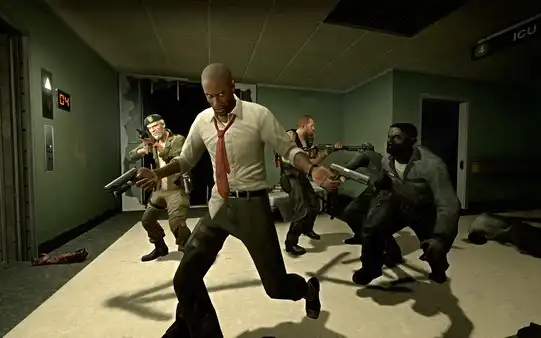
Left 4 Dead Survivors in Hospital Escape — action-packed hallway shootout.
Watch closely and you’ll notice tiny details—Survivors flinch when a Boomer explodes nearby or stagger slightly while reviving a teammate. These micro-animations sell the illusion of a living, breathing world—even in the middle of a zombie apocalypse.
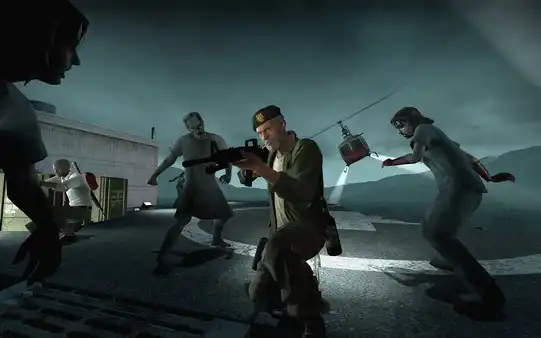
Rooftop pressure at night — one survivor holding the line as the horde closes in.
Details That Still Hold Up
What really makes Left 4 Dead timeless is its balance. It’s simple to pick up but layered enough to keep you hooked. Whether you’re charging through levels with a tight-knit group or relying on the game’s surprisingly smart AI, it delivers a different story every time you play. And that story is told through systems—combat, level flow, enemy spawns—not long-winded exposition.
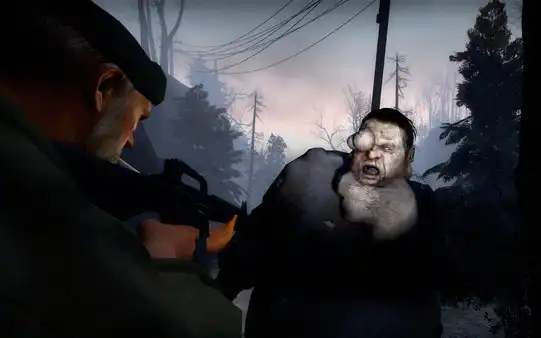
A close encounter with the Boomer — one mistake and the whole squad pays for it.
For anyone who values tight cooperative gameplay, responsive AI companions, and atmospheric tension, Left 4 Dead remains one of the best examples of how smart design can stand the test of time. It’s a zombie shooter, sure—but one that still teaches lessons most modern co-op games haven’t quite mastered. That’s why revisiting Left 4 Dead in 2025 still feels more rewarding than many of today’s newest releases.
If you’re into zombie games that mix brutality with strategy, you might also want to check out our review of Dead Island 2 and the SOLA DLC—a modern twist on undead mayhem with its own unique co-op dynamics.
Guest review by Wiggz
Edited and published by Ronny Fiksdahl, Founder & Editor of Fix Gaming Channel.
Enjoy our content? Support Fix Gaming Channel with a donation via
Buy Me a Coffee to help keep independent game journalism alive.