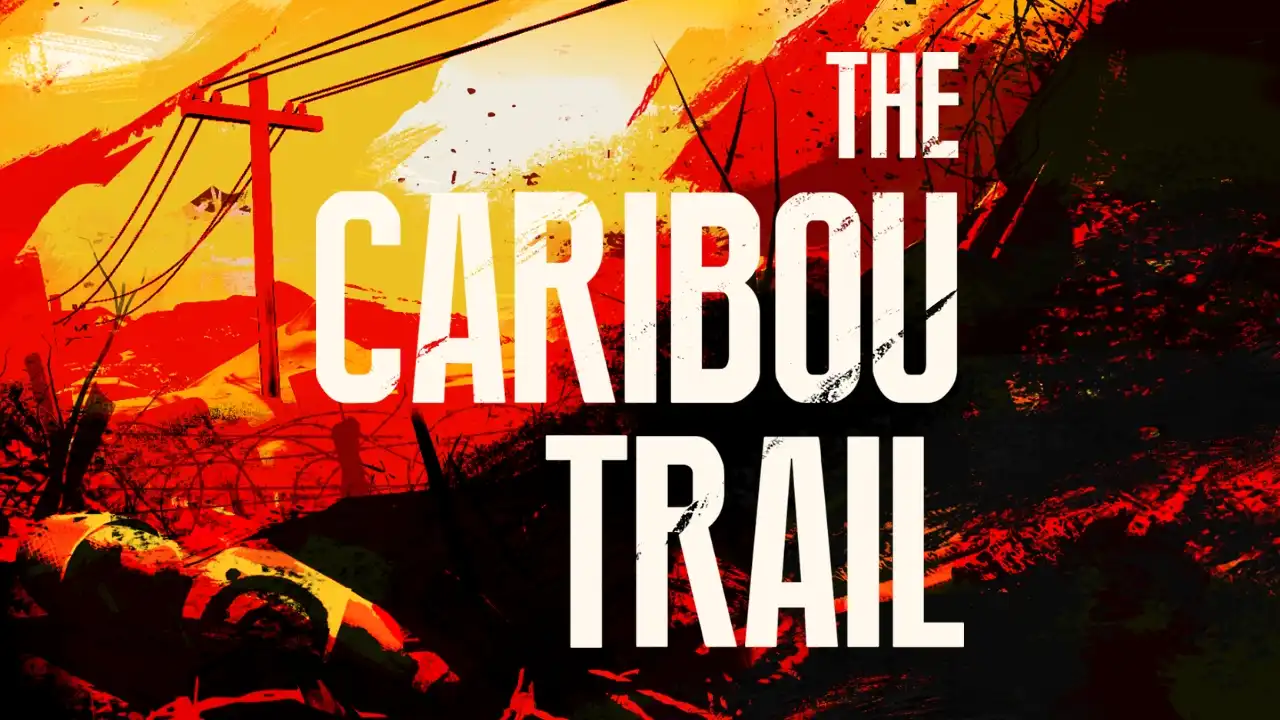
A Shorter Journey Than I Expected
The Caribou Trail is not the long war adventure I expected when I sat down for the night. It is a short, directed, story-heavy first-person experience set during the Gallipoli campaign of World War I, and while it looks beautiful and carries some strong atmosphere, it also left me wanting more room to breathe, explore, and connect with everything it was trying to say.
In practical terms, The Caribou Trail plays more like a guided narrative journey than a traditional war game. You move through trenches, follow orders, listen to conversations, read fragments of story, and complete small first-person interactions while the game pushes you through its version of the Gallipoli campaign. It uses the imagery and tension of war, but it is not built around combat, kill counts, or open-ended action.
As always, I went into The Caribou Trail without reading other reviews first. I am not even sure how many were out there before launch, and with embargoes there is always someone who jumps early, but that is another story for another day.
Maybe I should have read a little more about what kind of experience I was stepping into, because I had planned for a much longer session. I was rigged up and ready for a ten-hour journey, prepared to explore new territory, take my time, and settle into the world properly.
That was not really a mistake, though. It was more a case of old habits being hard to break. I often prepare for games as if they are going to take over the whole day, especially when they are narrative-driven and atmospheric. The Caribou Trail had other plans.
Reviewed on: PC via Steam
My full playthrough reached the credits in roughly three hours and eight minutes, unlocking 7 of 14 achievements along the way. That makes The Caribou Trail a short, focused narrative experience rather than a long campaign. Players aiming for every optional achievement may spend longer with it, but the main path is clearly built as one compact run.
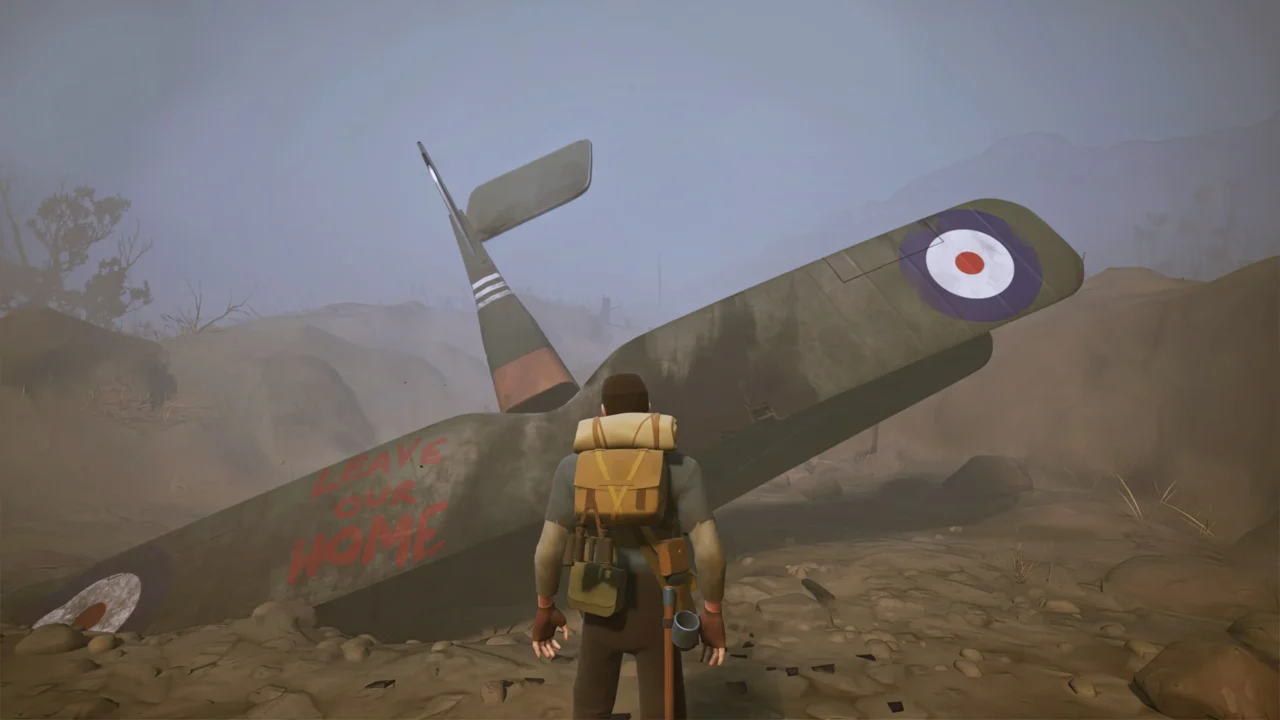
A striking WWI scene from The Caribou Trail.
The Caribou Trail – 32:9 Ultrawide Playthrough
I am also adding my playthrough video so you can see the game from my view, not just from screenshots or selected trailer moments. On my 32:9 49-inch ultrawide setup, The Caribou Trail looked solid, and at times, it had those small magic moments where the art, atmosphere, lighting, and setting worked really well together.
Join Our Newsletter
Stay updated with the latest interviews, previews, and indie gaming news from Fix Gaming Channel.
A Story You Have to Meet on Its Own Terms
Are you a survivor? Did you serve your nation? Do you connect deeply with war stories, military history, or personal accounts that sit somewhere between memory, trauma, and duty? If so, The Caribou Trail may speak to you differently than it spoke to me.
My own experience with war and military stories comes mostly from gaming. For me, that means games like Medal of Honor and that whole route, so I am not coming into this as someone with deep military knowledge or lived experience. I came into it as a player, ready to experience a story.
That matters, because The Caribou Trail is not a game that gives you much freedom. It asks you to listen, read, follow, and move through its story in a very directed way. Whether you enjoy that or not, you have to meet the game on its own terms.
A War Game Without the Usual Shooter Fantasy
One thing I should mention is that The Caribou Trail is set during World War I, and a lot of the experience has you moving through trenches, following directions, using a map, compass, and basic navigation like north, south, east, and west. You run around in a war setting, but this is not a traditional shooter. At least in my playthrough, I was not running around with a gun, building up a kill count, or being dropped into constant combat encounters.

Light action moments appear, but The Caribou Trail remains focused on story and atmosphere.
I did not kill anyone during the action parts, and I did not get killed either. That gives the game a different feeling from many war games. It is less about power and more about being pulled through a situation where you are part of something much bigger, and often worse, than yourself.
Small story moment discussed below.
There was one moment that stayed with me. I found myself with a hostage lying down, and the game gave me the choice to kill him or let him go. I chose to let him go. Then one of my fellow soldiers shot him in the head anyway.
That moment says a lot about the game’s tone. You can try to be kind, but war does not always care. Or, to put it in the most video game way possible: that is what you get for being nice in a video game.
Light Action, Strong Direction, Little Freedom
There are some light action moments and a few dramatic scenes, but they are used sparingly. They blend well into the story and never turn The Caribou Trail into a full action game. This is still very much a directed narrative experience first.
That direction is also where the game holds itself back a little. There is very little freedom here. At times, it feels like the game wants you to follow the exact emotional and physical path it has prepared, and if you step away from that, you are reminded quickly. In a longer game, that might not stand out as much, but because The Caribou Trail is so short, the lack of freedom becomes more noticeable.
I never really felt like I was moving from mission to mission. It felt more like a directed story, where the path is there, and you are being pulled through it. That works for the kind of story the game wants to tell, but it also means players looking for choice, exploration, or replayable systems may feel boxed in.
Cooking, Listening, and Missing the Point
There is also a cooking sequence where you get a few ingredients, a bowl of soup, and a spoon. You smash the ingredients up and down with the spoon while someone sits with you and talks. It is a small interaction, but it also shows how The Caribou Trail blends simple actions with storytelling.
The part I am still not fully sure about is whether I had to keep cooking, or whether I could have stopped, sat still, and just listened to the conversation. I did not test that, so I cannot say for sure. I cooked as soon as I could because, at that early point, I was still expecting a much longer game. I thought I had plenty of time ahead of me, so I did not treat every early story moment as something that might be important to the main thread.
That may be on me as a player, but it also says something about the pacing. Since the game is short and the story cannot be skipped, it is probably a good idea to listen closely from the start. Some of the conversations may carry more meaning than they first seem to, especially when the full experience only lasts a few hours.
Stories Inside the Story
The Caribou Trail asks you to listen a lot. There are stories being told, memories being shared, and written pieces of story inside the larger story. That is part of the experience, and when it works, it gives the game more weight and a stronger sense of place.
Not every story hit the same way for me. Some were interesting and helped pull me deeper into the setting, while others did not leave much behind. In a longer game, that balance might have worked better, because there would have been more time to sit with each voice, each moment, and each piece of history.
Here, the short runtime makes that harder. When my playthrough reached the credits in just over three hours, the amount of listening and reading sometimes felt bigger than the space I had to process it. It is clearly part of the game’s identity, but it also made some moments feel like they passed before they had fully settled.
A Beautiful Game on 32:9 Ultrawide
Visually, this is where The Caribou Trail works very well. On my 32:9 49-inch ultrawide setup, the game looked solid and atmospheric from start to finish. I had nothing serious to complain about when it came to graphics or gameplay. Performance was stable, and I did not run into crashes, major bugs, or broken progression.
There are moments where the art direction, lighting, and atmosphere come together in a way that looks beautiful. Both the trenches and the quieter moments have a strong visual identity, and the game often feels like it has been framed with care. It is not just technically fine; there are some magic moments of art and atmosphere here.
The only thing I noticed was a small visual issue I see far too often in games, where the camera or character positioning briefly gives you an odd look inside a character model. I am not a qualified game developer, so I will not pretend to know how hard that is to fix. I can only speak as someone who plays a lot of games, and from that side, it is something I notice too often. It is not a major problem here, but it is enough to mention.

Simple interactions help move the story forward through the trenches.
Sound, Music, and Atmosphere
The sound design and music are solid. They support the tone well, especially during the more tense or dramatic moments. The audio helps carry the atmosphere without getting in the way of the story.
It is not a soundtrack I would rush out to buy, but if it was offered as a free DLC or extra, I would probably add it to the library. It fits the game, even if it did not stay with me as much as the visuals and story direction did.
A Familiar Narrative Style
The Caribou Trail also comes from Unreliable Narrators, with Indie Asylum again involved as publisher. That connection makes sense when you play it. I previously covered Two Falls (Nishu Takuatshina), and there are familiar elements here in the visual style, the directed gameplay, and the way the story takes priority over traditional action.
If I remember correctly, Two Falls was also a shorter narrative experience compared to what I often expect when I sit down for a full session. For me, short does not mean bad. It means shorter than expected. Both games have a strong sense of art direction, and both show a team that clearly cares about atmosphere, presentation, and emotional storytelling.
That is where The Caribou Trail works best for me. Even when I wanted more freedom or more time inside the world, I could still see the craft in how it looked and felt. Like Two Falls, it is a game built around story, mood, and perspective more than mechanical depth.
How Long Is The Caribou Trail? Length and Value
At $12.99 USD / $16.99 CAD, the value depends on what you expect from it. If you measure games mainly by hours, this may feel short. If you are comfortable with compact narrative games that can be finished in one or two sittings, the price is easier to accept. For me, the quality is there, but the short runtime does make the package feel slightly limited.
This is not a game for players looking for a long campaign, open exploration, or deep mechanical freedom. It is better suited for players who enjoy short narrative experiences, historical settings, emotional storytelling, and walking through a carefully directed journey from beginning to end.
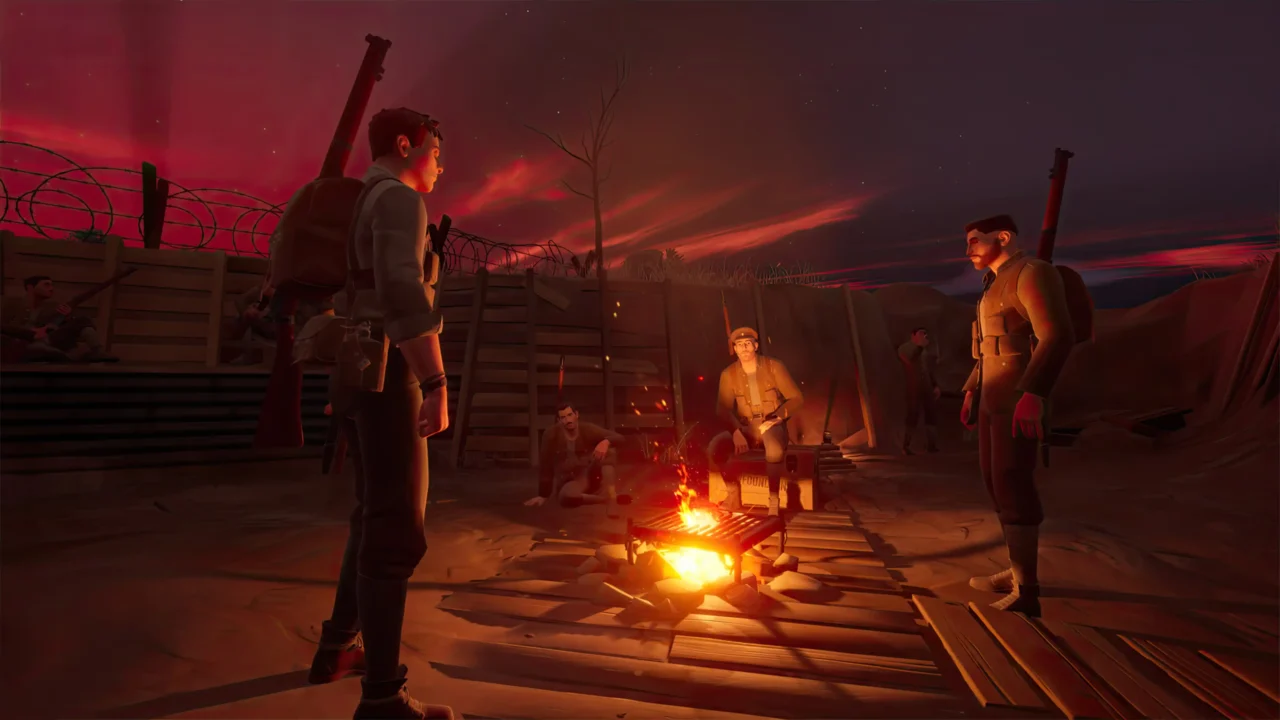
The Caribou Trail often works best in its quieter story-driven moments.
If you are looking for a two-day or week-long game where you play a couple of hours each night, this is probably not that. For me, it was one full run. Some players may stretch it across two sittings, especially if they take their time and look for every achievement, but the main path is short and focused.
The Caribou Trail
Release: May 14, 2026
Price: $12.99 USD / $16.99 CAD
Genre: Action, Adventure, Casual, Indie
Developer: Unreliable Narrators, Manavoid Entertainment
Publisher: Unreliable Narrators, Indie Asylum
Platforms: Steam, Epic Games Store, PlayStation 5 — released July 7, 2026
Languages: English and French voice + subtitles
Verdict
The Caribou Trail is a visually strong and emotionally directed narrative experience with solid performance, good atmosphere, and a clear sense of purpose. It looks beautiful on 32:9 ultrawide, it runs well, and it has moments where the art and tone really come together.
At the same time, its short length, limited freedom, uneven story delivery, and very directed structure hold it back from being more memorable for me. I enjoyed it, but I also finished it sooner than expected and left with the feeling that some parts needed more room to settle.
A short, focused, beautiful war story that works best when you accept it as a guided narrative experience, not a long-form campaign or traditional war game.
Related Reading
Two Falls (Nishu Takuatshina) Review
Steam Games Under Two Hours: Short Games Worth Playing
Fix Gaming Channel’s 32:9 Super Ultrawide Series
Written by Ronny Fiksdahl, Founder & Editor-in-Chief of Fix Gaming Channel.
Send interview pitches, corrections, tips, or developer stories to contact@fixgamingchannel.com.
Support independent games coverage on Ko-fi.