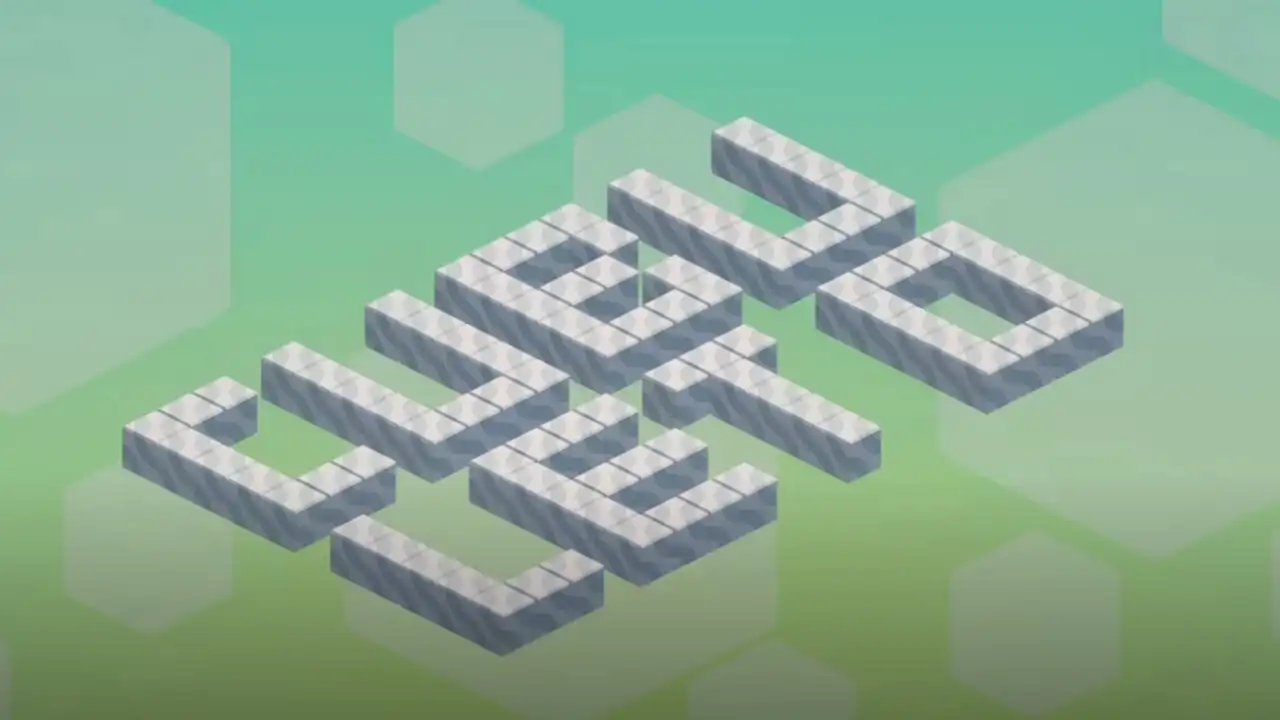
A puzzle idea from ten years ago, rebuilt with everything I’ve learned since
The original idea behind Cubuleto came from a concept I imagined about ten years ago while I was teaching myself how to use Unity 3D.
Before that, I had been programming mainly in C++ using SDL, experimenting with small projects and trying to understand how game engines were structured.
Unity felt like a completely new world to me at the time, and I was fascinated by how quickly I could see visual results compared to writing everything from scratch.
That excitement pushed me to prototype ideas rapidly, without worrying too much about structure or long-term maintainability.
This is part of Fix Stories — dev-authored journeys published on Fix Gaming Channel.
Cubuleto — Official Trailer
Steam page
Developer YouTube channel
Official trailer.
Join Our Newsletter
Stay updated with the latest interviews, previews, and indie gaming news from Fix Gaming Channel.
How it started
As you can notice in the early footage, both the graphics and the UI looked amateurish rather than professional.
Still, the core idea was already there.
The main mechanics involved navigating over a grid of cubes and interacting with teleporters of different colors, walls, and obstacles in order to reach a goal block marked in black.
Even if the presentation was simple, the puzzle logic already felt interesting and had potential for depth.
At that time, my code was extremely unorganized.
I had no idea about design patterns, data serialization, unit testing, or any kind of proper software architecture.
I was coding purely by intuition and experimentation.
My main motivation was the excitement of possibly having a game listed on Google Play and the naive dream of impressing people in college by saying I had released a game.
That ambition was fun, but it was also unrealistic because I lacked experience in finishing and maintaining a complete product.
Unsurprisingly, the project slowly lost momentum and eventually died.
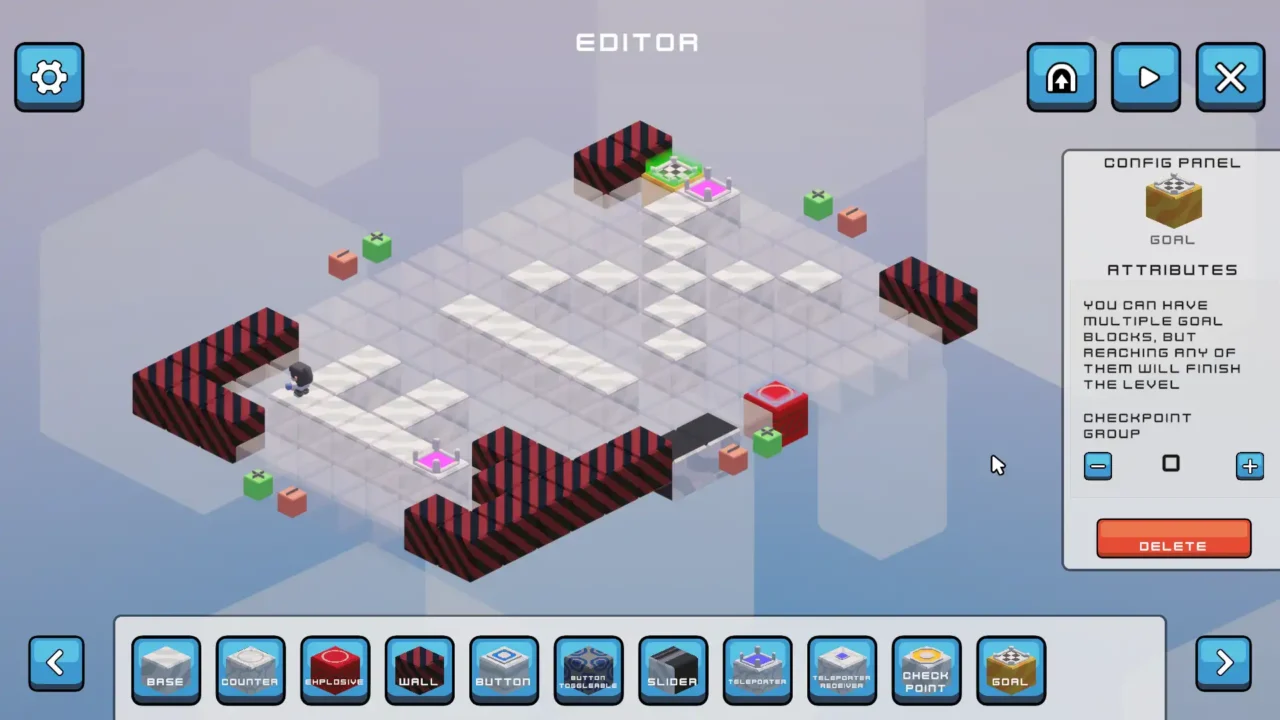
Place bases, walls, buttons, sliders, teleporters, checkpoints, and more.
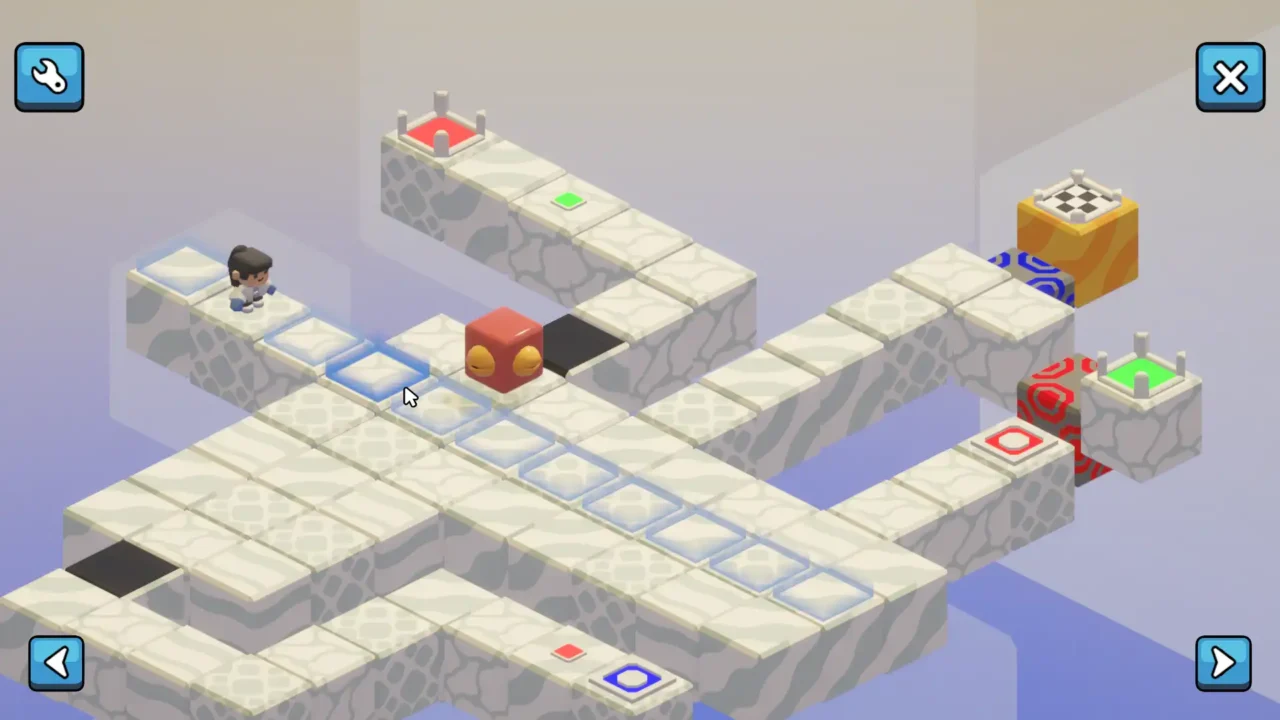
Color-coded teleporters and pressure switches force careful route planning.
How it is going
During the last ten years, I accumulated a lot of knowledge, both technical and business related.
I worked on different projects, learned how to structure code better, how to think about scalability, and how to approach development with a more professional mindset.
At some point, I realized that Cubuleto still had potential and deserved a second chance.
I gathered a budget of around 10,000 euros and hired a friend to help me.
We also decided that this time the game would be developed primarily for PC, while keeping a possible mobile port in the backlog.
This decision was based on better tooling, easier testing, and a more flexible release pipeline.
We worked together from the beginning of last summer until December.
The original game idea was used as a reference, but we expanded it significantly.
We added many new types of cubes with different behaviors, enemies that would follow and pressure the player, and layered structures of cubes that would activate when specific conditions were met.
This added more strategic depth and required players to think ahead rather than just react.
Play the Demo and Wishlist Cubuleto on Steam
The graphical aspect was also very important to us.
We wanted the game to be pleasant to look at without being overly complex or heavy on computational resources.
The goal was to find a balance between simplicity and visual appeal, so that the game could run smoothly even on lower-end systems while still looking polished and professional.
Original gameplay prototype (2015)
Watch the 2015 prototype gameplay on YouTube
Early Unity prototype footage from the original concept phase.
Level creation challenges
One of our biggest struggles was level creation.
Levels were basically JSON files loaded into a gameplay scene.
While this was flexible, it also meant that much of the process was manual.
My colleague created a utility tool to help with this, but a large part of the workflow still required manual input and testing.
This took a lot of time, especially because every level had to be tested by hand.
Using an AI to solve and validate levels was out of discussion at that point, both because of complexity and time constraints.
Designing puzzles that were challenging but fair required multiple iterations, and sometimes a level that looked ok on paper turned out to be frustrating or trivial in practice.
I eventually created a level editor directly inside the game.
When it started to show promise, we decided to fully integrate it into the project.
That moment changed the direction of Cubuleto significantly.
We realized that if we had a solid editor, we could allow players to create their own levels.
This led to the idea of a community-driven content system, where players could upload and share their creations.
To ensure quality, we introduced a requirement: a player must play and finish their own level before uploading it.
This helped filter out broken or impossible levels.
Players can also browse and play levels created by others.
In the final version, the full game contains 250 built-in levels, while the demo includes 25.
Toughest moment
The toughest moment came at the end of November, when I ran out of budget for my colleague and had to continue working alone.
Since I was, and still am, involved in other projects, progress slowed down significantly.
It was a stressful period that forced me to rethink my scheduling and priorities.
This experience taught me how important it is to plan budgets realistically and to allocate both time and money with greater precision.
Even small teams need proper project management, otherwise delays become unavoidable.
Like any team, even one with just two people, we had moments of uncertainty.
Sometimes we did not know what to focus on.
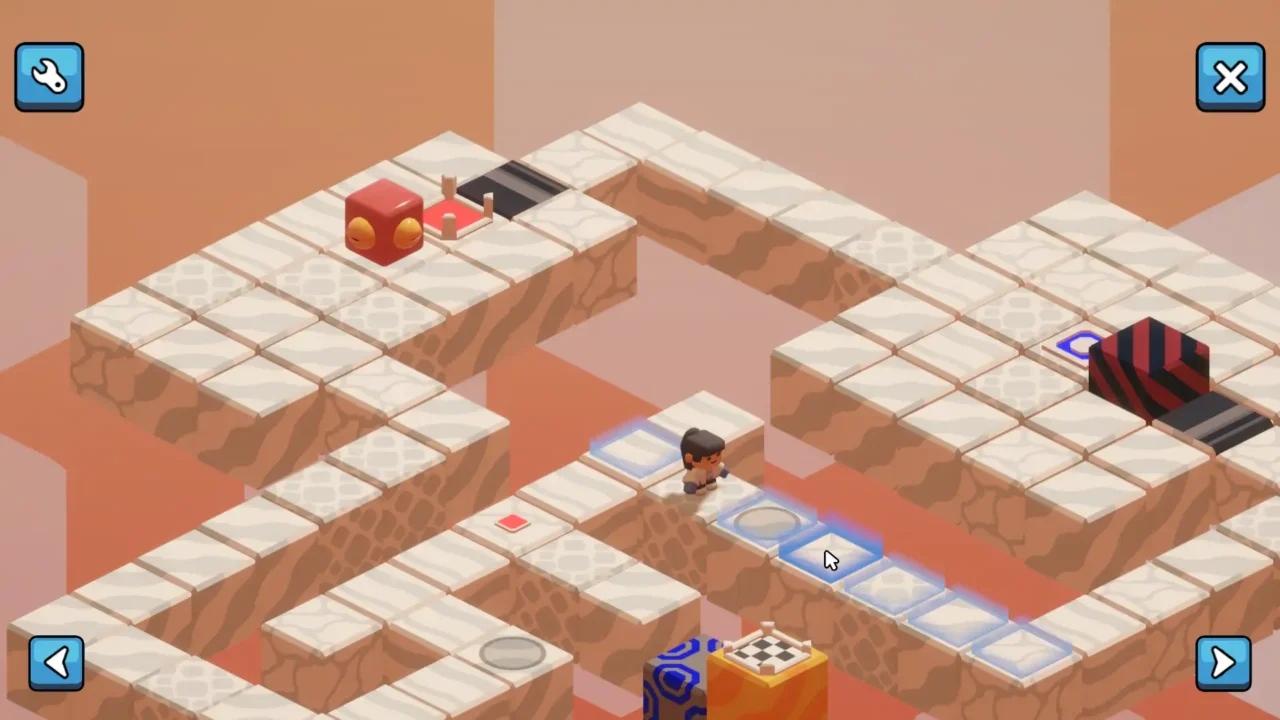
Verticality and timing add extra layers to the logic.
Sometimes new ideas appeared in the middle of development and distracted us.
Other times, we found bugs that were extremely difficult to solve and took far more time than expected.
These moments were frustrating, but they were also valuable learning experiences.
Launch story
I launched the demo a few months ago.
The response was very encouraging.
It was well received not only by friends but also by people from Reddit, Discord, and other gaming communities.
That feedback gave me confidence that the project was worth pushing forward.
The full game is currently under review on Steam, and if everything goes well, it should be available by the end of this month (January 2026).
At the same time, I am actively collecting advice and reading articles about marketing and promotion.
I am trying to find a balance between making the game visible and avoiding spam or aggressive advertising.
Lessons learned
In summary, this journey taught me how to plan a game more carefully, how to leave enough time for marketing, how important constant feedback is, and how important it is to have realistic expectations.
Most importantly, it reminded me that development should still be enjoyable, even when it becomes difficult or stressful.
If you enjoy what you are working on, it never truly feels like work.
Related reading
- Cubuleto on Steam
- HunterByte Digital — Cubuleto trailers & updates
- Fix Stories — Dev-authored stories on Fix Gaming Channel
Written by Stefan Tincescu
Edited by Ronny Fiksdahl, Founder & Editor of Fix Gaming Channel.
Enjoy our content? Support Fix Gaming Channel with a donation via
Buy Me a Coffee to help keep independent game journalism alive.