



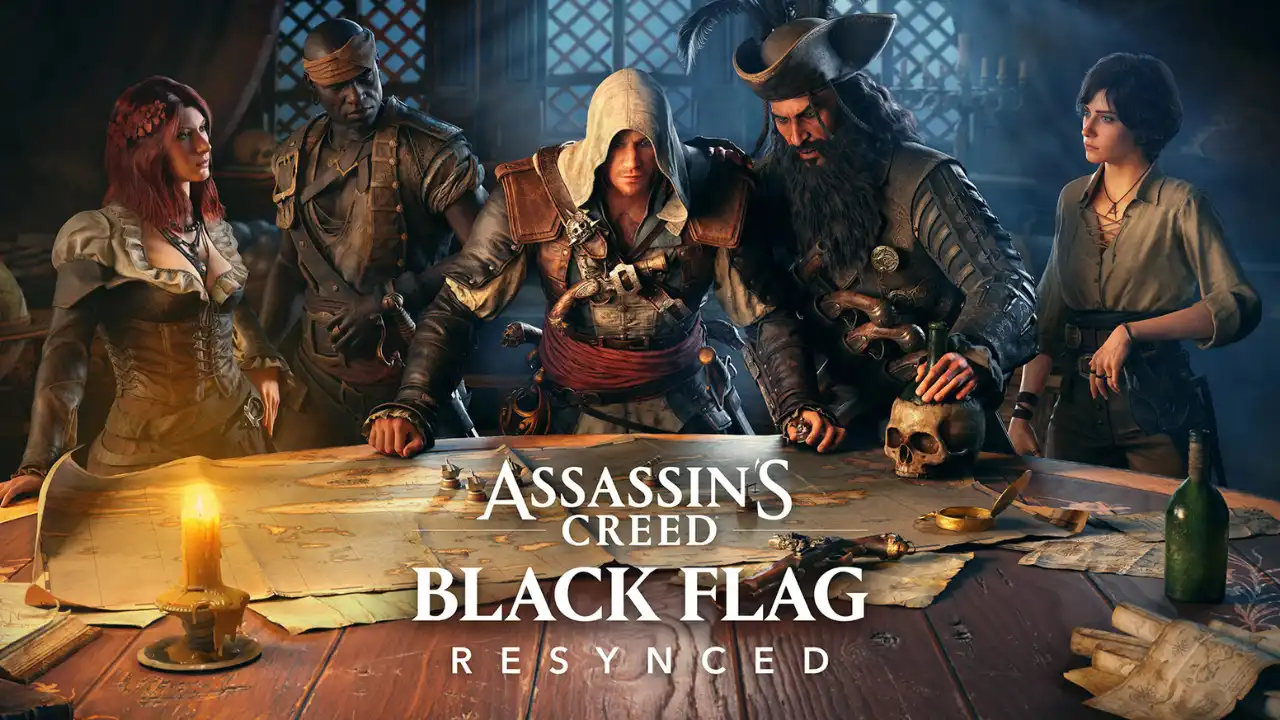
Black Flag’s Success Creates a Tempting Opportunity for Ubisoft
The remarkable launch of Assassin’s Creed Black Flag Resynced has proved that players will return to an older adventure when the overhaul offers more than sharper textures. The question is whether Ubisoft will now give another established entry the same treatment.
Ubisoft took a calculated risk by rebuilding one of the strongest entries in the Assassin’s Creed franchise. Based on the early figures, that decision appears to have paid off.
Assassin’s Creed Black Flag Resynced sold two million copies on its first day following its July 9, 2026 release. Within its first week, sales had passed three million. The game also reached 99,451 concurrent players on Steam during its opening 24 hours, setting a new franchise record on the platform.
Those figures become even more impressive when the game being rebuilt originally launched in 2013. As we covered in our earlier look at Assassin’s Creed Black Flag Resynced, this is a complete remake rather than a routine resolution upgrade.
Assassin’s Creed Black Flag Resynced Trailer
Join Our Newsletter
Stay updated with the latest interviews, previews, and indie gaming news.
Why the Resynced Approach Worked
The performance of Black Flag Resynced shows why the idea has more potential than a conventional remaster. Ubisoft did not simply increase the resolution and send Edward Kenway back to sea.
The remake was rebuilt using the latest version of the company’s Anvil engine. It introduced parry-driven combat, expanded stealth options, improved parkour, deeper naval mechanics, updated environments, new story scenes, and additional missions.
A new endgame chapter also expands Blackbeard’s story through eight additional missions. These additions give returning players something unfamiliar to discover instead of asking them to purchase the same adventure with cleaner lighting.
That distinction is likely one of the main reasons the remake avoided feeling like another routine re-release. Players already knew the characters, world, and central story. The new version gave them a reason to experience those elements again.
The project also brought together teams across Ubisoft’s international network. Our feature on the Filipino developers behind Black Flag Resynced examined how Ubisoft Philippines contributed to locations, animation, naval systems, and other parts of the remake.
A Safer Bet Than Building Something New?
For executives examining development budgets, the attraction is clear. Building a new franchise requires players to accept an unfamiliar world, cast, story, and gameplay structure. A remake begins with something the audience already recognizes.
That does not make development cheap or straightforward. A project like Black Flag Resynced still requires years of production, updated technology, redesigned systems, new content, testing, marketing, and coordination between several studios.
It does, however, remove one major uncertainty: whether players care about the original idea.
Black Flag already had a dedicated audience. The remake gave that audience a modern version while also providing a clear entry point for players who never experienced Edward Kenway’s story on older hardware.
The result may encourage Ubisoft to search its catalog for another game with a recognizable setting, a proven following, and enough room for improvement to justify a substantial rebuild.
Could Assassin’s Creed Odyssey Be Next?
Assassin’s Creed Odyssey appears to be one of the strongest commercial candidates.
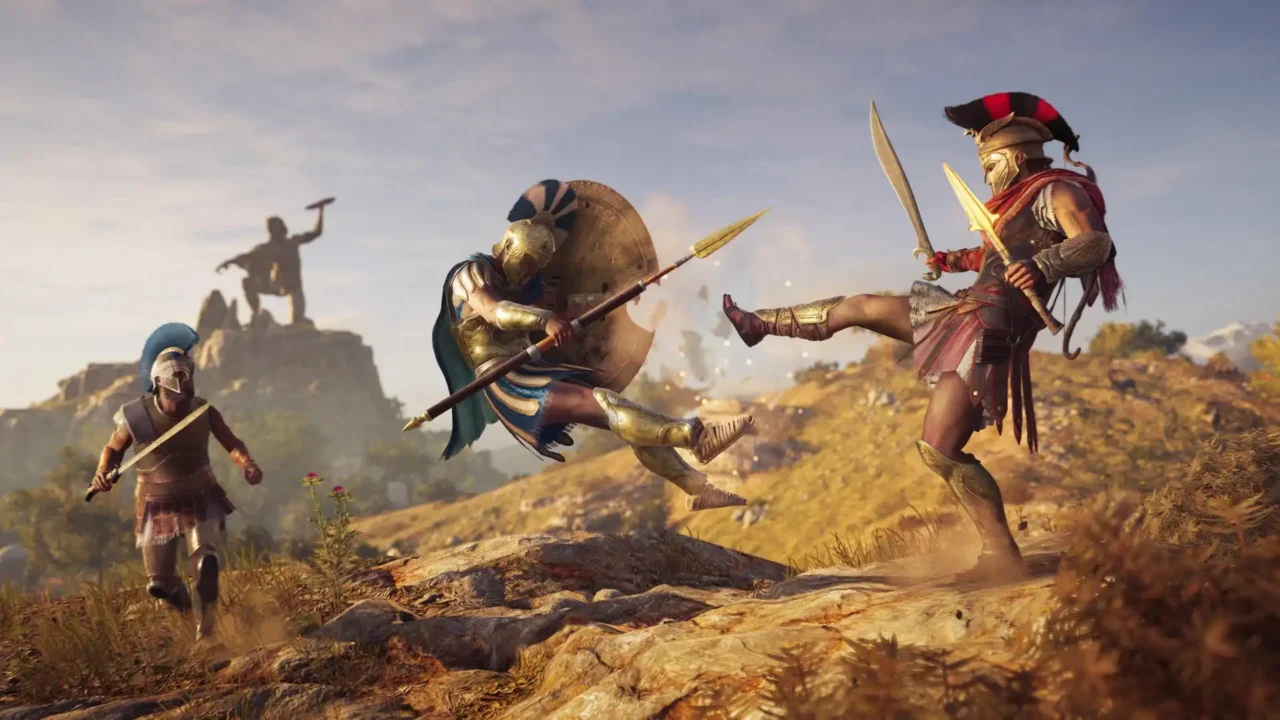
Released in 2018, the game’s enormous recreation of Ancient Greece, choice-driven dialogue, naval exploration, mercenary system, and two possible protagonists gave it an identity that remained distinct as the franchise moved toward Valhalla and Shadows.
A fully resynced version could introduce denser settlements, improved facial animation, more natural crowd behavior, revised combat feedback, smoother naval movement, and a less intrusive approach to some of the original game’s progression systems.
The challenge is that Odyssey already looks and plays like a comparatively modern release. A new edition would therefore need to offer substantial mechanical and narrative additions rather than rely on technical improvements alone.
There is also a timely cultural opportunity. Christopher Nolan’s film adaptation of The Odyssey arrived in July 2026, placing Greek mythology and the journey of Odysseus back into mainstream entertainment.
That renewed attention does not automatically translate into increased interest in the game, but it creates an obvious connection for a marketing department. Ubisoft already has one of gaming’s largest interactive recreations of Ancient Greece waiting in its catalog.
Would Assassin’s Creed III Justify Another Return?
Assassin’s Creed III presents a more complicated case.
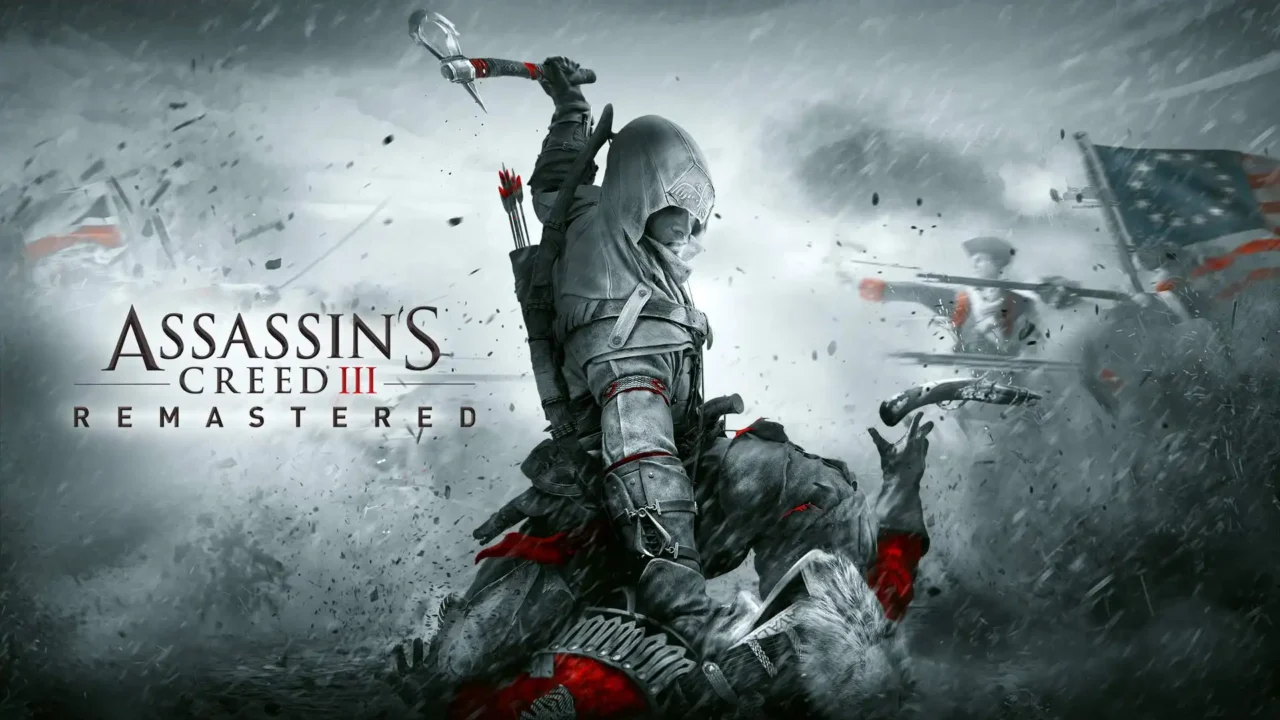
Connor’s story has already been revisited through Assassin’s Creed III Remastered, which launched in 2019 for PlayStation 4, Xbox One, and PC before arriving on Nintendo Switch.
That version included higher-resolution textures, 4K and HDR support, updated character models, revised environment rendering, gameplay adjustments, the original single-player DLC, and Assassin’s Creed Liberation Remastered.
Because that remaster already exists, a second visual upgrade would be difficult to justify. A proper Resynced edition would need to rebuild the experience much more aggressively.
The original game had ambitious ideas. Its American Revolution setting, changing seasons, frontier exploration, naval missions, large battles, homestead community, and focus on Connor’s personal conflict created one of the broadest games in the early series.
It was also criticized for slow opening hours, restrictive mission design, uneven pacing, and objectives that frequently punished players for approaching situations differently from the intended route.
A remake could address those problems by restructuring the introduction, giving players more freedom during missions, rebuilding stealth, improving crowd behavior, and developing Connor’s relationships with greater depth.
That makes Assassin’s Creed III the more interesting creative option, although perhaps not the safest financial choice.
The Shadow of Skull and Bones
The success of Black Flag Resynced also invites an unavoidable comparison with Skull and Bones.
Skull and Bones Launch Trailer
Skull and Bones began life with connections to the naval systems of Black Flag, but eventually became a very different product. It focused on live-service progression and ship combat rather than delivering the wider pirate fantasy of exploring cities, boarding vessels, fighting on foot, and following a central character-driven story.
It found an audience, but it did not become the clear successor to Black Flag that some players had imagined during its long development.
By returning directly to Edward Kenway, Ubisoft returned to the pirate experience players had already embraced. For more games built around the same fantasy, our list of the best pirate games to play in 2026 includes both the original Black Flag and several modern alternatives.
The Risk of Turning Resynced Into a Formula
There is still a danger in repeating the approach too often.
Players are unlikely to support an endless line of full-price reissues that offer little beyond improved lighting and higher-resolution assets. The early success of Black Flag Resynced should not be interpreted as automatic approval for every remake Ubisoft could produce.
The strength of the Resynced idea is that it sits between a remaster and a completely different reimagining. It preserves the central identity of the original while correcting systems that have aged and expanding parts of the game that were previously limited by technology, budget, or production time.
Another title would need the same level of purpose.
Odyssey would need enough additional content and systemic improvement to justify rebuilding a game that remains highly playable. Assassin’s Creed III would need a deeper reconstruction capable of improving the original structure rather than simply remastering it for a second time.
Odyssey Is the Safe Choice, but Assassin’s Creed III Has More to Gain
Ubisoft has not announced that either game is receiving the Resynced treatment, so for now this remains speculation.
If the company prioritizes audience size, recognizable imagery, and an experience that still feels relatively modern, Assassin’s Creed Odyssey appears to be the safer candidate.
If it wants to demonstrate how extensively an older game can be improved, Assassin’s Creed III may offer the more valuable opportunity.
The biggest lesson from Edward Kenway’s return is not simply that nostalgia sells. Nostalgia may attract attention, but the remake still needs to respect the player’s time and offer a stronger version of the original experience.
For now, players can return to the Caribbean and enjoy the resynced adventures of Edward Kenway. Somewhere inside Ubisoft, however, it would be surprising if somebody was not already examining the numbers and asking which Assassin should return next.
Assassin’s Creed Black Flag Resynced
Release: July 9, 2026
Genre: Action-adventure
Developer / Publisher: Ubisoft Singapore / Ubisoft
Platforms: PlayStation 5, Xbox Series X|S, and PC
Related Reading
Assassin’s Creed Black Flag Resynced Sets Sail on July 9
The Filipino Developers Behind Assassin’s Creed Black Flag Resynced
10 Must-Play Pirate Games for 2026
Written by Aidan Minter, Writer at Fix Gaming Channel.
Send interview pitches, corrections, tips, or developer stories to contact@fixgamingchannel.com.
Support independent games coverage on Ko-fi.