



Why the Full Game Goes Further Than Its Demos Suggest
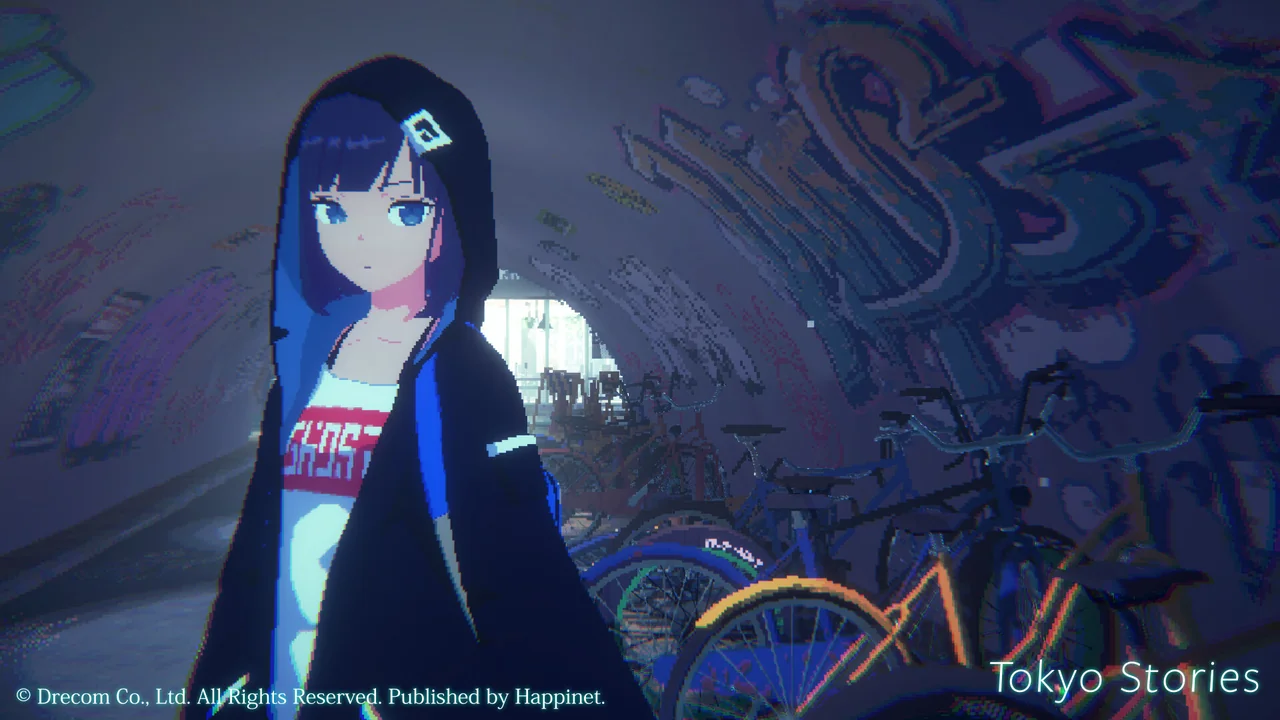
Tokyo Stories opens quietly, but producer and director Yuki Ikeda says there is more to the game than walking through its deserted streets. In our written interview, he discusses the project’s ambitious scope, the changing relationship between Suzu and Yuno, and what the team wants players to notice beyond the trailers.
The questions were sent ahead of Tokyo Game Show 2026, as part of the same remote interview arrangements as our ANOMALITH conversation with Gai Kidokoro. Below, Ikeda talks about development support from Happinet and CharacterBank, the detail in the city’s back alleys, and doing things differently from rain.
Tokyo Stories Official Trailer
Watch Tokyo Stories: The Night Moves Again
More Conversations With Game Developers
Hear from the people making the games on your wishlist.
Join Our Newsletter
Stay updated with the latest interviews, previews, and indie gaming news.
Holding On to the Original Vision
Tokyo Stories has been shown publicly in different forms for several years now. Looking back at the original version of the project and comparing it with the game today, what has changed the most that players might not immediately notice from screenshots or trailers?
Thinking about it now, perhaps very little has changed.
Terashima and I have continued working to bring the vision we originally imagined to life. That said, the content we’ve experienced along the way may have influenced us, so there may be some subtle changes in the finer details.
Tokyo itself has changed considerably due to ongoing redevelopment, but the Tokyo depicted in the game hasn’t been affected all that much by those changes.
The additional development time has clearly allowed the project to continue evolving. Was there a particular moment, piece of player feedback, or internal decision that significantly changed the direction of the game?
We haven’t made any major changes to the overall direction of the game. However, the scope we originally envisioned proved far too ambitious to complete as planned, so we’ve repeatedly reassessed how to bring the project to life while staying true to what we wanted to create.
Some players have commented that the demos released so far make the game look like it’s just about walking around. The slow pace at the beginning is intentional, but how to communicate that there are a variety of gameplay experiences in the later sections, each tailored to its own scene, is something we’ve discussed extensively as a team.
Support, Scope, and the Tokyo Game Show Demo
Happinet joined Tokyo Stories as publisher in 2026, with CharacterBank also providing development support. What has that partnership allowed you to do with the game that would have been difficult for the original team alone?
The biggest difference is that we now have an environment where we can focus on development. In addition to financial support, having CharacterBank join us as a development partner has made a significant difference to both our ability to improve the game’s quality and the efficiency of the development process.
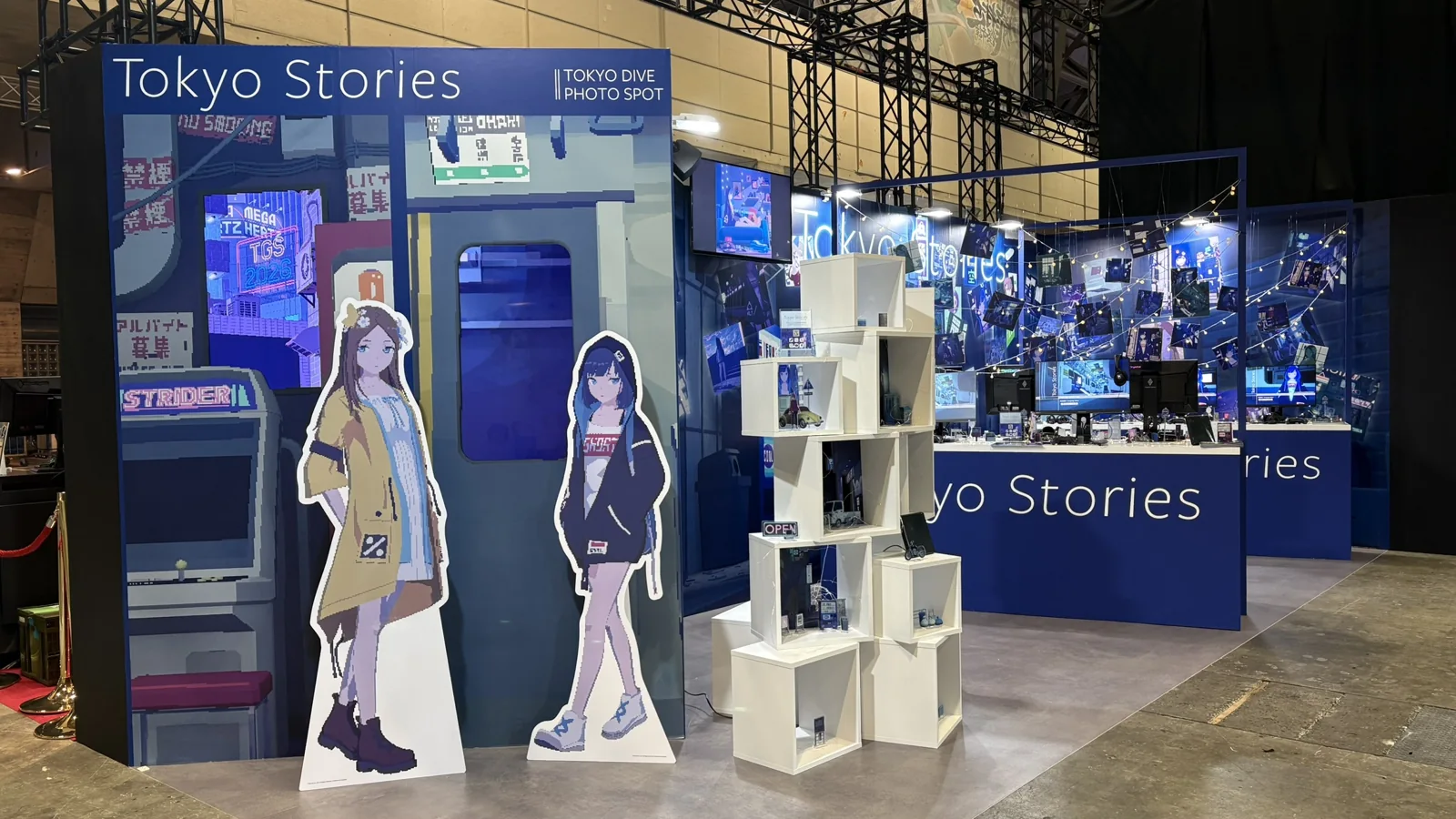
On the promotional side, we’ve also been able to reach audiences on a scale that wouldn’t have been possible for a small team alone. This includes exhibiting at TGS, launching the “TOKYO DIVE 360°” promotion, and establishing a presence on Chinese social media. We’re truly grateful for the support, which has been a tremendous source of reassurance for us.
Players at Tokyo Game Show are getting another opportunity to play the game. What did you specifically want this latest TGS demo to communicate about Tokyo Stories that earlier demos perhaps couldn’t?
The demo itself hasn’t changed significantly from the versions we’ve showcased in the past.
We would have liked to show players new areas and situations, but we decided to prioritize development of the full game instead. We are planning to release new demos and other opportunities to experience the game as we approach launch, so we hope you’ll look forward to them.
The Details Behind the Deserted Streets
You have also launched TOKYO DIVE 360°, allowing people to explore the game’s world and discover hidden information and items online. Is this purely an extension of the TGS presentation, or does the idea of carefully observing a location and discovering details also reflect how you want players to approach the full game?
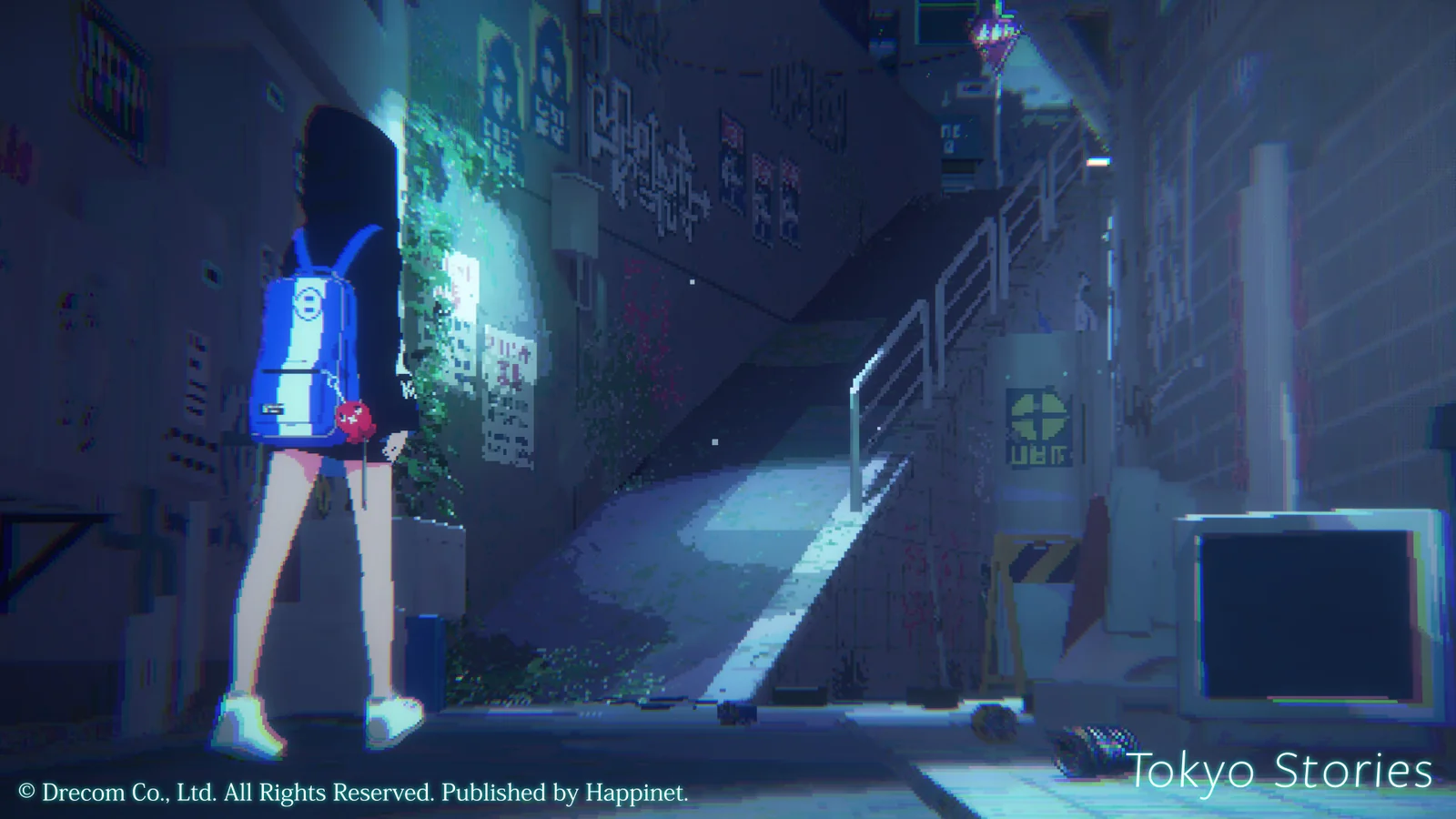
The idea started with wanting people who couldn’t attend TGS to have the opportunity to walk through the world of Tokyo Stories, but we also wanted to encourage them to take their time and look around carefully. We’ve filled the game’s back alleys with details such as outdoor air-conditioning units, pipes, stickers, and posters, perhaps even to an excessive degree. We designed these environments so that players could sense the atmosphere of each place and feel the presence of the people who once occupied it.
In the full game, we think players will enjoy the experience even more if they pay attention to every corner of the fixed-camera scenes and wonder what might lie further down each alley as they explore.
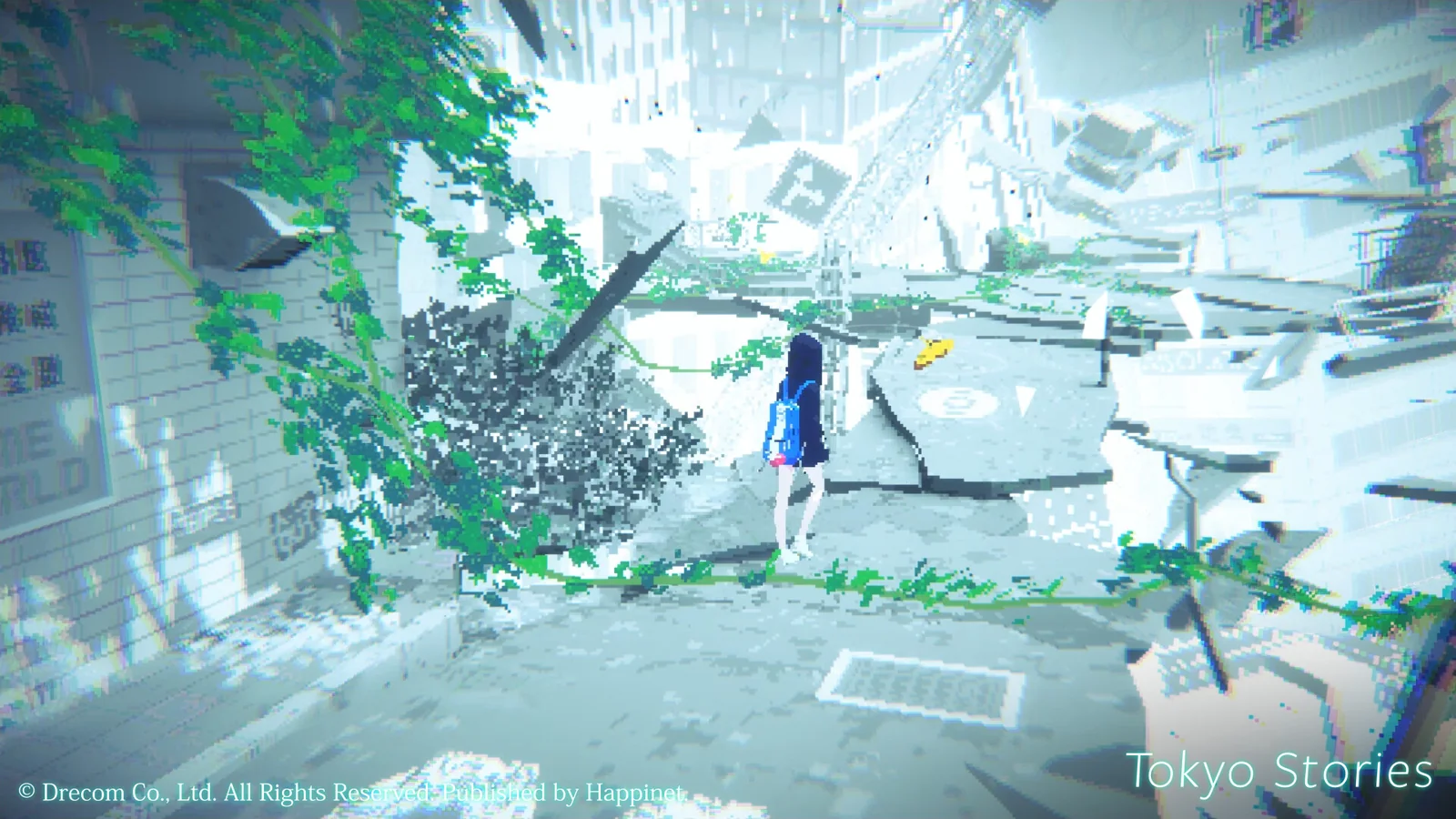
Tokyo Stories follows several characters whose stories overlap around a Tokyo where everyone has disappeared. How difficult is it to give players enough information to form their own theories while still protecting the larger mystery?
Many games these days move their stories along at a fast pace, so I understand that some players may find the slow opening of Tokyo Stories a little frustrating. At the same time, if we explained everything from the start, players wouldn’t have the opportunity to share in Suzu’s sense of uncertainty.
As the plural Stories in the title suggests, multiple stories overlap in this version of Tokyo. The biggest challenge is deciding which stories to reveal and in what order. Rather than leaving things ambiguous all the way to the end, the narrative develops substantially in the full game. In the meantime, we hope players will enjoy having the space to think, speculate, and imagine what might be happening.
What Tokyo Stories Does Differently From rain
You and Seiichi Terashima previously worked together on games including rain. A lot is naturally said about the similarities between those projects and Tokyo Stories, so we’d like to turn that around: what is something you deliberately wanted to do differently this time because of what you learned from those earlier games?
The biggest difference is the characters. In rain, the protagonist was invisible and had no dialogue, whereas in Tokyo Stories, we’ve portrayed Suzu and Yuno as contemporary characters who communicate through actual conversations. We’ve also been careful not to make Suzu too passive, and I hope her feelings will resonate with players and move them, even if only a little.
The setting is another difference. When we worked on rain, we were strongly drawn to the idea of depicting a city overseas, but this time we chose Tokyo, a place that represents our own roots. We’ve also taken a different approach to the music by working with Newly, a hip-hop beatmaker rather than a traditional video game music composer. That, too, has been a new challenge for us.
Finally, what do you think will surprise players most about Tokyo Stories once they get beyond what has been shown in the trailers and public demos?
I think players will be most surprised by how the story gradually gathers momentum, moving beyond the quiet atmosphere established at the beginning. As the reasons behind Tokyo’s deserted streets and what happened between Suzu and Yuno are gradually revealed, Suzu herself also begins to change.
In terms of gameplay, there’s much more than exploration alone. Each scene offers a different kind of experience, and I hope there will be moments when players think, “So this is what the game is all about!”
For another conversation about how music shapes a game’s identity, read our interview with composer Benedict Nichols.
Tokyo Stories
Release: To be announced
Genre: Adventure
Developer / Publisher: Drecom Co., Ltd. / Drecom Co., Ltd., Happinet
Platforms: PC (Steam); consoles announced, specific platforms to be confirmed
Related Reading
ANOMALITH Interview: Gai Kidokoro on Showa-Era Horror and Survival
Behind the Scores: An Interview With Benedict Nichols
Written by Ronny Fiksdahl, Founder & Editor-in-Chief of Fix Gaming Channel.
Send interview pitches, corrections, tips, or developer stories to contact@fixgamingchannel.com.
Support independent games coverage on Ko-fi.