

A Self-Taught Creator’s Struggle With Android Testing and Two Storefronts
In this first-person account, Tony, known online as Landers2K, shares the stops, restarts, and lessons behind his first mobile game.
For years, Tony kept putting off the game he wanted to make. When he finally began, Android testing led him to shelve the project for months. He eventually returned, finished Don't Tap Red, and navigated two separate mobile-store launches. This is his story, told in his own words for Fix Stories.
Watch Don't Tap Red in Action
Watch the official 18-second Arcade gameplay clip.
Stories From the People Making Games
Read more first-person development stories, indie gaming news, and interviews from the people behind the games.
Join Our Newsletter
Stay updated with the latest interviews, previews, and indie gaming news.
From “one day” to day one: making my first game alone
By Tony (Landers2K), LNDRS Studio
Hi, I’m Tony, but most people online know me as Landers2K. I’m 32, I’m from Paris, and I make gaming content on TikTok, YouTube and Twitch. A few days ago, I released my very first game, Don’t Tap Red, on iPhone and Android.
Here’s how it happened.
Always “one day”
I’ve always loved the other side of video games. Not just playing them, but understanding how they’re made: the code, the logic, the little details that make a game feel good. For years I told myself I would try it one day. And for years, “one day” kept moving, because there was never enough time.
About seven months ago, I stopped waiting. I’m completely self-taught: no school, no studio, no team. Just Godot, my own skills, a lot of trial and error, and a lot of late evenings.
And then I stopped. My first tests on Android were a struggle: things that worked on my computer didn’t work the same on a phone, and I got stuck. So the project went into a drawer for months.
About a month ago, I opened it again. This time I didn’t let go. I’ve been working on it nonstop ever since, and that last month is when Don’t Tap Red really became a game.
Why this game
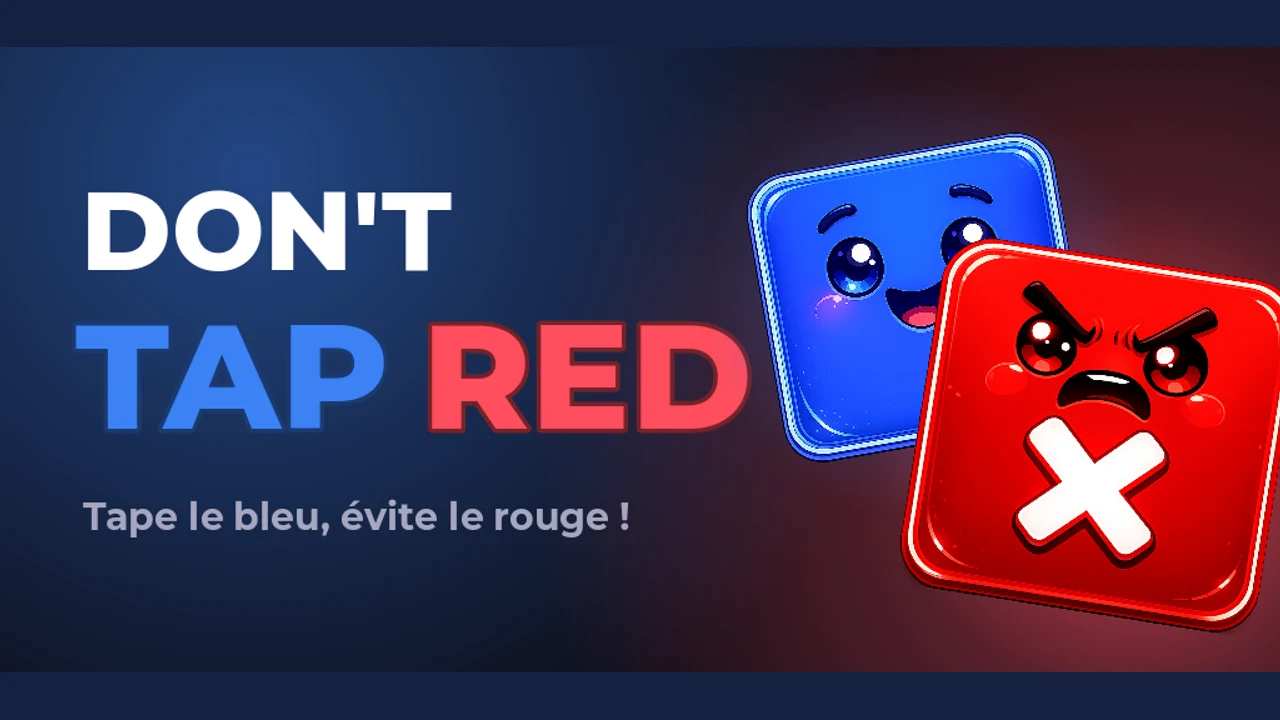
I didn’t want my first project to be a giant game I would never finish. I wanted something small, fun and addictive, a game you understand in one second and can’t put down. The rule fits in one sentence: tap the blue, never touch the red.
Of course, “small” didn’t stay small for long. Every time I played, I had a new idea. The cubes started moving, speeding up, multiplying. Then came other modes: Rain, where cubes fall from the sky, Chrono, with 60 seconds to get the best score, and Challenge, with 20 worlds to beat. Then skins, missions, levels, leaderboards, friends…
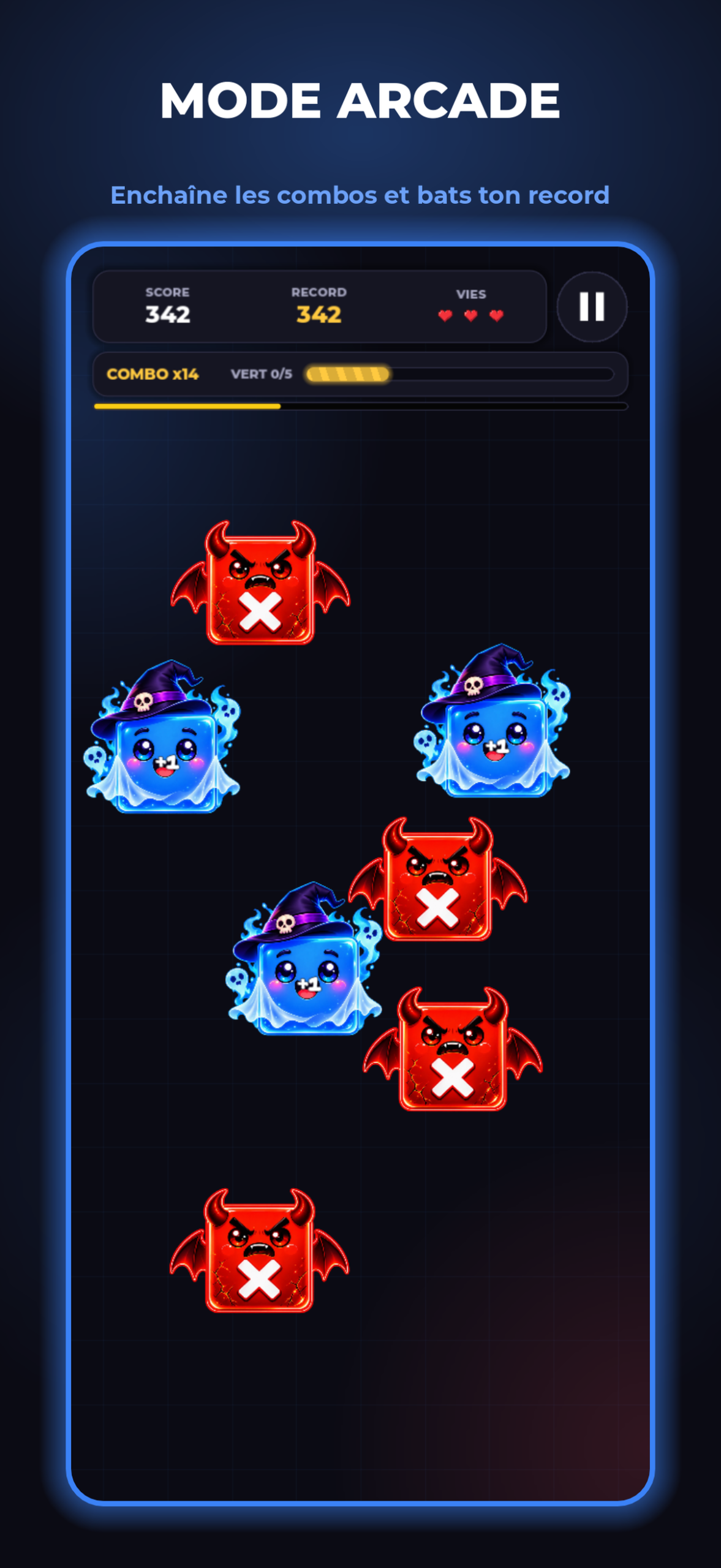
Arcade mode tests the player’s reactions with blue and red cubes.
The idea I’m proudest of is the community boss. Once a season, every player fights the same giant boss together. Its HP drops live for everyone, and each player is rewarded based on their place in the damage ranking. The first one, The Black Cube, arrives on November 2. For a small solo game, I love the idea that players around the world are playing together, not just side by side.
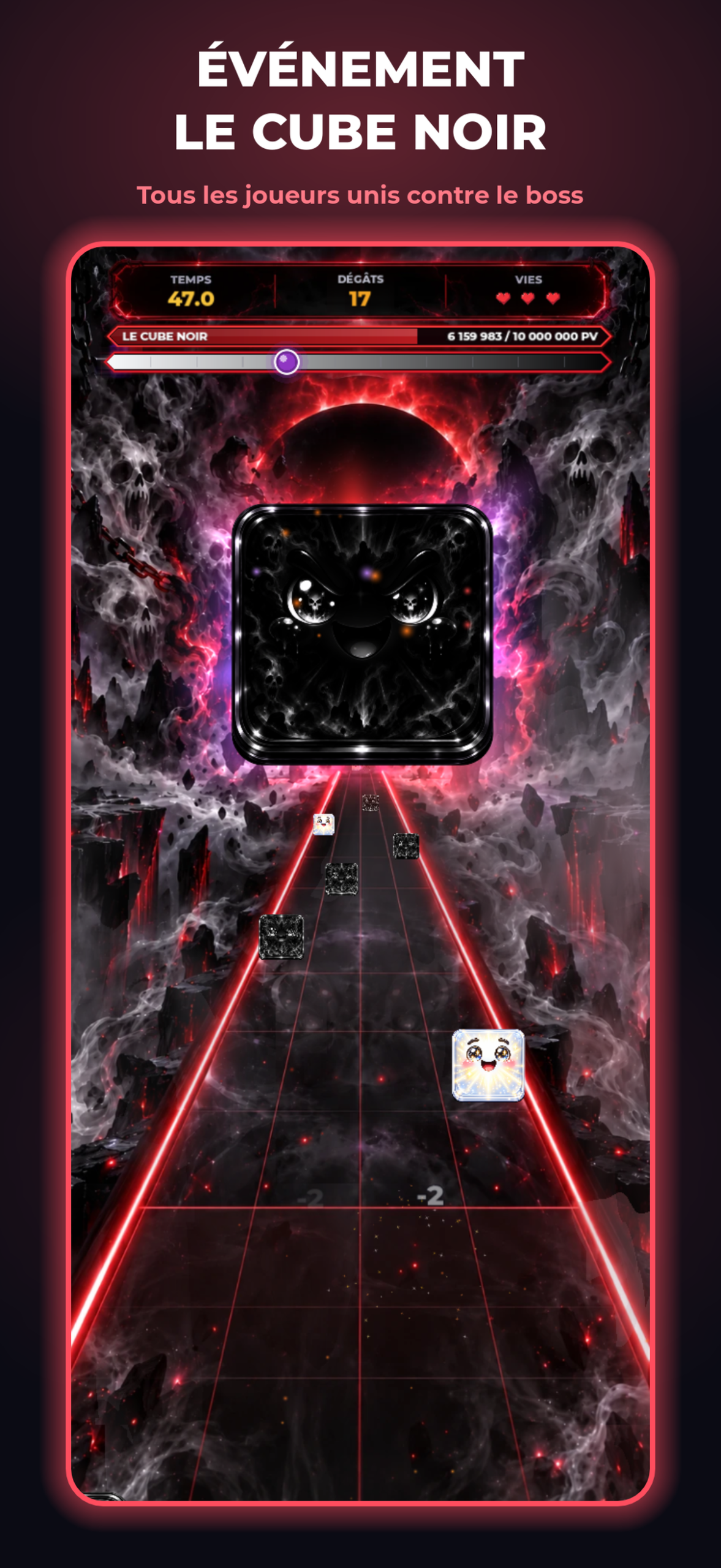
The Black Cube is the game’s first shared seasonal boss, scheduled for November 2.
What went wrong
Making the game was the fun part. Getting it onto the stores was a different story.
I had no idea how many rules and restrictions there are on Google‘s and Apple‘s side before a game can go live: reviews, forms, policies, settings for purchases and ads… and you have to get every single one right. Sometimes I was ready, but the stores weren’t. I had planned to release on October 20. In the end, it came out on October 21 on iPhone and October 22 on Android. Just one or two days late, but when you’ve been waiting for that moment for so long, every hour feels long.
The decisions I struggled with
When you work alone, nobody tells you whether an idea is good. You decide, you test, you change your mind, you test again.
Some game modes changed a lot before finding their final shape. Some challenges were rewritten several times. And some ideas I liked simply didn’t make it, because they didn’t make the game more fun. Deciding what to remove was often harder than deciding what to add.
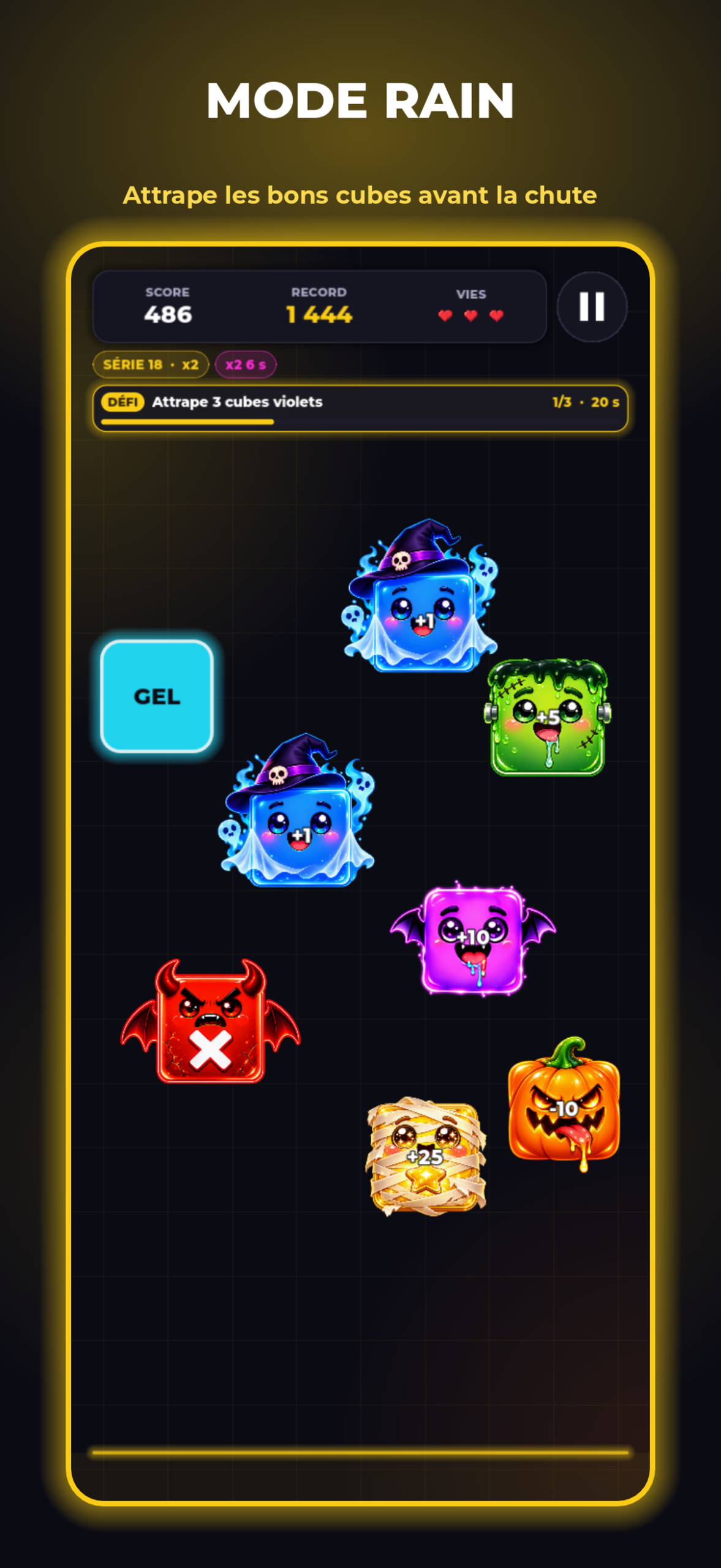
In Rain mode, cubes fall through the screen as players chase points.
What I learned
1. Start small. It will grow anyway. My “small reflex game” ended up with five modes and a boss system.
2. Don’t give up for good. Putting the project aside for a while was fine; coming back to it is what made the difference.
3. Publishing is half the work. Finishing the game is one thing; getting it through the stores is another. Plan time for it.
4. Let people play early. My testers found things I would never have seen on my own.
5. Use the right tools. Godot was perfect for a solo developer like me, and at the very end I used a bit of AI to polish what needed polishing. But every choice in the game is mine.
Day one
When Don’t Tap Red finally appeared on the stores, under my own studio name, LNDRS Studio, I was just happy. Happy to see something I had imagined for so long become real, and playable by anyone with a phone.
Now I hope a lot of players will join, especially for the first boss fight on November 2. After that comes a Christmas season, then a new boss in January. I’ll keep improving the game and listening to the players.
“One day” finally became day one. If you’ve been waiting for the right time to start your own project, maybe it’s time to stop waiting.
Thanks for reading, and good luck: don’t tap red!
More first-person accounts of solo development include the story of Instant Estresso and bringing Stelline to Android.
Don't Tap Red
Release: October 21, 2026 (iPhone); October 22, 2026 (Android)
Genre: Arcade, reflex, casual
Developer / Publisher: LNDRS Studio (Tony, aka Landers2K)
Platforms: iPhone (App Store) · Android (Google Play)
Free to download; optional in-app purchases. English and French.
Related Reading
Fix Stories: Instant Estresso and Solo Mobile Game Development
Fix Stories: One Swift Engine, Two Phones — How Stelline Came to Android
Story written by Tony (Landers2K), LNDRS Studio, for Fix Gaming Channel.
Edited for publication by Ronny Fiksdahl, Founder & Editor-in-Chief of Fix Gaming Channel.
Send interview pitches, corrections, tips, or developer stories to contact@fixgamingchannel.com.
Support independent games coverage on Ko-fi.