








Potions, books, bottles, and rubber ducks: the growing appeal of putting everything back where it belongs.
I started by looking at a couple of potion games. Then I found another. And another. Before long, I was looking at libraries, cellars, museums, and shops full of rubber ducks. Different objects, different settings, but a very familiar invitation: here is an enormous mess. Please put it away.
We’ve covered the appeal of cleaning before, including Spilled!. But this particular wave of first-person sorting games caught my attention. Why are so many developers choosing shelves, scattered objects, and thousands of things to organize? More importantly, what makes one worth playing after you have already tidied another?
Shelve the Potions! — Trailer
Watch the trailer linked by Knight Owl Games
Find Your Next Unexpected Game
Get more games worth a closer look, along with conversations with the people making them.
Join Our Newsletter
Stay updated with the latest interviews, previews, and indie gaming news.
Books, Bottles, Bones—and Yes, Ducks
A few of the games on our radar show how far the idea stretches. These are the hooks described on their store pages, rather than review verdicts:
| Game | The sorting pitch |
|---|---|
| Librarian: Tidy Up the Arcane Library! | Return 3,072 books to their shelves and unlock magical abilities that make the work more efficient. |
| Cellar Keeper | Organize 2,448 bottles, with a relaxed mode and a separate speedrunning option. |
| Shelve the Potions! | Sort more than 2,000 potions while solving shelf-specific puzzles and finding clues. |
| A Place for Every Potion | Separate mixed liquids into single-color potions, then work out where the bottles belong. |
| Sort Them Ducks | Arrange more than 4,000 rubber ducks into themed collections. |
| DinoBones: Tidy Up the Museum | Identify and assemble around 2,000 bones to rebuild nine dinosaur skeletons. |
There is an obvious family resemblance. But even these descriptions suggest different demands: recognizing an object, solving a clue, managing what you carry, or finding the right place in a skeleton. A similar-looking pile does not necessarily mean the same game underneath.
One Developer Names the Inspiration
To understand why someone would make another game in this niche, I asked Honey Jam, the developer of Potion Pantry: Sort the Apothecary. The developer credited an earlier sorting game as inspiration. The full five-question interview appears below.
That gives us a specific connection: a developer enjoyed a game and wanted to build on its appeal. It does not make Librarian the inventor of every organizing game, but it does identify an influence on this particular project.
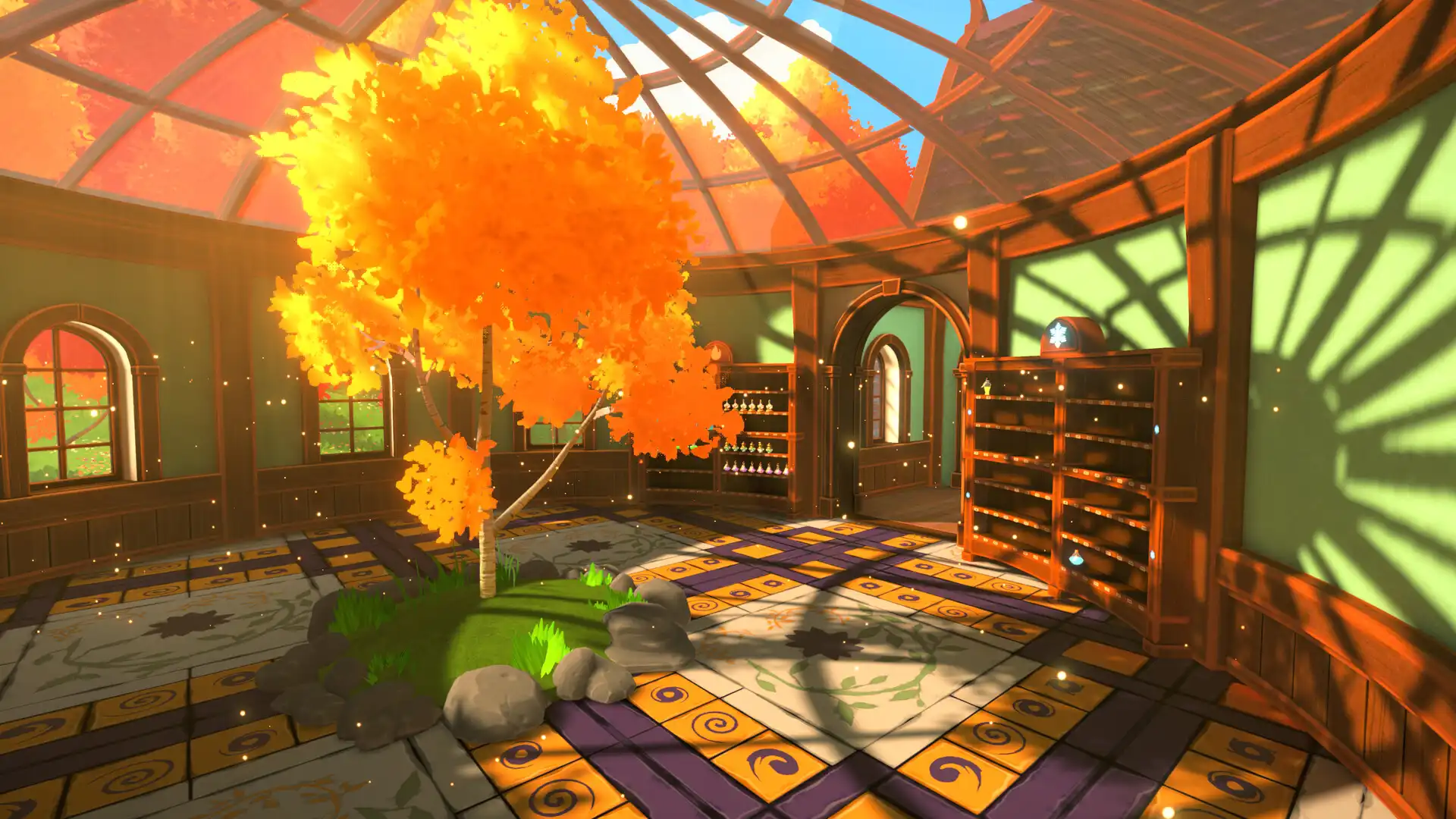
An autumn-colored tree brightens the magical apothecary in Potion Pantry: Sort the Apothecary.
Knight Owl Games also credits Librarian in its development post for Shelve the Potions!. The studio describes working with bottle shapes as well as colors and introducing puzzles to shape the pace. For at least these two developers, the inspiration is openly acknowledged.
Why Would We Choose More Chores?
This is the part I find interesting. Cleaning a room does not sound like the obvious answer to “What shall we play tonight?” Yet Honey Jam describes the meditative appeal of gradually restoring order in an imaginative setting.
I think that gets close to it. For someone who enjoys these tasks, progress is visible: the floor clears, a shelf fills, and a chaotic room becomes somewhere pleasant to be. A fantasy setting can make the same action feel less like household work and more like spending time in a place you enjoy.
Asked about the number of similar games appearing, Honey Jam compared the trend to other growing genres, including games inspired by Vampire Survivors.
That is one developer’s explanation, not a complete account of every studio’s decisions. But it is a useful starting point: an appealing idea gives other creators something to respond to. The question is what they add.
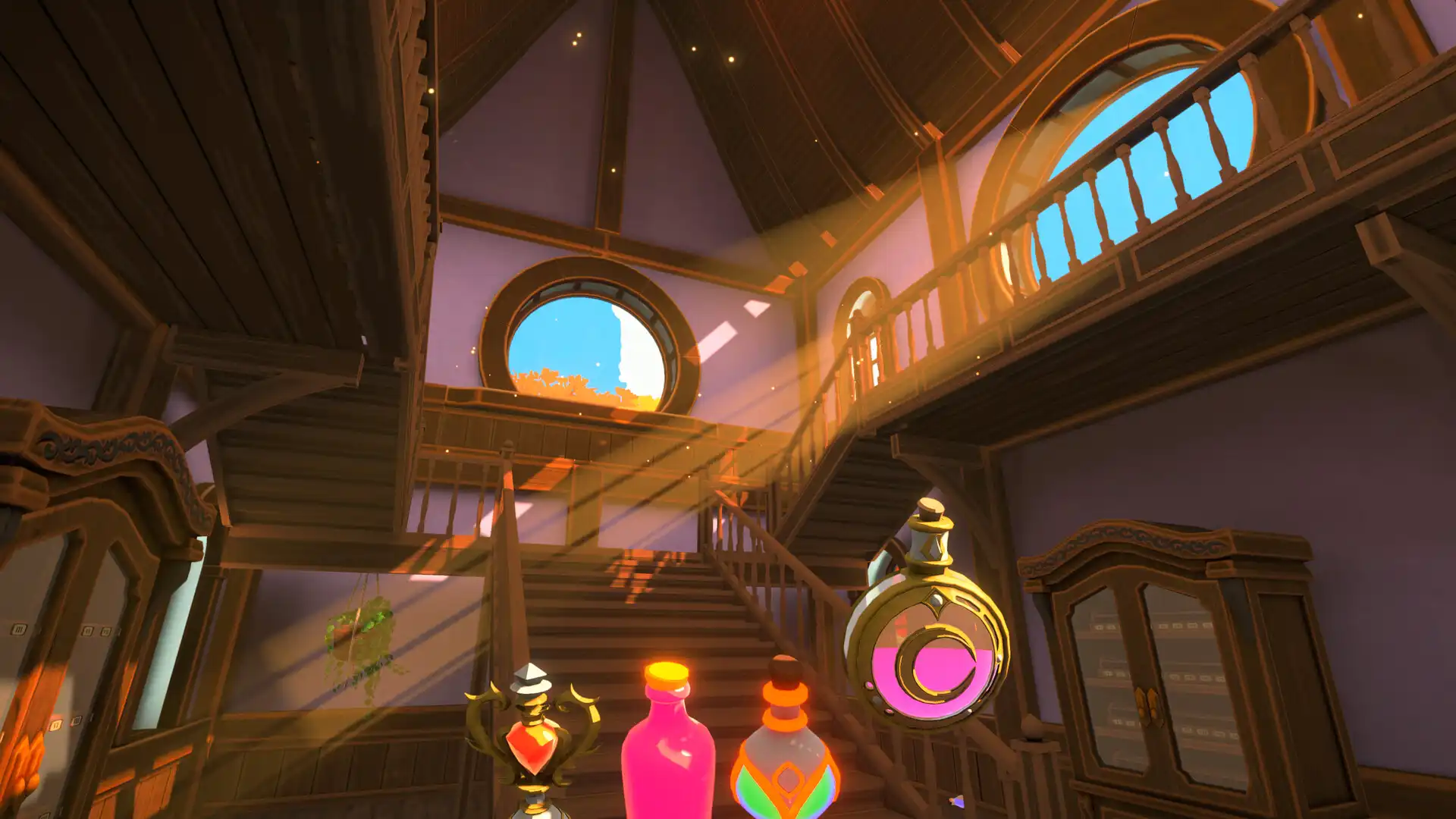
Light pours across Potion Pantry’s apothecary staircase, with colorful potions in the foreground.
The Difference Has to Be More Than Another Shelf
For Potion Pantry, Honey Jam describes trying to make sorting feel physical and intentional, with portable crates and liquid sound effects.
The developer also describes a rolling ladder and potion descriptions intended to help with placement while adding details about the apothecary’s world. These are the kinds of differences I want to examine when playing, rather than judging the whole game from a screenshot.
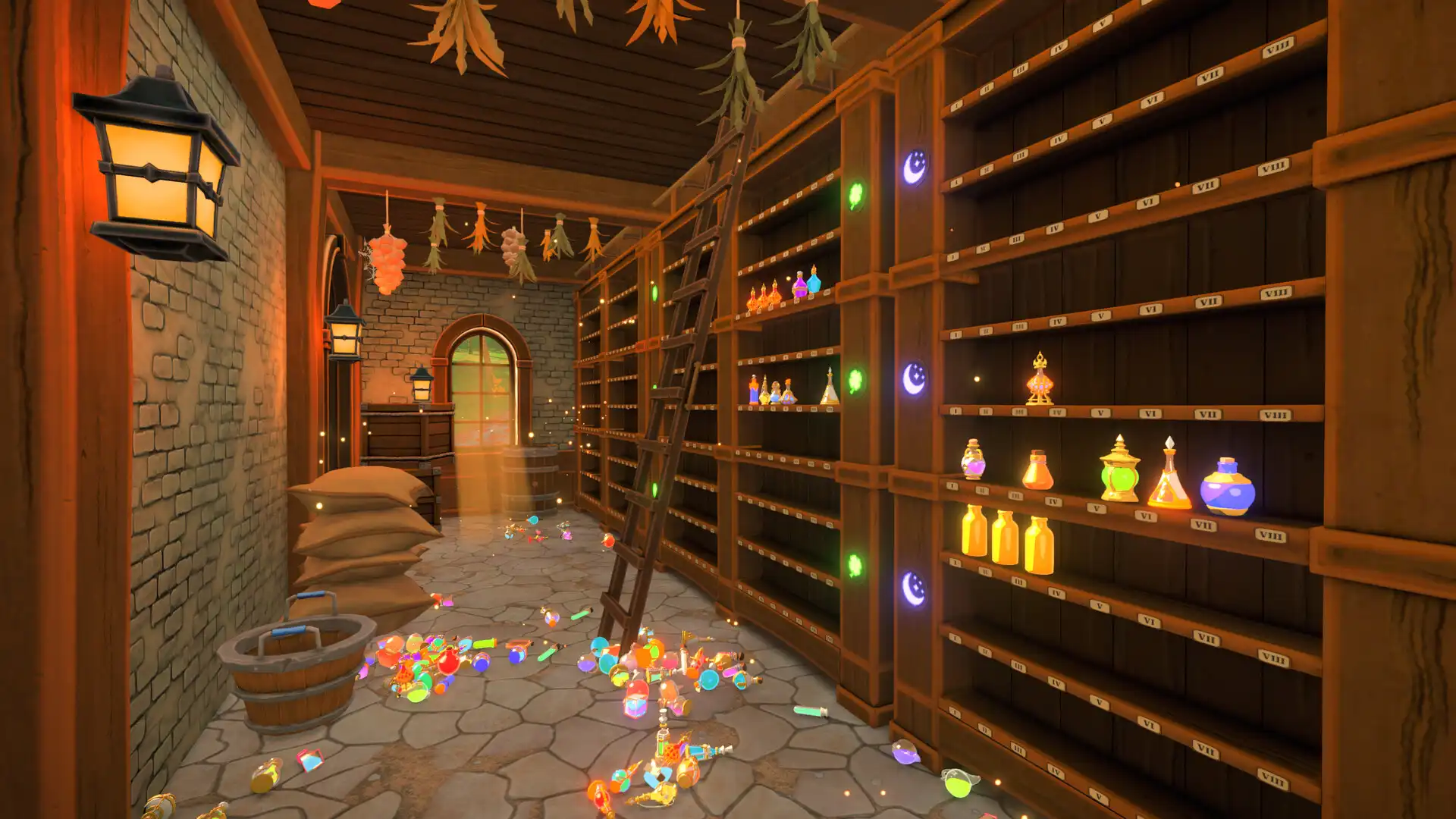
Your potion’s running… and the rest are all over the floor. Let’s tidy up!
How does picking something up feel? Does moving around the room stay enjoyable? Do the puzzles add variety? Is there a satisfying reason to finish another shelf? Those are more useful questions for players than whether a game has chosen bottles instead of books.
Ten thousand objects are not, by themselves, ten thousand reasons to keep playing. The design still has to make the work enjoyable.
Five Questions With Honey Jam, Creator of Potion Pantry
Honey Jam answered five questions by email about the game’s origins, what makes it different, and the growing sorting-game trend. The answers below are reproduced as received.
1. When did you first start developing Potion Pantry: Sort the Apothecary, and what originally inspired the idea?
I started work on Potion Pantry this spring, having been inspired by playing (and really enjoying!) Librarian: Tidy Up the Arcane Library. Feeling this sub-genre had, and still has, a lot of potential to evolve, I wanted to build a cozy experience that not only scratches the sorting itch but also leans into the fantasy of existing in a cozy apothecary, full stop.
2. There are several games appearing with similar potion, bottle, and organising concepts. Were you aware of any of these when you started development?
When I began development the sub-genre’s offerings were still relatively few and far between. I liked the idea of an old apothecary as a setting, and found potions to be fun and interesting objects to sort through, inspect and shelve. It seems that I wasn’t the only one!
3. What do you feel makes Potion Pantry different from other games in this particular niche?
With Potion Pantry I wanted to introduce a number of mechanics that made the act of sorting feel intentional and physical. One of my favorite mechanics is the ability to throw a bunch of bottles into a wooden crate and carry it to whichever section of the apothecary you’re currently working through. You’ll hear bottles clinking and liquid sloshing around as you carry it. It’s super satisfying! There’s also a rolling ladder to move between shelves, and descriptions for every potion to not only help you with placement, but also to give some flavor to the world and the story of the apothecary.
4. Why do you think we're seeing so many games built around sorting, organising, and arranging objects lately? Is it simply a growing trend, or do you think there's something more behind it?
I think that whenever a new popular genre has its moment, a lot of similar games are bound to pop up in its wake (like the many, many games spawned by Vampire Survivors’ success). At the same time, game development is now also more accessible than it’s ever been, meaning that more people are able to try their hand at making games.
As to why sorting games specifically, I can speak to my own experience of being increasingly drawn to smaller games with satisfying moment-to-moment gameplay. There’s something meditative about putting a messy room back together, piece by piece. Especially if it comes wrapped in a package of a fun fantasy, whether that be a magical library or an old apothecary.
5. As an independent developer, how do you feel when you discover another game with a similar concept to your own? Does it concern you, or do you see it as a natural part of game development?
To me, game development is all about inspiration and innovation. Seeing other games come out in the genre and explore new mechanics is generally very exciting. Cozy games are for everyone, and so I think there’s room for a lot of them to co-exist.
Some Are Even Selling Together
There is cooperation here, too. Shelve the Potions! and Cellar Keeper share a Steam bundle. Valve explicitly supports collaborative bundles across developers and publishers, with participating partners approving their inclusion. That establishes joint marketing, not a shared development team.
Other relationships are in the credits: Let's Tidy Up! : Treasure names both Tidy Up Team and Lowkey GameDev as developers. Those are specific, public connections. They are not a reason to assume every sorting game comes from the same people.
So, Shall We Tidy Up?
I am not interested in dismissing a game because it shares an idea with another. I want to know whether it does something enjoyable with that idea. Equally, a cozy setting is not a reason to overlook repetition that stops being fun.
Honey Jam sees room for many different takes on the same cozy idea.
That is a reasonable ambition. It still leaves each game with the job of earning the player’s time. For anyone looking beyond shelves, our Gentle Gems selection offers other ways to slow things down.
For now, the shelves keep getting bigger—and my list keeps growing. Which tidy-up game has kept you happily sorting, and what made it different?
Related Reading
Spilled! Turns Ocean Cleanup Into a Short, Cozy Indie Escape
Gentle Gems: Five Cozy Games to Unwind With
Written by Ronny Fiksdahl, Founder & Editor-in-Chief of Fix Gaming Channel.
Send interview pitches, corrections, tips, or developer stories to contact@fixgamingchannel.com.
Support independent games coverage on Ko-fi.