

A train ride through Izu, a sushi truck, and a game built to be finished
Interview by Ronny Fiksdahl, with additional questions from Aidan Minter.
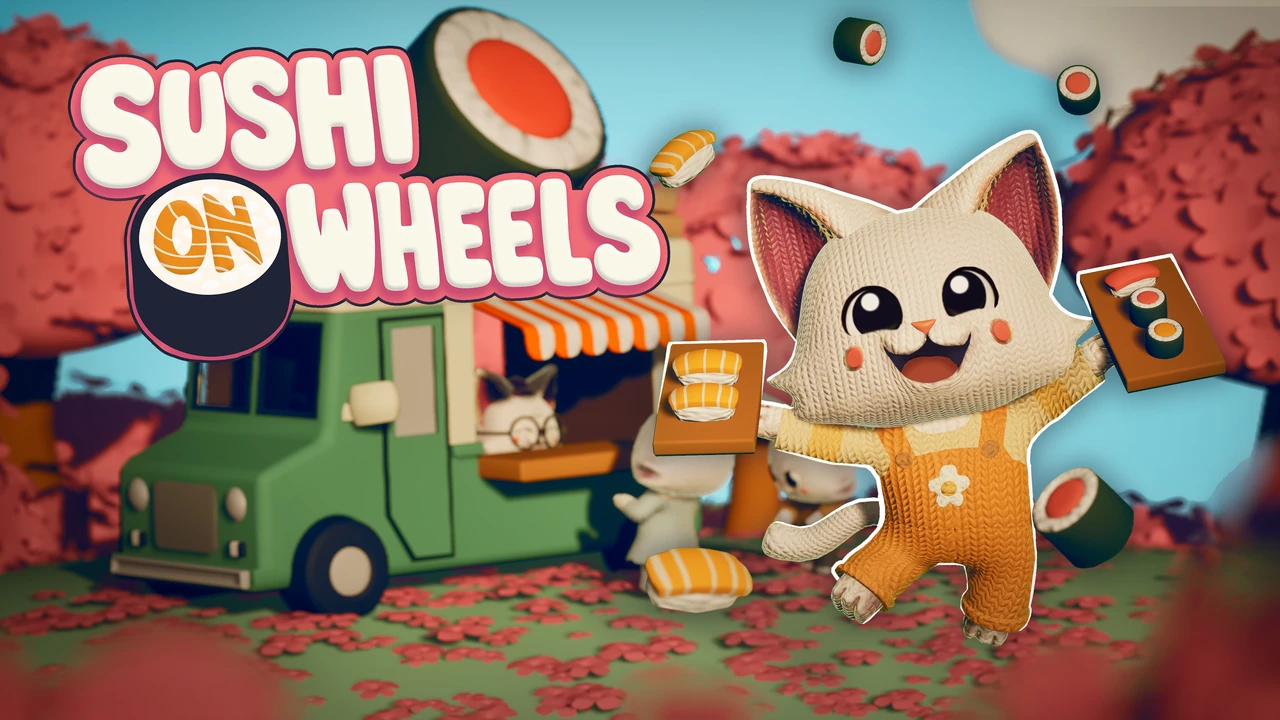
A train ride through Japan’s Izu Peninsula helped give Neil O’Sullivan Greene the setting for Sushi On Wheels. The founder of Greene Rapture is building a cooking and management game around a traveling sushi truck. A free demo is available on Steam, where the full game is currently scheduled for December 7, 2026.
In our interview, Neil discusses his background in VR art, keeping a project sustainable, and learning where players get stuck. As in our interview with Outside the Blocks developer Michał Kubas, the conversation also turns to the choices involved in finishing an indie game.
Sushi On Wheels – Official Gameplay Trailer
Watch the official Sushi On Wheels gameplay trailer
More conversations with indie developers
Get developer interviews and stories about the work behind independent games.
Join Our Newsletter
Stay updated with the latest interviews, previews, and indie gaming news.
Japan, food, and visual identity
1. You’ve spoken about your time in Japan helping inspire Sushi On Wheels. Was there a particular place, meal or moment that made you think, “this could be a game”?
I remember being on the train heading into Izu and seeing the landscape unfold. The volcanic terrain and all the different mountains really stood out to me. It felt unlike anywhere I’d been before, and I couldn’t think of a game I’d played that captured that particular setting. That’s when I started thinking it would be a really interesting place to build a game around.
2. How important was it to you that the food and Japanese setting felt authentic rather than just using sushi as a cute visual theme?
It was really important. After spending time in Japan and learning more about the culture through my partner, it felt natural to pay attention to those details. She’s been a great sounding board: I might show her something I’d made, and she’d point out that it wasn’t something you’d actually find in Japan. Having that perspective has helped keep me on track. The game is playful and stylised, but I still want the food and setting to feel connected to the place that inspired them.
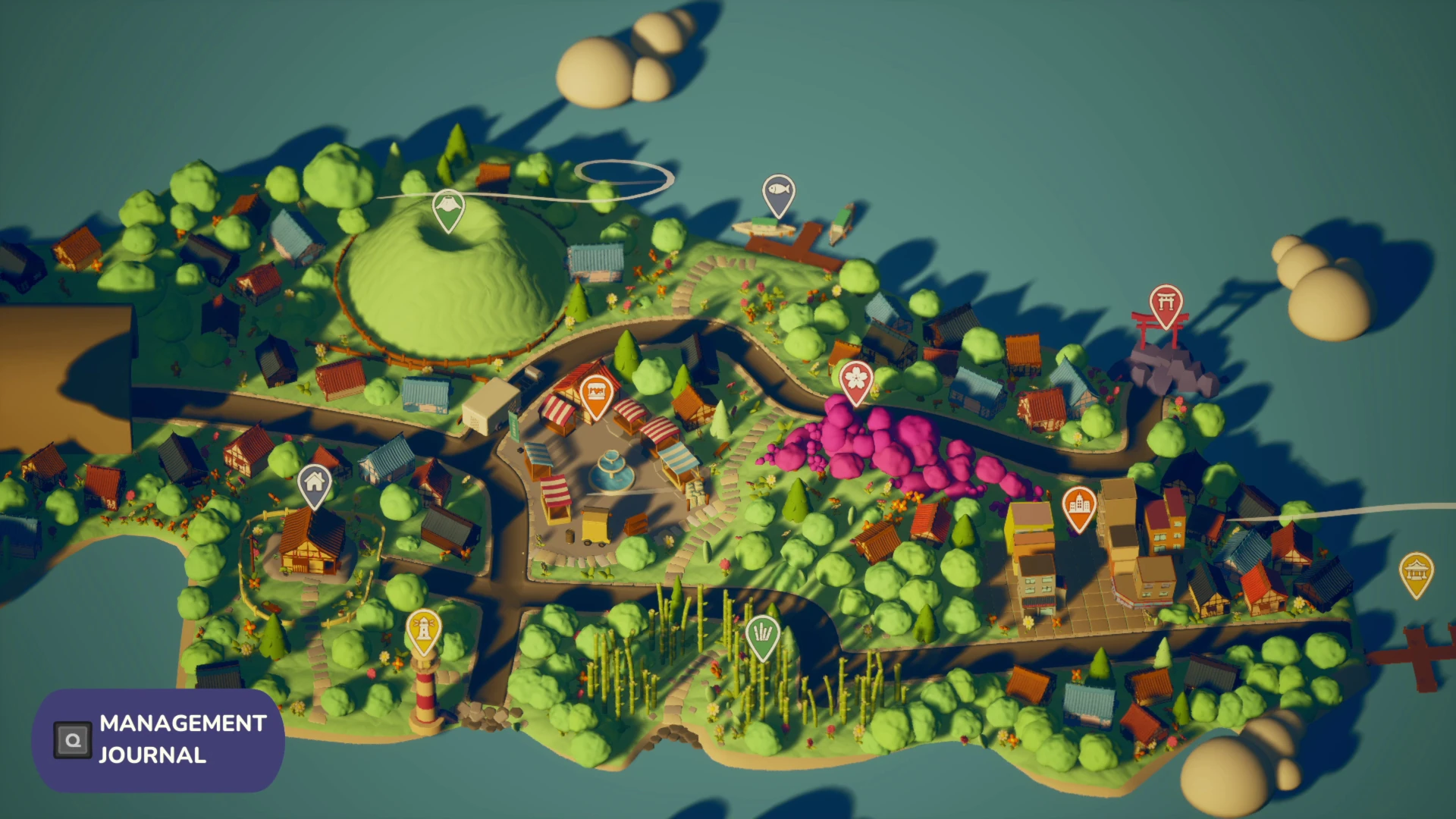
The game’s map brings together hills, coastal roads, and marked destinations. Image credit: Greene Rapture.
3. You started out working with 3D props and character art in VR before moving through freelance indie work and eventually becoming an Art Lead. How much of that background can players see in the visual identity of Sushi On Wheels?
Quite a lot, I think. Most of the art is made from scratch, and where I’ve used existing assets, I’ve reworked them to fit the style. Having a clear art direction has been a big part of bringing everything together.
My VR background helped technically, too. Working within strict performance limits taught me to think about optimisation from the beginning. I brought that approach into this project so it looks good and runs well on a range of systems.
Learning to finish an indie game
4. You’ve worked on several projects that were never released or announced. Did spending years contributing to other people’s games influence your decision to finally build something of your own?
It did, although I was always making my own prototypes and trying out ideas alongside those jobs. Even when I was working as a 3D prop artist, I knew I eventually wanted to make my own games. I’d always had ideas I wanted to see through, so it felt like a natural progression.
Working on other projects made me more aware of how much scope and decision-making matter. You can have talented developers and exciting ideas, but you still need a realistic path to finishing. That’s something I’ve tried to keep at the centre of this project: build something I know I can make and finish, and be selective about what goes into it.
5. You’ve mentioned that Harakka went bankrupt while you were working there. Did going through a studio closure change the way you think about scope, budgets or keeping an indie project sustainable?
It reinforced an approach I already felt strongly about. I was already cautious about scope and taking on more than a project can support, and going through it made those concerns more concrete.
For my own work, that means being honest about my time, resources, and what I can deliver. I still want to be ambitious, but in a way that fits a project I can sustain and finish.
6. At what point did you stop thinking of yourself primarily as an artist and start thinking, “I can lead and ship my own game”?
That confidence started to develop at Harakka. I had a lot of imposter syndrome, but I ended up working on gameplay systems as well as art, and it went well. Being around that team made me realise I actually know more than I thought about game design and how to put a game together.
Making cooking feel right
7. Coming from an art-heavy background, what part of developing Sushi On Wheels outside the art itself has been the biggest learning curve for you?
Balancing the systems, definitely. It’s one thing to say, “If the truck is dirty, customers won’t want to eat there,” but it’s hard to make that feel balanced in play.
UX has been big too. Making menus that feel intuitive on both PC and gamepad was a huge challenge. I knew I had to build for both from the start, but even then, it was tough.
8. There’s a lot happening at once in the game — cooking, serving customers, moving around and managing the restaurant. How did you balance keeping it relaxing while still giving the player enough pressure to stay engaged?
Difficulty options help. It can sound hectic, but it doesn’t have to be. If you want cozy, there’s no timer. You can take your time, clean the truck, make sushi carefully. There’s no penalty for serving fewer customers. So people can play at whatever pace feels good.
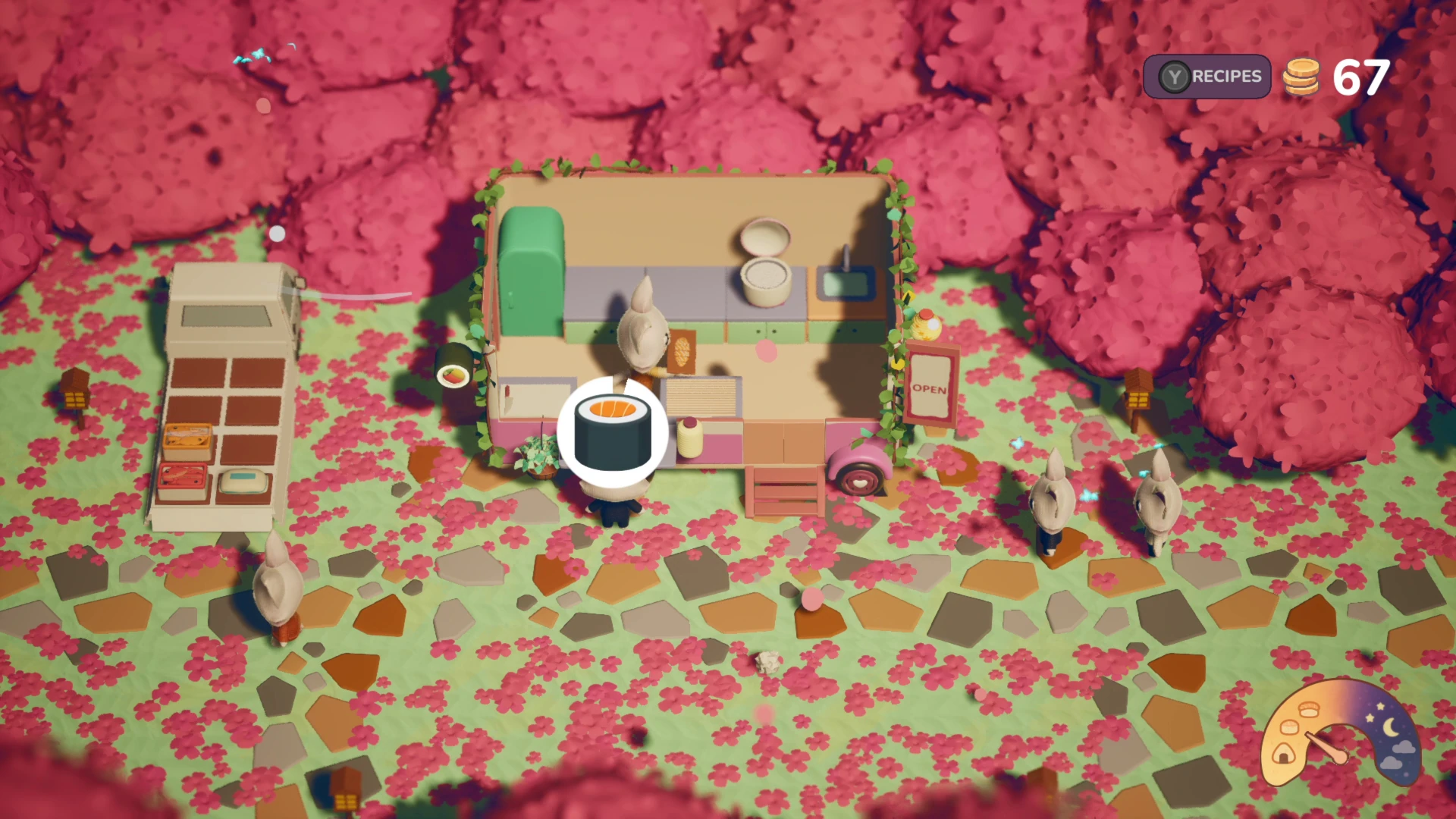
A customer waits at the sushi truck beneath pink trees. Image credit: Greene Rapture.
9. What did you learn from releasing the demo that changed, confirmed or challenged your plans for the full game?
One thing that really stood out was how much people mentioned the animation. I love doing animation, and I had so many ideas I didn’t have time to include. Seeing people call out the animation and the character it gives the game was really encouraging.
Some mechanics weren’t as intuitive as I’d hoped, though. Watching Let’s Plays was incredibly helpful. I could see exactly where players were getting stuck.
10. What has been the hardest part of developing Sushi On Wheels as an indie project that players probably wouldn’t notice from playing the demo?
Menus. When they work, you don’t think about them. When they don’t, they’re really annoying. Truck customisation has been especially tricky, making it feel intuitive on both gamepad and PC.
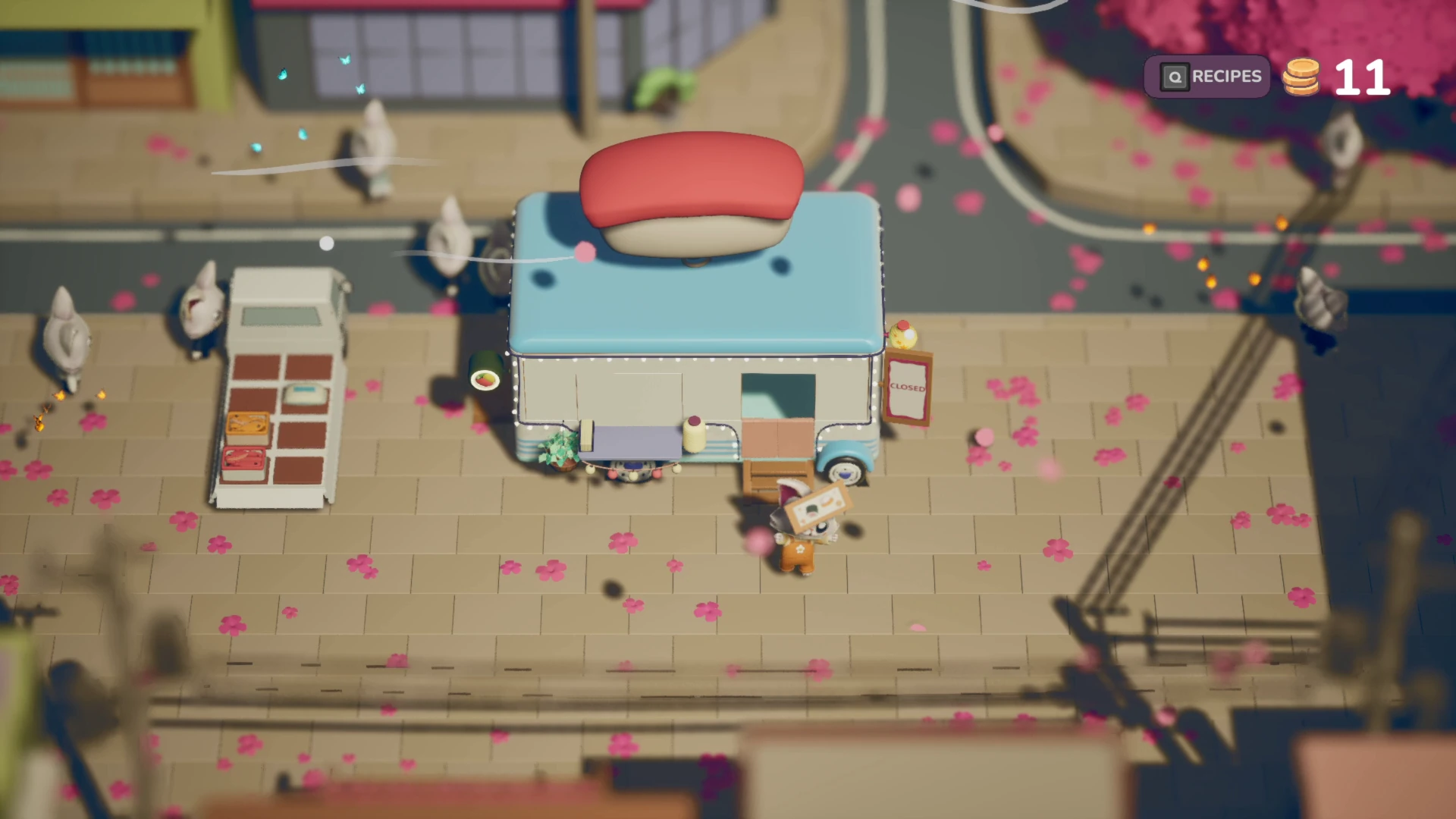
A blue-and-white truck displays a large sushi decoration on its roof. Image credit: Greene Rapture.
Finding the audience
11. The game feels like a cross between an animated Sylvanian Families meets Cooking Mama. Is there a specific audience identifier you’re hoping to hook with Sushi On Wheels?
People who love cooking games and cozy, atmospheric experiences. Sometimes you just want to do something comforting, maybe while watching a movie or winding down after a long day, and that’s the space I’m thinking about.
12. What are the challenges to keeping a game like this fresh for players, and how is Sushi On Wheels primarily different from other cutesy cooking games?
Keeping it fresh comes from progression: new recipes, decorations, outfits, and learning about characters as festivals unfold.
I wouldn’t say it’s wildly different from other cutesy cooking games, but the Izu setting and the focus on animation give it its own feel. I looked at games I love and tried to bring in things I wished they had.
13. In terms of marketing and PR, where do you target Sushi On Wheels to have the most impact to raise awareness given the competitiveness in the marketplace right now?
Anywhere people will listen. TikTok, Instagram, Bluesky, Twitter, and Reddit. Just wherever folks are actually hanging out.
14. When the full game releases, what do you hope players remember most about it after they’ve finished playing — the cooking, the characters, the setting, or something else entirely?
I’d love them to remember the feeling, relaxing with it, or those close-call stories where they nearly missed an order but pulled it off.
Sushi On Wheels
Release: December 7, 2026 (planned); free demo available on Steam
Genre: Casual, Indie, Simulation
Developer / Publisher: Greene Rapture / Rogue Duck Interactive, Gamersky Games
Platforms: Windows PC — Steam
Related Reading
Outside the Blocks: Interview with Solo Dev Michał Kubas
ANOMALITH Interview: Gai Kidokoro on Showa-Era Horror and Survival
Written by Ronny Fiksdahl, Founder & Editor-in-Chief of Fix Gaming Channel.
Send interview pitches, corrections, tips, or developer stories to contact@fixgamingchannel.com.
Support independent games coverage on Ko-fi.