A cosy medieval art sandbox with real charm, dry humour, and just enough chaos to keep it memorable
If you enjoy the kind of low-pressure creativity we recently highlighted in our cozy games round-up, Scriptorium: Master of Manuscripts makes a strong first impression. Mythwright and Yaza Games have built something that immediately understands its own appeal: a cosy, medieval-themed sandbox where you illustrate absurd manuscripts for strange clients, shuffle decorative assets around a page, and slowly turn nonsense into something that almost looks intentional.
It taps into some of the same “make something because it feels good” energy we saw in ShipShaper’s recent demo impressions, but with a much sillier and more deliberately eccentric identity. From the first few commissions, Scriptorium leans fully into its dry humour, soft absurdity, and relaxed pace. There are no crushing fail states hanging over your head, no timers forcing panic, and no pressure to play this like a high-stakes puzzle game. That easygoing tone is one of its biggest strengths.
Scriptorium: Master of Manuscripts – Official Trailer
Join Our Newsletter
Stay updated with the latest interviews, previews, and indie gaming news from Fix Gaming Channel.
Scriptorium: Master of Manuscripts
Release: 2026
Genre: Cozy, Simulation, Design & Illustration, Sandbox
Developer / Publisher: Yaza Games / Mythwright
Platforms: PC (Steam)
A cosy concept that lands immediately
Scriptorium is the kind of idea that sells itself almost instantly. A manuscript-illuminating sandbox built around medieval absurdity is already a strong hook, but the demo backs that concept up with a clear sense of tone. The humour is dry, playful, and often quietly ridiculous, which suits the whole experience perfectly. You are not here to min-max a production line. You are here to arrange odd little visual pieces onto parchment, meet increasingly strange client demands, and enjoy the process of making something decorative, messy, or unintentionally hilarious.
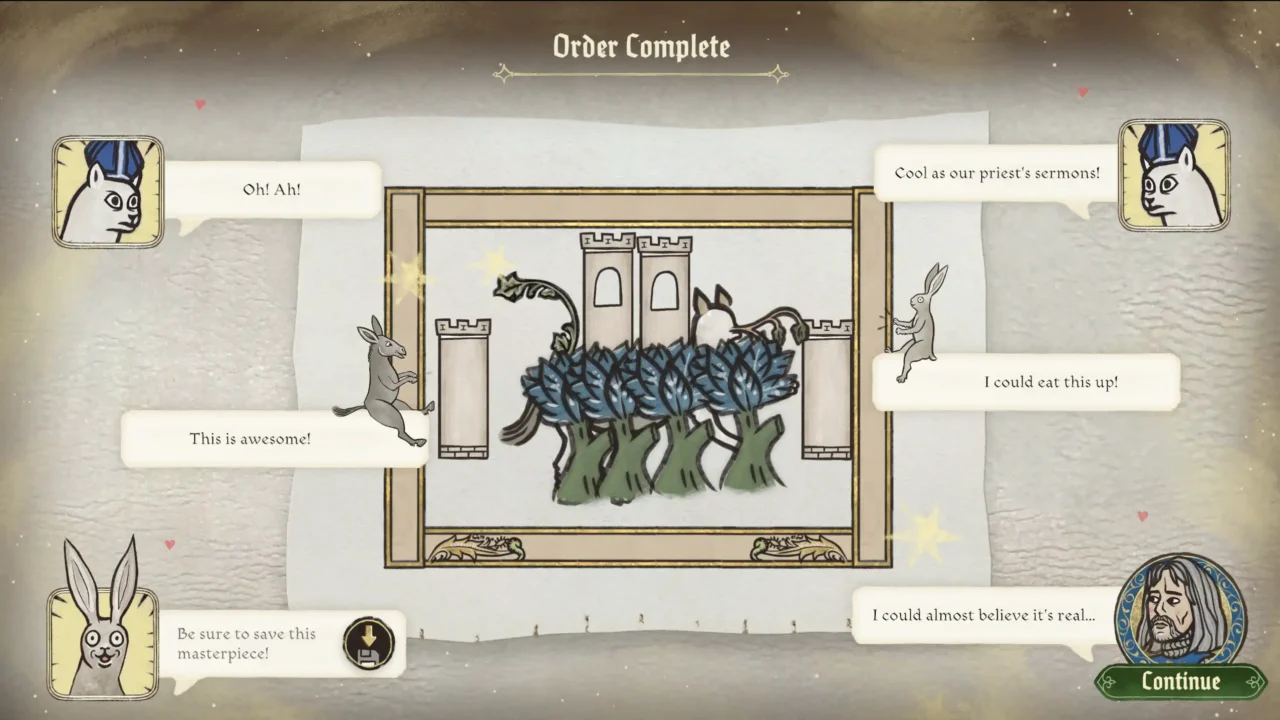
A finished manuscript commission in Scriptorium, complete with humorous client reactions and a gloriously cluttered beast illustration.
That light touch matters. The demo feels inviting from the start, and there is a genuine comfort to how gently it lets the minutes slip by. Rotating assets, stacking layers, and nudging a page into shape has a satisfying tactile rhythm to it, even when the final result looks less like a masterpiece and more like the marginal notes of a very overconfident monk. It is a game that knows how to be silly without becoming annoying, and that balance gives it a lot of character.
The parchment starts to feel cramped
Where the experience begins to wobble is the canvas itself. The parchment area feels surprisingly small, and while that may well be thematically intentional, it still creates a practical problem. What starts as quaint quickly becomes restrictive, especially once a client brief asks for multiple large visual elements on the same page.
The clearest example came during one commission that called for a bizarre creature with a branch for a nose and legs “thick like oaks.” By the time the creature itself had taken shape, with all its decorative flourishes and visual clutter, there was barely enough room left to satisfy the final requirement. Dropping in four oversized oak trees completed the brief, but also buried most of the actual creature beneath a forest of obligation. It was funny, yes, but it also exposed the game’s biggest mechanical weakness. The available space can feel too tight for the kind of escalating absurdity the commissions encourage.
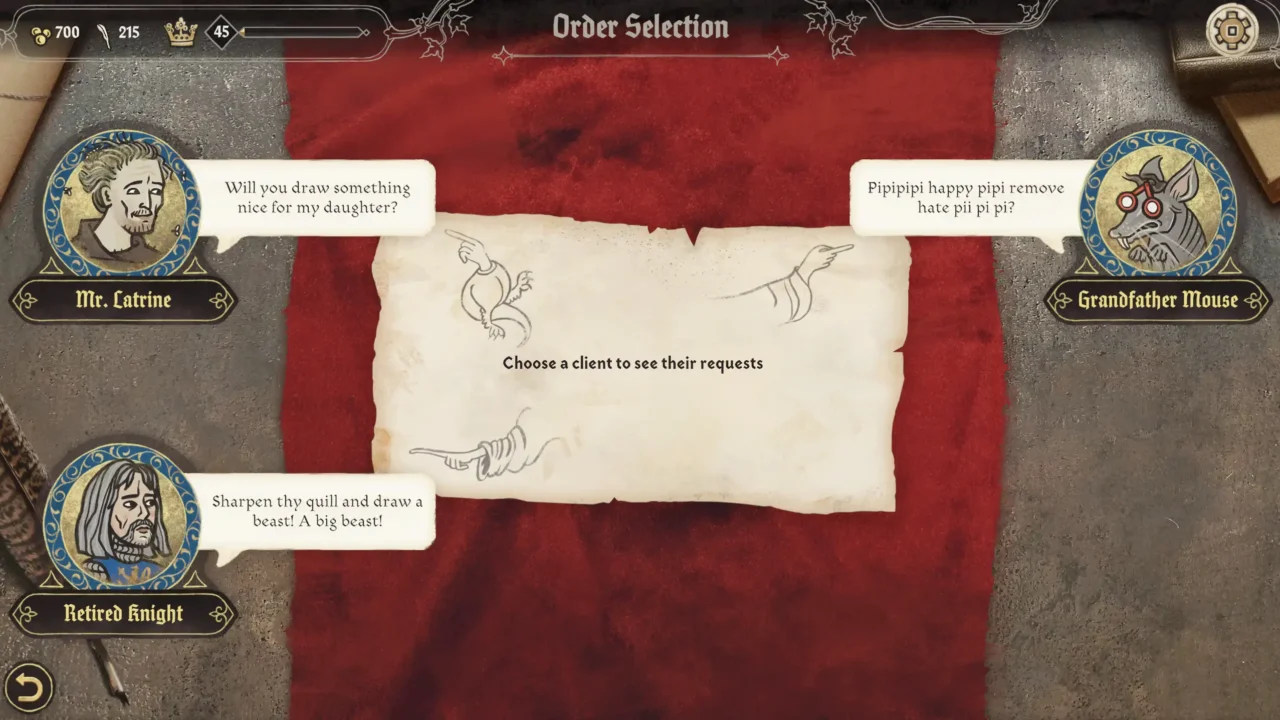
The Order Selection screen in Scriptorium introduces several eccentric clients and sets the tone for its dry, playful humour.
Freedom is fun, but the client system barely pushes back
That same creature brief also highlights another issue: Scriptorium does not meaningfully judge composition. It checks whether the requested ingredients are present, but it does not seem especially interested in how well they are arranged. Placement, balance, and overall visual coherence are mostly left to your own standards. If the right assets are somewhere on the page, the commission is treated as a success, even if the final piece looks like a medieval scrapbook assembled in a hurry.
There is an upside to that. For some players, this will be exactly the point. It makes the game a pure creative sandbox: total freedom, zero judgement, no systems trying to police your weird little ideas. But it also means there is less incentive to improve. I kept waiting for the client system to show a little more discernment, to reward stronger composition or push me toward cleaner and smarter page design. That never really came. As a result, I often felt that “good enough” was good enough, and that softens the long-term pull more than it should.
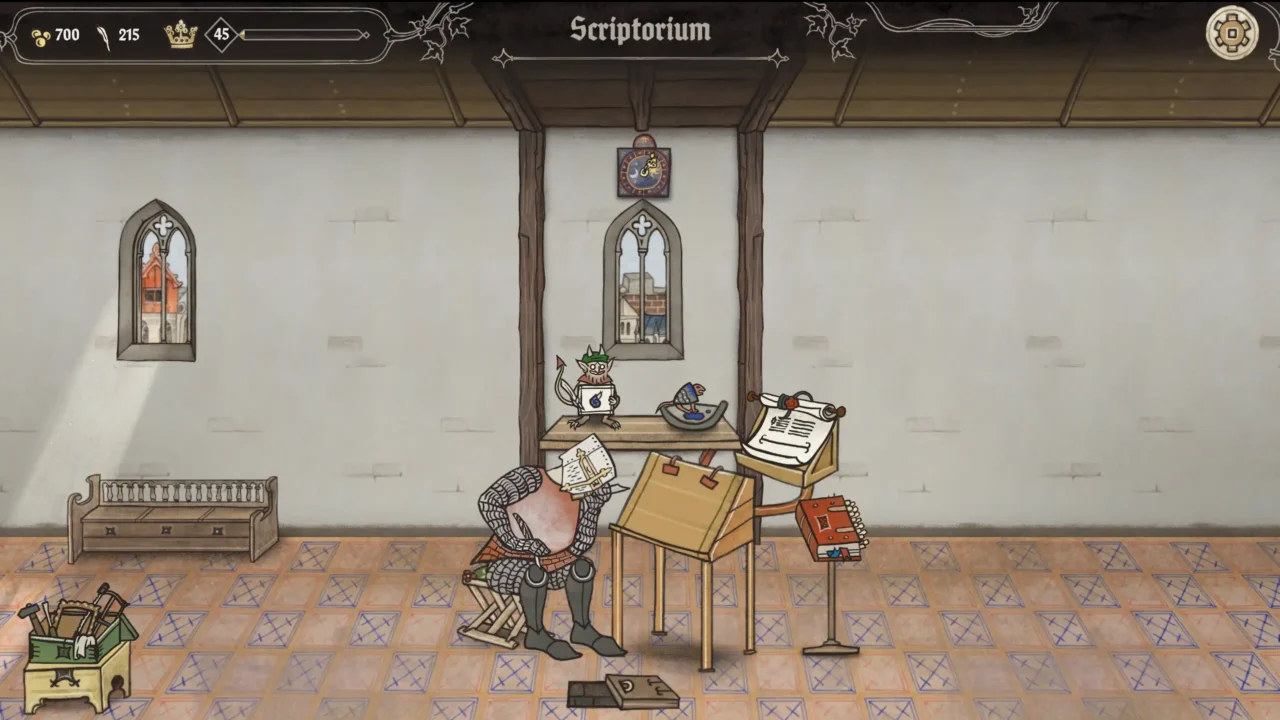
The main workshop area in Scriptorium presents the quiet, hand-drawn medieval space where each manuscript begins.
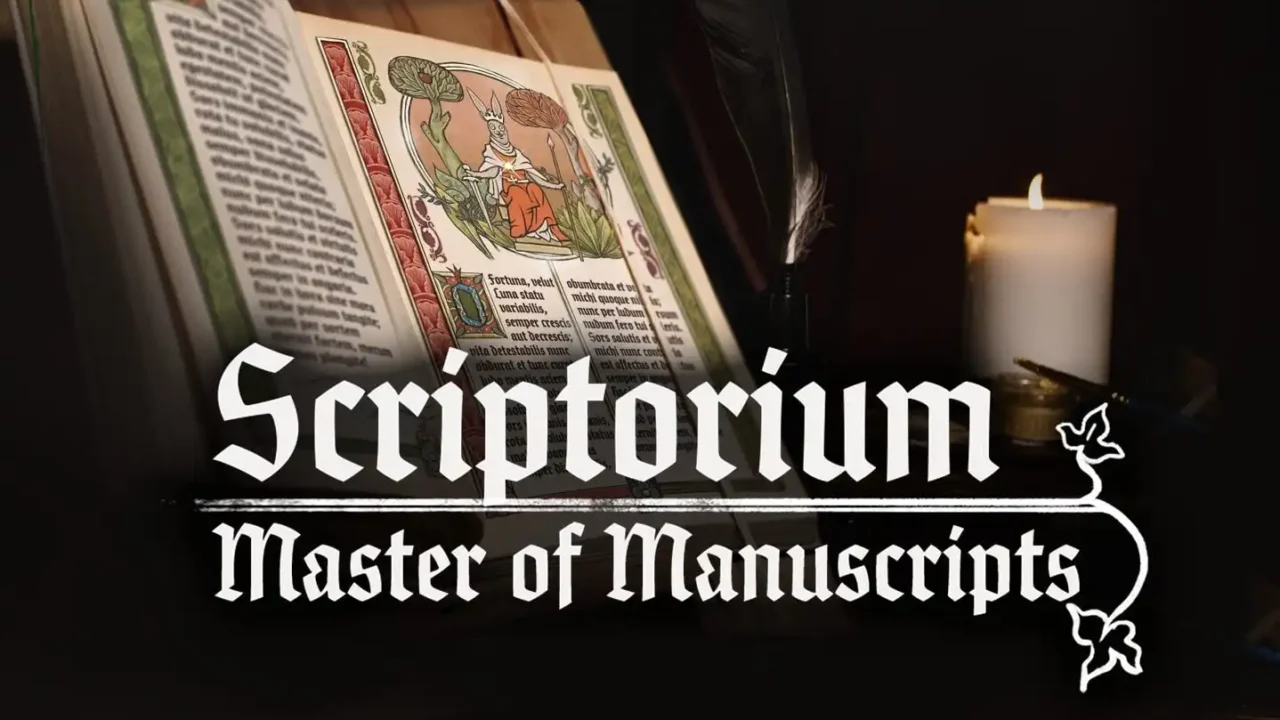
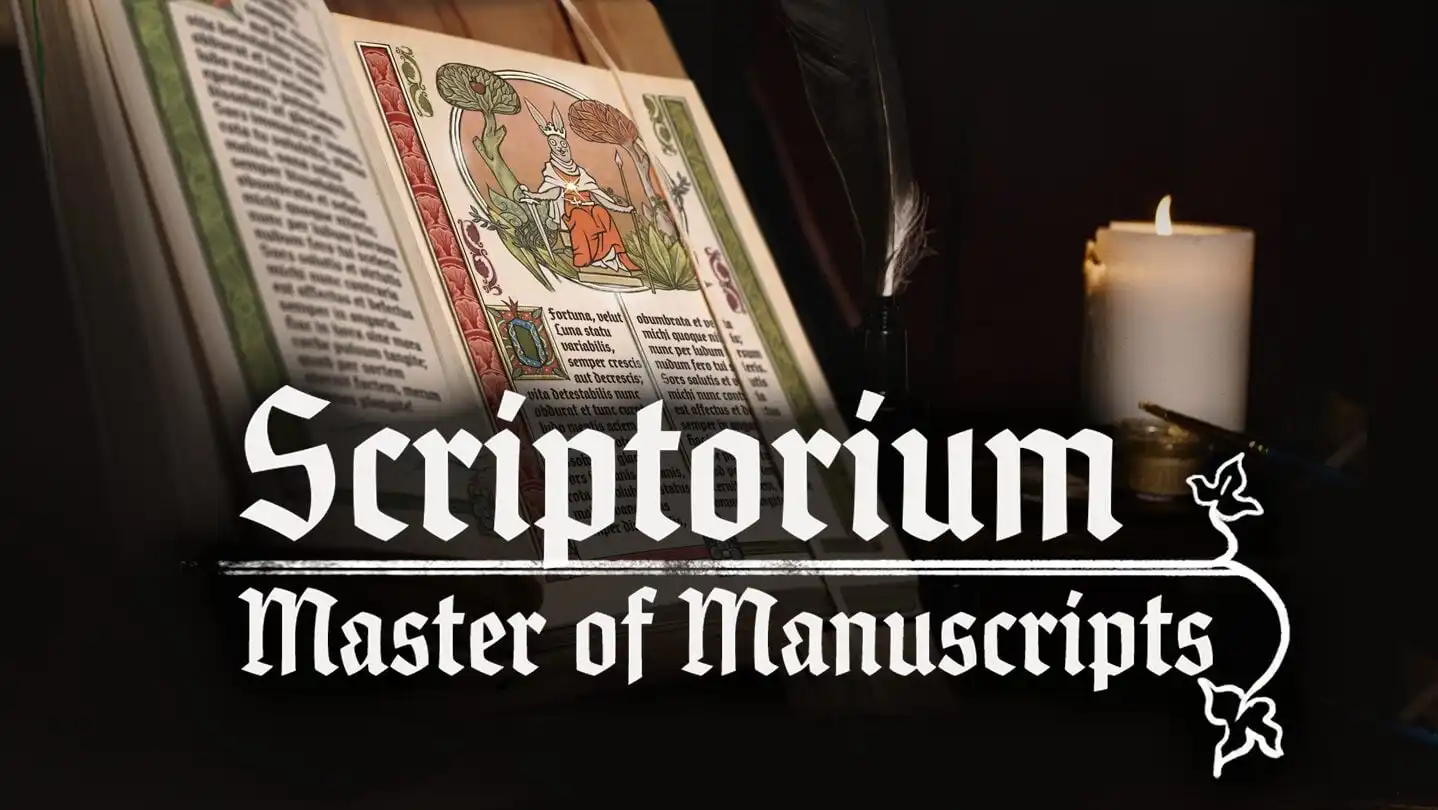
Official key art for Scriptorium: Master of Manuscripts, highlighting the game’s manuscript-inspired medieval aesthetic.
A generous toolset keeps it entertaining
Even with those complaints, the asset variety does a lot of heavy lifting. The demo gives you a broad collection of trees, water elements, animals, plants, furniture, weapons, human figures, decorative details, and strange little embellishments, and the ability to flip, rotate, and layer everything helps the whole toybox feel flexible. It is easy to understand why the game can hold your attention for a while, because even when a page turns into clutter, the act of building that clutter is still fun.
In that sense, Scriptorium feels like a deliberately crude medieval design tool: a charmingly odd sandbox built around creativity, humour, and a love of historical weirdness. The full game may need a stronger feedback loop if it wants players to keep chasing improvement, but the foundation is distinctive, and that matters. Not every indie game needs to be loud or mechanically dense to stand out.
Final thoughts
Scriptorium: Master of Manuscripts is charming, knowingly daft, and surprisingly easy to lose time in. Its dry humour and cosy creative loop give it a real identity, and for players who simply want to tinker without pressure, there is a lot to like here already. The cramped parchment space and almost nonexistent compositional judgement do hold it back, though, and they stop the commissions from feeling as satisfying as they could be.
Still, this is not a game that blends into the crowd. It has a clear voice, a niche of its own, and enough charm to make the rougher edges easier to forgive. If the full release builds on what is here while giving the client system a little more bite, Scriptorium could end up being one of those quieter 2026 indies that people remember fondly.
Related reading
Gentle Gems: Five Cozy Games to Unwind With
ShipShaper Evolving Demo Impressions: A Good Start to a Chill Ship Builder
Written by Aidan Minter — Fix Gaming Channel.
Send interview pitches, corrections, tips, or developer stories to contact@fixgamingchannel.com.
Support independent games coverage on Ko-fi.