A solo developer building in public — and turning steady visibility into real momentum
As I keep working my way deeper into the indie game world—meeting developers, artists, and creators with real vision—some projects stand out immediately. That was exactly what happened when Aidan tagged me in one of Ethan McKinnon’s posts, back when Riftwalker had just passed 6,000 wishlists. I checked out Ethan’s work on ArtStation and, within seconds, sent him a message. The images alone were enough. His work looked incredible, and it was obvious right away that this was someone building with real talent, ambition, and experience.
That is how I got in touch with Ethan McKinnon, the solo developer behind Riftwalker. And as I am writing this now, Ethan has publicly shared that the game has already climbed to 9,500+ Steam wishlists. That kind of momentum does not happen by accident. Ethan is not only building an ambitious solo project, he also clearly understands the marketing side from his own background in streaming, YouTube, and community-building. When you start putting the pieces together, the growth makes sense. In many ways, his approach is a case study in itself. It also lines up with something we talk about often through Fix Access: show the work, stay visible, and give people a reason to care early. Our guide on when to start marketing your game goes deeper into that timing.
I had the pleasure of speaking with Ethan, and honestly, he answered most of my questions before I even had the chance to ask them. What came through clearly was his dedication, focus, experience, and the simple fact that he understands something many still overlook: community matters. That transparency, that consistency, and that willingness to build in public all feel like part of what is pushing Riftwalker forward.
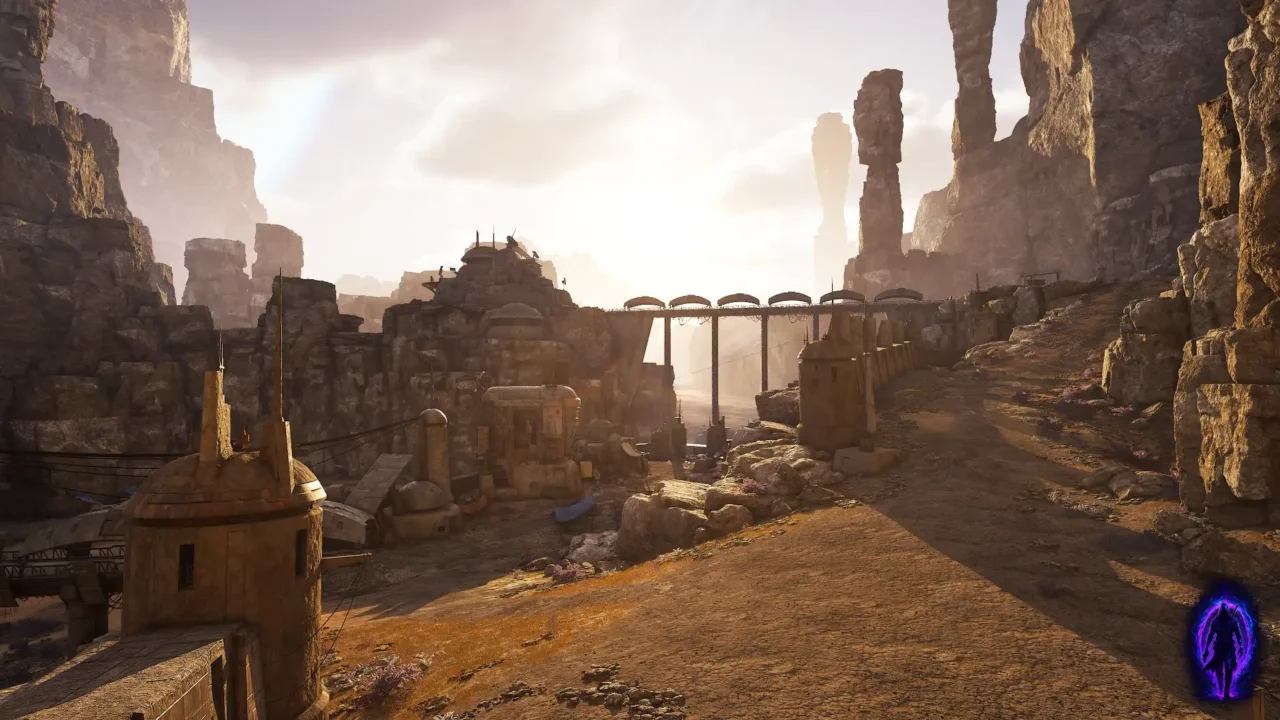
A wide look at one of Riftwalker’s rocky desert environments and settlement spaces.
Riftwalker – Void System Video
Video courtesy of Ethan McKinnon / Riftwalker.
Join Our Newsletter
Stay updated with the latest interviews, previews, and indie gaming news from Fix Gaming Channel.
More than just another solo dev story
Ethan comes across as more than just a solo developer trying to make a big game. In our conversation, he spoke openly about a long background around games, Unreal Engine, community-building, and the wider realities of making something people actually notice. What stood out most to me was how clearly he understands both sides of the process: the creative side of building a world, and the visibility side of making sure that world has a chance to reach people.
“I think like one of the biggest things of building a community is being 100% honest and transparent with your community.”
That line says a lot about Ethan right away. He is not treating visibility as something separate from development. He is treating it as part of the project itself, and that is one of the clearest reasons Riftwalker is already building traction.
Riftwalker started as a living portfolio
One of the most interesting parts of our talk was hearing how Riftwalker began. Ethan described it in very simple terms, and that simple description says a lot about how this project first took shape.
“Riftwalker started in the very beginning as a living portfolio.”
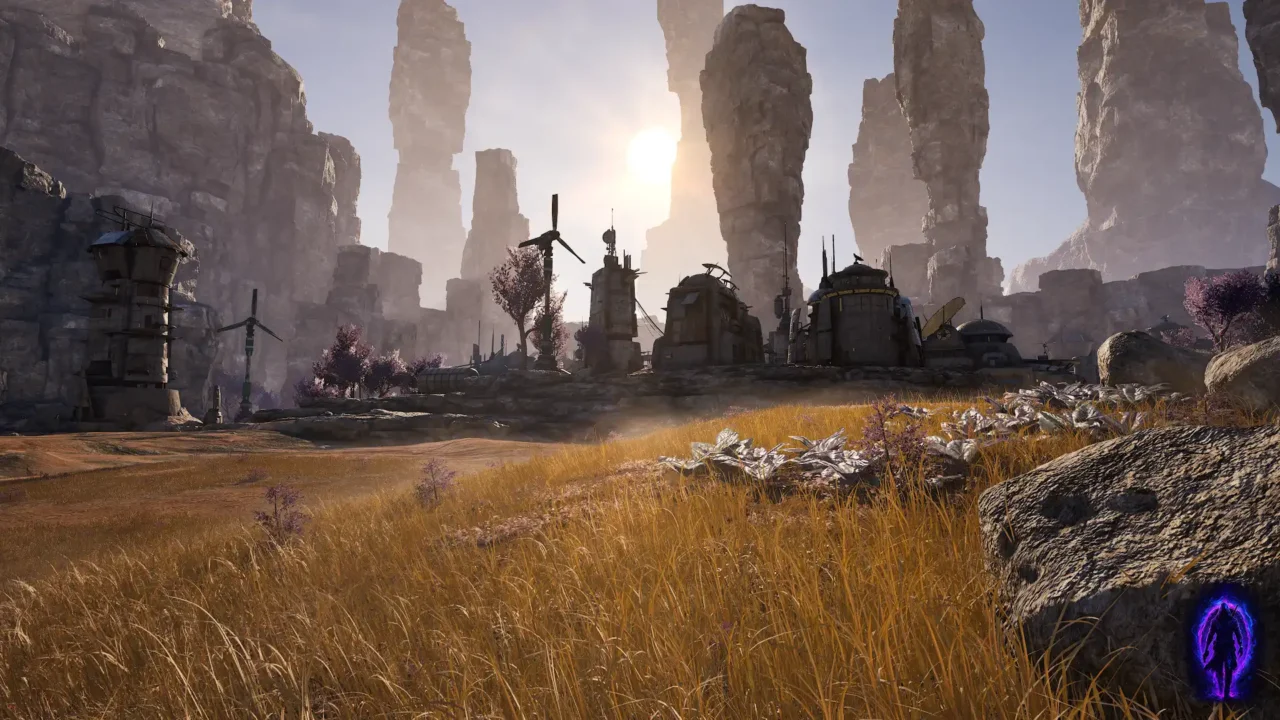
A wide environmental view that shows the scale and atmosphere of Riftwalker’s world.
What started as proof of skill evolved into something much larger and more ambitious. From there, Ethan kept building on the concept, shaping it into a full project with a stronger identity, a larger world, and a deeper story behind it. Since it began as a living portfolio and was shared publicly from the start, Riftwalker has grown in full view of the community rather than behind closed doors.
A sci-fi bounty hunter game with a clear identity
At its core, Riftwalker is shaping up as a sci-fi bounty hunter experience built around exploration, player curiosity, and risk-reward choices. Ethan repeatedly came back to the idea that if a player goes out of their way to look behind something, climb somewhere awkward, or push into a dangerous area, there should be a reason for it.
“I want them to really explore and discover because like I said, I am all about discovery and exploration and risk and reward.”
That design philosophy gives Riftwalker more than just a visual hook. It gives the game a strong direction. Rather than feeling like a random mix of systems, it already sounds like it is being built around a specific kind of player experience: pay attention, take chances, and get rewarded for thinking beyond the obvious path.
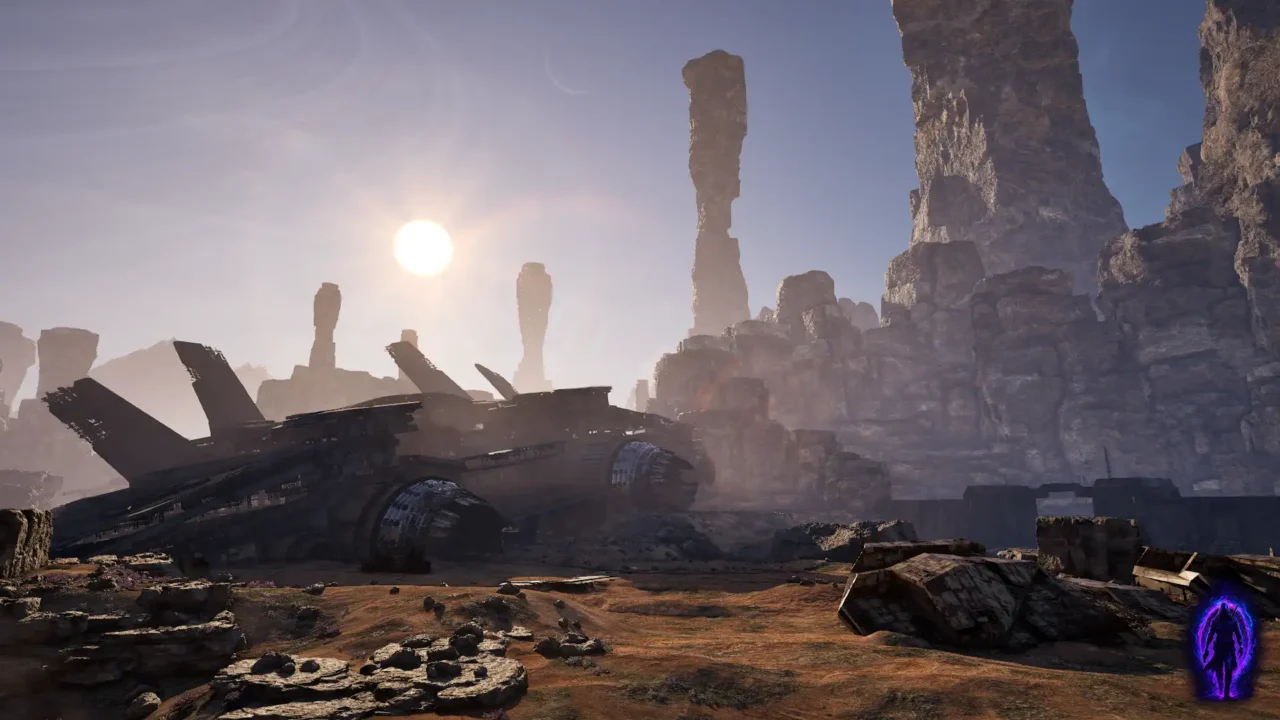
A dramatic environmental shot centered around a crashed ship wreck in the desert.
The Void system could become its standout mechanic
The biggest system hook Ethan showed me was the Void, and it is easy to see why he wanted to follow up with a separate short clip to explain it cleanly. From what he showed and clarified, the Void is not there just to make the game look stylish. It appears to function as a layered gameplay mechanic tied to traversal, stealth, shortcuts, timing, and consequences.
In practical terms, that means players can use it to approach spaces differently, reach paths they could not access otherwise, and create opportunities that would not exist in the regular state of the world. Just as importantly, it is not presented as a free advantage. Ethan framed it as something with real risk attached, which gives it more weight and makes it feel like a meaningful part of the game rather than a throwaway trick.
This is the kind of system that can give a project its own identity if it is executed well, and based on what I saw, it already feels like one of the strongest reasons to keep an eye on Riftwalker.
The weather system was another genuine standout
Another part Ethan showed me that really stood out was the game’s dynamic weather system. This was not just a simple background effect thrown in for atmosphere. What he presented looked like a much more deliberate part of immersion, with shifting conditions including rain, heavier storms, snowfall, blizzards, dust, and changing visibility. It added real presence to the world and made the environment itself feel more alive.
What impressed me most was how much thought had clearly gone into it. The way Ethan showed it, the weather was not just there to decorate the screen — it felt like part of the game’s identity, helping sell the scale, mood, and danger of the world he is building. Visually, it was one of the most striking moments of the entire call.
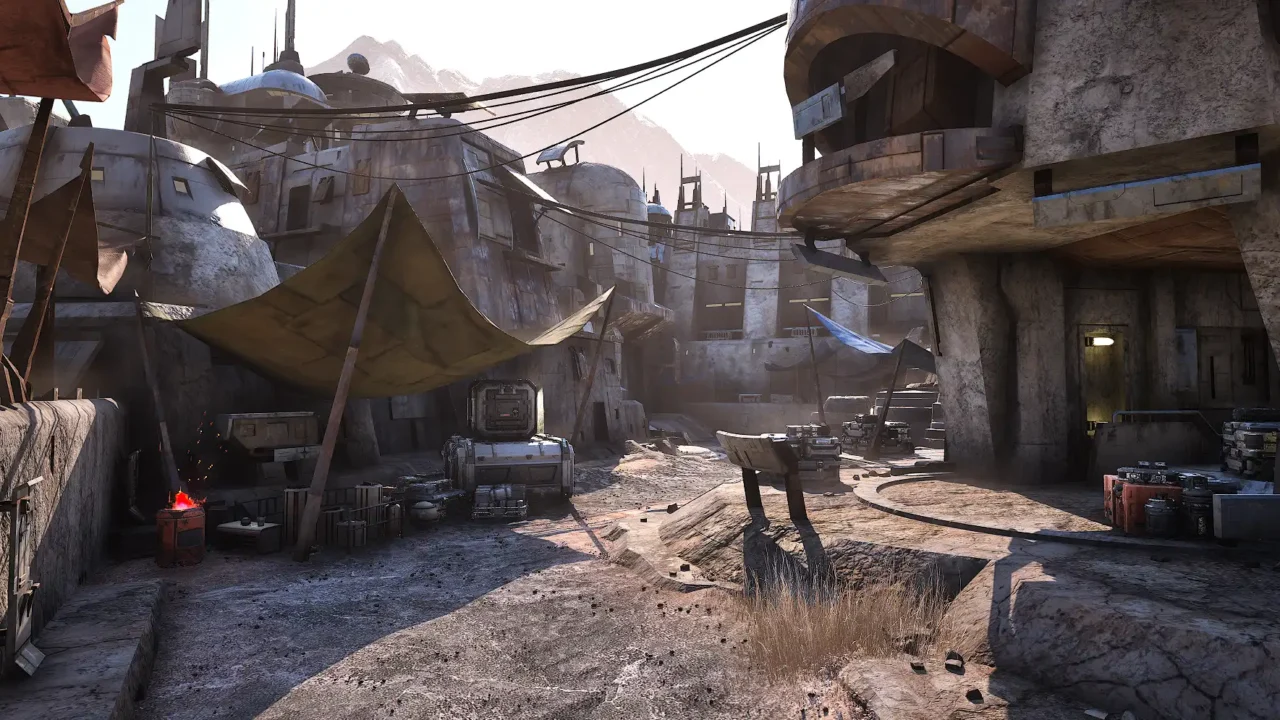
A clear-weather look at one of Riftwalker’s detailed settlement areas.
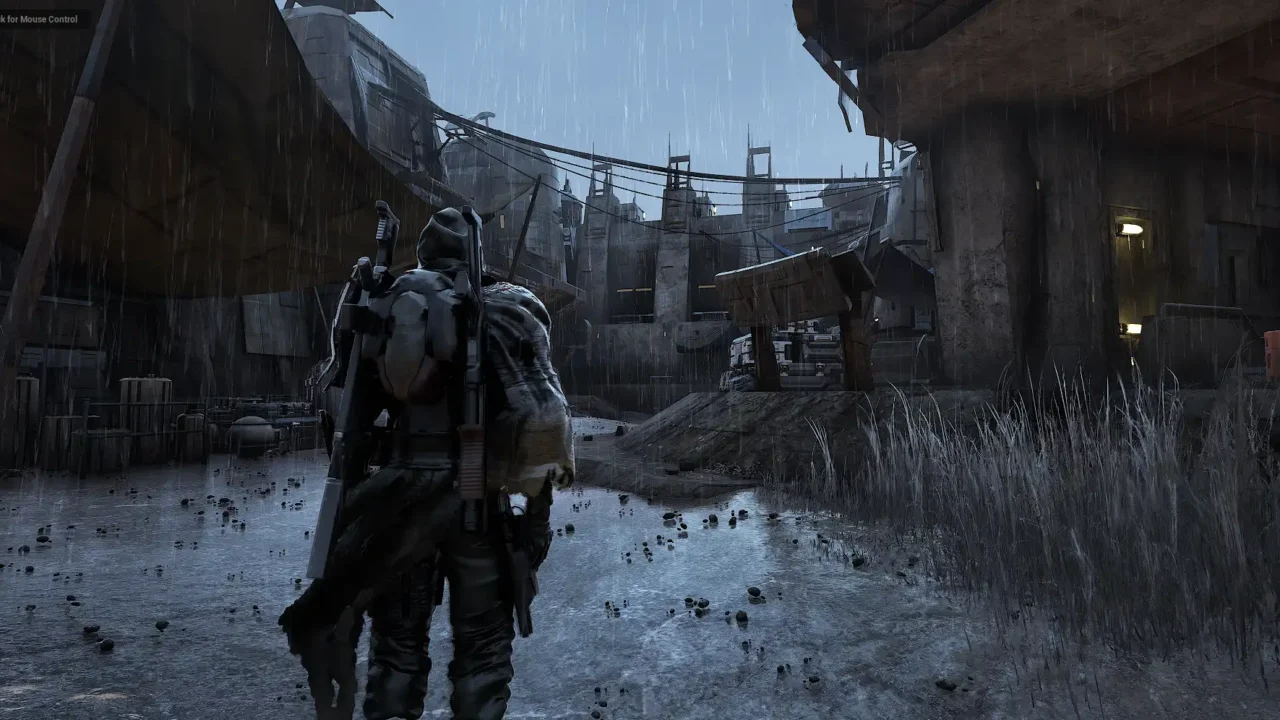
Riftwalker’s weather system in action, shifting the same kind of environment into a darker rain-soaked scene.
Combat, traversal, and layered systems already show real ambition
Beyond the Void itself, Ethan also spoke about combat, traversal, and several systems already taking shape inside the project. He referenced influences like The Division and Max Payne when talking about combat feel, with a clear focus on fluidity, feedback, and avoiding the kind of repetitive encounters that drain the life out of action games.
He also described a wider structure around bounty hunting, quests, progression, and mobility. Even in its current state, Riftwalker does not sound like it is aiming to survive on one cool mechanic alone. It sounds like Ethan is trying to build a game with enough layers that players always have something feeding into the next decision, whether that is combat, movement, tracking a target, or pushing deeper into a dangerous area for a reward.
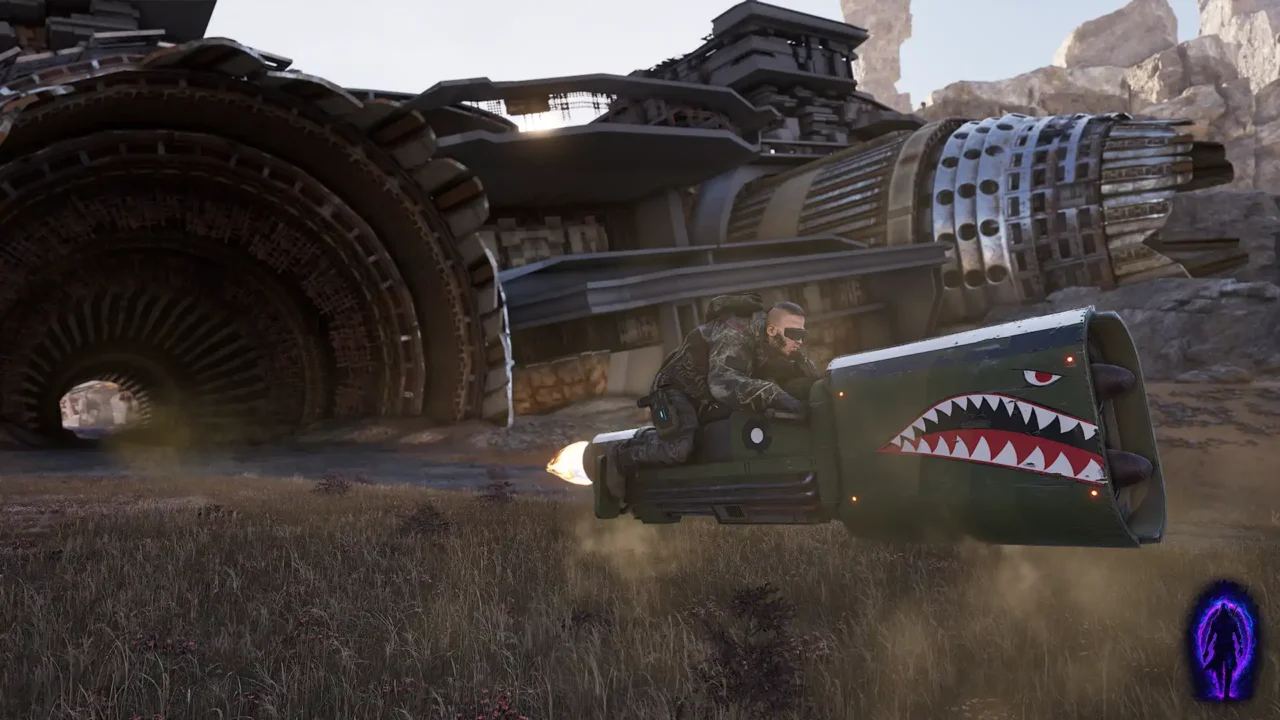
A strong action-focused shot showing Riftwalker’s speeder traversal across the desert environment.
Public momentum in real time
Ethan McKinnon first caught my eye when Riftwalker crossed an earlier wishlist milestone, and the momentum has only kept building. He shared the push past 9,000+, and now it is already up to 9,500+ Steam wishlists. That kind of growth does not happen by accident — people are paying attention because they can actually watch this project take shape.
Now It’s over 9000!!!!!! (insert meme here)
Riftwalker is now well over 9,000 Steam wishlists in a little over a month, the growth is Unreal!
I am so humbled, Thank you! 💜🙏
https://t.co/JhAKRRr2jA
#indiedev
#gamedev
pic.twitter.com/A8TPJ6Ykp8— Riftwalker | Sci-Fi Bounty Hunter (@Riftwalkergame)
February 27, 2026
Riftwalker’s 9,000+ wishlist milestone shared publicly on X, showing how quickly the momentum kept building.
Why the 9,500+ wishlists make sense
The more I listened to Ethan and looked at how he presents the project, the more the wishlist momentum felt logical rather than surprising. Going from 6,000 to 9,000+ and then 9,500+ Steam wishlists in a relatively short span tells its own story, but the real point is why that growth is happening.
Ethan said he updates players every day on X and makes sure he is posting small updates consistently.
That consistency matters. Ethan is showing the work, talking to people, posting updates, and letting the public see the game take shape. In an industry where many projects stay quiet until they are ready to be sold, that level of openness stands out. Whether you look at it as smart community-building, smart marketing, or just plain common sense, it is clearly working.
Where the project stands now
During our conversation, Ethan said Riftwalker had been in development for around seven months at that point, with the current focus on building out the first planet and laying the foundation for what comes next. He also pointed to a rough Early Access target of around 7–8 months from the interview period, while making it clear that the project is still active, evolving, and being refined in public as it grows.
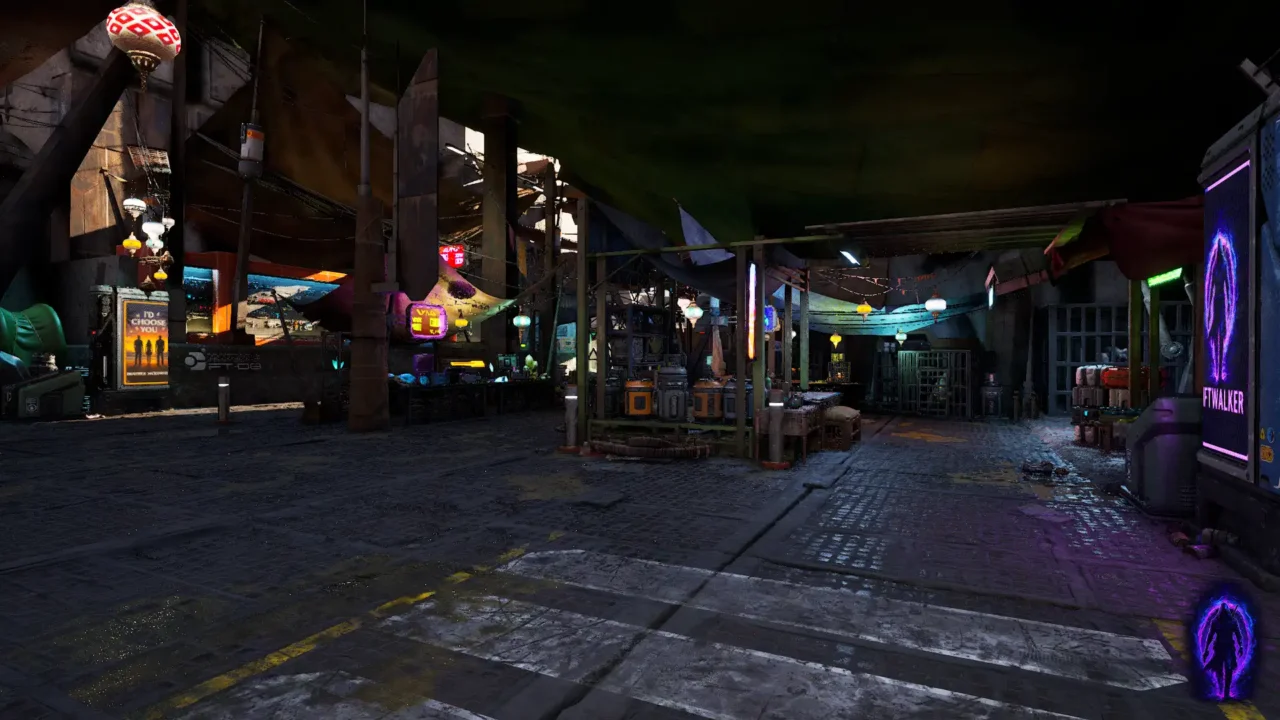
A darker interior market shot that shows another side of Riftwalker’s atmosphere and lighting.
That is another reason this one is worth keeping an eye on. There is still a lot ahead for Riftwalker, but the core direction already feels visible, and the public-facing momentum around it is real.
Wishlist Riftwalker on Steam
You can wishlist Riftwalker directly on Steam.
Follow Riftwalker
If you want to keep up with Ethan’s work, explore more of the world and visual design behind Riftwalker, or follow the project as it grows, you can find him across these public platforms:
You can watch Ethan build it live
For me, that may be one of the most interesting parts of this whole project. Ethan is not hiding the process. He is actively building Riftwalker in public, sharing progress, and letting people watch the game take shape in real time. That alone makes the project worth following, even before release.
Based on everything I saw and heard, this is one to keep firmly on your radar.
Related Reading
Written by Ronny Fiksdahl, Founder & Editor of Fix Gaming Channel.
Send interview pitches, corrections, tips, or developer stories to contact@fixgamingchannel.com.
Support independent games coverage on Ko-fi.