A short, looping escape-room story about OCD and anxiety
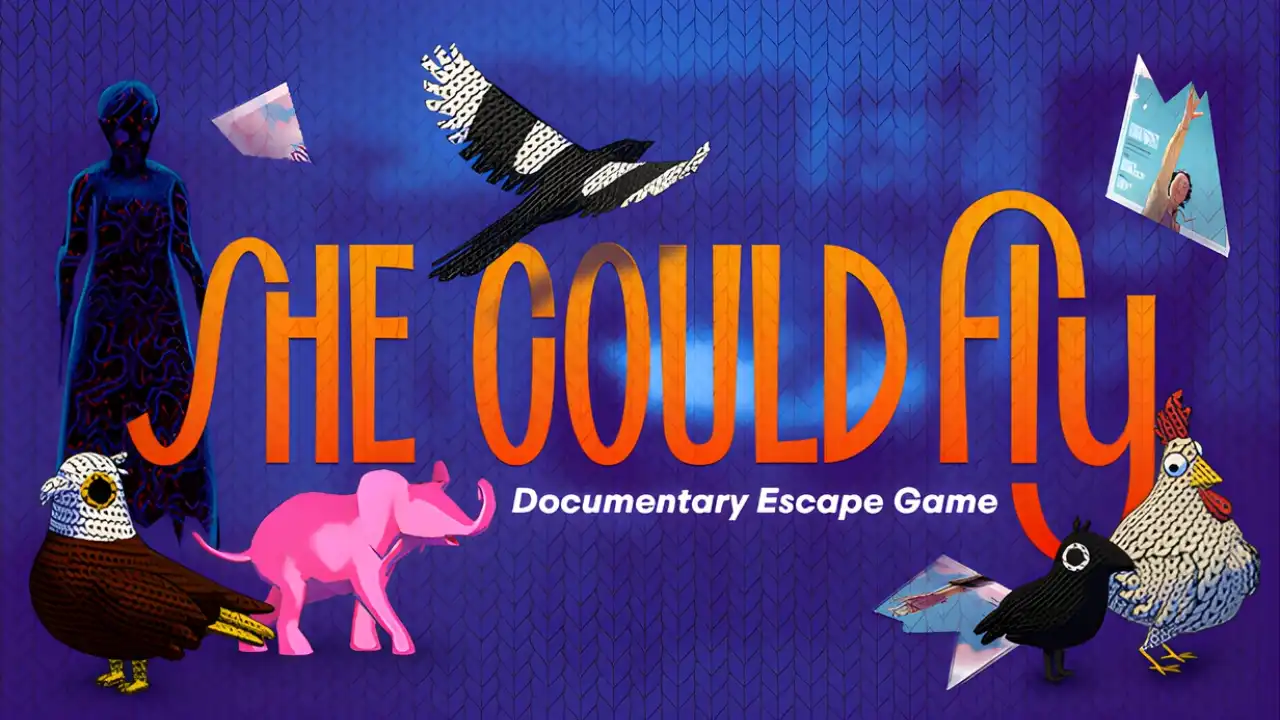
She Could Fly: Documentary Escape Game is a short, point-and-click psychological adventure from Wowbagger Productions that traps you in a looping flat full of comic art, cluttered details, and unsettling knitted birds. Your goal is straightforward – escape the flat – but everything around you is wired to something much more complex: an honest attempt to visualise how OCD and anxiety can feel from the inside. Here’s my She Could Fly Documentary Escape Game review.
If you’ve followed some of our coverage of experimental narrative games like Centum, you’ll recognise the same willingness to push beyond a traditional “escape room” and turn mechanics into metaphor. She Could Fly leans into that fully, combining comics, live-action documentary footage and interactive puzzles to get you thinking about OCD rather than just using it as a throwaway label.
Gameplay Video
Join Our Newsletter
Stay updated with the latest interviews, previews, and indie gaming news from Fix Gaming Channel.
Gameplay and Mechanics – Loops as metaphor
At its core, She Could Fly: Documentary Escape Game uses looping level design as both structure and symbol. You move through the same small flat again and again, nudging objects, picking up new comic fragments, and noticing small changes in the environment. It’s a clever way to echo how OCD and anxiety can trap people in repeating thought patterns and routines while still functioning as an accessible puzzle framework.
Guiding you through this is Tiger Orchid, a Twitch/YouTube-style streamer voiced by Shaniqua Okwok. She acts as a running commentary track, tutorial voice, and emotional anchor all at once, talking directly to you as if you’re watching a live stream while you play inside it. That decision grounds the experience in something familiar to most players and makes the heavier subject matter feel less abstract and more conversational.
She Could Fly: Documentary Escape Game
Release: July 11, 2024
Genre: Adventure, Narrative, Indie
Developer / Publisher: Wowbagger Productions / Wowbagger Productions
Platforms: PC (Windows & macOS) — Steam (wishlist/buy)
The basic point-and-click interactions are intuitive: you examine objects, collect comic pages, and bring them back to the desk to unlock new hotspots. The puzzles aren’t there to stump you for hours; they’re there to keep you engaged as the documentary elements slowly slot into place. The loops can feel disorienting at first, but that’s part of the point – the sense that you’re stuck, pushing at the edges of a space that never quite behaves the way you expect.
Visuals, sound, and atmosphere
Visually, She Could Fly keeps things deliberately lo-fi. This isn’t chasing high-end fidelity; instead, it borrows heavily from the original She Could Fly comic book by Christopher Cantwell and Martín Morazzo, wrapping the flat in panels, speech bubbles, and ink-heavy artwork. :contentReference[oaicite:1]{index=1} It suits the game’s hybrid documentary format perfectly – you’re not meant to forget that this is a story born on the page as much as on screen.
Sound is where the experience really tightens its grip. The voice work, ambience, and score combine to create a sense of unease without tipping into cheap horror. One particular spike – an abrupt fire alarm – is jarring by design, reinforcing how suddenly anxiety can crash into an otherwise controlled situation. Overall, the audio sells the mood far more than any flashy visual effect could.
How She Could Fly talks about OCD
The central task throughout each loop is to collect scattered comic pages and bring them back to the desk. Each assembled page reveals interactive hotspots which trigger short video clips: interviews with scientists, clinicians, people with lived experience, and comic creators who talk directly about Obsessive–Compulsive Disorder (OCD) and anxiety. Instead of turning OCD into a throwaway quirk, the game lets these voices take centre stage.
OCD is a mental health condition where intrusive, recurring thoughts (obsessions) drive repetitive behaviours (compulsions). Those behaviours can become so time-consuming and distressing that they interfere with everyday life. She Could Fly uses repetition in its structure – revisiting the same rooms, performing similar actions, retracing your own steps – to mirror those cycles without trivialising them. The more loops you complete, the more context you gain, and the more the mechanical repetition starts to feel like a deliberate reflection of what people with OCD describe.
It’s also important to note that the game comes with content warnings for emotionally challenging topics, including intrusive thoughts around fear of violence and self-harm, and signposts resources under its “OCD info” menu for players who might need support afterwards. :contentReference[oaicite:2]{index=2} That extra layer of care reinforces that this isn’t just a stylistic theme – it’s a serious attempt to shift how we think and talk about OCD.
Personal perspective and impact
Coming to She Could Fly with a basic understanding of anxiety disorders, I found it to be a genuinely thought-provoking way of approaching OCD. The loops, the cluttered flat, the persistent commentary from Tiger Orchid, and the documentary clips all work together to express how intrusive, cyclical, and exhausting these thought patterns can be. It’s not a clinical textbook, and it’s not pretending to be – it’s a game that uses interactivity to build empathy and understanding in a way a static article or video rarely can.
As a reviewer, that’s where it lands hardest. The educational intent is baked into the design, but it never fully overwhelms the experience as a game. You’re still solving, exploring, picking apart the space, and gradually feeling that satisfying click as everything you’ve seen and heard comes together into a clearer picture.
Related reading: If you’re interested in more purpose-driven indie projects, check out our piece on how over the hill built serious wishlist momentum through consistent outreach and showcases: How an indie gained 650,000 wishlists in 10 months.
Verdict – A powerful, short experience
She Could Fly: Documentary Escape Game is a compact experience, but it sets a high bar for games that want to tackle mental health with both honesty and craft. Its looping structure, documentary clips, and comic-inspired presentation all serve the same goal: to make OCD and anxiety feel less abstract, and more understood, without turning anyone’s real struggles into a gimmick.
As someone who cares about how games talk about mental health, I came away impressed by how carefully this project has been built. It manages to entertain and enlighten at the same time, and that’s rare. If you’re interested in narrative experiments, documentary storytelling, or simply want to see how games can handle mental health with sensitivity, She Could Fly is absolutely worth your time.
Written by Ronny Fiksdahl, Founder & Editor of Fix Gaming Channel.
Enjoy our content? Support Fix Gaming Channel with a donation via
Buy Me a Coffee to help keep independent game journalism alive.