


More science, more Jan, too much repetition — and 32:9 finally fills the screen
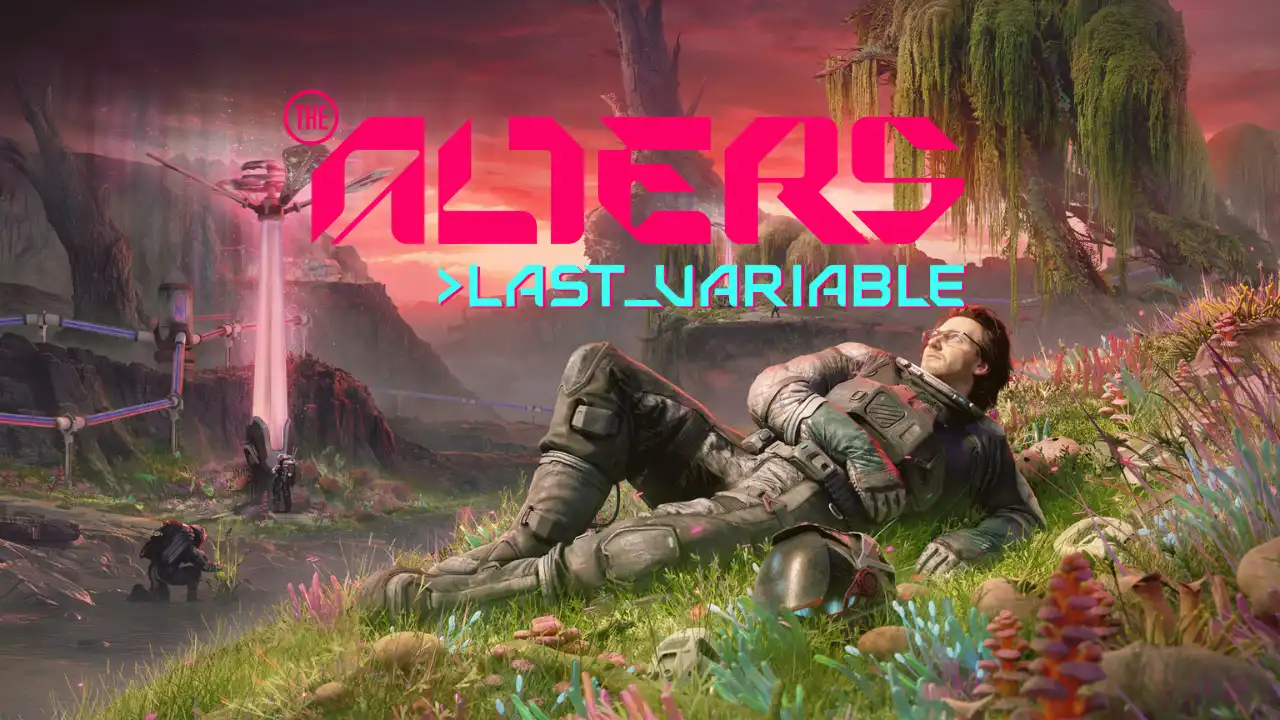
The Alters: Last Variable gives players a substantial reason to return, but repetitive terraforming, an awkward indoor camera, and occasional stuttering stop it from reaching the same level as the original game.
Reviewed on PC.Score: 7/10
I gave the original The Alters a 9.5/10. Its strange sci-fi story, survival systems, crafting, management, and different versions of Jan came together in a way that felt fresh, clever, and surprisingly emotional.
The Alters: Last Variable gives players a lot of new content. This is not a tiny DLC that disappears after one evening. Depending on how much you play each day, you could easily spend a week or two with it.
That is both a positive and a negative.
There is a lot here for a DLC, but the new systems do not always have enough variety to carry the full length. As the campaign continued, the terraforming, gathering, building, and waiting started to repeat themselves.
There is also good news for super-ultrawide players. The game finally presents a proper 32:9 view across the full display. However, it still did not offer my monitor’s native 5120×1440 resolution.
Light spoiler warning: This review discusses which ending from the original game leads into the expansion, but it avoids major story spoilers from Last Variable.
The Alters: Last Variable Launch Trailer
Join Our Newsletter
Stay updated with the latest interviews, previews, reviews, and indie gaming news.
Jan Scientist gets his own campaign
Last Variable continues the ending where Jan Scientist remains on the planet while the other Jans leave. He stays behind to study the Oasis, a green and living environment that should not be able to survive under the planet’s hostile conditions.
To continue the research, Jan creates four new scientific Alters: Jan Geologist, Jan Biologist, Jan Chemist, and Jan Physicist. Each has a different scientific specialty and different ideas about the Oasis, the research, and what Jan is willing to sacrifice to find answers.
The premise is good. Jan Scientist is also a logical choice for a continuation. His need to understand the planet gives the DLC a clear direction without pretending that the other endings from the original game no longer matter.
Returning players should settle back into the game fairly quickly. If you have not played The Alters since its original release, there is enough familiar material here to help you remember how everything works.
I would still strongly recommend finishing the original game first. The story expects you to understand Jan, the Alters, Rapidium, and why Jan Scientist’s decision to remain behind carries any emotional weight.
The underground base sounds more different than it feels
The original game was built around a mobile circular base and the pressure of staying ahead of a deadly sunrise. Last Variable replaces it with a permanent underground base designed to survive planetary cycles lasting for years.
On paper, that should be a big change.
It was not, at least not for me.
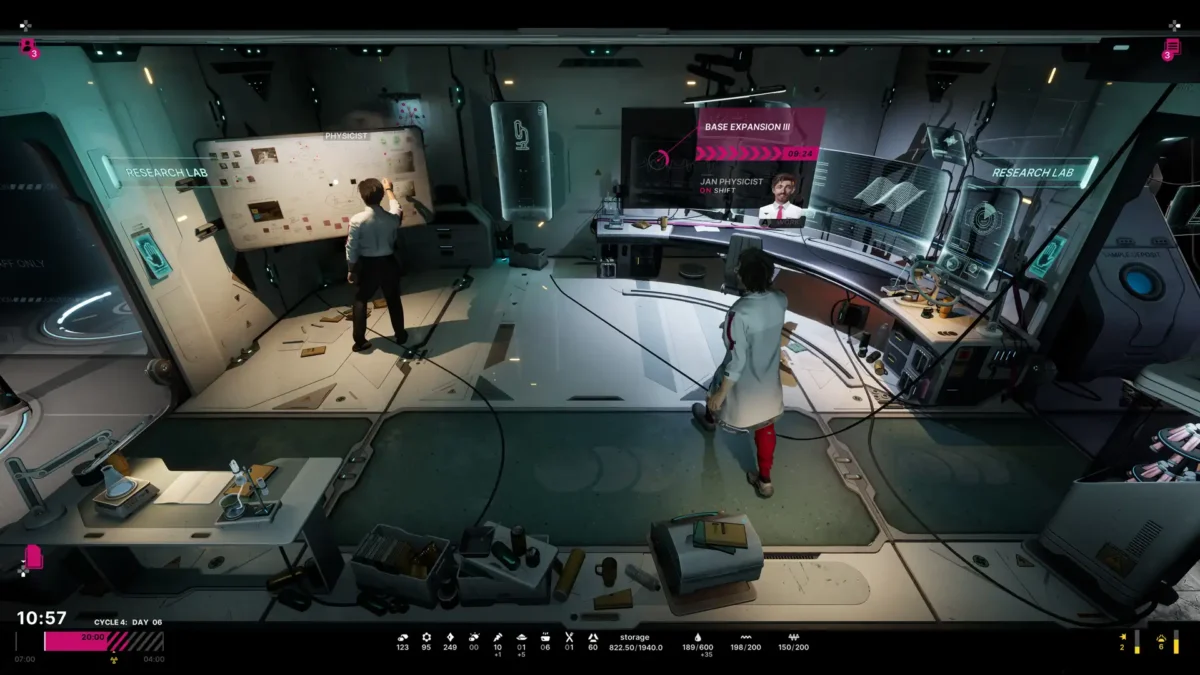
The location is different, and the base serves another purpose, but the main rhythm remains very familiar. You leave the base, gather resources, build whatever the next objective asks for, manage the Jans, and return to prepare for the next stage.
The pressure from the sunrise has been replaced by planetary cycles, cryosleep, and periods when it is safer to work outside. It changes the story and presentation more than it changes how the game feels to play.
The underground base works fine. I just did not feel the major difference that the description suggested.
Terraforming looks better than it plays
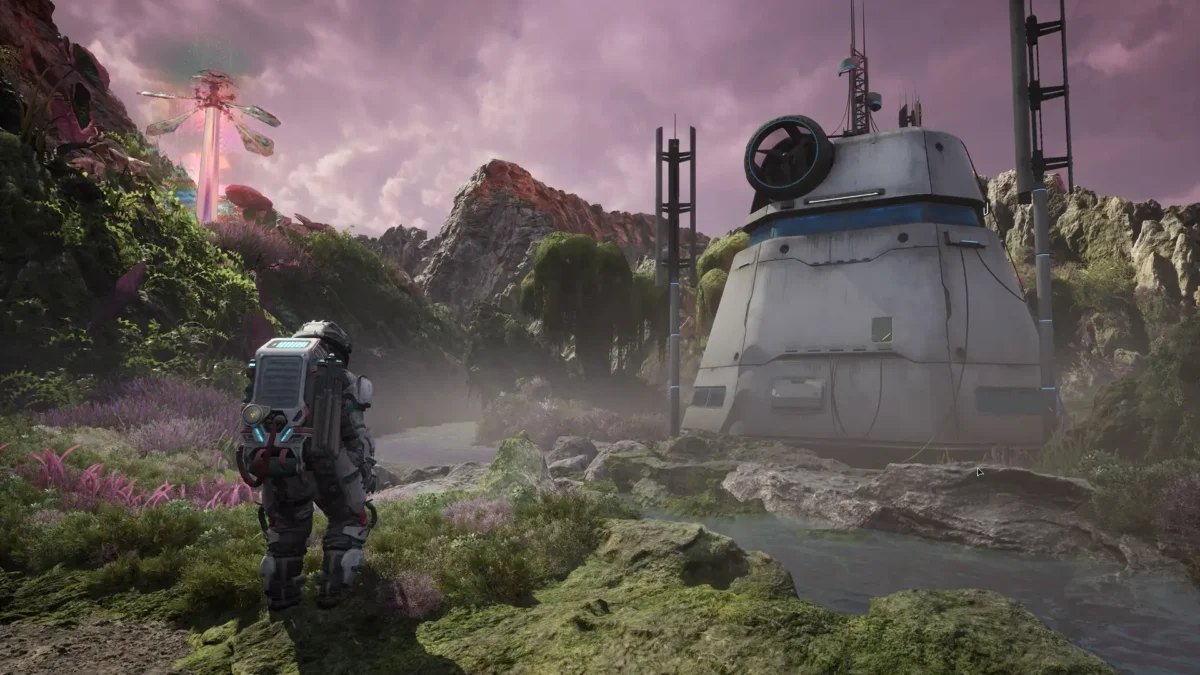
Terraforming is presented as one of the biggest new additions. Jan and his team gradually change different regions, create new materials, establish scientific structures, and continue investigating the Oasis.
Watching the planet change can be satisfying. Areas become greener, new resources appear, and parts of the world that once looked dead begin to feel alive.
Playing through that process is another matter.
Most of the time, terraforming felt like another resource grind. I did not feel that I was constantly making important strategic decisions about how the planet should be changed.
The pattern was normally straightforward: collect the required resources, build the required structure, wait for the process to finish, and then do something similar in another location.
There are new materials, machines, and research options, but they often give you more work rather than better choices.
Terraforming and the repetition surrounding it are among the main reasons for the lower score. Repetition was already part of the original game, but Last Variable stretches it across another long campaign.
The four new Jans are different — kind of
Jan Geologist, Jan Biologist, Jan Chemist, and Jan Physicist have different jobs, backgrounds, viewpoints, and personal problems.
They are different. Kind of.
They did not feel as distinct or memorable as the strongest Alters from the original game.
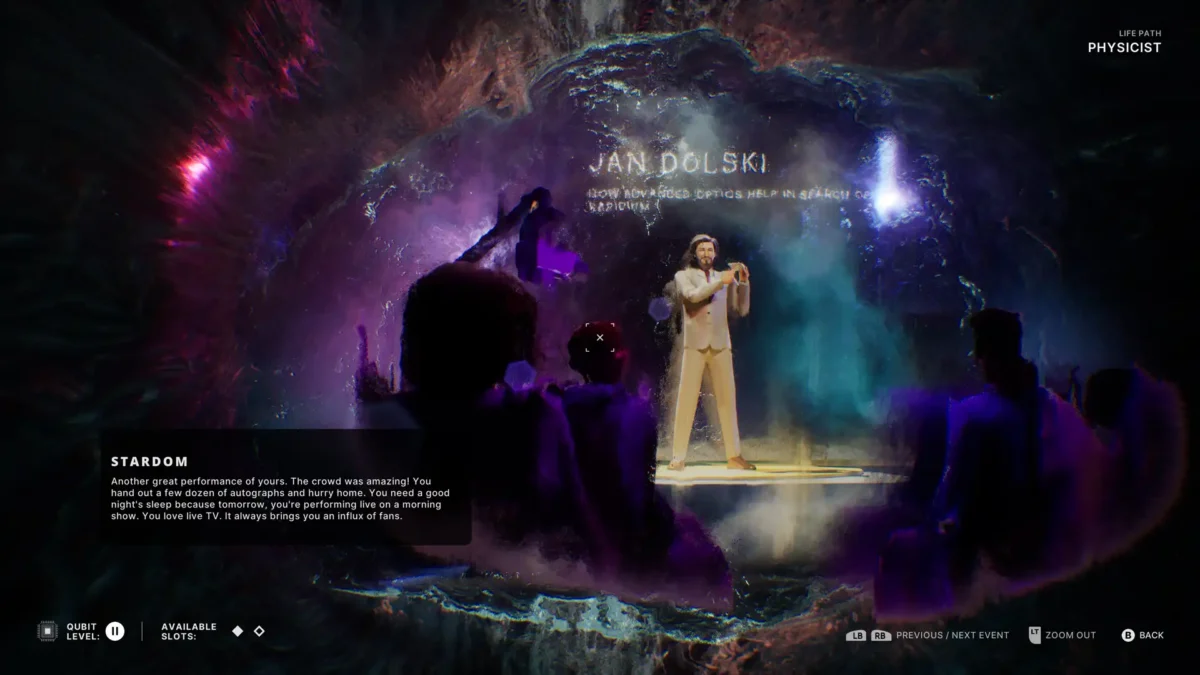
Their professions often stand out more than their personalities. I understood what each Jan contributed to the research, but I did not develop the same connection with them that I had with several members of the original crew.
They are different enough to keep the story moving, but not different enough to make every conversation or personal problem feel important.
The original game made many of its Alters feel like complete alternative lives. Here, the new Jans can sometimes feel more like four different departments inside the same science project.
Aging is mainly there for the story
Jan Scientist can enter cryosleep while the other Alters continue working through Field Labs. Jan avoids experiencing those years, while the other Jans continue living, working, and aging.
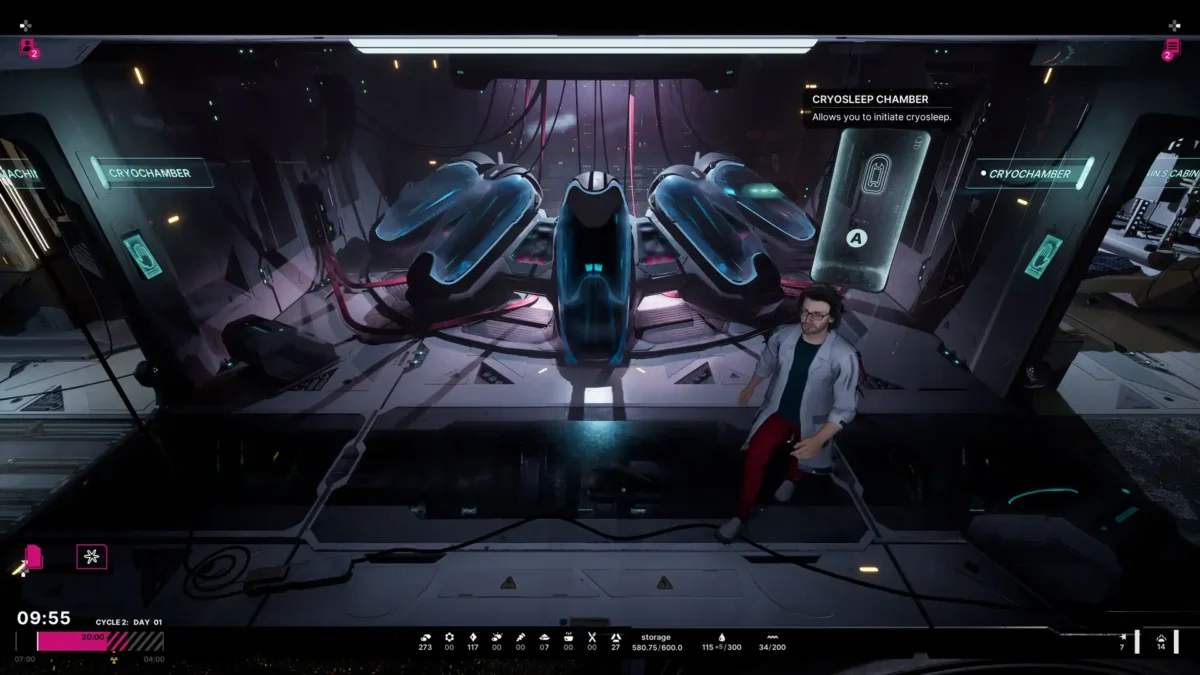
It is a good idea, especially in a game already built around lost time, different lives, and decisions that cannot be undone.
In practice, I felt that aging mattered more to the narrative than to the gameplay.
It supports conversations about sacrifice, obsession, responsibility, and whether Jan Scientist has the right to ask other versions of himself to spend years working toward his goal.
I understood why it mattered, but I felt most of its consequences through conversations and story developments rather than major changes to how I played.
The emotional side can become too much
The original The Alters handled emotional storytelling extremely well. Its strongest conversations worked because each Jan represented a life the main character could have lived.
Last Variable tries to carry the same emotional weight, but sometimes it pushes too hard.
The campaign repeatedly deals with aging, purpose, sacrifice, identity, scientific responsibility, and the cost of Jan Scientist’s obsession. Several individual scenes work well, but when everything is put together, it can become exhausting.
Not every conversation needs to feel like a final goodbye or another life-changing confrontation.
Sometimes the characters should be allowed to breathe, speak normally, and exist without another emotional crisis waiting around the corner.
The story remains interesting, but it sometimes tries so hard to create an emotional reaction that it loses some of the natural feeling that made the original game so effective.
A lot of content, maybe too much
This is not a DLC you start after dinner and finish before going to bed. Depending on how much you play each day, you could easily spend a week or two with it.
That is obviously a positive. You are not paying for one short mission or an extra hour of story.
It also creates a strange criticism: the DLC gives you a lot to play, but I sometimes wanted less of it.
The problem is not simply the number of hours. The problem is whether the gameplay has enough variety to support those hours.
Once terraforming and resource collection begin repeating the same pattern, making the campaign longer only makes the repetition easier to notice.
More content does not automatically mean better pacing. A shorter and more focused DLC could have told the same story without repeating as many jobs and planetary cycles.
Sometimes I wanted the expansion to chillax a little, remove a few repeated tasks, and get on with the story. This is still a DLC. It does not need to keep proving how large it is.
The length is good value when you only count the hours. It is less impressive when you look at how much of that time is spent doing similar work again and again.
It is also not something I could see myself immediately playing again. Once you know the story and have completed the grind, there is not much reason to start over.
Performance did not improve on my PC
I expected the technical update released alongside the expansion to improve image quality and performance.
On my PC, it did not.
I had to lower some graphics settings and enable AMD FSR. Even after doing that, the game did not always look as good as I expected from the hardware I was using.
The open planetary areas generally performed well. Most of the noticeable problems appeared when I entered rooms or moved through parts of the underground base.
There was occasional stuttering when entering certain rooms. It was not constant, and it never made the game unplayable, but it happened often enough that I noticed it.
The indoor camera remains frustrating
Inside the underground base and smaller rooms, the camera often feels too close and awkward. It makes moving around less comfortable than it should be, especially when turning or entering tighter spaces.
This matters because a large part of the campaign is spent inside the fixed base.
A camera problem that might be a small irritation in one area becomes much harder to ignore across such a long campaign.
Repetition and the indoor camera are the two biggest reasons for the lower score. The occasional stuttering and uneven pacing also count against it.
PC test system
CPU: AMD Ryzen 7 7800X3D
GPU: AMD Radeon RX 7900 XTX
Memory: 48GB DDR5 RAM
Display: AOC AGON AG493UCX2, 49-inch, native 5120×1440, 32:9, 165Hz
Tested 32:9 resolution: 3840×1080
32:9 finally fills the screen, but it is not native
Here is the biggest technical positive: Last Variable finally presents the game correctly in a 32:9 aspect ratio.
My AOC AGON AG493UCX2 has a native resolution of 5120×1440. That resolution was not available in the game. The 32:9 option available to me was 3840×1080.
So no, this is not full native-resolution support for my monitor.
However, the game now fills the entire 32:9 display and provides the wider field of view correctly. That is still a major improvement over the original release.
After previously asking whether The Alters would receive proper ultrawide support, I can finally give a clearer answer.
32:9 works properly now. Native 5120×1440 was not available during my test.
The wider view works especially well while exploring the planetary surface. The environments feel larger, and you can see more of the landscape around Jan.
I recorded a six-hour gameplay session at 3840×1080 to test the aspect ratio over an extended period instead of judging it from a few minutes at the beginning.
The Alters: Last Variable — Six Hours of 32:9 Gameplay
Six hours of The Alters: Last Variable gameplay tested at 3840×1080 in 32:9 on an AOC AGON AG493UCX2 display.
The indoor camera remains awkward, but that is a camera problem rather than the old problem of the game failing to present a correct 32:9 view.
For players using a 32:9 display, this is a meaningful improvement and one of the clearest reasons to return.
Is it worth $14.99?
For me, no. Not at full price.
There is enough content here to make the price look reasonable when you count only the hours. You get a complete new campaign, four new Alters, terraforming, an underground base, new resources, cryosleep, Field Labs, and a continuation of one of the original endings.
The problem is how those hours are used.
Too much of the campaign is spent repeating familiar collection, construction, research, and waiting. The new systems do not change the experience as much as their descriptions suggest.
The camera and performance problems also make the asking price more difficult to recommend without reservations.
Players who loved The Alters and have not played it since launch will probably get the most from this expansion. It is familiar enough to return to easily, and there is a substantial amount of new story.
Players who recently completed the base game may notice the repetition much sooner. For them, waiting for a discount makes more sense.
Final verdict
The Alters: Last Variable is a good expansion with a strong premise, a complete new campaign, and far more content than many story DLC releases offer.
The fixed underground base works, but it did not feel as different from the original mobile base as I expected.
Terraforming changes the landscape and creates some impressive environments, but too often it becomes another reason to collect resources and construct whatever the current objective asks for.
The four new Jans support the story without reaching the same individuality as the original crew. Aging is also more important to the narrative than it is to the gameplay.
The substantial length is impressive, but the campaign does not have enough variety to make every hour feel necessary.
The indoor camera, occasional room-entry stuttering, and disappointing performance on powerful hardware hold it back further.
Correct 32:9 presentation is a major improvement, even though my full native 5120×1440 resolution was unavailable.
I enjoyed returning to The Alters. I also spent too much time wishing the expansion would stop repeating itself and move the story forward.
Last Variable gives players more The Alters. Sometimes it gives them too much of the same thing.
The Alters: Last Variable
Release: July 13, 2026
Genre: Sci-Fi Survival, Base Building, Management, Adventure
Developer / Publisher: 11 bit studios
Platforms: PC — Steam, PlayStation 5, Xbox Series X|S
Related Reading
The Alters Review – Sci-Fi Survival Done Right
The Alters Ultrawide Support: Is It Updated Yet?
Written by Ronny Fiksdahl, Founder & Editor-in-Chief of Fix Gaming Channel.
Send interview pitches, corrections, tips, or developer stories to contact@fixgamingchannel.com.
Support independent games coverage on Ko-fi.