A debut project shaped by Arctic mystery, historical inspiration, survival design, and a grounded creative philosophy is starting to reveal why The Perilous North feels like one to watch.
Fix Gaming Channel previously covered The Perilous North in an earlier feature, but this interview goes deeper into the thinking behind the project. Morgan Ketelaar Jaress and Anna Mihhailovskaja speak openly about the game’s Arctic identity, its light Lovecraftian horror undertone, and the challenge of building a strategy survival RPG that stays meaningful without becoming a chore.
There is real ambition here, but also a grounded mindset behind it. The developers talk about story, historical research, crew management, navigation, visual direction, and the realities of trying to build something distinctive as a small team. Readers who enjoy thoughtful survival design conversations may also want to revisit our Permafrost interview, but this one has its own very different Arctic flavour.
The Perilous North is still early in development, with the Steam page currently listing the release date as to be announced and offering playtest access by request. That makes this interview a useful snapshot of the project’s creative direction, design philosophy, and long-term potential.
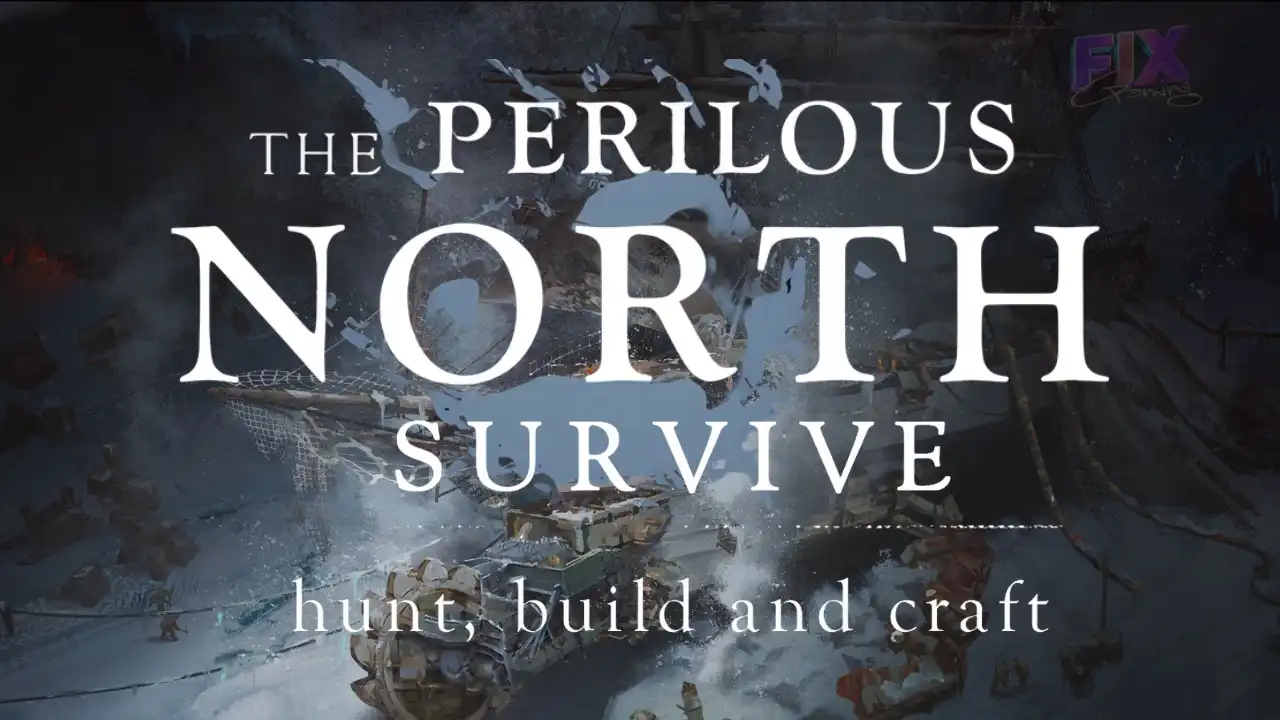
The Perilous North
Release: To be announced
Genre: Survival Strategy RPG, Adventure, Indie, RPG, Strategy
Developer / Publisher: SUBMERSION STUDIO LIMITED / Anna & Morgan (SUBMERSION)
Platforms: PC (Steam)
Exclusive Interview With Morgan Ketelaar Jaress and Anna Mihhailovskaja
The devs creating The Perilous North

Early mood concept art shows the harsh scale and atmosphere The Perilous North is aiming for, blending Arctic isolation with a darker sense of mystery.
Join Our Newsletter
Stay updated with the latest interviews, previews, and indie gaming news from Fix Gaming Channel.
Was it always the plan to weave a ‘light’ Lovecraftian horror aspect to the games narrative?
Morgan:
Yes! Since the game’s inception it has been a key part of the mystery and the world.
That said, we’ve got a very minimalist philosophy when it comes to the games’ fantastical elements. In an ideal world, you would have no idea about the Arctic. We’d almost prefer to be 100% historically accurate, so long as you, the player, had no idea what you were going to find and we could still play with your fear of the unknown.
But in the 21st century, there’s next to no chance you don’t already know what is in the Arctic, and what you’d likely find there. There’s no mystery. So we’re taking some creative liberties with the goal of enhancing the experience, rather than just changing things for the sake of it.
Our primary goal is to be faithful to the experience of being an Arctic explorer, with a secondary goal of being faithful to the history of being an Arctic explorer.
That means you won’t know what you’re getting yourself into, and have no idea what you’ll find.

A gameplay test scene shows crew gathered around a fire in punishing conditions, underlining the game’s focus on survival, morale, and management.
What are some of the key considerations you’ve had to take onboard with the Strategy Survival RPG nature of the game?
Morgan:
Considering RPG mechanics, the Witcher is probably the easiest example of the role playing you can expect. We have a specific story to tell, and the character you play as is a key part of that. You have a name, a defined personality and history. You can absolutely push the character in different directions, but the role playing is within the box of Captain Edward Fitzmaurice.
For survival mechanics, we’re doing our best to take ideas from just about everywhere except survival games. There’s a lot of (in our opinion) tedium and uninteresting gameplay that seems to come with the survival genre that is just not for us. We’re taking cues from puzzles games and (this is going to sound weird) stealth games.
For the strategy aspects, as much as we love complex games, simplicity is our mantra. Unless it provides something meaningful to the player, it’s getting ripped out with no mercy.
Originally we were developing the game almost like a tactical RTS (I know) but we realized quite early, thankfully, that it was totally the wrong direction.
Because of the setting, (leading a small crew in a desolate environment) we’ve really had to reach for answers to design problems, diving into obscure and weird games I daren’t even mention as it might have you questioning our sanity.
“Strategy survival RPG” sounds daunting, but it’s not something we think about during development. We’ve just sort of landed there through the process of “how do we best give you the experience of an Arctic explorer?”

This gameplay test image highlights shore exploration and the expedition setup feeding into the game’s broader strategy survival loop.
Some of the technology in the game looks like Steampunk inspired – was that a conscious decision for helping the game define itself and was that a specific design choice based on the games gameplay mechanics all along?
Morgan:
We didn’t need to invent much, the Victorian Arctic explorers already had some crazy inventions.
This was the height of the industrial revolution, and a lot of the funding and public interest in exploration at the time was fueled by crazy inventions that were meant to conquer the world. Some (telegraphs, electric lights etc.) absolutely did, but most (propeller sledges, snow trains, hydrogen balloons etc.) were a complete disaster.
The exaggerated technology was decided before either of us actually knew anything about game design, purely for recreating the “experience” of being an early Arctic explorer, where the leaps in technology must have seemed like magic. That said, it is really convenient if we do want to bend the truth a little for the sake of fun.Anna:
Steampunk seems like a natural addition to any Victorian-esque setting, but we’re not leaning into a heavily exaggerated steampunk direction. It’s more toned down, closer to the legacy of the Industrial Revolution and those early inventions sitting right on the edge of technological progress. Things like the first electric vehicles by Siemens and Halske, which resembled carriages more than cars. I’d say it’s the most appropriate time to release your inner nerd and be mesmerised by the heights and originality of these designs. It was a fascinating period. Inventions were bold and much less practical, which made most of them utterly useless, but incredibly exciting in their concept.
The Perilous North seems like a very ambitious project to undertake as your first real project, especially with the various layers involved in story, characters, gameplay mechanics and RPG survival management – what’s been the biggest challenge so far?
Morgan:
I’ll only speak for myself here, but this has been surprising, it’s not what I anticipated. Both of us are artists, with no background in code or tech. However the tech side making a game, while challenging, is very doable. The hardest part has been making something worth making in the first place.
Good storytelling, fun, art – things that have been around since 300,000 BC – that you’d hope we’d have a good playbook on by now, are still the most challenging things for me.
That and cross platform UI programming… That still makes me want to rip my hair out at times.Anna:
As for me, working on the visual side of things, the biggest challenge so far has been finding an overall aesthetic for the project – something that feels slightly more evocative than reality, while still staying grounded in historical references for people to recognise. It’s a difficult balance to strike. In many ways, the most interesting designs already exist in reality, so you’re constantly trying to reinterpret them by mixing and matching things from cultures that have the same roots and would work logically in the space of the project you are making.
And then, of course, if you’re anything like me, you end up looking at projects like Dishonored, where every single asset was designed and stylised to create a certain unique look of this project, and you can’t help but feel a little bit of envy – knowing that kind of production simply isn’t something we could afford at our scale. That said, I do think we’ve found a good rhythm in putting our resources into areas that matter the most for the player and the world to be cohesive, and we have something quite exciting taking shape.
The other ongoing challenge is writing. There are a few aspects to this – historical research and writing itself. To create something that feels meaningful, there are quite a few elements that need to come together as a whole. People being the part of the timeframe we are transporting our players into, social customs that are appropriate in certain parts of society, the language used etc., and all those small details that make a world feel believable. A lot of that comes through constant research – history, anthropology, literature, gradually building an understanding of how everything will work together.
And then, from there, the question becomes: what am I actually trying to say with this story? Do I have a story that is based in the realm of timeless questions and values that wouldn’t feel detached from reality and will be something people will respond to? Its something I`m constantly working on and hopefully will be able to share with our future players.

Sketches and handwritten notes offer a glimpse into the world-building and research shaping The Perilous North behind the scenes.
You’re utilizing Unreal Engine, how have you found working with that to build out all the game elements – is there anything specific with Unreal you liked as a game development engine?
Morgan:
It’s a bit of a mundane answer, but the main reason we’re using UE is because we were already familiar with it from our day jobs.
It is a fantastic engine though, and for the art style we’re eventually going to be pulling off, it is probably our best bet.
You do feel the engine (not-so) gently nudging you to make a multiplayer shooter with building mechanics – aka Fortnite. Anything outside of that needs to be fought for tooth and nail.
With the rapidly changing games media landscape is social media more of a priority for spreading awareness and community building for the game?
Morgan:
Haha – As I’m writing this we’ve just put out a Youtube video that bombed beyond our worst nightmares.
Social media is a bit of a mystery to us (and probably everyone). Our first video, we just threw out into the void with no context and no plan, just a shitty, half baked idea for a game and it got nearly 90k views. The video we posted yesterday and wrote specifically with the intention of getting a huge view count got sub 1000 views (granted, it wasn’t a dev log).
The internet is becoming an increasingly noisy and difficult to navigate place, but everything good that has come our way so far has been directly because of social media.
It is tempting to offload the marketing to someone else, but if there’s one thing I’m sure of, it’s that no marketing team will love this game or be more passionate about it than us, and perhaps this is naive, but I do truly believe that even today, if you have something special and of value, even if the marketing is completely blundered, as long as it’s put out there it will be found.
It is however, very difficult to sell a product still in the making.
We don’t have a board of investors to answer to, so we have the luxury of focusing very heavily on gameplay first, and making it look pretty after. That’s certainly expediting development, but default texture cubes and “trust me, these lines of code are going to be awesome in a year or two” are (understandably) a hard sell to the average guy or gal scrolling on Tiktok just looking for a game to play after work or school.Anna:
I think we’re still very much finding our footing when it comes to social media – trying different approaches to share what we’re doing, while also making sure we’re not only engaging with fellow developers. It’s been quite fascinating to see how the algorithms respond to different kinds of content, and how people feel about the setting and the stories we’re trying to tell about going through this journey together.
I do agree with Morgan – it feels a bit like the Wild West at times, but all things considered, people have been incredibly kind and often generous with valuable feedback. We’re looking forward to sharing more videos, building a community around the game and involving them in development.

Environment concept art points toward a cold, expansive landscape shaped as much by beauty as by danger.
The landmark sketchbook used in the game feels similar to how Red Redemption 2 prompted the clue system with maps for its treasure hunts. Does this reduce the hand holding aspect for players so that they figure out more for themselves as part of the survival aspect?
Morgan:
It’s funny you mention that! The landmark sketchbook just got a huge overhaul this week. While it was a lot of fun in its previous form, we felt it was a little too “treasure hunt” and not quite “arctic explorer”.
We’ve since updated it to involve more thematic mechanics. Navigating with a limited map, using limited information to find your way. It’s still very simple mind you, but we want you to have the experience of 19th century Arctic navigation, and the philosophy behind the design is still the same – to feel like “if I don’t use my brain here, I will die” – without the frustration that doubtless came from it.

Navigation appears to be one of the game’s more distinctive layers, asking players to work with limited information rather than heavy hand-holding.
How difficult has it been to factor in the design of the crew management attributes like hunger, cold, mental health etc?
Morgan:
Very difficult! We need to strike a balance between keeping things thematic, and not over burdening the player with stuff they need to manage.
Our initial attempt with prototyping was WAY too complex. It was challenging and led to interesting scenarios, but it was overly stressful and unmanageable.
We then pivoted to literally just one stat to manage per crew member. Health. This did have the intended outcome, it was very simple, but it didn’t allow for contextual differences between cold, hunger, physical injuries, or mental distress.
Our current model is still one stat to pay attention to – one thing you can look at and say “John’s fine” or “Oh my God, John’s about to die”, but cold, hunger and distress are there under the hood determining why John is doing so poorly, and what is actually going to happen. Will he get frostbite? Or get into an argument? Or suffer a broken bone?
Also, taking care of the crew must be very simple, and be a fun puzzle to solve. Survival games are notoriously tedious for interrupting the real gameplay with “now it’s time to take care of the chores” mechanics we are avoiding like the plague.

Character concept art helps sell the project’s period setting and the grounded stylised direction behind its expedition crew.

A pencil character drawing hints at the personalities and visual identity being built around the expedition crew.
What’s the next big phase of the game you are looking to tackle next?
Morgan:
A demo!!!
This is our goal for this year.
We’ve been making throwaway levels to test mechanics but that will be our entry point to actually making the game, for real.
A short, 30 minute or so playthrough close to the beginning of the game, introducing you to the core loop (navigate ship → explore on foot → gather → craft → progress) that, while not perfect, we can put in front of players and they’ll get it.
It’ll be a huge step in marketing the game. It’s the first thing players can actually start interacting with and judge its merit from, outside of us just talking about how cool it’s going to be.
Also, it’ll be the first time we can flex our artistic muscles. Hopefully they haven’t atrophied too much living in Visual Studio for a year straight.Anna:
Ideally, we’d like to include something that offers a glimpse of the story and draws people into the world and its mystery in that demo, rather than just presenting the core mechanics in isolation. If we’re fortunate, as Morgan mentioned, we’ll also be able to include some assets that will show the artistic direction we’re aiming for, though that will largely depend on our schedule and how much time we have to bring it all together.
As a small developer, do you have any advice or insights for other small teams working on their debut game?
Morgan:
I’m not sure how comforting this will be, but if you feel like “I have no idea what I’m doing, and I’m a fraud” that might actually be a good thing. From our limited experience, nobody really has any idea what they’re doing in games. Some of the biggest failures come from the most senior teams.
We’re in no position to give any advice or lecture on success, as we haven’t made anything yet. For all we know, we might be a huge flop.
But, (a bit like Arctic explorers) what we do have is an unshakeable belief that if we just persevere, we will stumble our way into something that people will enjoy and appreciate.
So, (again like Arctic exploration) we’ll see how it goes. It might be a fairytale of taking huge risks and pursuing your dreams… or a cautionary tale of hubris and overconfidence.
For something actually useful, I’ll just paraphrase a quote from someone much smarter and more successful than me, a Sid Meier quote I heard the other day (I must have had my head under a rock), just in case anyone else hasn’t heard it yet:
“There are three kinds of fun: fun for the designer, fun for the computer, and fun for the player … the goal is to make sure the fun for the player is what matters.”
Fun for the designer being clever and satisfying to build mechanics not leading to meaningful choices. Fun for the computer being complex systems not leading to meaningful gameplay. Fun for the player being visible, meaningful decisions the player actually enjoys.
Game developers are very clever and also have massive egos, and it’s a cruel irony that cleverness is often what sinks games. Games become very impressive, very complicated engineering fiascos, and lose track of what most players actually care about. Simple, dumb fun and clean execution.Also (feel free to cut this out of the interview) I want to say thanks to you guys at Fix Gaming for reaching out and taking an interest! We don’t expect anyone to be interested in our game at this early stage, but we really appreciate it when people do catch a glimmer of the potential we’d like to think we have.
Related Reading
The Perilous North: Polar Survival and Crew Management
Written by Aidan Minter — Fix Gaming Channel.
Send interview pitches, corrections, tips, or developer stories to contact@fixgamingchannel.com.