A slot-machine roguelite that turns luck into dread—and keeps you chasing “one more spin”
This CloverPit review looks at how a simple spin becomes a tense fight against debt, bad odds, and the urge to try one more time.
Reviewed on PC.Score: 8/10
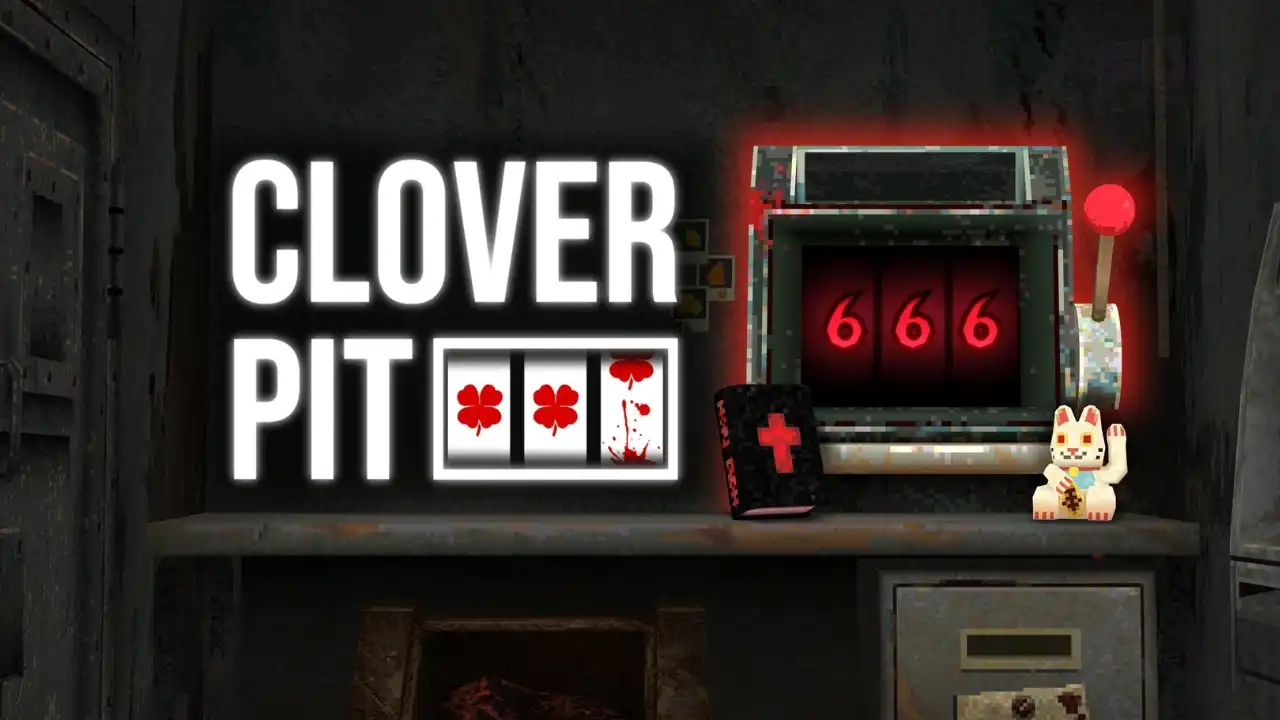
I don’t often find games that make my pulse jump before I’ve even hit “Start,” but CloverPit did exactly that. The moment I loaded into that dimly lit cell—slot machine looming like a mechanical god, rust and grime caked into every surface, an ominous ATM blinking in the corner—I knew this wasn’t another run-of-the-mill indie roguelite. It felt wrong in the best possible way.
CloverPit fuses a roguelite loop with a slot machine, then twists it into psychological horror. You’re trapped in a debt spiral, spinning for your life and trying to earn enough before the floor literally gives way. It carries some of the unease of Buckshot Roulette—chance, tension, and industrial nihilism—but has a personality of its own.
CloverPit Gameplay
Want more roguelite reviews like CloverPit?
Get more game features, reviews, interviews, indie coverage, and gaming news from Fix Gaming Channel.
Join Our Newsletter
Stay updated with the latest interviews, previews, and indie gaming news.
Deadlines, spins, and the slope to ruin
The setup sounds simple: spin the reels, win coins, pay off your debt, and survive another round. Beneath that is a layered system. Each deadline raises the stakes. Between rounds, you make hard calls about banking coins for interest, burning tickets in the back-room store, or grabbing Lucky Charms—build-defining buffs that alter odds, patterns, and payouts.
Those choices keep the slot machine from feeling passive. You are not only waiting for luck. You are building around symbols, protecting your economy, and looking for combinations that can survive the next debt increase. Once you clear a run, Endless Mode opens up and lets you push your luck even further.
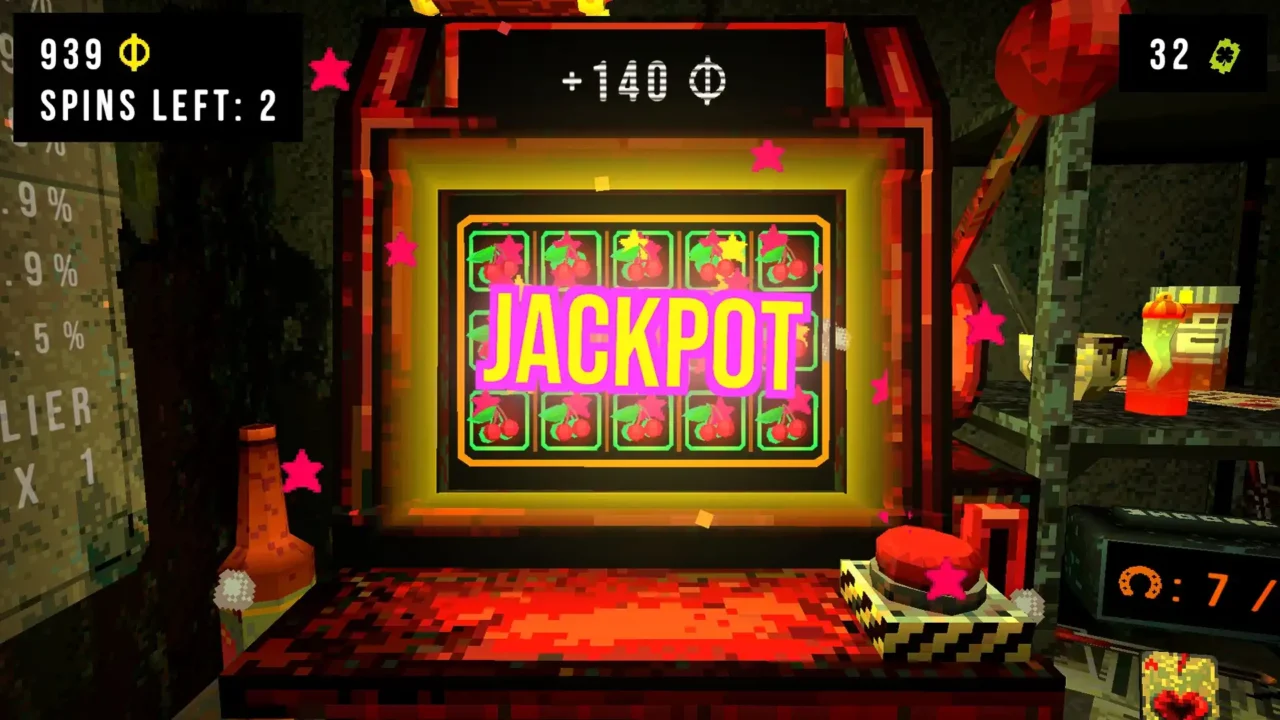
CloverPit turns a lucky jackpot into a brief escape from the next debt deadline.
Familiar yet unnerving
What hooked me wasn’t just the numbers. It was the mood. The debt meter creeps while the machine mocks you. Every flicker and groan turns anxiety into art. A lucky streak detonates across the reels, coins explode everywhere, and for a heartbeat you feel untouchable.
Then the next deadline hits. Your debt doubles. Your luck evaporates. That’s CloverPit in a nutshell—hope and despair playing tug-of-war in your brain.
Depth, discovery, and the line between skill and chance
There’s real buildcraft here. With more than 150 items and synergies, the game rewards learning its rhythms: when to bank for interest, when a risk window is open, and which charms can snowball under debt pressure.
It can be punishing, and sometimes unfair. When luck betrays you, you learn. You start seeing patterns, finding charm combinations, and adjusting your route. Losing rarely feels empty because you’re always one clever spin away from redemption—or ruin.
What works
- A distinctive concept that fuses roguelite tension with slot-machine risk and a grim escape-room atmosphere.
- An addictive loop where failure feeds the “one more spin” mentality.
- An oppressive, cohesive presentation where the room, ATM, lighting, and sound all reinforce the dread.
- Lucky Charms and item synergies that allow expressive strategies and satisfying snowball builds.
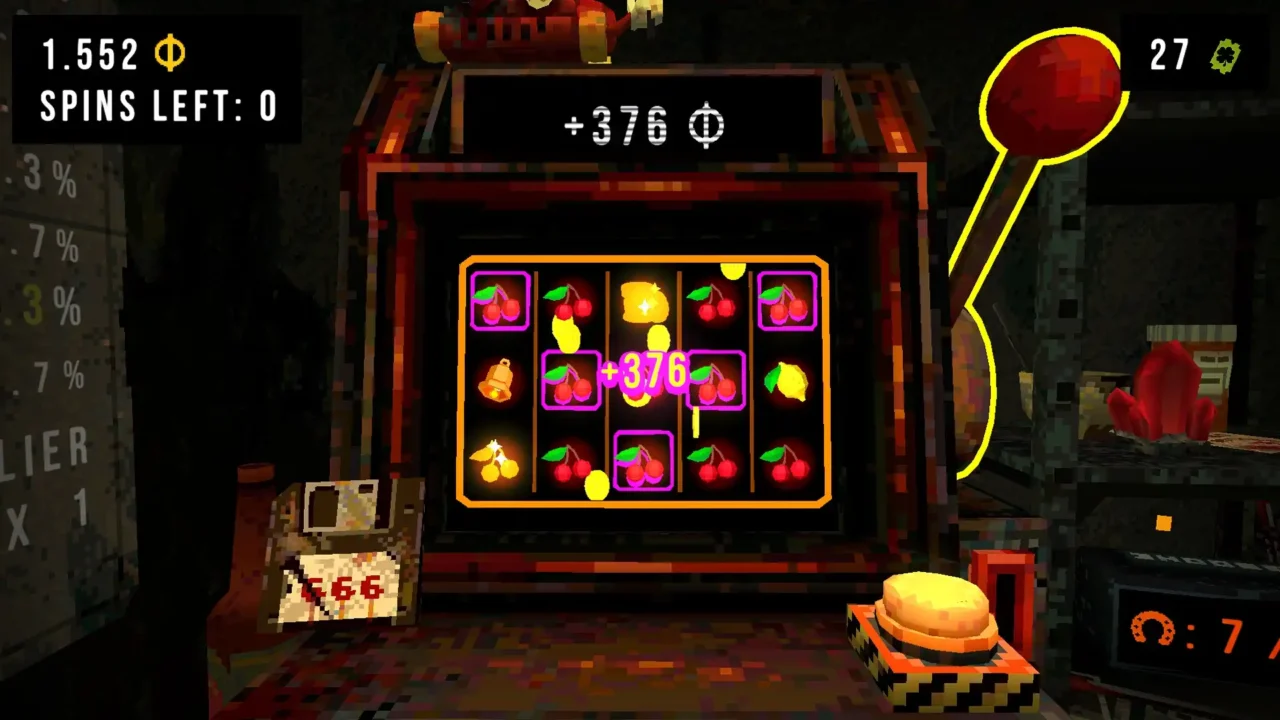
A strong payout can rescue a run, but the next deadline is never far away.
What to know
- It wants to hook you. If you are prone to chasing “just one more,” be mindful.
- The early hours are deliberately opaque. Discovery acts as the tutorial, which some players will enjoy more than others.
- RNG spikes happen, and certain charm sets perform much better later in a run.
- The game uses heavy gambling imagery and flickering effects.
Verdict
CloverPit is a weird, haunting, and unreasonably compelling roguelite that traps you in its spinning madness and dares you to escape. It understands how to make mechanics feel emotional—how to turn a simple spin into an existential crisis. It’s not just about winning; it’s about surviving the pull to play again.
A daring, grimly beautiful experiment in luck, control, and obsession.
CloverPit
Release: September 26, 2025
Genre: Roguelite, Psychological Horror, Strategy
Developer / Publisher: Panik Arcade / Future Friends Games
Platforms: PC — Steam, Xbox / Game Pass, iOS, Android
Related Reading
More Game Reviews from Fix Gaming Channel
Written by Daniel Józef Sarach, Fix Gaming Channel.
Send interview pitches, corrections, tips, or developer stories to contact@fixgamingchannel.com.
Support independent games coverage on Ko-fi.