Mobile Gaming Is Not the Problem — Bad Mobile Games Are
Mobile gaming is everywhere, but the phone is not the villain. Fake ads, bad design, and games built around spending are the real problem.
Mobile gaming gets mocked a lot, especially by some PC and console players. For some people, “mobile game” still sounds like an insult. They hear the words and instantly think of fake ads, pop-ups, timers, autoplay, energy systems, pay-to-win mechanics, and games that seem more interested in your wallet than your time.
But that is not really a mobile problem.
That is a bad game problem.
Mobile gaming is huge. Not “maybe one day” huge. It already is. According to GSMA’s Mobile Economy 2026 report, the mobile industry supports 8.8 billion wireless connections, including 5.8 billion unique mobile subscribers, around 70% of the global population.
That alone should tell us something: the phone is not some side device anymore. It is one of the biggest gaming platforms in the world.
Two quick examples of what mobile can be
Mobile games do not all look the same. Some are quiet puzzle games. Some are quick runners. Some are card games, word games, shooters, strategy games, or five-minute distractions before the bus arrives.
That range is why the platform should not be judged only by the worst fake ad you saw last week.
Monument Valley 3 shows the quieter puzzle side of mobile gaming.
Call of Duty: Mobile shows how far action games have gone on phones.
Get more gaming news, reviews, interviews, mobile picks, casual gaming coverage, and opinion pieces from Fix Gaming Channel.
Join Our Newsletter
Stay updated with the latest interviews, previews, and gaming news.
Everyone has a phone
Almost everyone has a mobile phone now. If they do not, well, that is a different conversation entirely, is it not?
For many people, the phone is the first gaming device they own. Not a console. Not a handheld. Not a gaming PC. A phone.
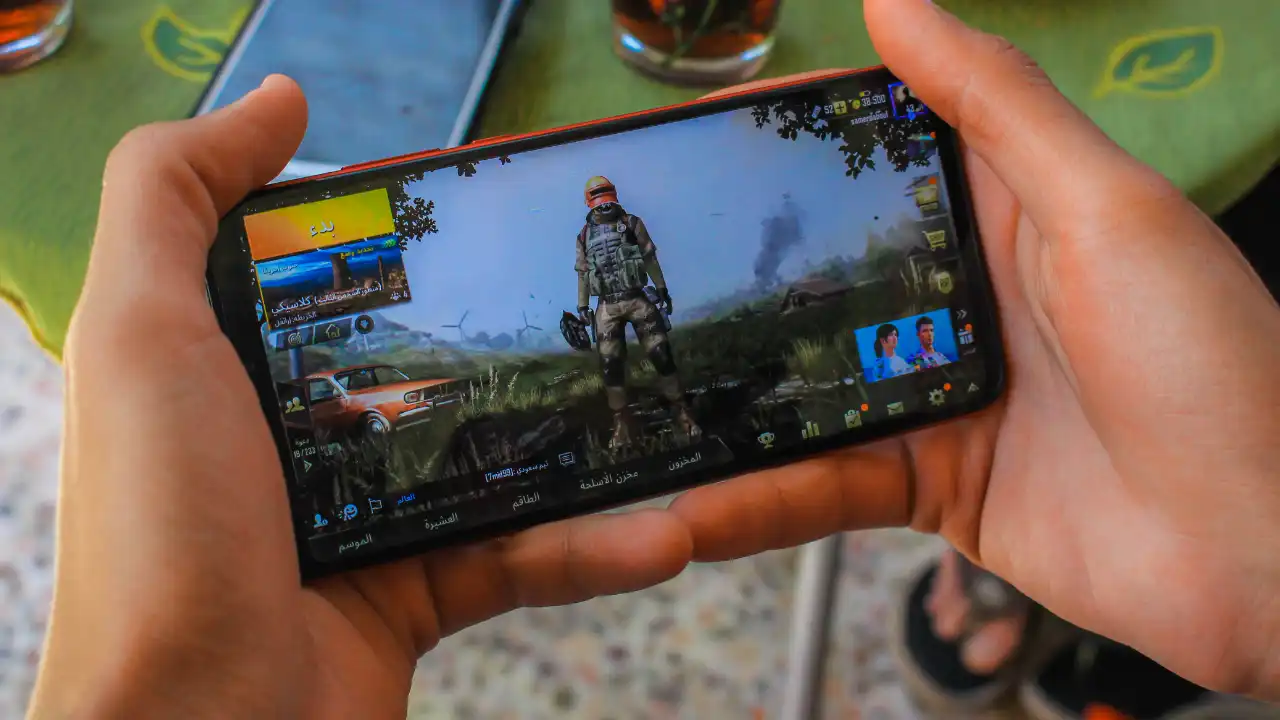
You can play on the bus, at school, at work during a break, in bed, in the restroom, while waiting for food, or while pretending you are checking messages. That is the power of mobile gaming. It fits into real life in a way consoles and gaming PCs often do not.
I still remember playing Snake on the way to school. On the bus, in class, probably in the restroom too. It was simple, it was always there, and that was the point. You did not need a big setup. You had a phone in your pocket, and suddenly you had a game.
And so the story goes.
I am not even sure if my grandmother plays games, but she is close to 100 years old and knows how to handle an iPad. That says a lot. Kids understand mobile devices. Adults understand them. Parents understand them. Grandparents use tablets. Some people play puzzle games. Some play word games. Some play shooters. Some play card games. Some play Roblox. Some just open something for five minutes while waiting around.
It still counts.
Casual gamers are still gamers
A lot of people who play on phones will never call themselves gamers. They do not follow release calendars. They do not care about frame-time graphs. They do not sit around arguing about console generations. They just want something fun to play for five or ten minutes.
That counts too.
A puzzle game on a lunch break counts. A word game before bed counts. A farming game while waiting for food counts. A quick shooter match on mobile data counts. Not every game needs to be a giant open-world RPG to be worth playing.
That is where mobile wins. It is easy to start, easy to stop, and already in your hand.
Mobile-first countries show the real scale
In countries like the Philippines, you can see how big mobile is just by looking around. People are head down in a phone everywhere: on buses, outside shops, during breaks, while waiting for food, and sometimes while walking.
When mobile data runs out, some people continue online life through internet cafes, shared Wi-Fi, or whatever access point is available. That is not a punchline. That is what a mobile-first market looks like.
According to DataReportal’s Digital 2026: The Philippines report, the country had 137 million cellular mobile connections active in late 2025, equal to 117% of the population. That does not mean every person has more than one phone. It means some people have multiple SIMs or connections, but it still shows how deeply mobile access sits inside daily life.
In many lower-income and mobile-first markets, the phone is simply the most realistic gaming device. A gaming PC costs money. A console costs money. A monitor, desk, controller, subscription, and stable home internet all cost money. But a phone is already there. It is used for messages, school, work, payments, videos, social media, and yes, games.
Sensor Tower reported that Southeast Asia was one of the largest global markets for mobile game downloads in Q1 2025. The Philippines followed Indonesia in the region with 366 million mobile game downloads during the quarter.
That does not mean every market spends the same. Richer countries may still spend more per player. But for reach, downloads, daily habits, and visibility, mobile-first regions are impossible to ignore.
Mobile gaming did not start with fake ads
Mobile gaming did not start with modern app stores, gacha systems, daily rewards, battle passes, or fake ads showing gameplay that does not exist.
The early history is messy, depending on what counts as a “mobile game,” but one of the most cited early examples is Tetris on the Hagenuk MT-2000 in 1994. Then Snake helped turn phone gaming into something almost everyone recognized.
Simple games. Quick sessions. Something to do when you had a few minutes. Something that did not need a TV, a console, or a desk. Just a screen, buttons, and time to waste.
That part still counts.
The reputation problem is real
Mobile gaming has earned some of its bad reputation.
There are too many fake ads. Too many games that look nothing like their trailers. Too many clones. Too many menus before you even get to play. Too many “starter packs,” “limited offers,” “watch this ad,” “claim this reward,” and “come back in six hours” systems.
If your first thought is some fake puzzle ad where the hero freezes, burns, drowns, or fails basic logic because the player pulled the wrong pin, I understand why you are tired. If your first thought is a game that interrupts you every 30 seconds with another offer, I understand that too.
But bad examples should not define the whole platform.
We do not judge all PC games by the worst shovelware on Steam. We do not judge all console games by the most broken launch of the year. We should not judge every mobile game by the worst ad-driven cash grab either.
The phone is not the enemy
A phone is not a bad gaming device by default. It is just different.
Touch controls can work. Short sessions can work. Portrait mode can work. Landscape mode can work. Controller support can work. Cloud saves can work. Crossplay can work. Small games can work. Big games can work.
The problem starts when the game is not designed around play. It starts when the whole structure is designed around friction, spending, waiting, and manipulation.
That is when mobile gaming becomes a punchline.
But when a mobile game respects the player, the platform makes sense. It is accessible. It is portable. It is familiar. It is always nearby. For many casual players, that phone is the only gaming device they use daily.
Mobile gaming deserves better
Mobile gaming does not need everyone to love it.
It needs better standards.
Less fake advertising. Less predatory design. Less copy-paste garbage. Less “watch an ad to breathe.” More real gameplay. More honest trailers. More games that respect the player’s time.
The phone is not the issue.
Bad design is the issue.
Bad monetization is the issue.
Fake marketing is the issue.
Mobile gaming is not the problem. Bad mobile games are.
One more thing
And for Fix Gaming Channel, this is not just talk. I am working on testing mobile games on my 32:9 monitor using Samsung DeX and my phone.
Let us see if that turns into something useful, something ridiculous, or a complete fiasco.
Either way, stay tuned.
Sources: GSMA Intelligence, DataReportal, Sensor Tower, PhoneArena.
Related Reading
Best Mobile FPS Games To Play In 2026
Written by Ronny Fiksdahl, Founder & Editor-in-Chief of Fix Gaming Channel.
Send interview pitches, corrections, tips, or developer stories to contact@fixgamingchannel.com.
Support independent games coverage on Ko-fi.