



AI promises more performance, but the bigger question is what gets sacrificed in return
If you’re running an AMD graphics card, this conversation might feel like a look through the neighbor’s window, at least for now. However, the looming showdown between Nvidia’s so-called DLSS 5 and AMD’s FSR Redstone (FSR 4) is shaping up to be one of the defining graphics debates of this hardware generation.
On the surface, DLSS 5 is a developer’s dream. It promises higher frame rates with less strain on raw silicon, allowing studios to push visual boundaries that were previously impossible. In an era of shrinking dev cycles and ballooning budgets, DLSS 5 acts as a high-tech safety net. But as we look closer, that net is starting to look more like a crutch.
The Power Paradox
Early demonstrations of DLSS 5 have already sparked a healthy dose of skepticism. Reports covering Nvidia’s early showcase described an eye-watering setup: two RTX 5090 GPUs working in tandem, with one for traditional rendering and the other dedicated entirely to AI-driven neural rendering.
While Nvidia insists this is merely a proof-of-concept and that the final consumer version will be optimized for a single card, the lack of a public single-GPU demo has left the community wary. It raises a difficult question: If it takes two flagship cards to show the tech today, how much “innovation” will be left for the average gamer tomorrow?

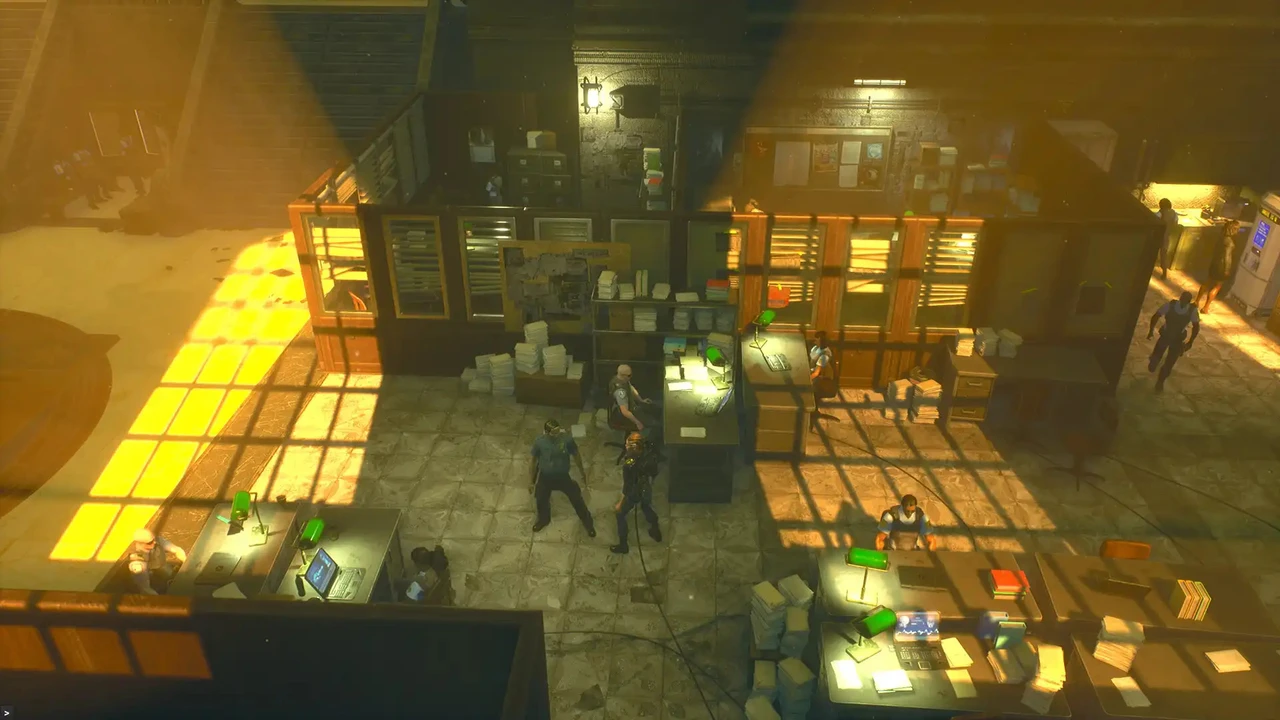
Resident Evil Requiem shown with DLSS 5 off on the left and DLSS 5 on on the right.
Join Our Newsletter
Stay updated with the latest interviews, previews, and indie gaming news from Fix Gaming Channel.
Optimization vs. AI Intervention
The core of the frustration isn’t the technology itself, which is objectively impressive, but how it’s being used. There is a growing sentiment that AI upscaling and frame generation are no longer enhancements; they are becoming requirements.
We are entering a cycle where:
- Native resolution performance is sidelined.
- Neural rendering is used to mask unoptimized game engines.
- Hardware inflation, including rising RAM, memory, and graphics card costs in early 2026, makes “raw power” upgrades inaccessible for many.
A Growing Divide
This creates a fundamental split in PC gaming philosophy. Should performance be the result of clean code and efficient hardware, or is it acceptable for AI to “hallucinate” the missing pieces?
The irony is hard to miss: Nvidia markets DLSS 5 as a way to make cutting-edge graphics more accessible, yet the hardware required to run these AI features effectively remains locked behind a premium paywall and ongoing concerns around practical VRAM demands. Even if Nvidia delivers on the promise of single-GPU compatibility, the practicality of the tech remains to be seen.
As 2026 unfolds, the debate won’t just be about DLSS vs. FSR. It will be about the soul of gaming performance: Are we moving toward a future of smarter games, or are we just using AI to cover up the cracks in a fractured industry?
Related Reading
Nvidia Launches Beta for All in One App for Gamers and Creators
Written by Daniel Józef Sarach — Fix Gaming Channel.
Send interview pitches, corrections, tips, or developer stories to contact@fixgamingchannel.com.
Support independent games coverage on Ko-fi.