
Failure, Persistence, and the Dog That Helped Shape the Game
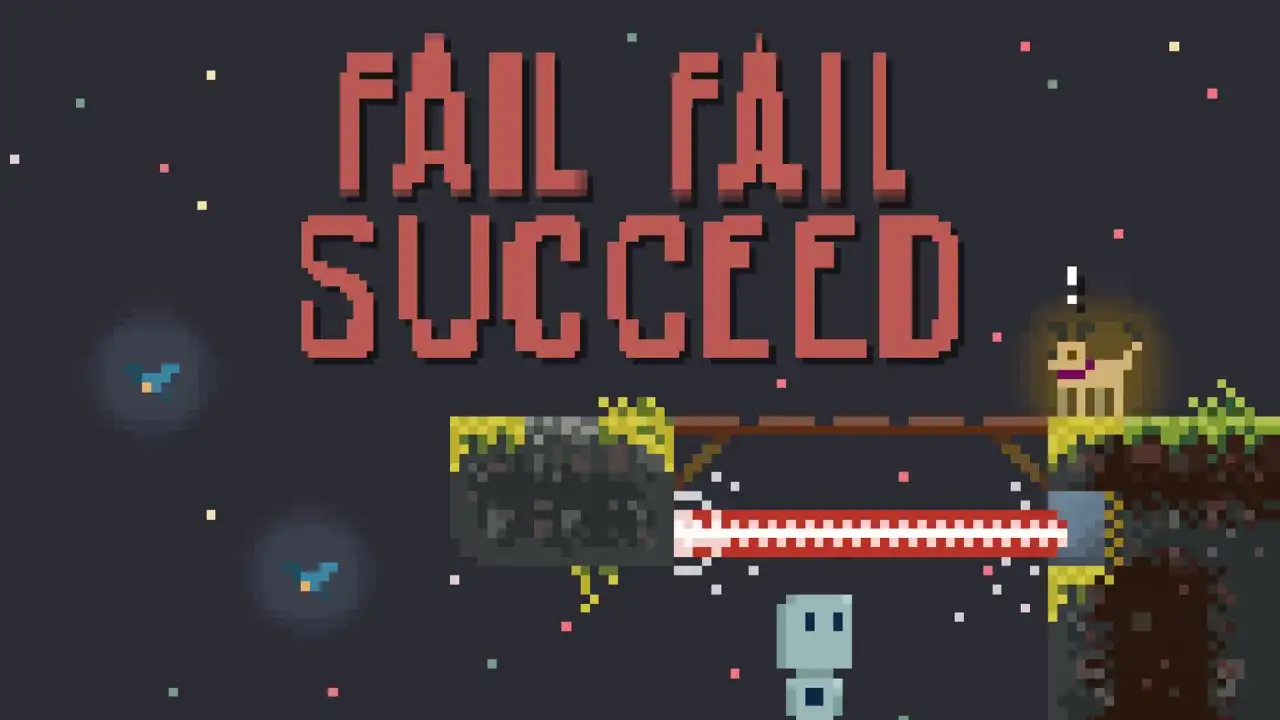
Fail Fail Succeed is a logic-driven puzzle platformer where failure is not simply the end of an attempt. It becomes part of the solution.
Developed by solo developer Martin Zetterman and published by The Notlanders, the game turns repeated failure into progress, with players leaving fragments behind that can become platforms, barriers, and small steps forward through deadly puzzle rooms.
Behind that mechanic is a deeply personal story. Zetterman has connected the game to his own experiences with mental health, isolation, persistence, and the comfort of his dog Eira during development.
Fix Gaming Channel spoke with Martin Zetterman about failure, solo development, mental health, and the real dog behind part of the game’s heart.
Fail Fail Succeed
Release: May 12, 2026
Genre: Logic-Driven Puzzle Platformer
Developer / Publisher: Martin Zetterman / The Notlanders
Platforms: PC via Steam
Join Our Newsletter
Stay updated with the latest interviews, previews, and indie gaming news from Fix Gaming Channel.
Martin Zetterman on Fail Fail Succeed
You recently gave an interview with NDS a publication in Sweden how your pet dog Eira was a huge source of comfort – do you think animals pick up on the human emotional state more than we give them credit for?
I think most people with pets will agree with me that they most certainly pick up on our emotional states. Eira, my dog, will often match my mood to some extent.
If I am low, she will often be calm and particularly affectionate. I find that she will insist on lying near me, won’t stress about going outside etc. It’s as if she understands that it’s hard.
If I am stressed or upset about something, she will often come up to me and nudge me away from the source of it. She can be quite persistent with this actually, and sometimes she simply won’t stop until I take a break.
Even on days when I am too hyped up, she can try to nudge me or calm me down by resting her head on me. Like a gentle reminder to take it easy, sort of.
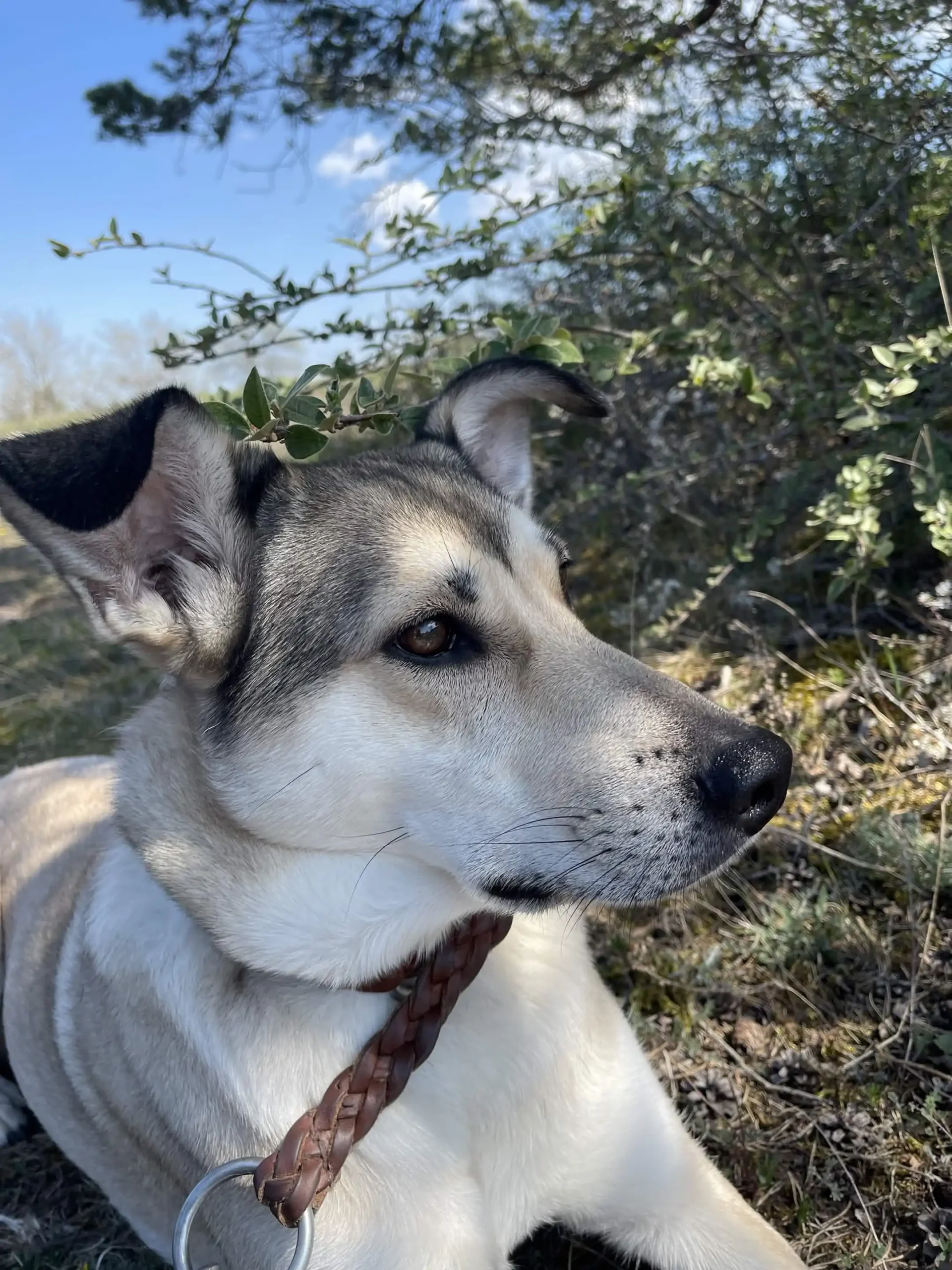
Eira became an important emotional presence during the solo development journey behind Fail Fail Succeed.
In Fail Fail Succeed, there seems to be an underlying theme of persistence through failure. How much of that comes from your own experiences with mental health, self-doubt, or isolation during development?
The game is 100% inspired from my own experiences, but not just during development. The mechanics, animations, the dog companion and so many more little details about the game are all built on metaphors for my experiences with mental health struggles. I could go on for hours explaining all of them to be honest.
I’ve long lived in a cycle of rushing forward with all the energy in the world, without a single care, only to crash hard into depression and isolation. The latter resulting in what can essentially be described as a total reset. It’s often felt like starting over from zero. But with hindsight, I can tell that even through all of this I’ve been building a path through life that has brought me to where I am today. As unhealthy as it has been, every crash has left me with new knowledge or resources which has helped me improve, adapt and move forward.
When I started working on Fail Fail Succeed, it marked a point in my life when I turned around to confront this cycle, to examine it and to learn to cope with it.
Fail Fail Succeed is to some extent the result of this process, as much as it has been a tool in and of itself. I don’t mean to say that I’ve broken free from anything, but I recognise it for what it is and I can handle it better nowadays.

Martin Zetterman with Eira, whose companionship became part of the emotional heart behind Fail Fail Succeed.
You’ve mentioned the importance of your dog during the solo development journey. In practical day-to-day terms, how did that companionship affect your mental wellbeing, motivation, and ability to keep going when things became difficult?
Eira has been with me since before day 1 on this journey. But even since before that she’s been a link to reality that’s been vital to keep me sane and moving forward.
At times she’s been the reason I get up and go in the morning, and at others she’s been a gentle reminder to take a break and not get lost in the digital realm.
She doesn’t understand what’s going on in my life, but she recognises my emotional state and acts accordingly. And that is without any conditions or expectations. She is a source of comfort when things have feel hard, an anchor to keep me down when I go too far, and a positive distraction when things are overwhelming. That’s not to mention how she’s been a great rubber duck when I am stuck on a bug!
Solo game development often means there’s nobody to share pressure, uncertainty, or creative struggles with. Were there periods where working alone became mentally overwhelming, and how did you navigate those moments without burning out?
In the process of designing and creating Fail Fail Succeed, I’ve also undergone a process of confronting and examining myself. In that sense Fail Fail Succeed is a form of self expression through mechanics. It’s been rough at times, translating something unpleasant into a game. Even though all of the narrative is implicit on purpose and more of an undertone, the game is a constant reminder of things that have pained me.
Because of that, breaks that have created a distance between the game and myself have been important. Having Eira to force me outside has been a blessing in that regard. So has having friends and loved ones who’re willing to force me into a different context.
The latter I think is really important actually, so make sure you do not isolate yourself entirely! You can only go so far with telling yourself that you’ve done enough or given it your all. A bit of outside perspective is necessary.

Eira, the real dog behind part of the heart and humour surrounding Fail Fail Succeed.
Many indie developers openly romanticize the “solo grind,” but very few talk honestly about the emotional cost behind it. What do you think people misunderstand most about the relationship between creativity, loneliness, and mental health when building a game alone for years?
There’s something powerful that can come out of working alone. Making space to express yourself freely, free from outside intervention, can be incredibly rewarding and therapeutic! One just needs to take care not to get too fixated, lest you end up dragging yourself down and wallowing in it.
I also think people are fixated on the idea of making sacrifices, but forget about the recovery and sustainability of it all. At the very least they downplay it. The grind is exhilarating for sure, but if you crash there’s nobody else to keep going. If you lose yourself to a burnout, it might have been for naught.
As such, you need to make sure you’re kind to yourself, you need to be your own HR and fight to ensure that you get the time you need to produce, but also recover. Don’t get addicted to the grind! It’s not a sprint, nor is it a relay race. You need to make sure you hold up for the long run.
Again, outside perspectives can be really helpful here.
Related Reading
- More Developer Interviews on Fix Gaming Channel
- Visit the Fix Gaming Channel Interviews Hub
- Building HueFold in Kyiv: Finding Calm Through Color and Chaos
Written by Ronny Fiksdahl, Founder & Editor of Fix Gaming Channel.
Have a developer story, interview pitch, or indie game tip? Reach us at contact@fixgamingchannel.com.