

How one iOS puzzle game became a quiet source of focus, reflection, and calm during extraordinary circumstances.
There’s one review I keep coming back to.
“Pretty enjoyable game to spend some time and relax. Especially in a bomb shelter during missile attacks.”
I didn’t plan that. I didn’t market it that way. But when I read those words for the first time, I understood what HueFold had quietly become, not just a puzzle game, but a small act of calm inside chaos.
Let me back up.
The Idea
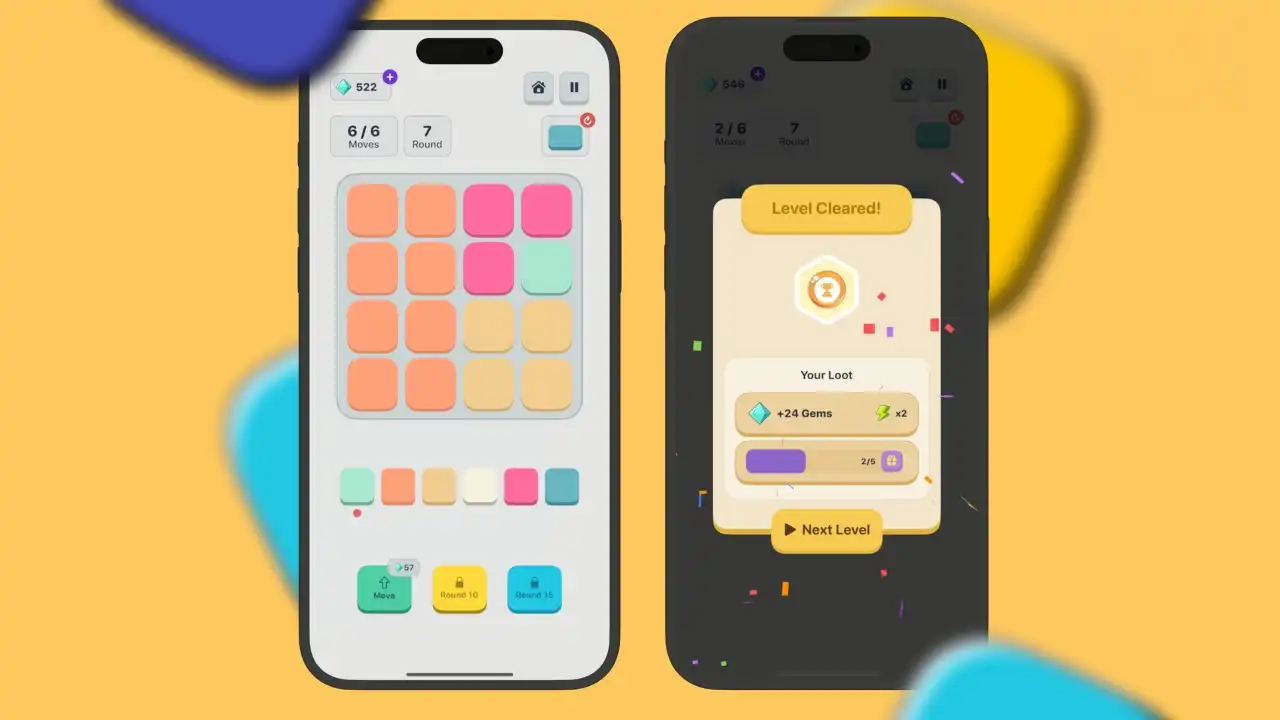
HueFold is a color-mixing puzzle game for iOS. The concept is deceptively simple: you’re given a grid filled with different colors, a target color, and a limited number of moves. Your goal is to repaint the entire grid so it matches that single target color before you run out of steps.
Every tap blends adjacent cells. Colors mix, interact, and cascade in ways that feel intuitive at first and fiendishly tricky later on. You’re not just painting; you’re planning three, four, or five moves ahead, weighing every cell like a chess position.
Clear the grid, and the next level unlocks. Fail, and you restart and rethink. The difficulty ramps deliberately as new mechanics appear, constraints tighten, and the satisfaction of finally cracking a hard level feels genuinely earned.
The Story Behind It
I’ve spent years building iOS apps professionally. I know the platform. I know Swift, SwiftUI, all of it. So when I decided to build my own mobile game, I assumed the technical side would be manageable.
I was wrong, or at least partially wrong.
Game development is its own universe. The logic that governs a productivity app is nothing like what drives an engaging game. User expectations are different. The feedback loop is different. The emotional contract between player and game is something you can’t fake, and you can’t ship without understanding first.
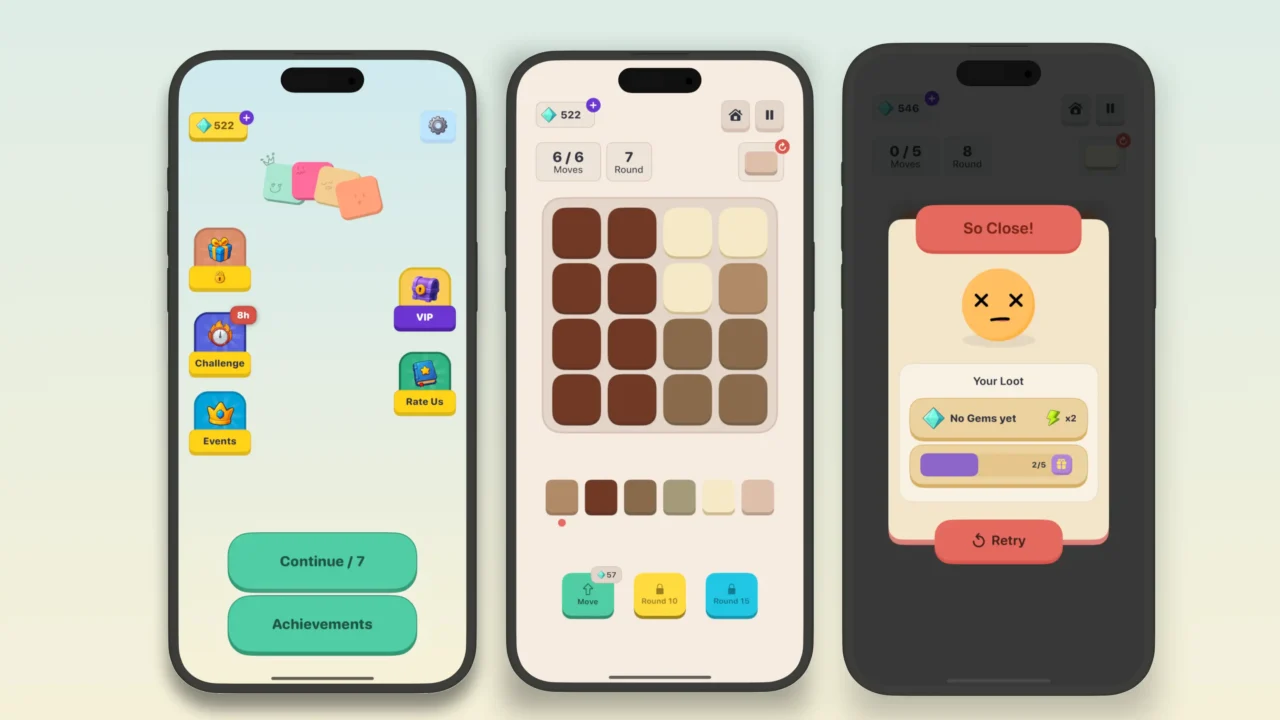
This HueFold image shows multiple parts of the game experience, including menus, puzzle gameplay, and retry flow.
Join Our Newsletter
Stay updated with the latest interviews, previews, and indie gaming news from Fix Gaming Channel.
I built HueFold across many months of iterating on mechanics, testing feel, and throwing out early ideas that were technically fine but not fun. That distinction, between technically correct and genuinely enjoyable, became the core design challenge.
And I built it in Kyiv, Ukraine, during the full-scale war that Russia started when it invaded my country in February 2022. Air raid sirens. Power cuts. The sound of Russian drones and missiles in the night sky. There were sessions where I coded by laptop battery because the electricity was out.
I’m not saying this for sympathy. Plenty of Ukrainians are living far harder realities than a developer with a deadline. I’m saying it because context matters. This game was made in those conditions, and it launched anyway. That fact carries its own kind of meaning for me.
The Launch and the Cold Shower That Followed
The moment HueFold went live on the App Store was euphoric. Months of work, finally real, finally downloadable by anyone in the world.
That feeling lasted about 48 hours.
Then came the bug report.
One critical issue, a single flaw in the core game loop, completely broke the experience for players who encountered it. Not a visual glitch. Not a minor annoyance. A fundamental failure that made the game unplayable for some users on day one.
I won’t sugarcoat how that felt. It was devastating. After everything that went into building the game, the first impression it made on some real players was simply: broken.
But here’s what I took from it, and what I’d tell anyone releasing their first product: test as if everything depends on it, because on launch day, it does. An extra week of QA before release is worth ten times what it costs you to patch a critical bug after players have already formed an opinion. The damage to users, and to yourself, is not something a fast-follow update fully erases.
I patched it. I moved forward. But that lesson is now permanently wired into how I build.
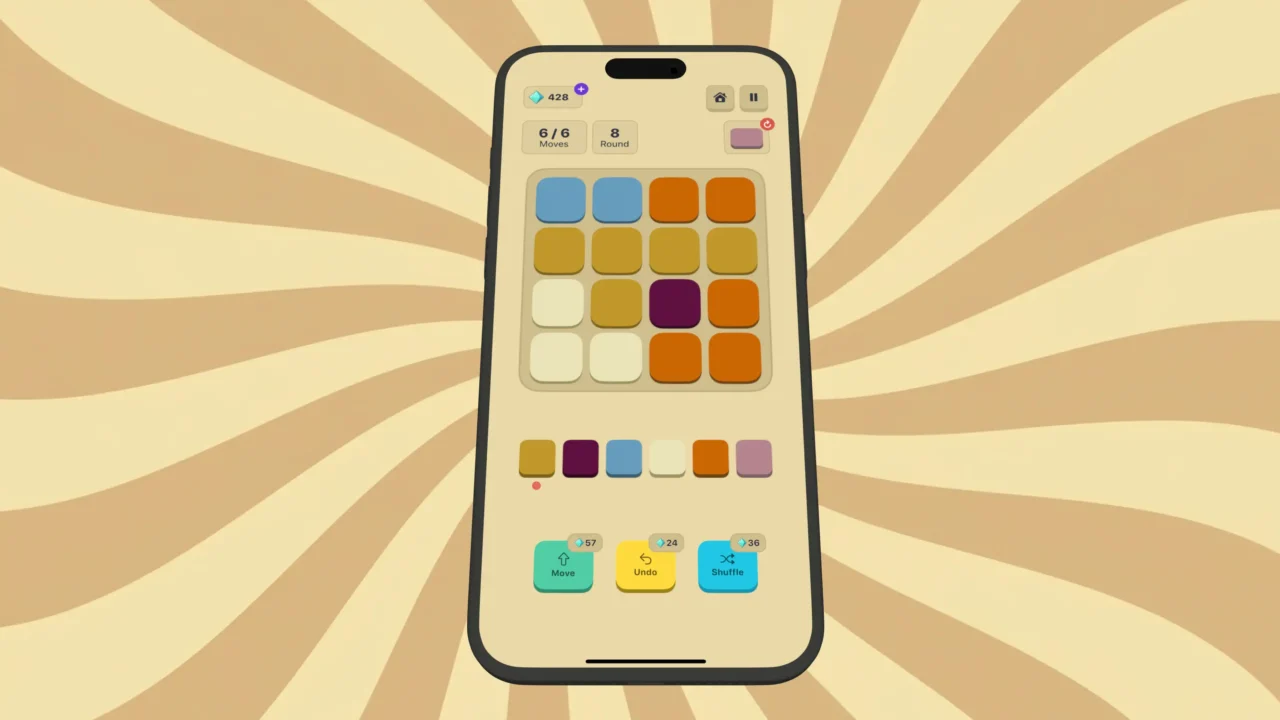
A promotional HueFold image showing the puzzle gameplay on a single mobile screen.
What HueFold Is Now
The version of HueFold available today is considerably more than what launched. Since release, I’ve shipped consistent updates with new levels, new mechanics, and localisation in English, Ukrainian, Spanish (Mexico), Portuguese (Brazil), Chinese, and Korean. A daily challenge mode helps keep returning players engaged, alongside in-game events and rewards that refresh regularly.
The game has found its audience quietly, without a big marketing push. People who enjoy thoughtful puzzles. People who want something that requires real attention without demanding hours at a time. And, apparently, people who need something to focus on when the world outside gets loud.
Why It Matters
What I made was harder than I expected, more educational than I could have planned, and more meaningful than I imagined when I wrote the first line of code.
HueFold is a game about color and strategy. But making it taught me about endurance, craft, and why you keep shipping things even when conditions are imperfect.
They usually are.
Links
App Store: HueFold on the App Store
X: @huefold
Instagram: @huefold.game
Creator: @skreepao
Related Reading
Interview: Exkee on Rescue Ops: Wildfire, real firefighter input, and the challenges behind the game
Matt Essom Interview — Art in Games
Written by Maksym Skrypka, Fix Gaming Channel.
Send interview pitches, corrections, tips, or developer stories to contact@fixgamingchannel.com.
Support independent games coverage on Ko-fi.