Exkee talks Rescue Ops: Wildfire, real firefighter input, public playtest feedback, and the challenge of simulating large-scale wildfires.
I previously covered Rescue Ops: Wildfire on Fix Gaming Channel, but this interview adds the kind of context that matters. It gives a clearer picture of where the game comes from, why wildfire response became the focus, and how Exkee is trying to turn something this technical and unpredictable into a playable solo and co-op experience.
In one of Exkee’s first written interviews outside France, the team talks about firefighter collaboration, public playtest feedback, solo balancing, emergent player behaviour, and what still needs work before launch. The answers below are published in full and kept in their original wording.
Editor’s note: This interview was originally prepared around the Rescue Ops: Wildfire public playtest. The Game Info section has been checked against the current Steam listing, which still lists the game as coming soon.
Rescue Ops: Wildfire
Release: Coming soon
Genre: Action, Simulation, Strategy
Developer / Publisher: Exkee
Platforms: PC (Steam)
Rescue Ops: Wildfire – Official Gameplay Overview Trailer
Credit: GameTrailers upload of the official gameplay overview trailer.
Join Our Newsletter
Stay updated with the latest interviews, previews, and indie gaming news from Fix Gaming Channel.
What first inspired Rescue Ops: Wildfire?
Before this project, our studio had already developed a fire propagation tool and algorithm for French firefighters. That experience planted the initial seed for the game, which has evolved significantly over the past three years.
Today, those same firefighters are still involved and regularly share their expertise with us.
On a more personal level, we are based in Marseille (France), a region heavily affected by wildfires. Combined with the growing impact of climate change, this made the topic feel both relevant and meaningful to us.
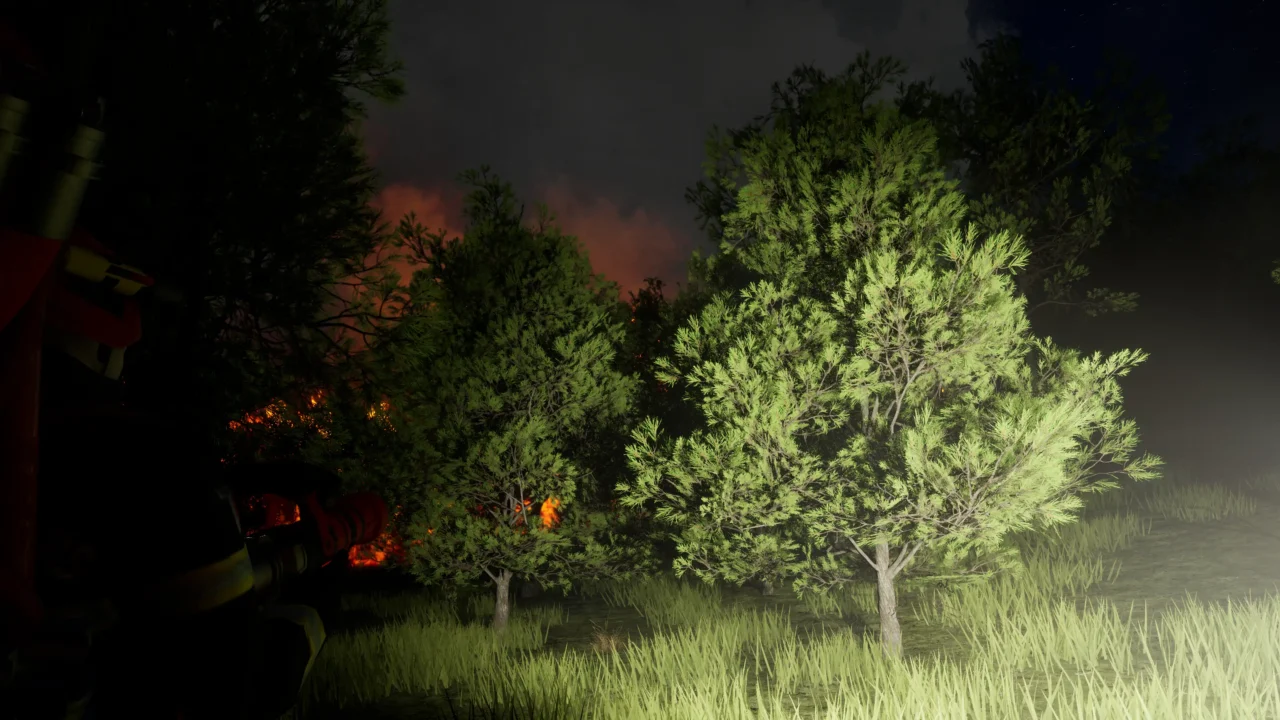
A night-time wildfire scene in Rescue Ops: Wildfire, with dense smoke and trees lit by emergency vehicle lights.
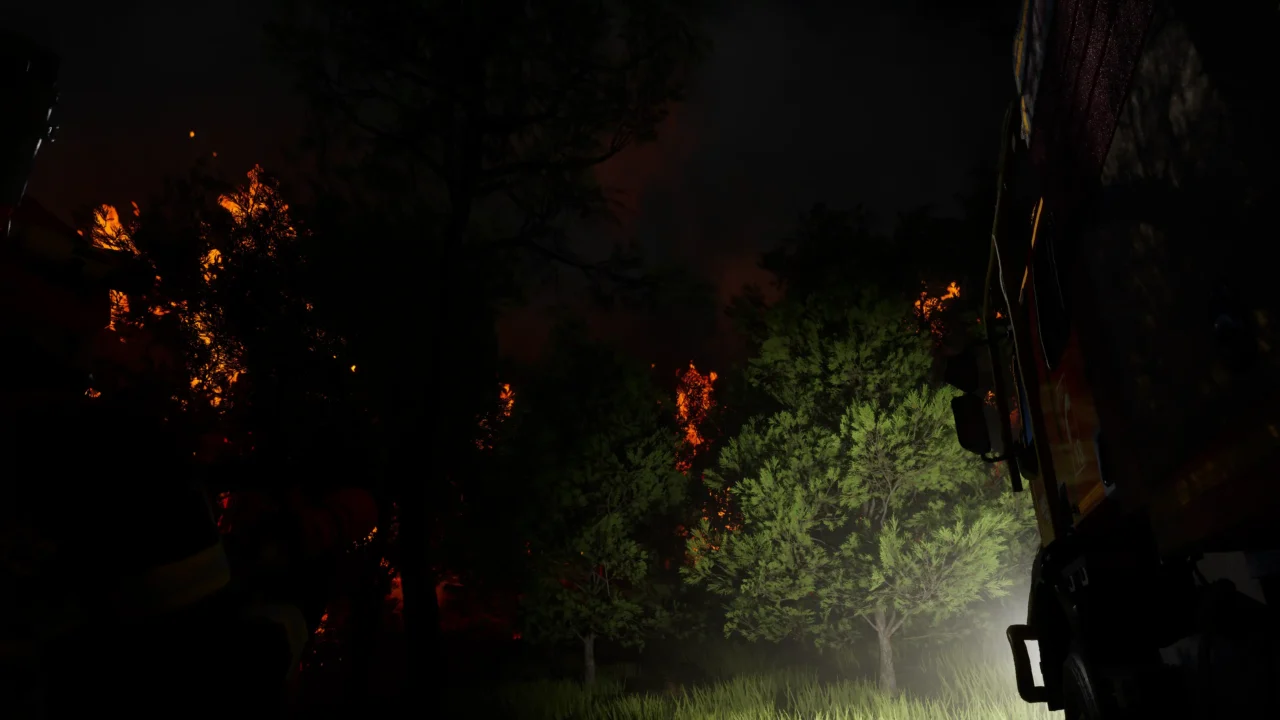
Emergency vehicles frame a burning forest in this dramatic night-time Rescue Ops: Wildfire screenshot.
Why did you choose wildfire response as the heart of the game?
Our previous experience, our location, and the broader context of climate change all naturally led us to this subject.
We also believe video games are a powerful medium to raise awareness. They can reach a wide audience and allow players to learn through engagement and entertainment, including younger players.
While there are already some great firefighting games, very few focus specifically on wildfires. Yet it’s a rich topic in terms of gameplay, with diverse environments and techniques used around the world, even if it comes with significant technical challenges.
What kind of experience do you want players to have the first time they jump into the playtest?
We want players to discover the intensity of this profession, explore our systems, and experience both realism and cooperation, especially with friends.
Even though this is an early version ahead of Early Access, we want players to have fun while understanding the game’s depth.
As an indie studio, we’re building this project step by step. Community feedback is essential to us: we read and evaluate everything shared on our Discord, and we truly want to shape the game together with our players.
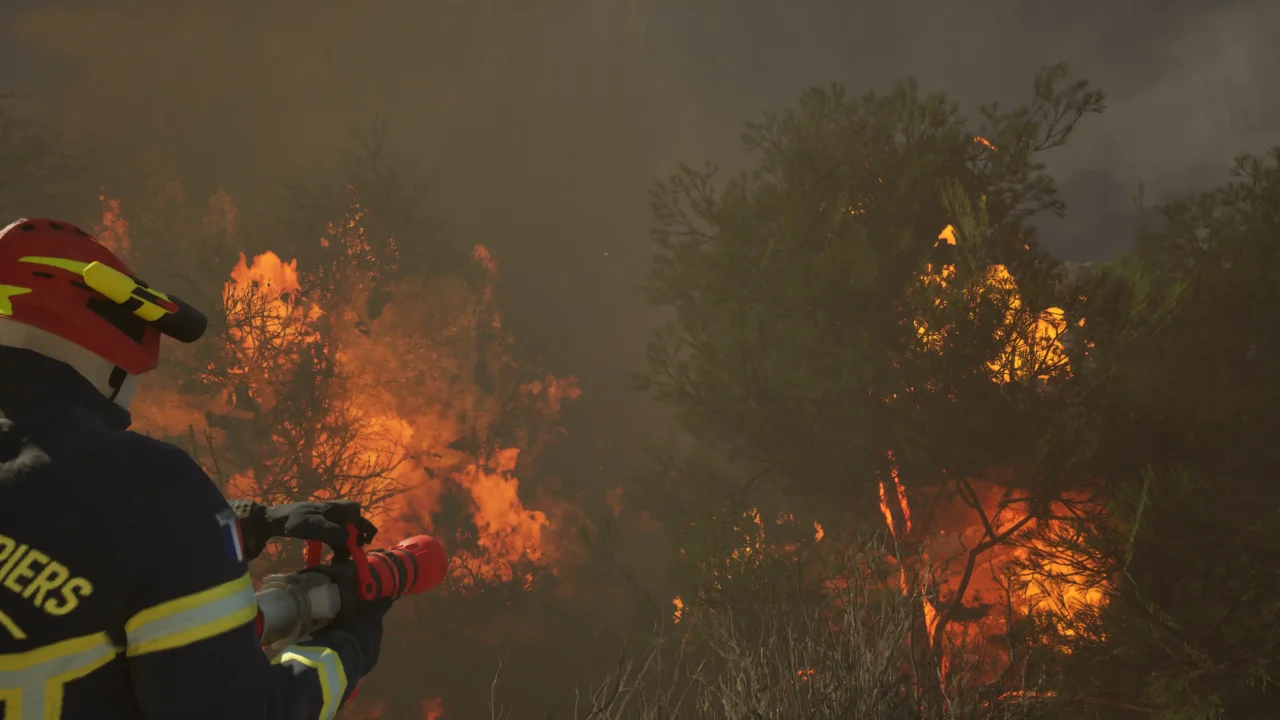
A firefighter battles intense flames and thick smoke in Rescue Ops: Wildfire.
Do any of you have personal experience with fire rescue, emergency response, or similar work? If not, where has that practical knowledge and inspiration behind the game come from?
We’re collaborating closely with firefighters on Rescue Ops: Wildfire, including a partnership with the French firefighter esports team SPF Gaming.
We’re also fortunate to have many professionals in our Discord community, and several team members have close connections with firefighters. This gives us access to valuable insights whenever we need guidance.
We’ve also taken part in firefighting events in France, where professionals showed strong interest in the project and were impressed by our approach, they also gave us some good feedback.
What part of translating wildfire response into gameplay has been the most difficult so far?
The technical aspect is by far the biggest challenge.
Simulating hundreds of thousands of trees burning in real time across a 16 km² multiplayer map is extremely demanding. We’ve shared more details about this in our fire propagation showcase on YouTube.
Another challenge is scaling real-life wildfire scenarios (which usually involve large teams) into a playable experience for solo players or small co-op groups.
How different does the game feel in solo play compared to full co-op?
We’re still working on balancing, and current feedback shows that solo play can feel quite challenging, especially for new players.
Some experienced playtesters have already created helpful content to guide solo players. In the future, we’d like to introduce dynamic balancing based on team size.
We’re closely monitoring all feedback to improve this aspect.
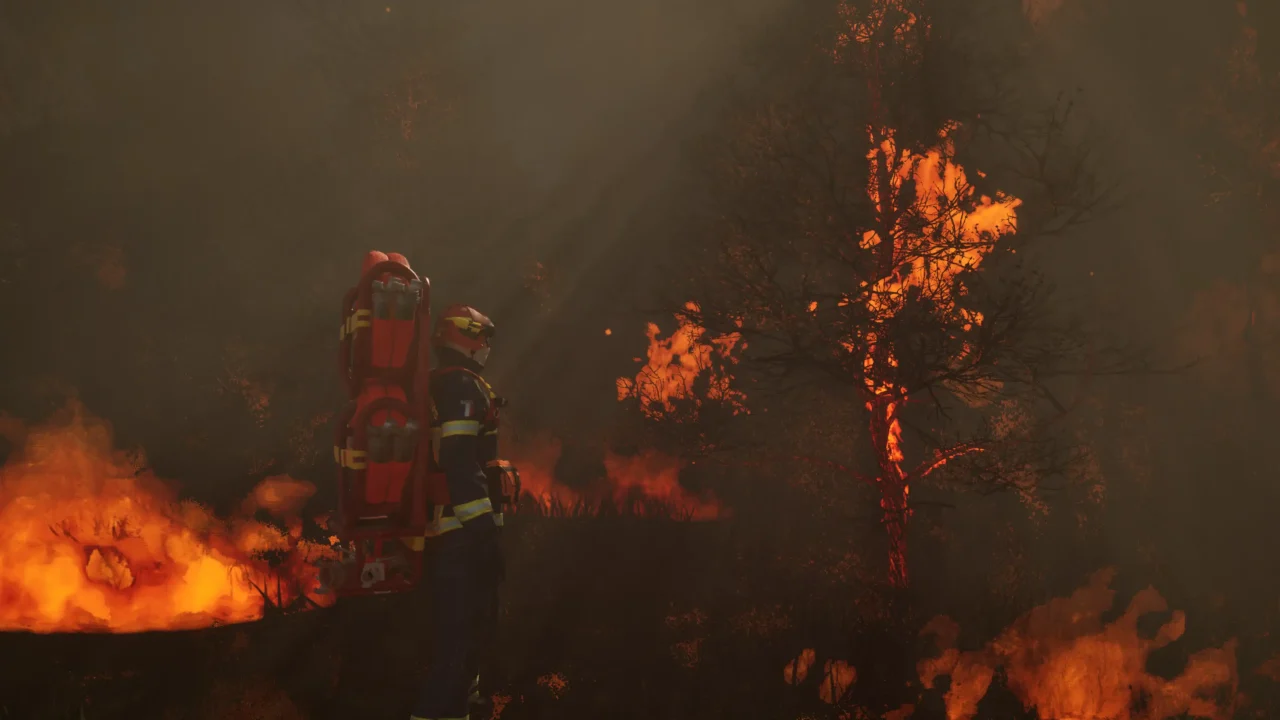
Thick smoke and towering flames surround a firefighter in this Rescue Ops: Wildfire screenshot.
What kind of feedback are you paying closest attention to during the playtest?
We pay attention to all feedback, but our top priority is fixing bugs to ensure a smooth experience.
For suggestions, we use internal tools to identify the most requested features, while also considering development time and feasibility. As an indie studio, we have to prioritize carefully.
That’s also why Early Access is important to us: it gives us the time to improve the game alongside our community.
Have players approached the game in any unexpected or creative ways so far?
Absolutely! We’ve been surprised by the different ways players approach and successfully complete missions. The game encourages emergent gameplay, allowing for multiple strategies thanks to systems based on physics, such as fire propagation, water pressure, and vehicle handling.
We’re also currently hosting a Discord event where players compete to complete the first mission as quickly as possible, and we’ve already seen some impressive speedrunning.
Players are also incredibly creative when it comes to finding bugs! We’ve received some hilarious clips, which we love. Even if they can be a bit scary from a developer’s perspective.
Between now and launch, what are the team’s biggest priorities?
This may evolve depending on playtest results and feedback on April 9th, but one of our main goals is to expand the game’s scope with new locations inspired by different regions around the world.
We want players to discover new vehicles, equipment, uniforms, and firefighting approaches based on real-world practices.
We’re also interested in exploring semi-urban environments as a middle ground.
Related Reading
Rescue Ops: Wildfire – Gearing Up with 50K Wishlists in Sight
Written by Ronny Fiksdahl, Founder & Editor of Fix Gaming Channel.
Send interview pitches, corrections, tips, or developer stories to contact@fixgamingchannel.com.