



The Solo Developer Who Chose Discovery Over Combat—and Learned to Make His Own Music
After years spent building a combat-free exploration game, solo developer Gustavo Galembeck of Flat Voxel is nearing the release of A Simple Expurriment. In this Fix Stories contribution, he explains what a sprawling 2D platformer taught him about player feedback, composition, and knowing when a project has taken enough of his time.
Watch the A Simple Expurriment Trailer
A Simple Expurriment — Official Trailer
More Stories From the People Making Games
Get more first-person developer stories, indie coverage, reviews, and gaming news from Fix Gaming Channel.
Join Our Newsletter
Stay updated with the latest interviews, previews, and indie gaming news.
The following first-person story was submitted by Gustavo Galembeck of Flat Voxel. His wording is preserved as submitted.
A Simple Expurriment: trying to bring something new to one of the most overdone game genres ever – and learning a lot while at it.
In mid-2022 I started what would be my fourth game (now fifth, after a 3-month break in 2024 to make a short Halloween project): a 2D platformer. Yes, the kind of game first-time developers make in order to learn a little and move on quickly to something else. Why a platformer, of all things, at this point?
Basically, while I enjoy frantic combat as much as anyone, I have always preferred the metroid half of the metroidvania formula: for me, these games are and will always be about exploration and discovery first. Anything else – air dashing, giant bosses, 50-hit combos – should be welcome additions, not the norm. That’s why, four years ago, I decided I’d make a game focused on exploration with no combat to speak of.
Obviously, that’s the exact opposite of what would be reasonable when Hollow Knight is the genre’s gold standard and its sequel is Game Of The Year. But I’m a solodev who’s a programmer above all else, and my best shots are at games that could turn out bigger than the sum of their parts – because none of said parts can be particularly flashy to begin with. And so came the idea of a combat-free metroidvania where players not only open new paths by getting additional abilities, but also create these paths by manipulating the game world directly as if it was a big sliding puzzle. In this game, the surprise of discovery would come from all places: the exploration, game mechanics and story elements would work together to constantly hit players with something unexpected.
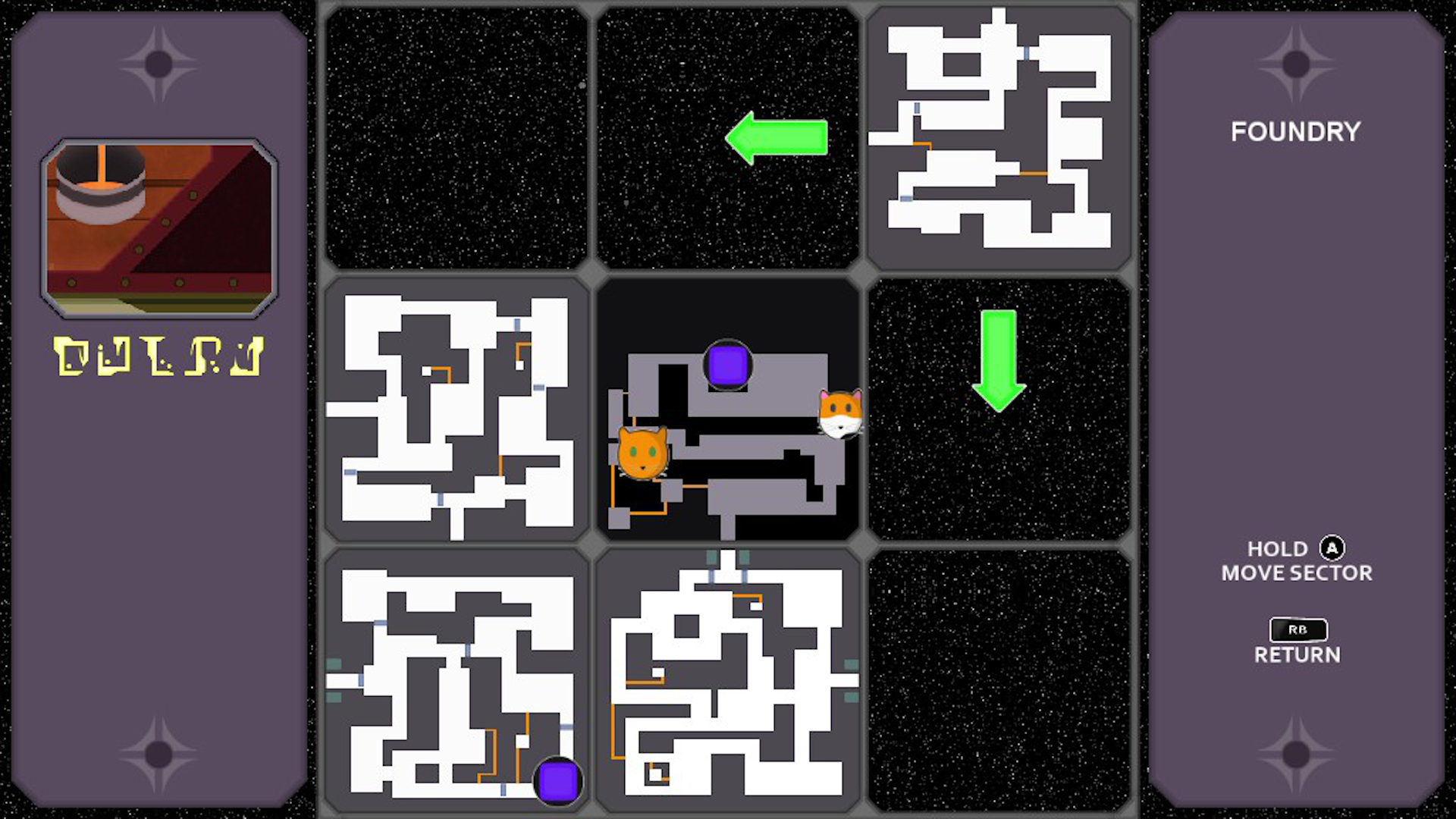
The map manipulation mechanic lets players rearrange sections of the alien ship. Image: Flat Voxel.
Also, time is always an issue. I think many games overstay their welcome, and that’s a problem when there are so many games for so little gaming time. I don’t like dropping a game unfinished or feeling like I’m leaving a lot behind (collectibles, side missions) but, at the same time, many games leave me with a sort of empty feeling. That’s why I wanted to make a game that respected players’ time: a single playthrough should take 5 to 6 hours, seeing everything it has to offer shouldn’t take much more than that and, above all, players should walk away from it feeling the experience was worthwhile.
Being a solodev means you will learn a lot, every day. And now, with the game completed and nearing its release, I can say that I had never learned so much with a single project before.
1) All my games use the open-source Cocos2d-X framework, now known as Axmol Engine. Despite the change from “framework” to “engine”, it’s still the same collection of versatile, faster-than-ever classes that depend entirely on your ability to think in 2D with no visual aid other than some sketches in a notebook. If I could publish on consoles, probably would have migrated to Unity or Godot long ago. As that’s not the case, I opted to keep with what feels like home to me – and, given the right tools, it can run on anything with a processor and a C++ compiler with no strings attached. Probably, someday I’ll have to embrace something more mainstream, but I finished this project thinking that I’ll avoid proprietary stuff for as long as I can.
2) One of the worst mistakes I made with my previous games: I didn’t playtest them enough. It’s fascinating (and scary, and sometimes frustrating) to actually watch people trying your game: what seemed obvious to you sometimes isn’t to others, what you never thought that could be a problem sometimes is. Player feedback made the game better in every respect, from the look of some environments to game control and speed to menus and instructions.
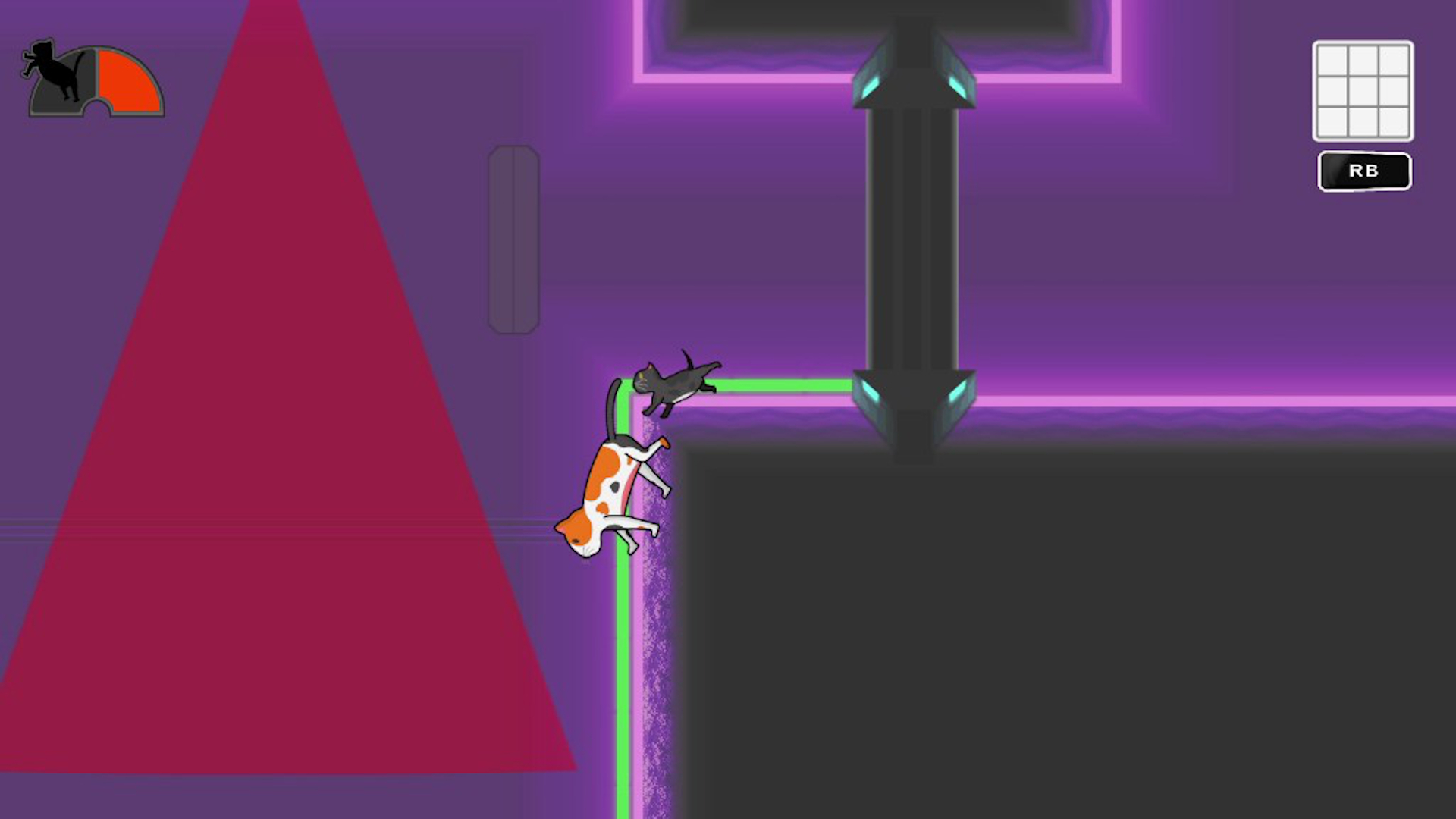
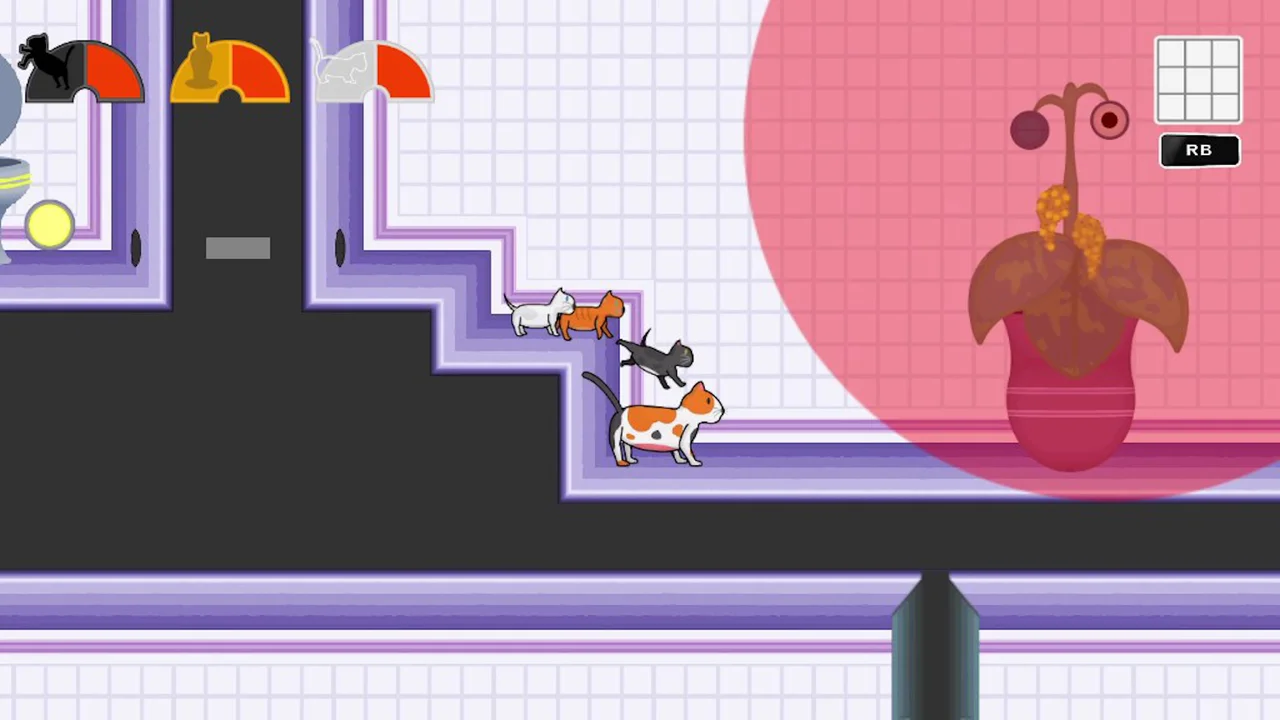
Cats being cats: run walls up and down. Image: Flat Voxel.
3) Now, what has really opened a new world to me: music. My other games had music done by a professional composer. For this one, I realized early I would need lots of music – probably more than I could afford. I considered using either non-exclusive licensable music (which I quickly discarded) or AI-generated music that didn’t use unauthorized sources (but the generative AI backlash rapidly grew to a point I didn’t want to have anything with it). Short for options, I decided to try what I had always wanted to do but didn’t think was possible – making my own music. Obviously, as is the case with my art, it’s nowhere near professional level. But just knowing I can do it has made this project worthwhile regardless of how it performs when released.
4) Finally, the biggest lesson: I won’t spend several years making a game again. The three-month period I spent in 2024 working on another game from beginning to end was refreshing and gave me a whole new appreciation for smaller projects. With AI allowing for more and more games with impressive 2D art done in minutes, it’s not even reasonable to spend years on a single project that can’t compete with them on visuals and relies entirely on ideas that are hard to sell. My little Halloween project from 2 years ago gave me the blueprint of what I should do from now on.
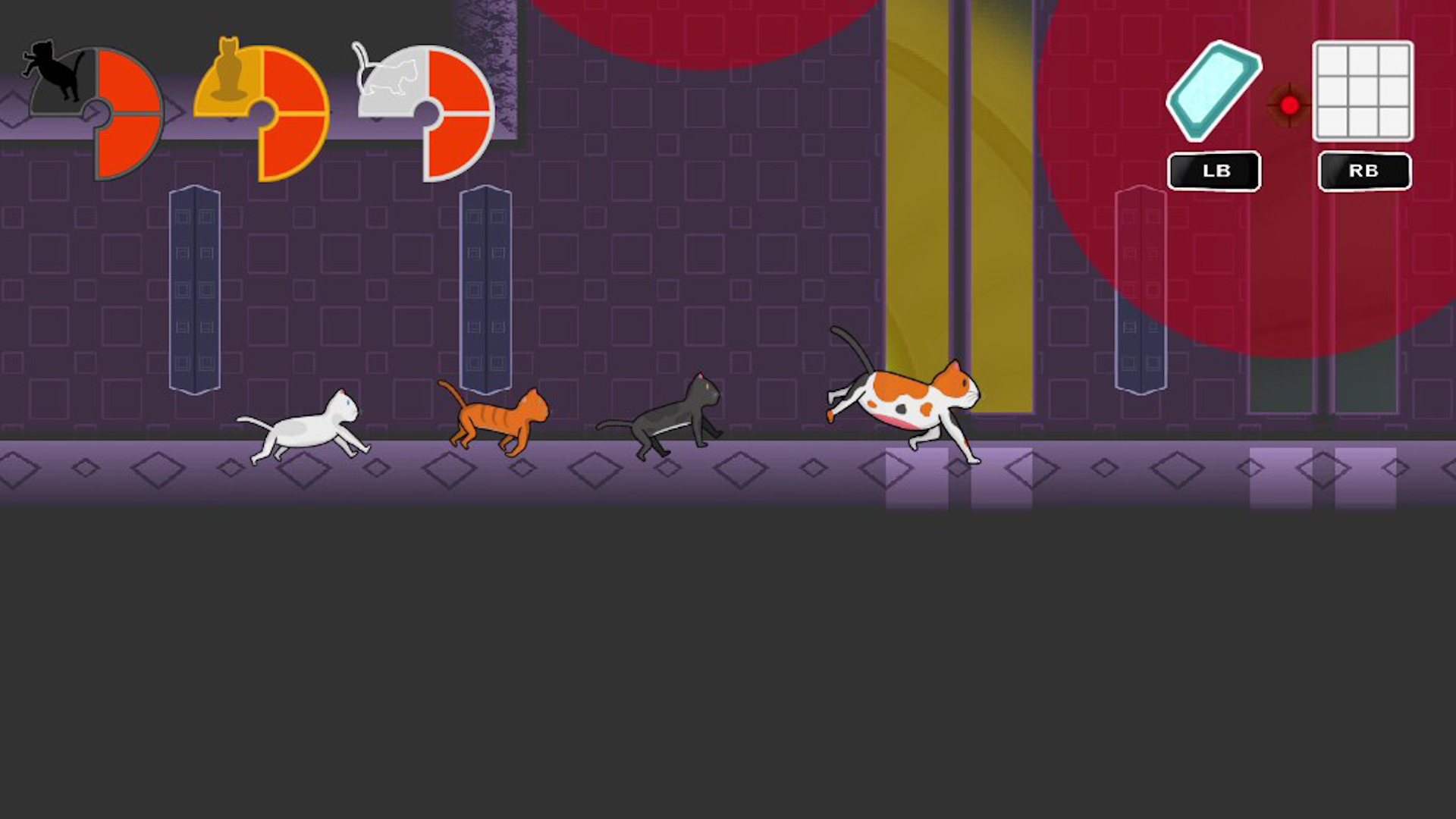
A cat and her kittens explore the alien facility. Image: Flat Voxel.
A Simple Expurriment releases on a few days, and right now I’m trying to distance myself from it and wrap my head around my next project (which is still on its early stages and of which I will definitely be writing about way before 2030). I still don’t know what to expect of it, but from my little weird feline metroidvania I can only hope it connects with players the way it’s intended to.
Gustavo Galembeck (Flat Voxel) – Solo developer
A Simple Expurriment
Release: Planned for October 28, 2026
Genre: Combat-free metroidvania, exploration platformer, puzzle
Developer / Publisher: Flat Voxel
Platforms: Windows PC — Steam
Fix Gaming Channel: Fix Stories gives game developers and creators space to share their work and experiences in their own words. This story was submitted by Gustavo Galembeck of Flat Voxel and formatted for publication without rewriting his contribution.
Related Reading
Fix Stories: Games Don’t Always Need to Ask More From Us
Burned Out From Game Development, I Made Tiny Tape Store
Fix Stories: One Swift Engine, Two Phones — How Stelline Came to Android
Story written by Gustavo Galembeck of Flat Voxel.
Edited and published by Ronny Fiksdahl, Founder & Editor-in-Chief of Fix Gaming Channel.
Send interview pitches, corrections, tips, or developer stories to contact@fixgamingchannel.com.
Support independent games coverage on Ko-fi.