Games, music, AI and the freedom to follow the next creative idea
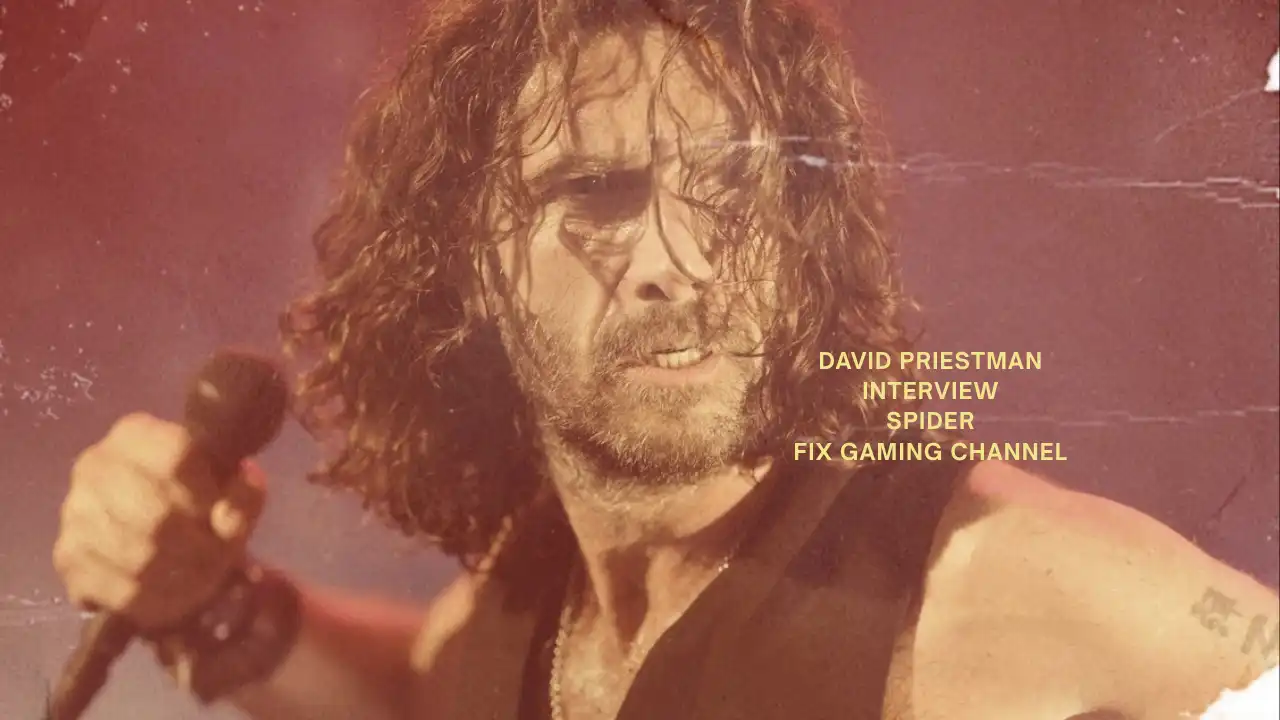
David Priestman reflects on seven years at Future Publishing, rediscovering games through The Last of Us, creating music through SPIDER, life in Thailand, film scoring, AI music, and his ambition to compose for video games.
David Priestman has moved through games media, advertising, music, scoring, and creative production. Now based in Koh Samui, Thailand, he describes SPIDER as “Post-Apocalyptic Rock ’n’ Roll,” combining distorted guitars, cinematic atmosphere, and ideas drawn from science, philosophy, politics, technology, and the human condition.
In this interview, Priestman discusses the business and art behind games, the instinctive process behind his music, the possibilities and limitations of AI tools, and why he believes video games are becoming the defining art form of the 21st century.
Before we get into music, games, film, and everything else, who is David Priestman, in your own words?
Who is David Priestman? At heart, I’m someone driven by curiosity. I’m happiest creating, travelling, meeting people, and experiencing places that challenge my perspective. The road has always represented freedom to me, and many of the experiences I’ve had while travelling have become the biggest influence on my music and creative work.
Beyond creativity, I’ve always had a deep interest in geopolitics and how societies evolve. I’m fascinated by the forces that shape the world around us, but equally by the individual stories within it. I have a genuine empathy for people who have been dealt a harder hand than my own, and I think those encounters have influenced me just as much as any film, game or record ever could.
Whether I’m writing music, working on a creative project or simply exploring somewhere new, I’m always searching for something honest and meaningful. I suppose that’s the thread that runs through everything I do.
You’ve moved through games media, advertising, music, scoring, and creative production. When you look back at that path, does it feel like separate chapters or one long creative thread?
That’s a great question, and one I’ve genuinely asked myself over the years.
I think the honest answer is both. When I look back, I can clearly see distinct chapters: games, media/advertising, music, scoring, creative production. At the time, each felt like its own journey with its own challenges and lessons.
However, with hindsight, I can see there has always been a common thread running through them. One opportunity has always led to another, one door opening as another closed. It feels like an interconnected tapestry, where every experience, every success and every setback has quietly prepared me for whatever came next.
So whilst they may appear to be separate careers on paper, to me they’ve always been part of the same creative journey.
What did your time around Future Publishing and games media teach you about the business side of creativity, audiences, and how people connect with games?
My seven years at Future Publishing and working within the games industry was one of the defining chapters in my creative journey.
The first thing it gave me was a renewed love of gaming itself. I’d grown up with games, but as music became a bigger part of my life and I spent more time playing in bands, gaming had gradually taken a back seat. Future brought me back.
I’ll always remember my manager and mentor, Andrew Church, handing me a PS3 and a copy of The Last of Us when I joined his team. That genuinely changed my perspective. The emotional depth, the storytelling, the cinematic presentation… It was the moment I realised games weren’t simply entertainment anymore. They had evolved into something capable of standing alongside the very best films.
In fact, I came away believing that if cinema was the defining art form of the 20th century, then video games are becoming the defining art form of the 21st. They combine storytelling, music, performance, technology and, uniquely, player agency. No other medium quite does that.
Professionally, Future also gave me a holistic understanding of the business that surrounds games. Working closely with publishers, developers and media agencies taught me how creativity and commerce have to coexist, and how building a lasting audience is every bit as important as launching a great game.
Above all, though, it introduced me to some remarkable people. Looking back, it was one of those chapters that opened far more doors than I realised at the time.
There is always a story behind someone leaving one world and building life somewhere else. What brought you to Thailand: choice, chance, opportunity, burnout, curiosity, or something harder to explain?
Another great question and in many ways one that links back to my first answer.
Thailand wasn’t a leap into the unknown. I’d been travelling to Koh Samui regularly for almost twenty years, so it had gradually become somewhere that felt like a second home. Then, during a trip in early 2025, I met a group of like-minded people who introduced me to the Digital Nomad lifestyle and Thailand’s DTV visa. Suddenly, a possibility I’d never really considered became very real.
Of course, practical considerations played their part. The rising cost of living in the UK made me question whether there was another way to live. But the bigger motivation was freedom. My children are now adults, forging their own paths, and I realised I had an opportunity to write an entirely new chapter of my own.
Thailand has always given me a feeling that’s difficult to describe but instantly recognisable whenever I’m here: freedom. It inspires me creatively, slows life down just enough to appreciate it, and reminds me why I love travelling in the first place.
One of the unexpected joys has been sharing that with my children. They’ve visited me here, experienced a different culture, and hopefully discovered that the world is far bigger and more accessible than they might once have imagined.
Looking back, moving here feels less like leaving one life behind and more like continuing the same journey, just on a different road. And honestly, I can’t imagine my life without this chapter now.
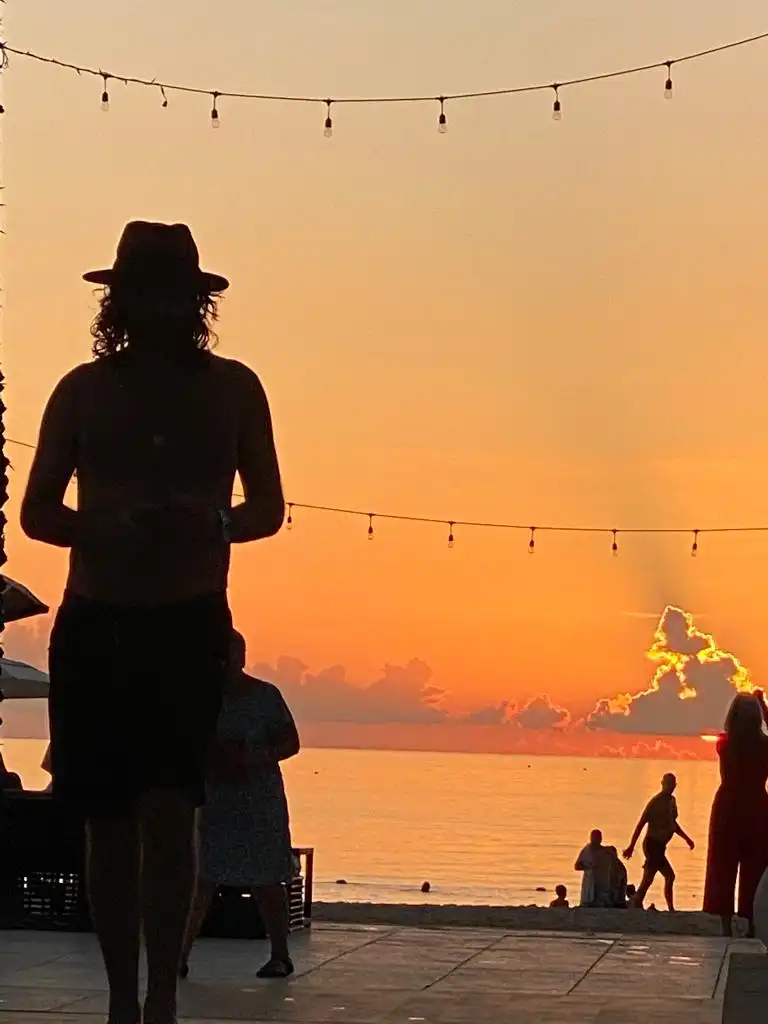
Koh Samui became another chapter in David Priestman’s search for freedom, travel, and creative space.
You make music under SPIDER and have moved into scoring as well. What usually starts a piece of music for you: a sound, a feeling, an image, a memory, or something else entirely?
Superb question.
The honest answer is that there’s no single starting point. Music seems to find me rather than the other way around. It can be a scientific breakthrough that sparks a lyrical idea, a melody that arrives in a dream, an image, a landscape, or sometimes something I can’t explain at all.
What I’ve learned over the years is that when those ideas arrive, they demand attention. It almost becomes a compulsion to capture them before they disappear.
A recent example was a trip to Hong Kong. An old song I’d originally written and recorded back in the ’90s called Escape Capsule kept playing over and over in my head throughout the trip. It refused to leave me alone. The moment I arrived back in Koh Samui, I barely had time to take my shoes off before I was in my studio re-recording it.
The same thing happened when I was thinking about the score for The Stranger. I was travelling through California with my family, watching the landscape rush by outside the window, when I suddenly started hearing this enormous wall of feedback, distorted guitars and distant screams in my head. By the time I landed back in the UK, despite the jet lag, I went straight into the studio. Twenty minutes later I’d recorded what was essentially the first sketch of the score.
The interesting thing is that I hadn’t actually been offered the job at that point.
I sent the director that rough recording, and it ultimately secured the project.
Those moments have taught me to trust instinct. When an idea arrives, I don’t question it anymore, I follow it. More often than not, that’s where the best work comes from.
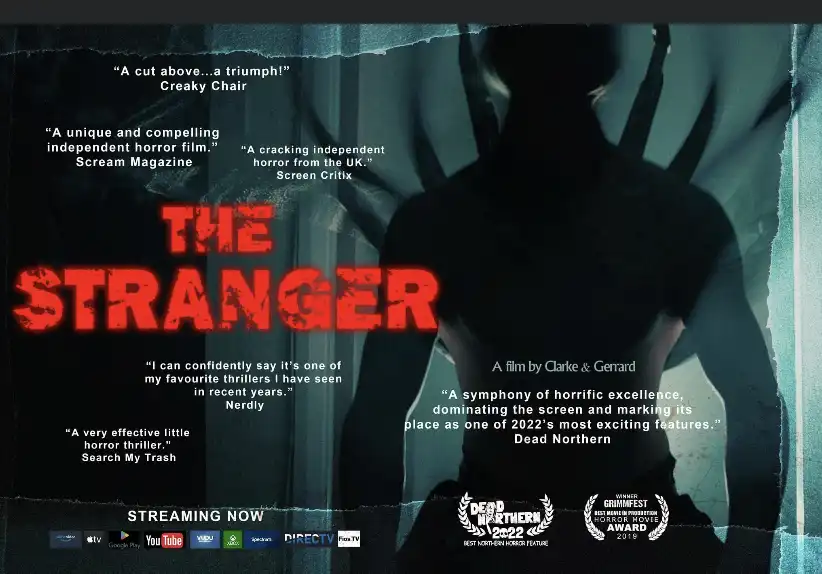
An instinctive first musical sketch helped David Priestman secure the scoring project for The Stranger.
For someone discovering your music for the first time, where should they begin? What is SPIDER, where can people listen, and why should they give it their time?
That’s a big question!
If someone was discovering my music today, I’d point them straight to the SPIDER YouTube channel. These days I tend to think visually as well as musically, so most songs are accompanied by a video. For me, they belong together, making YouTube the natural home for the project.
SPIDER is, in many ways, a convenient fiction. It’s the creative identity that allows me complete freedom to explore ideas, stories and emotions without limitation. The tagline is “Post-Apocalyptic Rock ‘n’ Roll,” and that’s probably the simplest way of describing it. It’s dark and aggressive in places, but never without hope. It asks existential questions over huge basslines, distorted guitars and cinematic soundscapes. I love the tension between beauty and chaos.
Although my musical history stretches back decades and includes a wide range of projects and international collaborations, I’ve deliberately chosen to focus on the present rather than the past. I’m currently building a new website that will eventually include hidden “Easter eggs” for anyone curious enough to explore those earlier chapters.
Why should someone give SPIDER their time? Because I don’t write songs simply to fill playlists. Every track begins with an idea that I’m genuinely compelled to explore, whether that’s science, philosophy, politics, technology or the human condition. If people come away thinking, feeling, or questioning something they hadn’t before, then I’ve done my job.
And if they eventually get to experience SPIDER live, I hope it feels exactly as I intend it to: like an iron fist in a velvet glove.
Route 666 is presented in full under The High Priest. The complete album was uploaded to YouTube on June 17, 2026.
Visit The High Priest on YouTube
Music, film, and games all deal with atmosphere in different ways. What do you think music can say that words or visuals cannot?
This question immediately makes me think of one of my favourite writers, Hermann Hesse, who wrote beautifully about music as something that speaks to the deepest parts of our humanity.
For me, music exists in a place beyond language. We’ve all experienced that moment when the hairs on the back of your neck stand up or your arms tingle for reasons you can’t quite explain. That’s the sweet spot. It’s the point where emotion bypasses logic, where words become unnecessary and something much more instinctive takes over.
That’s what I think music can do that film, dialogue or imagery cannot achieve on their own. They can move us, of course, but music has an extraordinary ability to unlock emotion in a direct, visceral way. It can make us remember people we’ve lost, transport us back to moments we’d forgotten, create tension, hope or wonder in an instant, and sometimes express feelings that simply don’t have the vocabulary to describe them.
For me, that’s the pursuit. Whether I’m writing a song or scoring a film, I’m chasing that moment where music stops being something you hear and becomes something you feel.
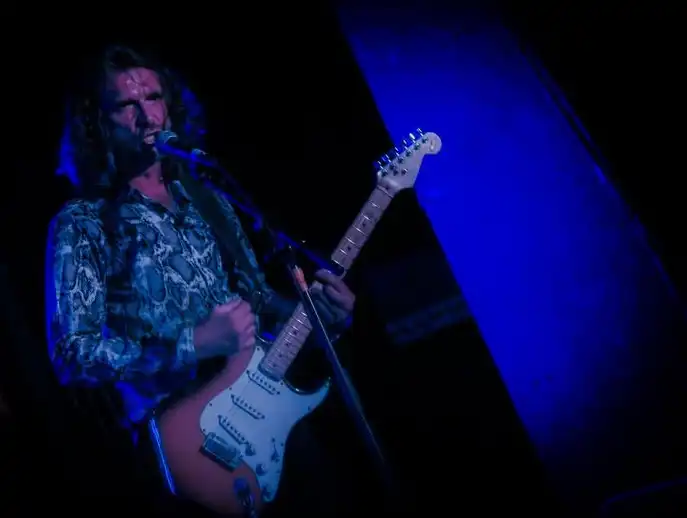
David Priestman performing live as SPIDER in 2025.
When you are working on music for someone else’s project, what do you enjoy more: full creative freedom, or a focused brief where the challenge is finding the right emotion inside someone else’s world?
I recently worked on the pilot for a comedy sitcom that reminded me of Birds of a Feather. It couldn’t have been much further away from my own musical world, and that was precisely what made it interesting. It challenged me to think differently and develop skills I wouldn’t have discovered had I stayed inside my comfort zone. Every project like that adds another string to the bow.
That said, if I’m answering your question honestly, I do love complete creative freedom.
I’m always open to direction, collaboration and constructive feedback, that’s part of working professionally but I love those moments when someone trusts you enough to simply say, “Go and create.”
There’s been a recurring theme running through these questions, and I don’t think that’s a coincidence: freedom.
Whether it’s travelling, writing music or performing live, freedom is the thing I’m always chasing. When I’m completely immersed in creating, something changes. It sounds clichéd, but it’s true. The anxieties, the noise of everyday life, all of it disappears. I’m completely present. Whether you want to call it flow, instinct or being connected to something bigger than yourself, it’s the closest I ever come to feeling completely at peace.
That’s the feeling I hope every piece of music carries with it.
Would you like to do more music for video games, and if so, what kind of game world would make you think, “Yes, I need to score this”?
Oh… now that is a delicious question.
Absolutely. Scoring video games is something I’d love to do, and it’s very much on my radar.
I’ve always believed that games are becoming the defining art form of the 21st century because they combine storytelling, visuals, performance, technology and music in a way no other medium can. As a composer, that’s incredibly exciting because your music doesn’t just support the experience, it becomes part of how the player feels and remembers that world.
If I had to choose my playground, it would definitely be horror, science fiction, cyberpunk, psychological thrillers or anything dark, atmospheric and emotionally intense. Those worlds naturally resonate with the music I write under SPIDER.
More than anything, though, I’d want to create a score that becomes part of the game’s identity. The best game soundtracks don’t just accompany the action, they become inseparable from the memories players carry with them long after they’ve put the controller down.
If a developer wanted something visceral, cinematic and just a little unconventional, I’d be very excited to have that conversation.
From one musician to another, I have to ask about AI music. It is becoming a bigger topic across games, film, and online content. Have you tried tools like Suno or other AI song generators, and what is your honest take on them? I’m interested in both sides: the good, the bad, how they work as tools, and what this might mean for musicians trying to keep the human part of music alive.
I haven’t actually used tools like Suno myself, but a friend of mine took several of my songs, ran them through AI, and sent me the results.
The first one, 8 Ball, genuinely blew me away. I remember thinking, “Wow… this is remarkable.” It was impressive, creative and surprisingly convincing.
But then something happened.
By the second and third tracks I started noticing the same vocal characteristics, the same production habits, almost the same personality repeating itself. The novelty wore off quite quickly, and I found myself losing interest. I still think 8 Ball is fantastic, but it also highlighted AI’s limitations for me.
I completely understand why these tools exist, and I think they have a place. They’re brilliant for experimentation, generating ideas or helping people who might not otherwise have the confidence to create. Used as a creative assistant, I think AI can be genuinely exciting.
Where I become more cautious is when AI replaces the creative journey itself.
For me, the greatest reward in making music has never been the finished song—it’s the process. It’s the frustration, the experimentation, the moments where nothing works, followed by that breakthrough when suddenly everything clicks into place. That’s where the joy lives. That’s where you discover something about yourself.
If musicians choose to hand that entire process over to AI, I think they’re missing the most meaningful part of being an artist. The destination matters, but it’s the journey of creating something from nothing that gives music its soul.
Creative people often spend years finding the confidence to say what they really think. Has your public voice always been there, or did it take time to trust it?
That’s an interesting one because I think there are two different answers.
I’ve never really lacked confidence in expressing myself creatively. Whether it was playing live, recording music or putting work out into the world, I’ve always been comfortable taking that leap. In that sense, I don’t think I ever had to find my public voice—it was always there.
What has changed is what that voice actually says.
As I’ve got older, travelled more, met people from completely different backgrounds and experienced life’s inevitable highs and lows, I’ve become far more interested in asking bigger questions. My music today is probably more philosophical, more reflective and more willing to challenge ideas than it was twenty years ago.
I’ve also become less concerned about whether everyone agrees with me. Creativity isn’t about consensus. It’s about honesty. I’d much rather create something that genuinely connects with a smaller audience than dilute it in the hope of pleasing everybody.
If there’s one thing I’ve learned, it’s that people respond to authenticity. Whether someone loves your work or hates it almost becomes secondary. If it’s honest, they’ll at least know it’s real.
Freedom as the connecting thread
Across Priestman’s answers, freedom keeps returning. It shapes his move to Thailand, the instinctive way he follows musical ideas, his approach to collaboration, and the peace he finds when he becomes completely absorbed in creating.
His view of AI music follows the same balance. He recognises its value for experimentation and accessibility, while remaining cautious about replacing the difficult and deeply personal process that gives music its human character.
Scoring video games is one chapter he would still like to pursue. Horror, science fiction, cyberpunk, psychological thrillers, and other dark, atmospheric worlds would give him space to create something visceral, cinematic, and unconventional.
Follow David Priestman
YouTube: The High Priest
Instagram: @the_high_priest11
Related Reading
Art in Games: Karl “Rockfist” Rosqvist on Alruna, Chiptune, and Human-Made Music
Written by Ronny Fiksdahl, Founder & Editor-in-Chief of Fix Gaming Channel.
Send interview pitches, corrections, tips, or developer stories to contact@fixgamingchannel.com.
Support independent games coverage on Ko-fi.