Lynwood Montgomery on craft, AI, and the state of game art
As part of our continued Art in Games series, we spoke to Art Director Lynwood Montgomery, an industry veteran who has had stints at various studios, including Wizards of the Coast, Microsoft Game Studios, Pipeworks, and Big Fish Games, among others.
An accomplished artist, Art Director, and Creative Director, Lynwood has experience across 3D art, illustration, graphic design, UI/UX, video production, and motion graphics.
Portfolio: lynwoodart.com
In this interview, Lynwood talks about traditional training, adapting to new tools, AI in game production, the pressure facing artists in the current industry, and why human instinct still matters in creative work.
Lynwood, you’ve got an extensive playbook filled with lots of skills including expertise in 3D art, illustration, graphic design but what was your initial training or specialism creatively speaking?
I’ve been drawing since I could hold a pencil, mostly spaceships, monsters, and D&D characters. At some point I realized that while I loved the idea of being a fine artist, I also enjoyed things like electricity, groceries, and living indoors. So, I went the practical route and earned a BA in Graphic Design.
That ended up being a smart move. The fundamentals: composition, typography, visual storytelling, turned into the secret sauce behind everything I’ve done since: illustration, marketing, game art, and art direction. Graphic design gave me the structure; my imagination provided the rest.
Once I entered the professional design world, though, I hit a wall. The creative process often involved endless approvals, multiple committees, and at least one person who had very strong feelings about Helvetica. By the time a design shipped, it barely resembled my original idea. So, I decided to jump into the expanding world of 3D graphics, where experimentation and speed felt more natural.
Enter Infini-D on my old Mac, a piece of software that was delightfully primitive and absolutely magical. I taught myself animation, motion graphics, and sci-fi visual effects for no other reason than sheer obsession. Those passion projects became my portfolio which landed me a job in games. My Art Director at the time later told me he hired me because of my graphic design skills. You never know.
And from there, everything aligned: illustration, design principles, 3D, and cinematic storytelling blended into a creative path that shaped the artist I am today. I began with traditional art and developed into a 3D Artist, Graphic Designer, UI/UX Designer, and Art Director. Growth is essential, you have to stay flexible and be willing to evolve and grow.
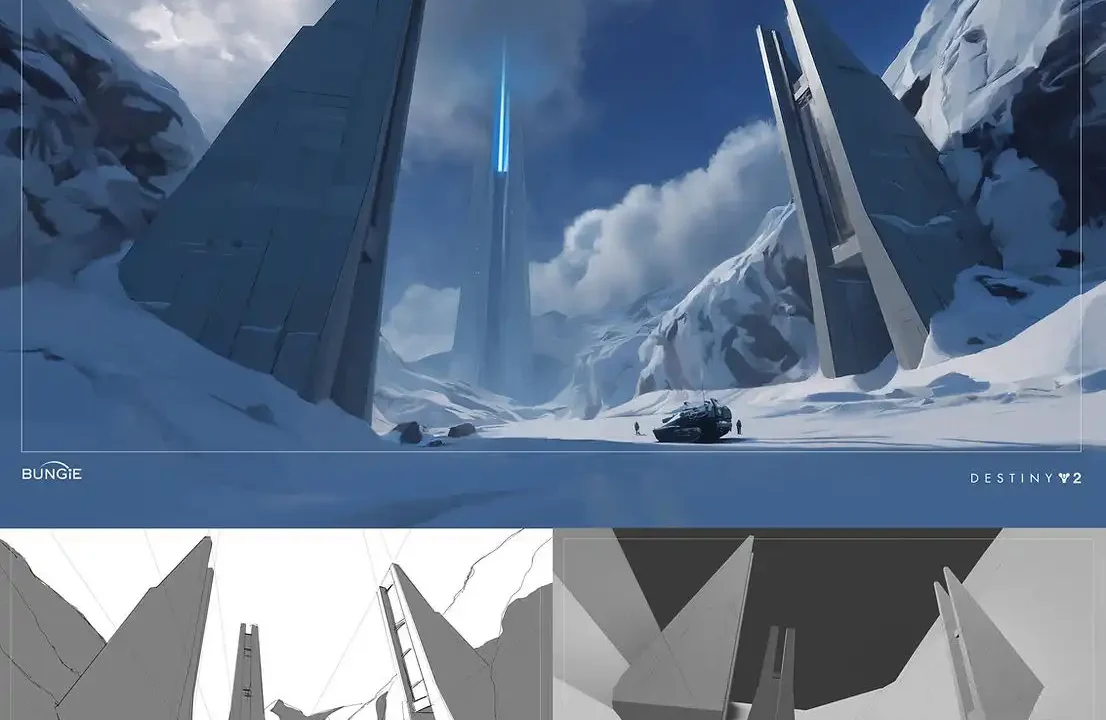
Bungie — Destiny 2 environment art test sheet: icy monolith valley with composition thumbnails.
Join Our Newsletter
Stay updated with the latest interviews, previews, and indie gaming news from Fix Gaming Channel.
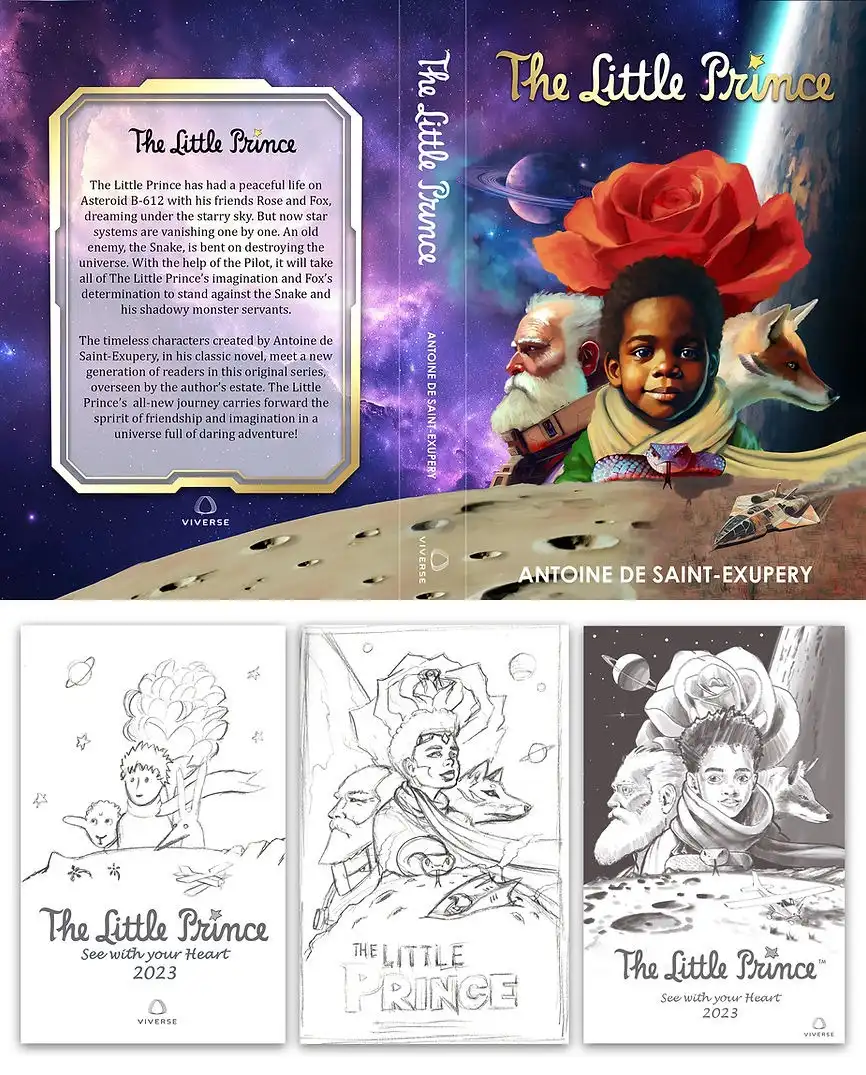
Cover spread and sketch progression for The Little Prince, from rough drafts to final art.
What are your thoughts on the emergence of AI and how it affects the creative industry and Art Direction where video games are concerned, particularly in light of Tim Sweeney’s own opinion where he argued that requiring labels for AI use on game stores is pointless because AI will be integral to almost all future game production?
I agree with Tim Sweeney in that trying to label AI use in games isn’t realistic. AI is quickly becoming part of the everyday toolkit, just like Photoshop, Unreal, or ZBrush. Before long, you won’t be able to separate “AI work” from “non-AI work” in production because it will be baked into almost every stage.
We’re already seeing studios ask for AI fluency in job descriptions, and that tells us everything we need to know. It’s not going to be a niche skill for long. And it’s not just for art teams either. AI is already transforming project management, scheduling, QA, content planning, marketing, and HR. Any studio that wants to accelerate delivery or operate more efficiently is going to integrate AI into their workflows.
The interesting challenge right now is that there’s a gap between what AI can realistically do today and what companies hope it will do tomorrow. There’s a lot of excitement around automation, cost savings, and content scaling, but sometimes the expectations get ahead of the technology or ahead of the creative process. As tools mature and teams learn how to integrate them thoughtfully, AI will simply become part of how we build games. At that point, labels won’t matter because it’ll be everywhere by default.
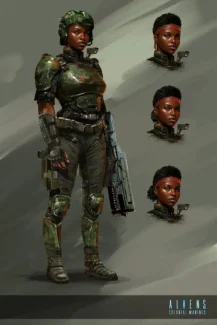
Character concept sheet exploring the marine’s armor, gear, and facial variations.
You’re a traditionally trained artist but you’ve also recently dabbled in new emergent AI creative tools in the form of Alisa AI and 3D AI Studio. Is it an inevitable path that traditionally trained artists need to adapt to incorporating AI art skills to stay relevant in the games industry?
I’ve been in the industry long enough to recognize this pattern. Every major shift, from home computers to Photoshop to the rise of the internet, has changed how artists work, and AI is simply the next evolution in that cycle. It’s not replacing creativity; it’s becoming another tool in the pipeline.
If you want to stay relevant in games, it makes sense to get familiar with AI rather than avoid it. Lean into it, experiment with it, and figure out how it enhances your vision, because it’s not going away. Game development has always been a moving target, and the teams that thrive are the ones that adapt early and learn how to integrate new tools thoughtfully.
As artists and art directors, we should welcome technologies that help us ideate faster, iterate more efficiently, or visualize concepts that used to take days. Ignoring AI isn’t a strategy, it’s a shortcut to becoming outdated. Yes, we should all use AI ethically but I believe this is one of those inflection points in the industry where embracing change can genuinely shape the trajectory of your career.
2025 has been one of the most challenging years for creatives in the game industry, individuals that have made considerable contributions to videogames – what’s your hot take on the state of the games industry right now?
2025 has been a challenging year for creatives, and not just in games. The broader economic downturn has forced many industries to tighten budgets, and games have been caught in that same wave. Rising production costs, combined with a player base that expects bigger and more cinematic experiences, have pushed studios and publishers to make tough decisions, and yes, that has led to layoffs.
The job market is now saturated with incredibly talented people, which makes things feel more competitive than ever. But I don’t see this as the end of opportunity, I see it as a period of transformation. Even in a down economy, the demand for interactive entertainment isn’t disappearing. What’s changing is how studios build content, how teams are structured, and what technologies they rely on.
We’re watching the industry rebuild with more efficient workflows, smarter tools, and cross-disciplinary talent. AI, procedural systems, and new production methods are opening creative doors that weren’t even on the table a few years ago. Yes, it’s a tough moment, but it’s also a moment of reinvention.
And that’s where the optimism comes in: great artists and great thinkers still stand out. Strong portfolios, adaptability, and thoughtful self-promotion absolutely make a difference. Even in a difficult year, I believe that creative people who stay curious and evolve with the tools will continue to find meaningful opportunities in games.
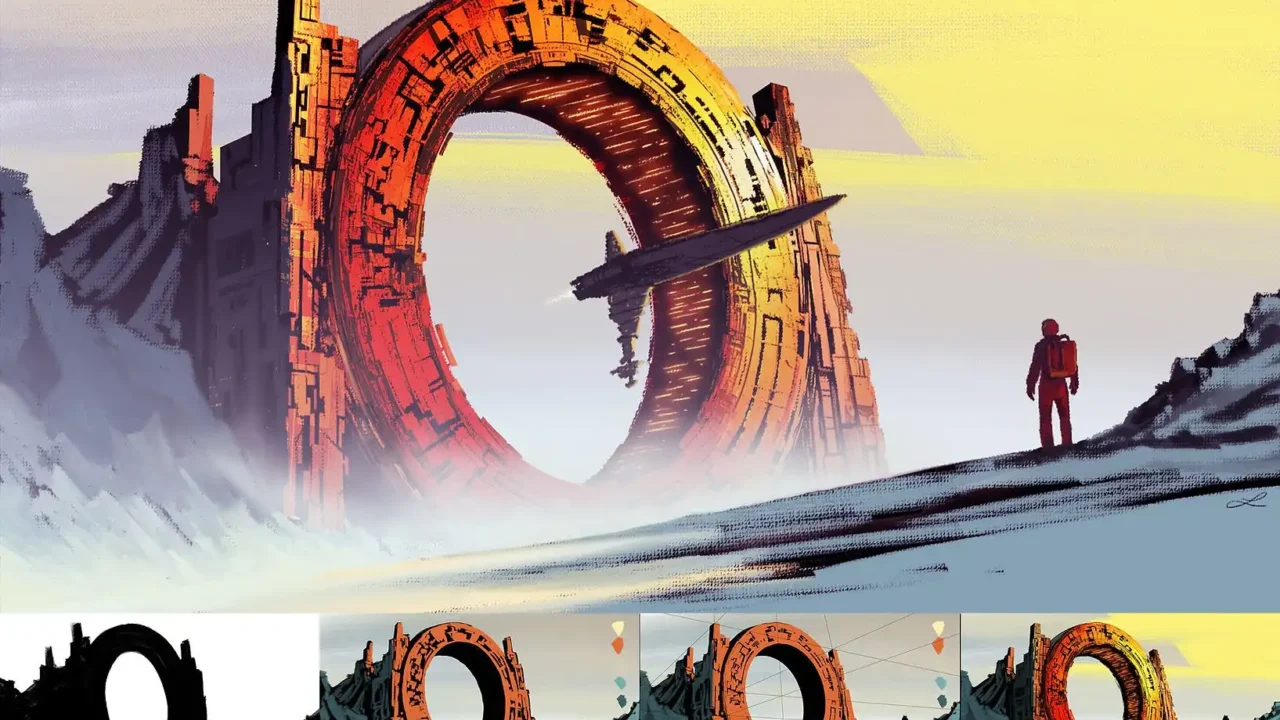
Environment concept sheet featuring a monumental ring gate and scale studies.
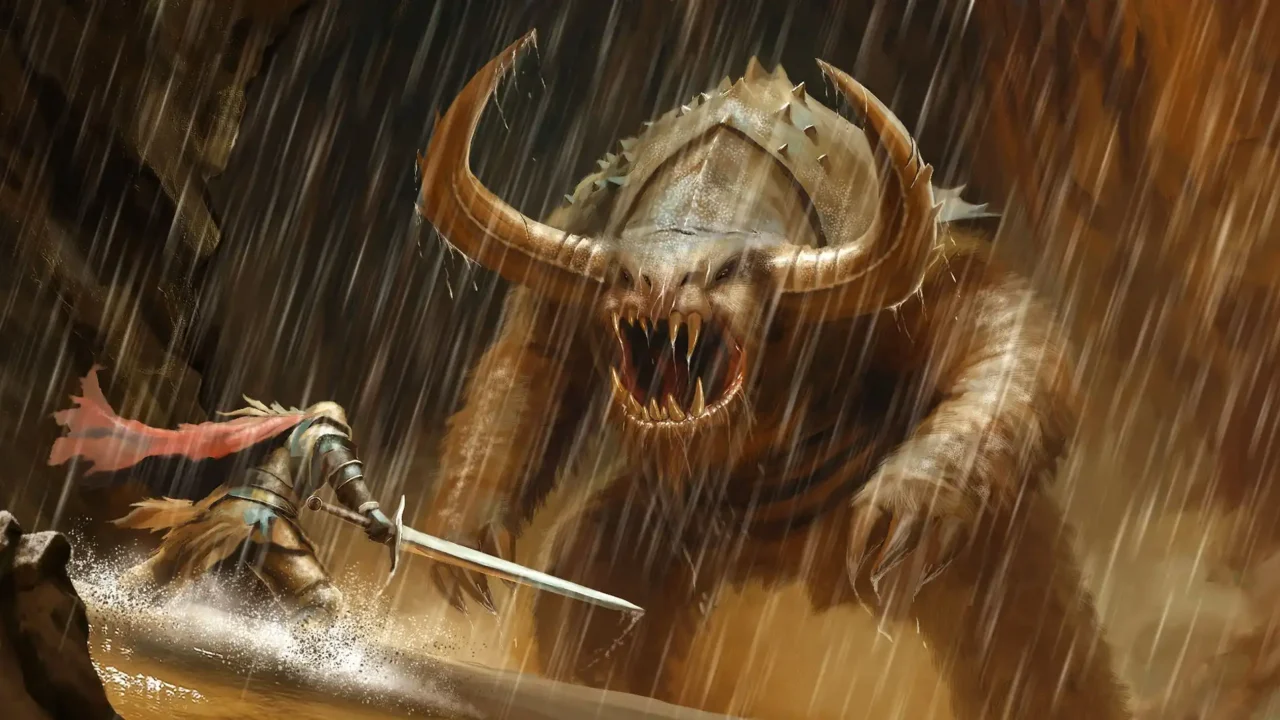
A lone knight squares off against a towering horned creature as rain lashes the battlefield.
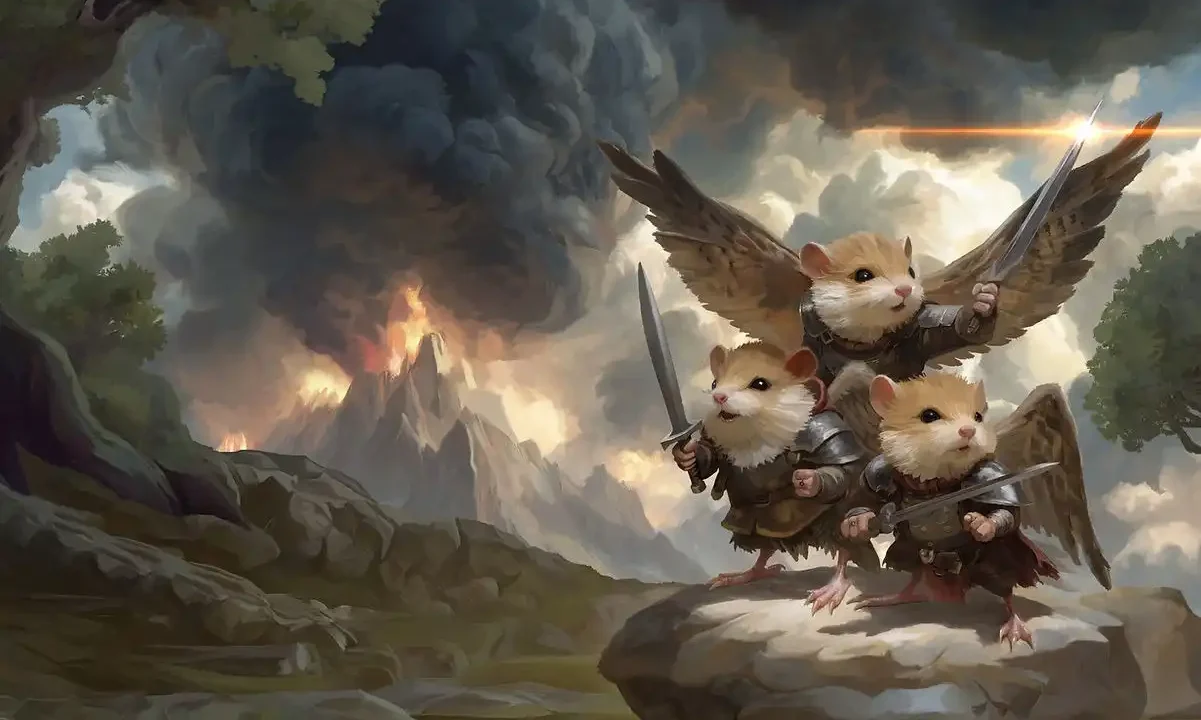
Winged mouse warriors rally for battle beneath storm clouds and a firelit mountain range.
You orchestrated the comprehensive visual overhaul for Magic Online for Wizards of the Coast – how do you undertake a project like that with such a passionate and loyal fanbase, where does the groundwork start for something like that on a creative level?
What’s interesting is that when I began working on Magic Online, I realized very quickly that a full visual overhaul wasn’t actually possible. Because minor visual changes, like updating text colors, were more complex than they appeared, what could have been frustrating became an opportunity to experiment and explore more resourceful solutions.
Instead of forcing a redesign that wasn’t technically viable, we started asking a bigger question: What kind of digital Magic experience was actually missing? At the time, Wizards had Duels of the Planeswalkers for brand-new players and Magic Online for high-level deck building and tournament testing. But there was a huge gap in the middle; millions of players who loved Magic but didn’t have a modern, approachable way to play digitally.
Collaborating with Sr Producer, Charles Leroux, I led the visual exploration of what this new product could look like. We built concept designs and motion graphics that felt modern, accessible, and faithful to the brand, and shared them across the company. Those visuals helped stakeholders see the potential, and that momentum led to funding for a brand-new digital division.
Magic Arena became Wizards’ first in-house digital production and the project grew into exactly the experience the audience was craving. So, while I didn’t get to overhaul Magic Online directly, the creative groundwork we laid ultimately helped shape the future of Magic’s digital presence.
We interviewed Arnie Jorgensen who said we could be seeing the last human-built games as the proliferation of AI technology advances, what are your own thoughts on this?
I think that’s a pretty dramatic prediction. Sure, AI can crank out assets, scripts, or even entire prototypes if you point it in the right direction, but we’re still a ways out from AI waking up one morning, pouring itself a coffee, and saying, “I’ve got a killer idea for a narrative-driven RPG about grief, socks, and cosmic squirrels.”
Great games are still powered by human weirdness, intuition, and creative judgment. Players respond to personality, intention, and emotional beats, not a machine trying its best to imitate them. AI might be excellent at producing a never-ending supply of casual games, and I fully expect a future where some companies will flood the market and hope one of them becomes the digital equivalent of a lottery win. That’s fine.
But the memorable stuff? The games that make you laugh, gasp, cry, or yell at your controller? Those still require humans who make irrational creative decisions, argue about color palettes at 2 a.m., and rewrite dialog until it feels just right. That’s not something AI can replace, it’s something AI can assist, like a very fast intern who never sleeps and has no sense of irony.
So no, I don’t think we’re seeing the “last human-built games.” We’re just entering a future where AI joins the team, handles a lot of the heavy lifting, and humans stay responsible for all the strange, brilliant choices that make games worth playing.
Who or what has been the single biggest creative inspiration in your career?
It’s a tie—two very different kinds of inspiration.
First, my parents. They weren’t creative in any traditional way unless you count building a computer from scratch to control the house lights or crocheting doll dresses for toilet paper covers. But they noticed early on that I was obsessed with drawing, and instead of telling me to get a “real hobby,” they encouraged it. They had no idea what I was doing, but they bought the sketchbooks and said, “Sure” when I wanted to enter my drawing of a turtle wearing a hat (his name was Tippy) for a chance to win $5000. I hope they knew how much that support meant to me.
My second big inspiration was Kevin Cahill, one of my college graphic design professors. He was the first person to explain the difference between fine art and commercial art in a way that actually stuck. He said: Fine artists make art for themselves. Commercial artists make art for someone else. Simple, but seismic. It completely rewired my creative brain.
Suddenly, I wasn’t trying to express my inner cosmic feelings about breakfast cereal. I was solving a problem for a client, with intention, clarity, and structure. That shift allowed me to critique my own ideas without spiraling into existential dread. This allowed me to give and receive feedback like a grown-up instead of a delicate houseplant in need of emotional misting. Total game changer.
So yes: supportive parents doing the best they could + a professor who shook the snow globe inside my head = the two biggest influences on my creative career.
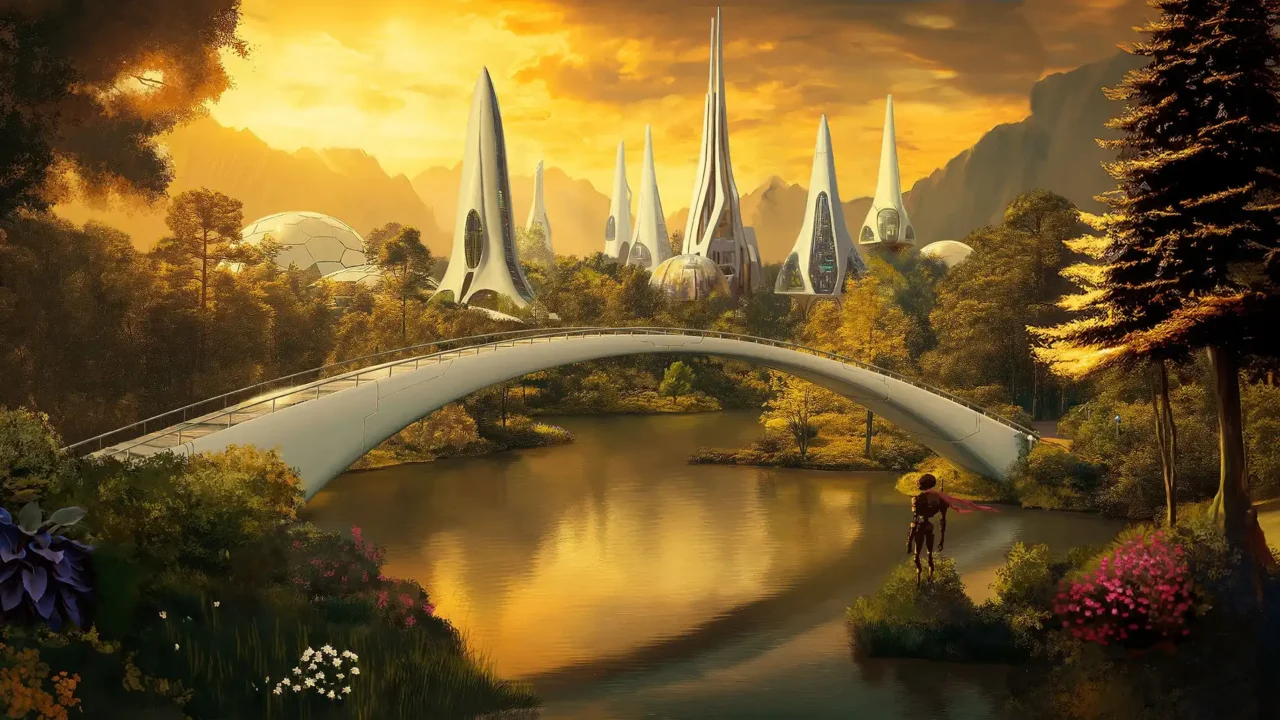
A serene sci-fi garden city scene, with an arched bridge leading toward sleek spires.
If you had the chance to work on any movie or videogame franchise in history what would Lynwood Montgomery want his name attached to and why?
That’s easy: Star Wars, hands down. Anyone who’s ever spent more than five minutes with me knows this franchise occupies at least 40% of my brain at all times. Just ask my wife and kids. Hell, even our dogs know this about me.
A New Hope basically rewired my young imagination. The world-building, the creatures, the ship designs, it felt like someone opened a door and said, “Here, have an entire galaxy. Don’t worry about bedtime.”
For a while, I was convinced I was destined to become a model builder at ILM. I had a whole plan worked out: I’d live in a workshop, wear one of those denim shop coats, and spend my days gluing tiny spaceship parts together like a very focused wizard. That career didn’t materialize, but I still happily build scale models as a hobby. So, if anyone from Lucasfilm is listening, I’m still available and I know my way around an X-Wing.
Star Wars is just one of those universes that makes me want to contribute something to it. Getting my name attached to anything in that galaxy far, far away would feel like the creative equivalent of finally getting a real functioning lightsaber.
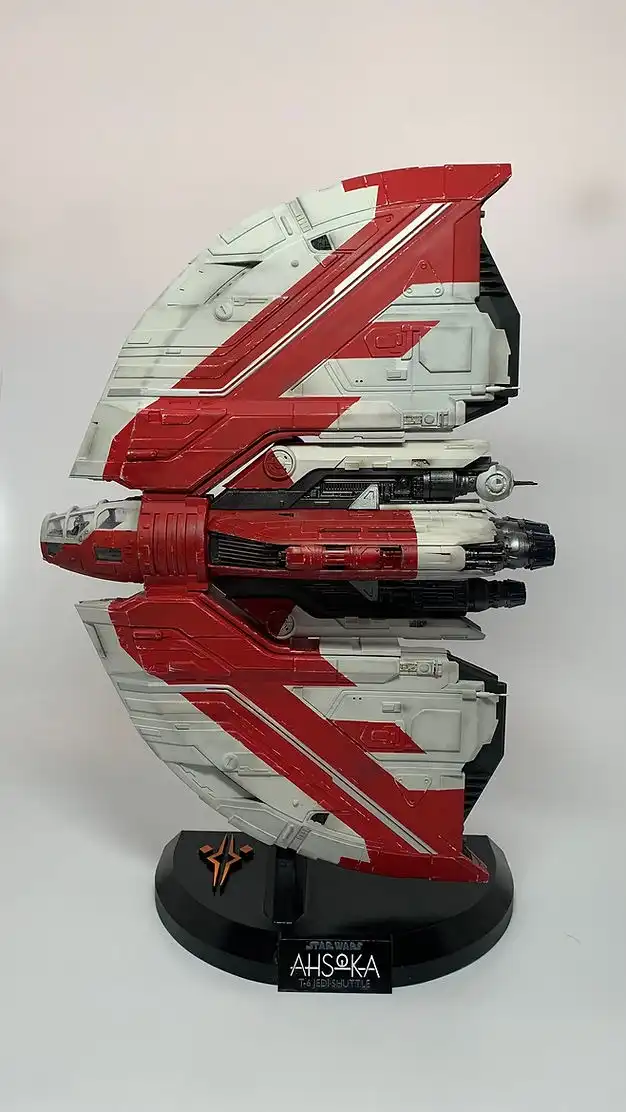
T-6 Jedi Shuttle display model in red-and-white livery.
Related Reading
- More Art in Games interviews: Art in Games — Interviews archive
- Referenced in this interview: Arnie Jorgensen discusses AI’s impact on creativity
Written by Ronny Fiksdahl, Founder & Editor of Fix Gaming Channel.
Send interview pitches, corrections, tips, or developer stories to contact@fixgamingchannel.com.
Support our work on Ko-fi.