Fred Gambino talks sci-fi, from Asimov to game worlds, and the future of creative art.
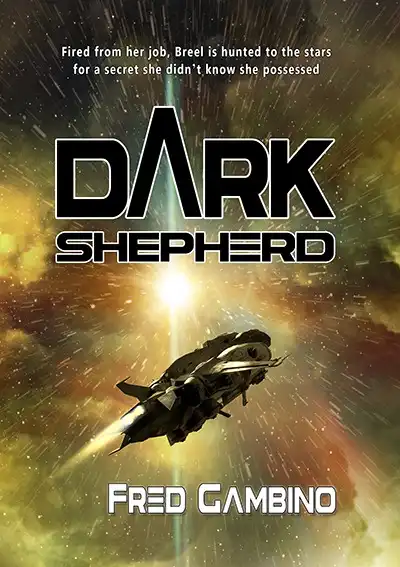
I had the pleasure of speaking with Fred Gambino, veteran concept artist, illustrator, and author of Dark Shepherd — a sci-fi novel and visual universe decades in the making. From iconic book covers for Isaac Asimov and Arthur C. Clarke to work in film and games, Fred’s story is one of constant evolution, bold reinvention, and deep love for science fiction.
In this exclusive Fred Gambino interview, the artist reflects on the childhood influences that led him into the world of illustration — from Gerry Anderson’s TV shows to the pages of classic sci-fi comics. He shares how he interpreted legendary worlds like Trantor, what AI means for the future of art, and how he returned to traditional painting after years in digital.
“In this Fred Gambino interview, we explore not just the origins of Dark Shepherd, but also Fred’s thoughts on modern creativity, AI, and the future of sci-fi visual storytelling.”
What or who has had the biggest impact on your creative style over the years?
Are there specific artists, films, or even life moments that helped shape how you see the world?
I was always interested in space and science fiction. I can’t recall a time I wasn’t. My earliest influence has to be Gerry Anderson. My first Gerry Anderson show was Supercar. I was about 5. Then there was Fireball XL5 followed of course by Thunderbirds. Later there was a comic called TV21, which featured all these shows as comic strips. I bought it every week. TV21 also satisfied my interest in painting and illustration and I became a big fan of Mike Noble and Frank Bellamy. Noble did the Zero X strip and Bellamy Thunderbirds. Worth looking up if you don’t know them.The other show was Dr Who. I was hooked.Then, when I was twelve, there was 2001, A space Odyssey, which had a huge influence on my generation. It’s hard to overstate the impact of that film. Slow and ponderous perhaps, by todays standards, but the first film to make a serious attempt to portray space travel realistically. It was a truly seminal piece of cinema that laid the groundwork for Star Wars ten years later and it still influences films and games today.As a teenager I was an avid reader. I read most of the Edgar Rice Burroughs; Tarzan, John Carter of Mars and Carson Napier of Venus and I was a big Michael Moorcock fan. Gradually I became less interested in fantasy and read more science fiction. All these books were fuel for my visual imagination and later influenced my own debut novel, Dark Shepherd, which was published by Newcon Press in 2024.During my last year at college I went to see an exhibition of Chris Foss paintings. It crystallised my desire to be an illustrator and a science fiction one at that. At that time, publishing was the biggest patron of science fiction art, so that was my aim.There was a publishing boom happening. More books were published than there were illustrators to do the covers, so, although most of the work still went to a small percentage of top artists; a truism for all the creative disciplines I guess, it was easier to arrange an appointment with an art director than it otherwise might have been.
When you’re not creating art, what inspires or recharges you personally?
Do you turn to music, books, nature, or something totally unexpected?
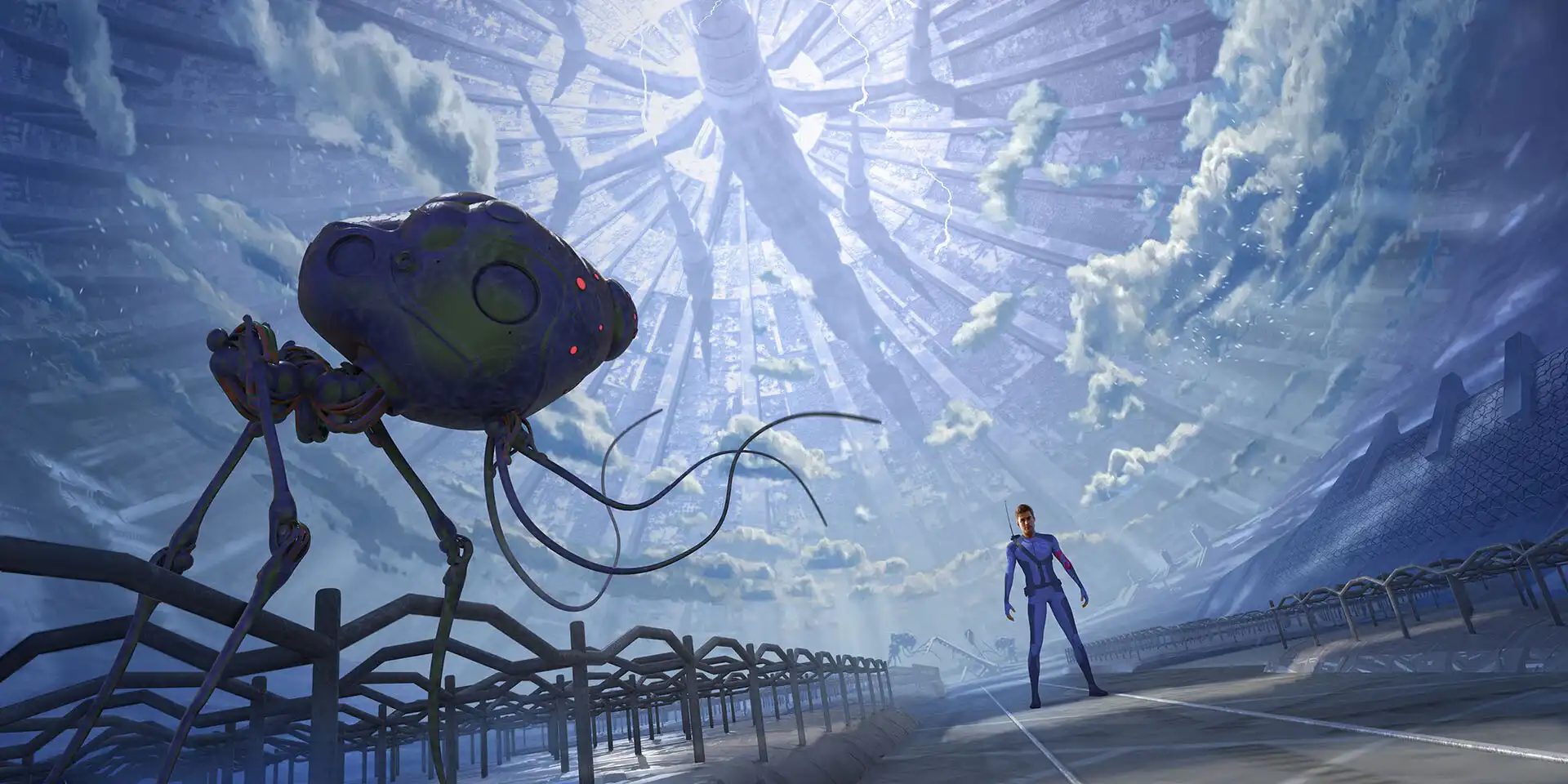
I love walking in the hills and cycling. I think that, as professionals whose working lives are mostly sedentary, exercise is really important, not just for your physical well being but also for your state of mind. I’ve solved many problems while riding on the bike. The kernel of the idea for Dark Shepherd came to me during a long bike ride. On that point, it’s also good to have your own IP to work on, to give you an escape from the strictures that commercial projects often impose.
Your early work includes covers for sci-fi legends like Asimov and Clarke.
What was it like visually interpreting those iconic worlds? Did you feel a sense of pressure or freedom?
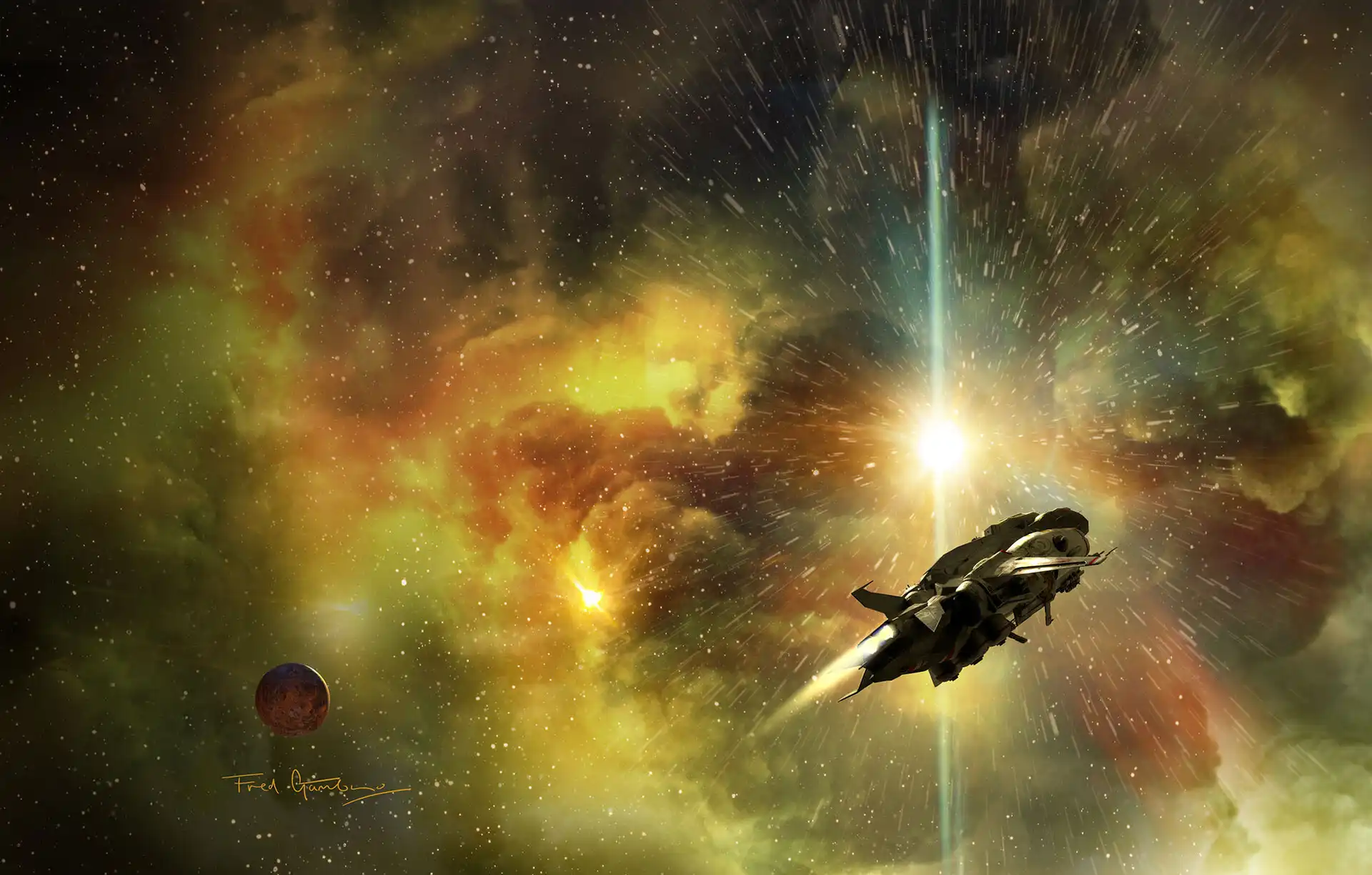
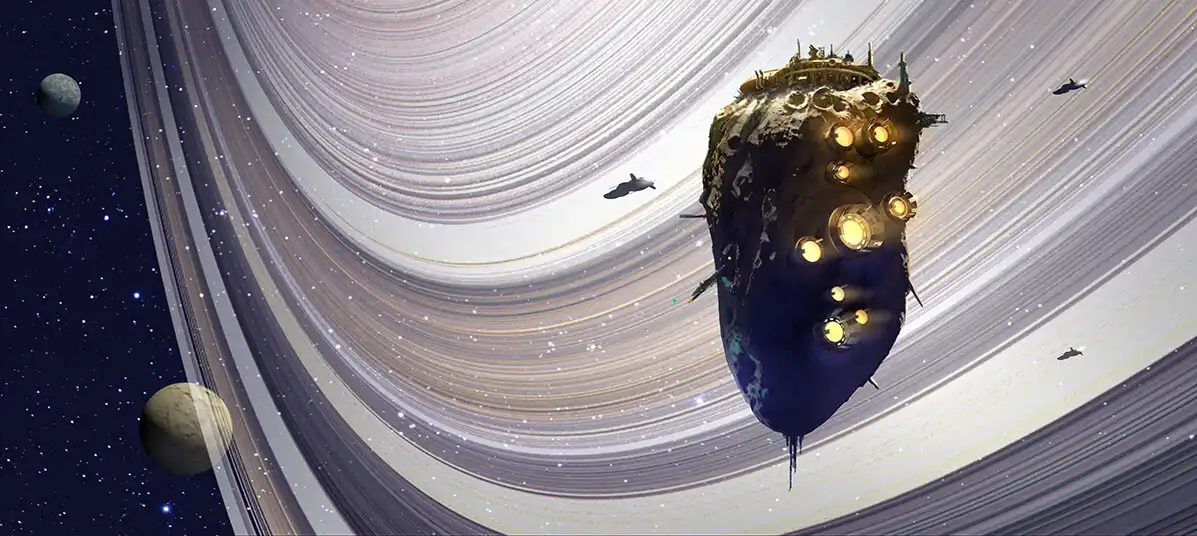
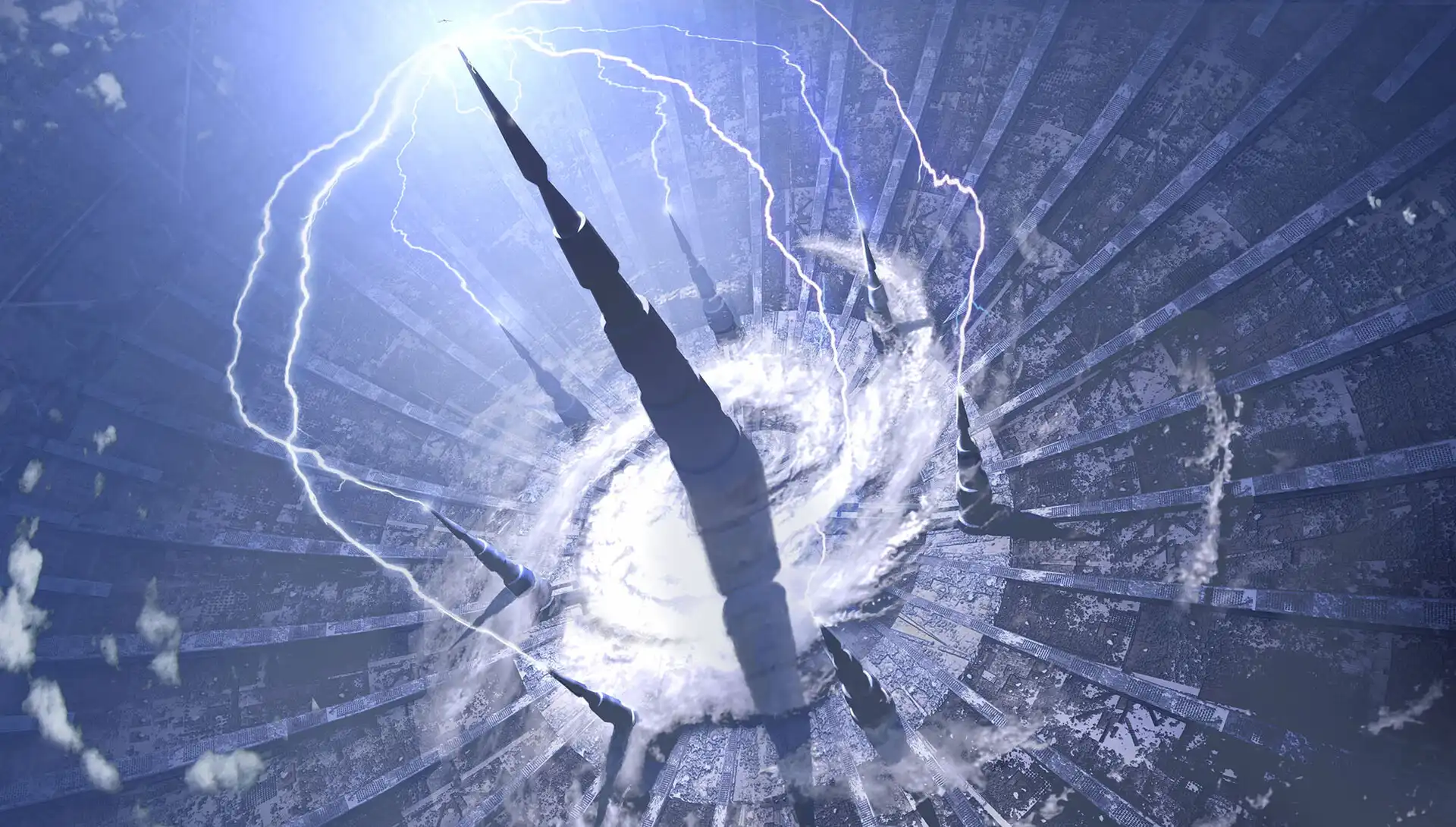
I was a huge fan of those books. I read them during the aforementioned teenage reading years. Consequently I felt a lot of pressure to get them right, but, the deadlines, especially for the Asimov Foundation series, were tight. So tight that I didn’t have a lot of time to dwell on the fact that I was working on an iconic series of books.The Asimov books were painted before digital was a thing. I had a fortnight to complete two highly detailed acrylics paintings of Asimov’s Trantor, a planet wide city that was the precursor and probable inspiration for George Lucas’ Corruscant.It was meant to be a single painting that would be divided into six covers, so that, when placed side by side, you would see the whole city panorama.I couldn’t paint them as one long painting, however. Firstly, I couldn’t find a piece of board long enough and even if I could, the chances of it surviving the train journey to London were small. Secondly, I had a very tight deadline. Another illustrator had let the publishers down and they were desperate to get the books into production. I had to send the first half, which would be the first three covers, before I could begin the second half.I built a lot of the spaceships as physical models, which I then photographed for reference.I worked for ten to twelve hours a day for the whole two weeks and when I finished I felt like I had ended a jail sentence.
You’ve worked in books, film, animation, and games.
Which of these creative spaces feels most like home for you?
I think I’ve enjoyed movies the most. Films were all we had in my younger years and I never really became a gamer when games arrived on the scene. I have worked on games. I worked as principle artist at a games company for a year and a half and worked on other games as a freelancer. I’m interested in the design aspect of them, but games are designed to be addictive and I would sooner spend my time designing, painting, walking or cycling to be honest.
After decades working on my own, working in film and game studios with creatives much more talented than myself was a huge boost to my work. I learnt so much. It was a real breath of fresh air.
You’ve seen the rise of AI in visual design. As someone who built your career through hands-on creativity, how do you view this shift?
Is it exciting, worrying, or a bit of both?
The industry is in flux–– again. Digital and 3D were seismic events for artists and now AI is proving another great disruption.I do feel that AI is different from the the advent of digital however. Digital allowed a lot more people into the industry, although I would argue YouTube had as much to do with that. YouTube made it possible to learn everything about anything.To use digital well, Photoshop and 3D, you still had to know about colour theory, composition and how to create a compelling image. It required a lot of work to understand these things and to learn how to use the software to its best advantage.It’s true that digital made a mass of jobs obsolete, but at the same time it created a whole slew of new jobs that simply didn’t exist before. 3D modelling and rigging for example, and it took time and effort to be good at those things.
Advocates say that will be true of AI, but I don’t see it. You don’t need to know much of anything to get AI to generate an image or an animation. Literally anyone can be dragged off the streets and taught to use it in a few hours.The industry is constantly focused on the bottom line. What this means is that fees will drop so that it will be hard to make a living. That happened to some extent when digital workflows came about. Fees for book covers fell for example, so that today I might get half or less from a major publisher than I did in the 90s. Taking inflation into account, that’s a massive drop.However, in film and games (games as we think of them today didn’t exist at all before digital of course) the new jobs, the 3d Modellers, the riggers, the animators, the concept artists, were all well paid because they were hard to do. There is value in rarity, I’m afraid, and AI is taking that away.And, for me personally, a lot of the the fun in writing or illustration is problem solving. Handing that responsibility to a machine is just boring to me, so I don’t see me using it. I’m lucky that I am in a position to be able to choose.But, we still have to wait for the dust to settle before we can properly see the new landscape. My pessimism may be misplaced and a new generation of artists, who have grown up with AI, may find common ground with it. My worry is not the technology itself but how the pencil pushers will exploit it.
From traditional airbrushing to modern digital tools—what part of that evolution surprised you the most as an artist?
And do you ever miss the old ways?
So, the story goes like this. After an initial bumpy start I finally found my feet. For about a decade I was constantly busy, pretty much working seven days a week, sometimes ten to twelve hours a day. It was mainly for publishing. Not just science fiction. I did war, historical romance and children’s books. I had about a dozen jobs lined up all the time. I also did some advertising work.I was so busy that I didn’t take note that the number of jobs were dwindling, until one day there were no more. I remember it clearly. It was like running off a cliff at a hundred miles an hour and finding myself in free fall.I began to cast about to find out why. Desktop computers were a new thing. I knew nothing about them and felt threatened by them to be honest. Then someone sent me an article about a piece of software called Bryce, which generated very science fiction looking landscapes.“That’s the problem,” I reasoned, “computers are taking over.”
I determined not to be left behind. I cashed in an endowment mortgage to fund the purchase of a new Mac, with an astounding 8 megabytes of RAM. Yes, you read that right, megabytes, not gigabytes. I looked into what software to buy, Bryce of course, which was very innovative in many ways. Not only able to generate whole scenes, but at a time when software cost hundreds, if not thousands of pounds, Bryce sold for only £90, making it very affordable.
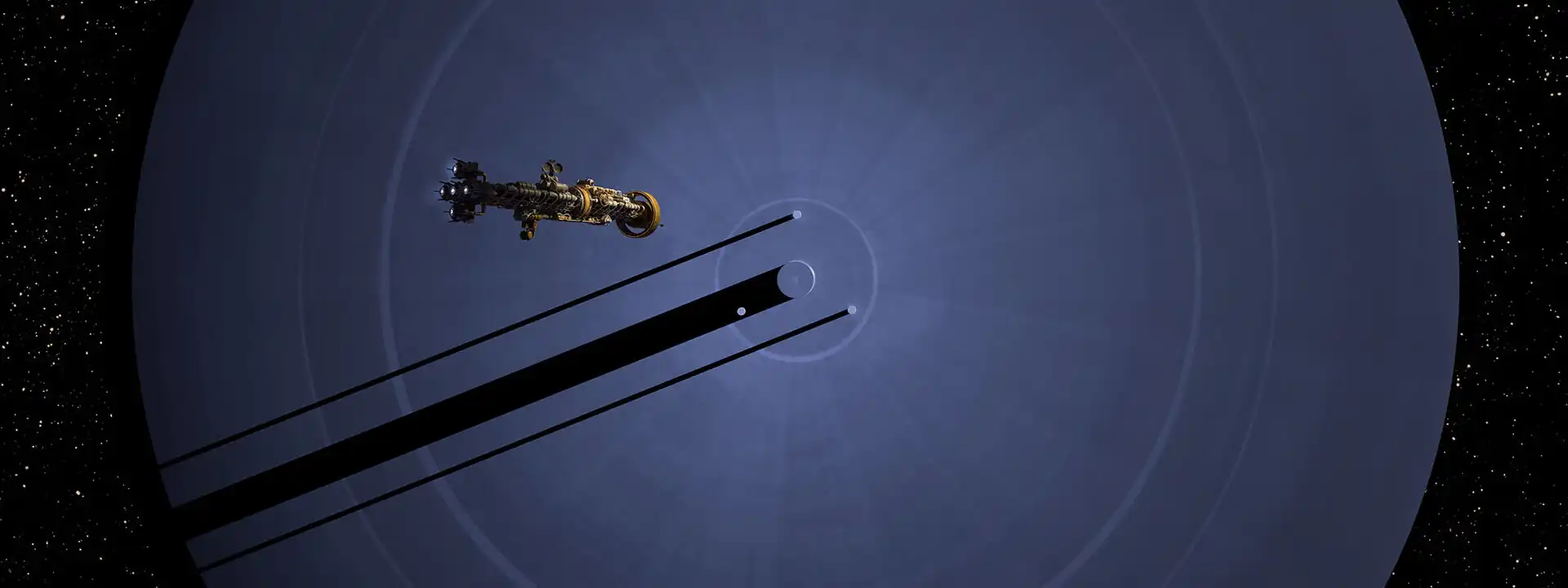
Photoshop, everyone had to have Photoshop and a 3d software called Alias Sketch, which later morphed into Maya. At the time Maya appeared it would only run on Silicon graphic machines, which sold for about £20,000 back in the1990s. I had to look for something more affordable and eventually moved to Lightwave, which would run on a desktop machine.Before that though, I had this pile of boxes containing unfathomable hardware in the room, that I had no idea what to do with. I had to get a friend to come over and show me how to put it all together.Rather than having been left behind, I found was ahead of the pack. The reason for lack of work were twofold. Firstly, the publishers had decided that the era of airbrush-spaceship illustrations had come to an end. They felt they put science fiction into a Star Wars – Star Trek ghetto. They wanted to broaden the appeal and so were creating typographic covers that weren’t so genre specific and, secondly, with the advent of Photoshop, they could do the covers themselves.
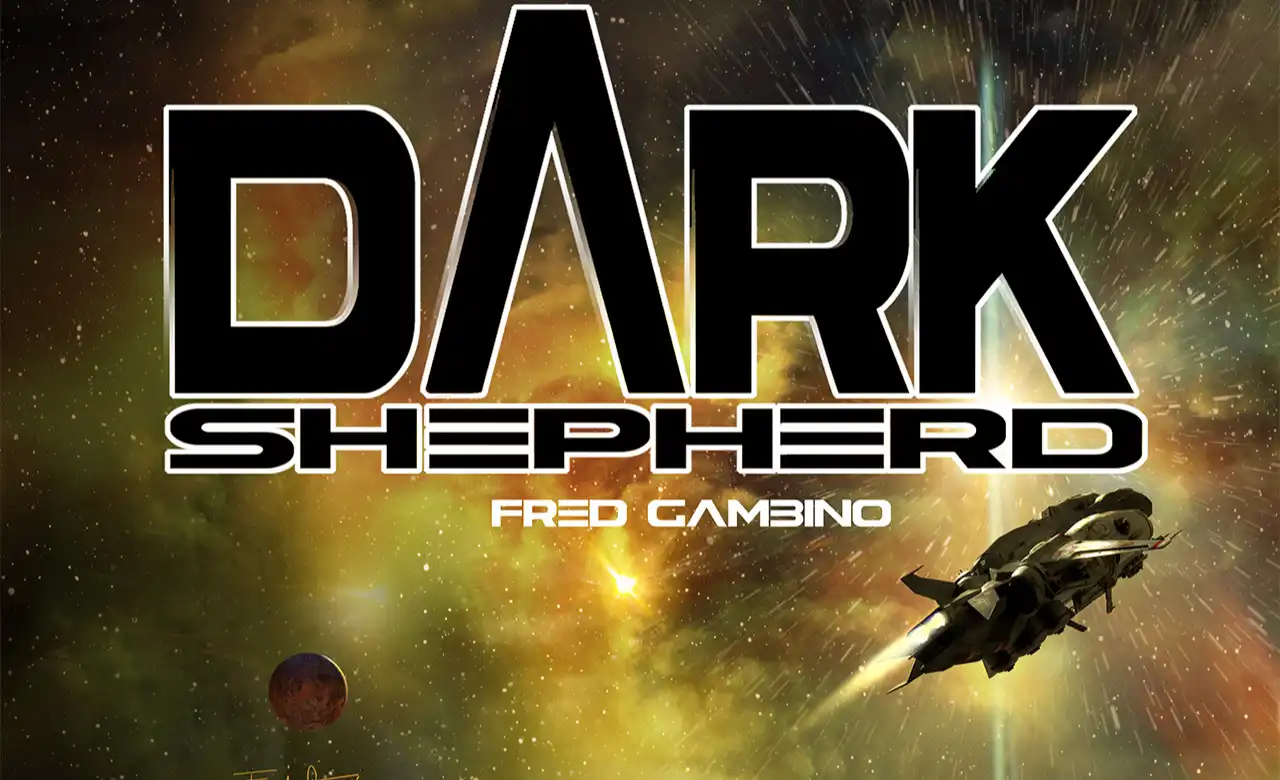
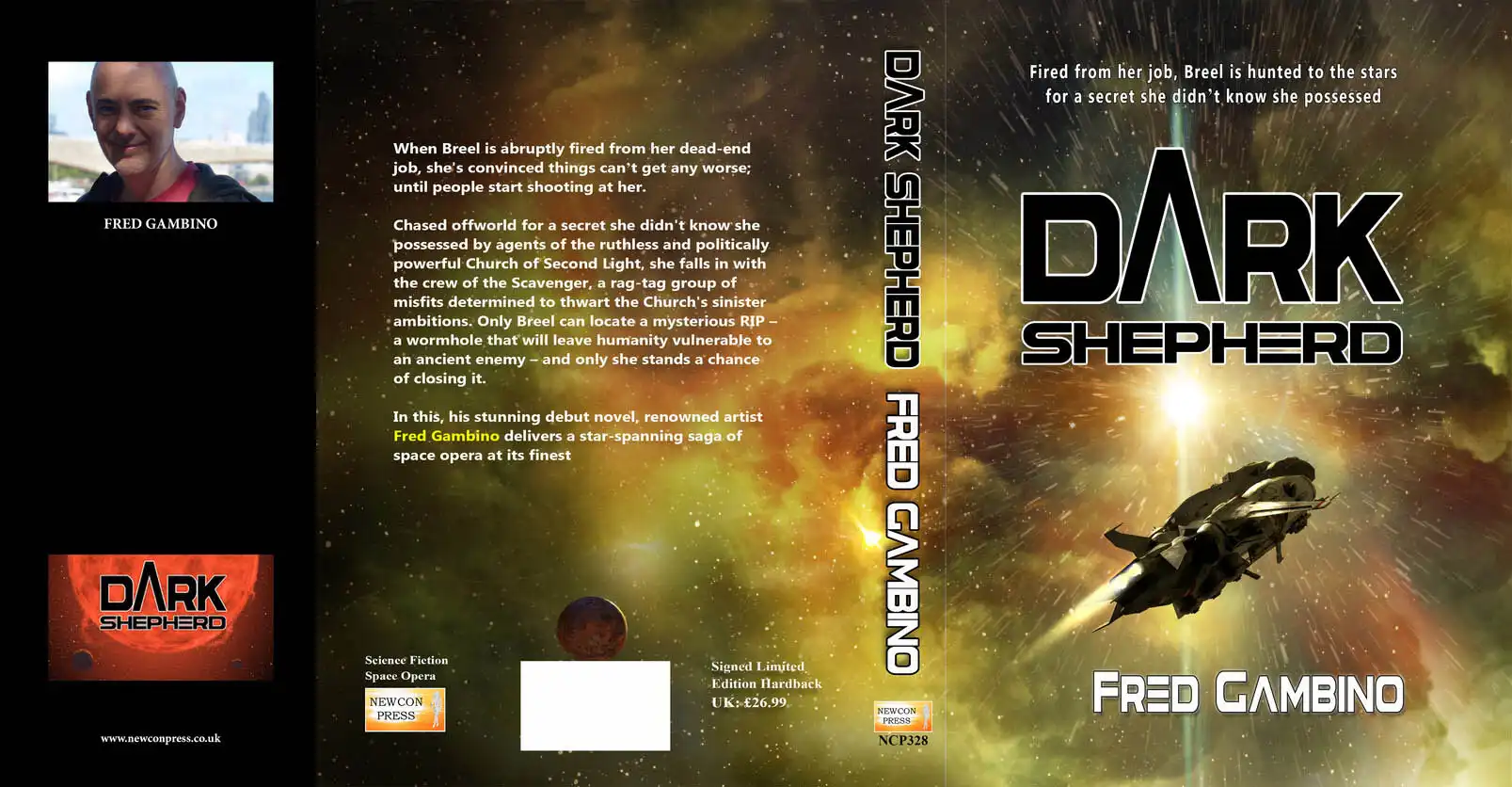
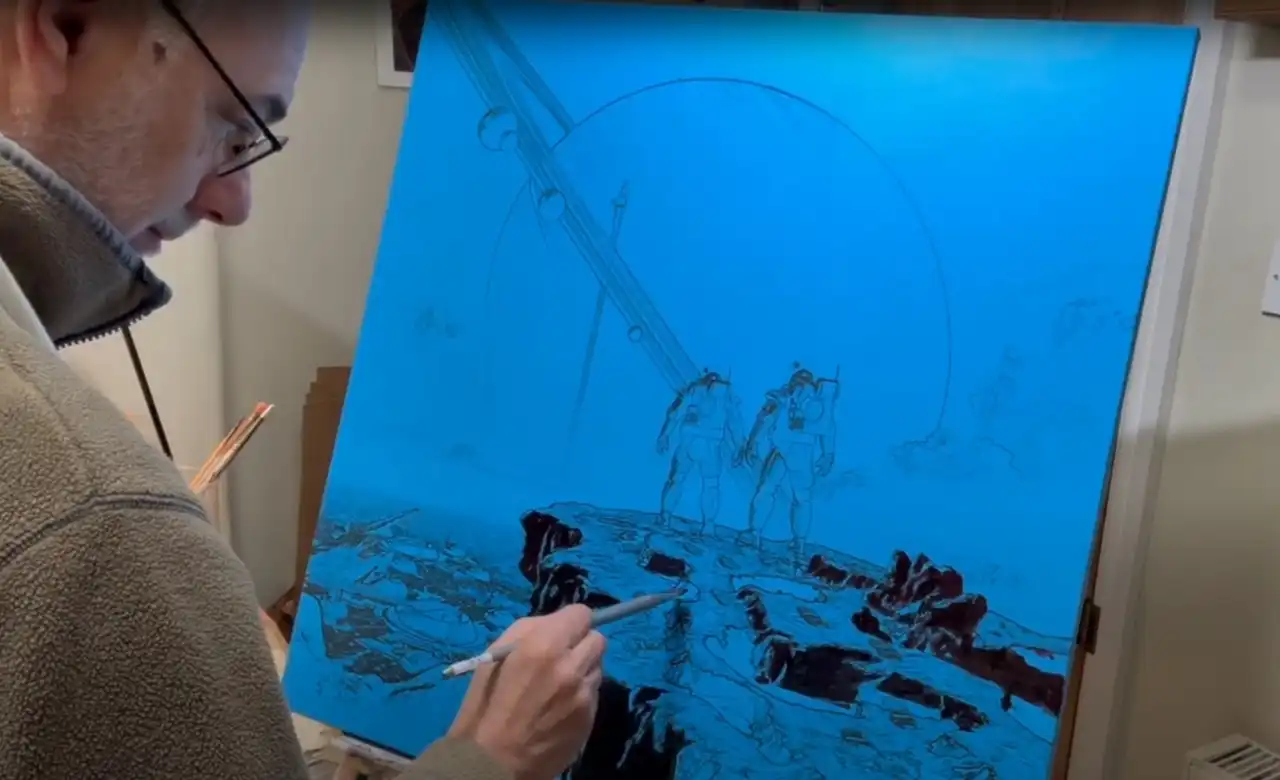
But, as I was one of the first to use 3D and Photoshop, in British publishing anyway, I had a new look and so had reinvented myself. I was busy again for the next few years. The ’digital pioneer’ reputation got me into a book that charted the transition from traditional to digital, and it was the work in that book that brought me to the attention of the director of Jimmy Neutron, John Davis, who gave me my first break into film concept work. Timely, as publishing was starting to fade again.After the initial trepidation I really enjoyed the challenge of digital, and being an early adopter stood me in good stead.Now I’m going back to traditional, working in oils and selling originals. This year I was commissioned to recreate one of my early digital images in oils, so I have gone full circle.I would still work digitally on film or game projects however, unless specifically asked not to do so. The nature of concept work, the demand for constant change, would make it difficult to do otherwise, but I might paint a cover. That would give me an original to sell. The cover of Dark Shepherd is digital, but I intend to paint the second one.
Your industrial sci-fi concepts—massive mining rigs, space stations—feel grounded yet otherworldly.
Where do those ideas come from, and how long does a piece typically take from start to finish?
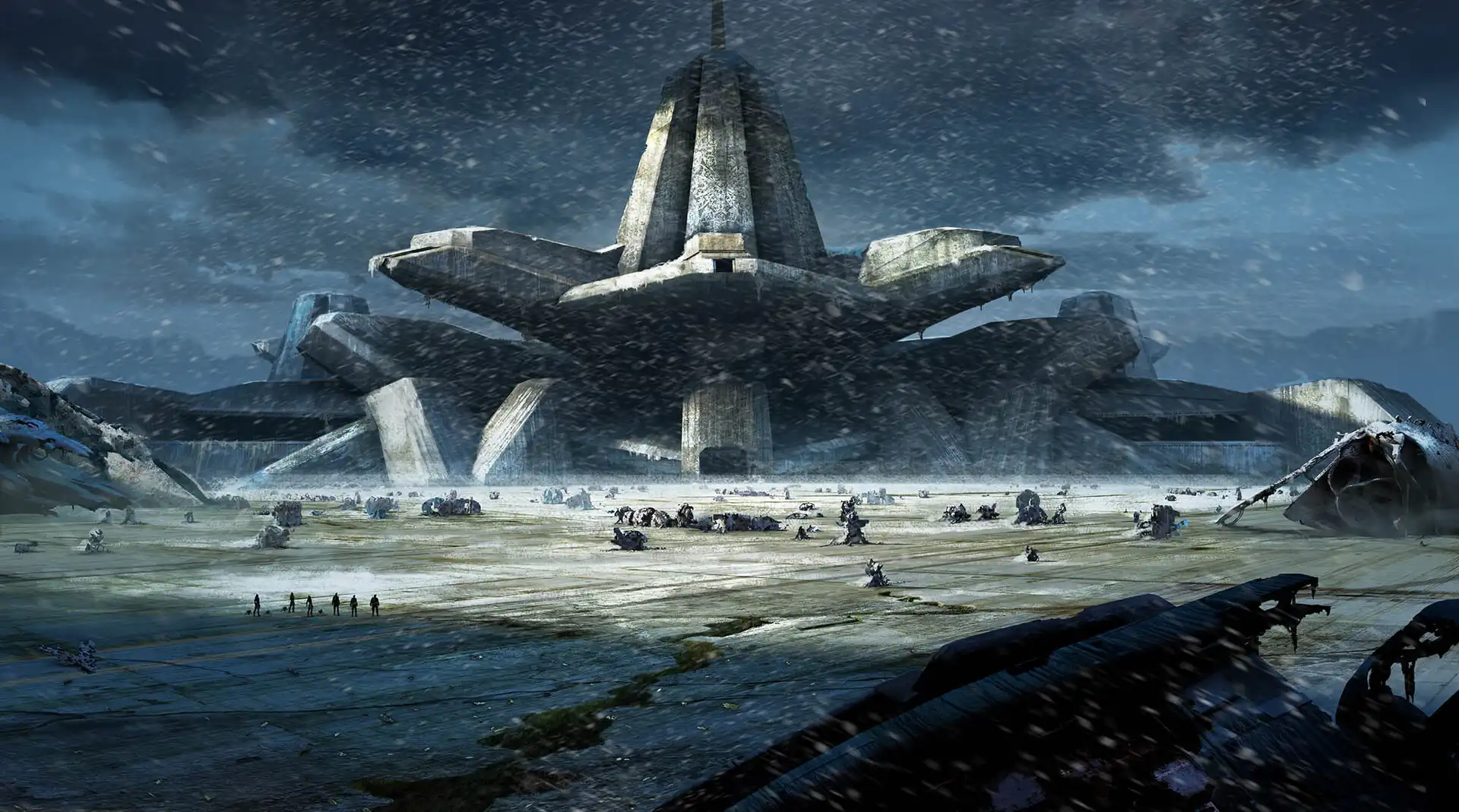
A lot of what I do commercially stems from the brief, script or manuscript. The details vary from project to project, but essentially I get a brief describing what is needed. Sometimes it can be specific to the story. The spacecraft needs a hatch here as the crew are all going to escape through it, for example. Sometimes I sketch in Photoshop or on paper to present ideas and then maybe jump into 3D to present a more finished image, if that’s required.
It’s possible to spend weeks on something and have everyone really happy with what’s been done, only to find one morning that the script has changed and whatever you have designed is no longer in the story. That’s part of the process and in some ways it’s to be encouraged as you get paid on a daily basis.An illustration, for example a book cover, will have a start, a middle and an end, but the process remains the same. Submit an idea and then when it’s approved take it to a higher finish.The brief, in either case, can just be a few lines or an entire manuscript. Sometimes you are left to your own devices, sometimes it’s a collaboration with much discussion. Occasionally, especially when working in a film or game studio, it’s normal for more than one artist to work on a single piece. Digital workflows lend themselves to this practice.This is the part of the process I enjoy and it also applies to writing. I like to chew away at a problem until I have a solution.
Do you build stories behind your artwork as you go?
When designing environments or machines, do you imagine the people who live or work there?
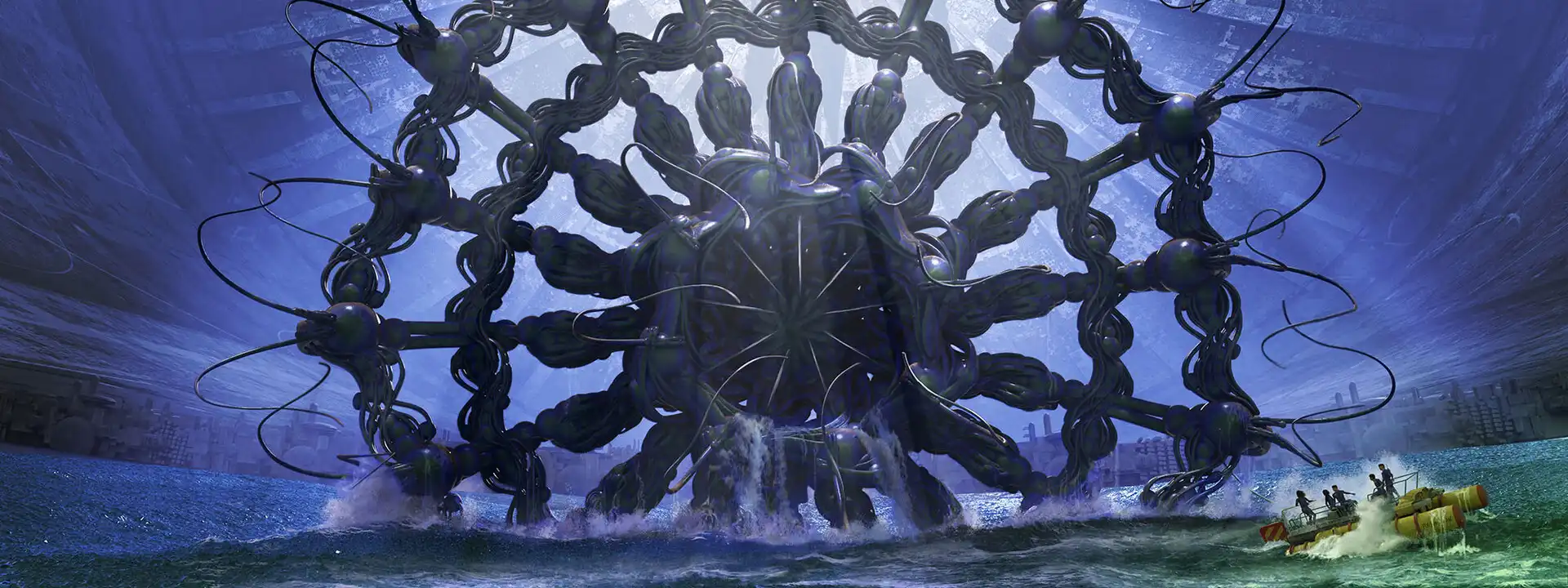
I do when working on personal pieces and often imagine myself inhabiting the spaceships or environments at night, to send myself to sleep.For my Dark Shepherd novel, the writing and illustration fed off each other. I would write something, illustrate it, then often go back and revise the writing based on the image I had produced. It’s been fun to bring my own characters and story scenarios to life in this way.A book or a film has its own story baked in of course, so I try to imagine myself in the shoes of the protagonists.
Is there a specific video game project or genre where you feel your art style could truly shine?
Maybe something like Exodus, Spaceminer, or even something smaller and more personal?
With so many of the books I read as a teenager now finding themselves on screen, it would be great to work on one of those adaptations. Rendezvous with Rama, for example, which is slated to be made by Denis Villeneuve. It was and still is one of my all time favourite books, but I guess I’ll have to be content watching it at the cinema, along with everyone else. I’m hoping Villeneuve makes as good a fist of it as he did with Dune. He is the perfect director to make it in my opinion.
Looking back, what has been your favorite project so far, and what made it stand out?
Was it the people, the challenge, or just the freedom to create something close to your heart?
My favourite project has to be my ongoing Dark Shepherd story, both writing and paintings. By now I’m fully invested in the characters and it can be all-consuming to spend so much time with them.The first book, Dark Shepherd, sold well.It’s available from Amazonand Newcon press,l and I have just submitted book two, Dark Shepherd Reality Rift, which I hope will be available by the end of 2025.
Resources
Written by Ronny Fiksdahl, Founder & Editor-in-Chief of Fix Gaming Channel.
Interested in more creator perspectives on the rise of AI?
Read our interview with Arnie Jorgensen on AI’s impact on creativity →