A cinematic reimagining of the DOOM legacy has arrived, but beneath the dragons, mechs, and medieval grandeur… something feels different.
Related coverage: DOOM: The Dark Ages Brings Medieval War Against Hell.
Related: DOOM: The Dark Ages Brings Medieval War Against Hell.
I’ve played DOOM since it didn’t even need an installer.
Back then, you’d boot it up from DOS and be knee-deep in demon blood before your monitor had finished warming up. The original DOOM didn’t bother with introductions or cutscenes. You were dropped into a corridor with a pistol, and the game trusted you to figure the rest out. You weren’t a hero. You were a force of nature — fast, brutal, and unstoppable. That was DOOM.
Rumble may require a security check. Click to load the video, or open it on Rumble.
Join Our Newsletter
Stay updated with the latest interviews, previews, and indie gaming news from Fix Gaming Channel.
When id Software resurrected the franchise with DOOM (2016), it was like a gut punch of familiarity. The speed. The aggression. The no-nonsense design. It was a game that respected your time and treated combat like a rhythm game dipped in gasoline. It didn’t just bring DOOM back — it reminded us why it ever mattered.
Then came DOOM Eternal. Faster, deeper, more layered. It refined the formula and pushed it to its limits. Some loved it. Some found it overwhelming. But no one could deny it felt like DOOM.
And now… we have DOOM: The Dark Ages.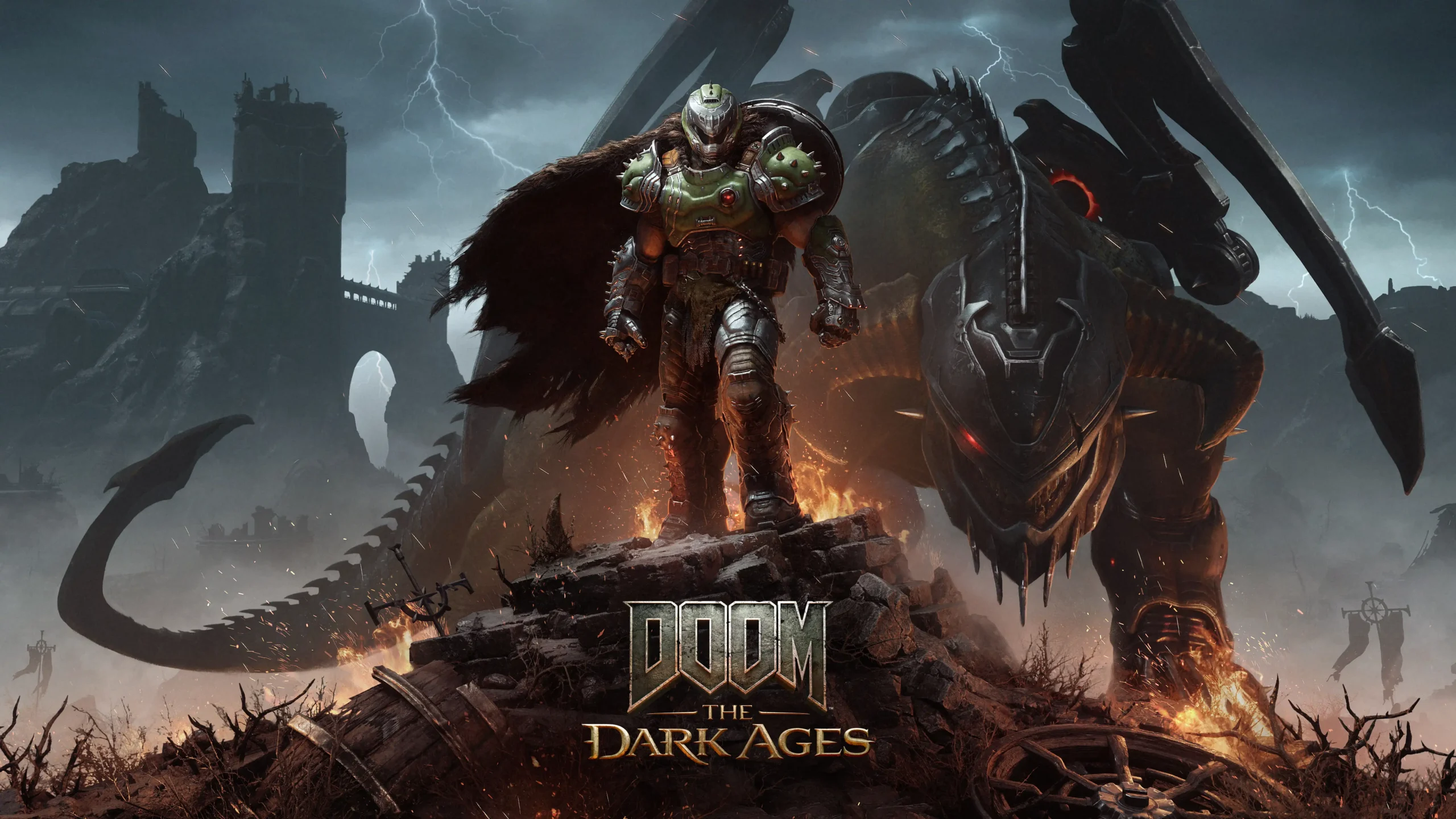
A New Slayer, A New Era
Let’s be clear — DOOM: The Dark Ages is not more of the same. It’s a reimagining. A prequel. A cinematic take on the Slayer’s origin story, set in a medieval techno-fantasy war against Hell’s legions. The demons are still here, and so is the blood. But the tone has changed. Massively.
You’re not just a Slayer anymore. You’re a weapon of gods and kings. You ride dragons made of steel and fire. You pilot a towering Atlan mech through ruined battlefields. You’re given backstory, context, mythos — all the things that classic DOOM deliberately left out.
And maybe that’s where the tension lies.
The original DOOM didn’t tell you who you were because it didn’t matter. Your job was to do. To act. To kill. That was enough. The less you knew about the Slayer, the more terrifying he became. Now, The Dark Ages wants us to understand him — to witness his creation, to contextualize his fury, to follow the path that shaped his legend.
That’s not inherently bad. But it’s a sharp turn from what made this franchise iconic.
From Fast-Paced Carnage to Cinematic Spectacle
From the first trailer alone, it’s clear this game is swinging for the cinematic fences. The animation, the scale, the music — it’s all dialed up to max. But what concerns me most isn’t the visuals or the production values. It’s the pacing.
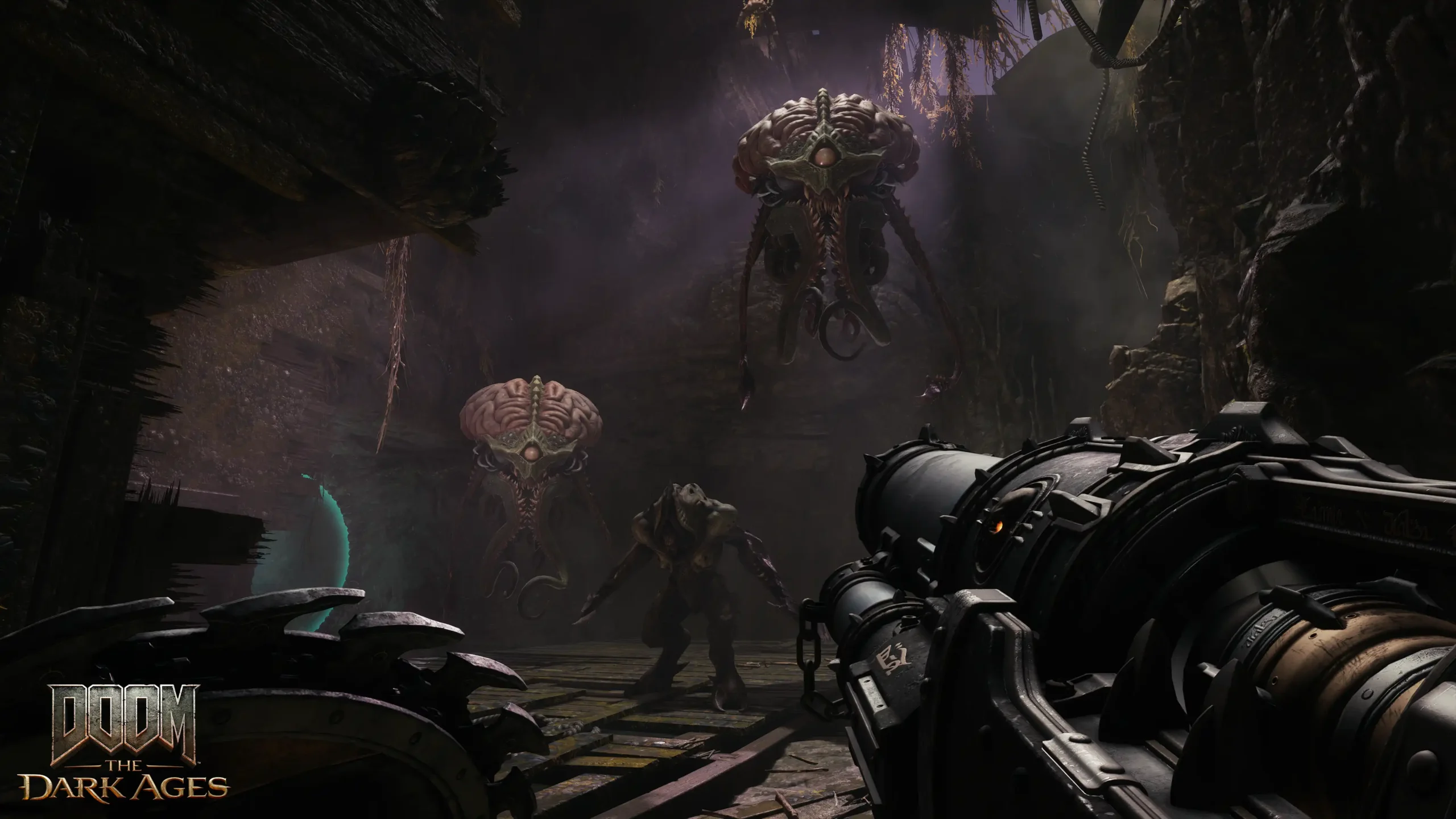
The previous two DOOM entries thrived on constant movement. You were punished for slowing down. You didn’t “fight” enemies so much as you dismantled them in motion. The combat was a flow state — jump, shoot, dash, glory kill, reload mid-air. There was nothing like it.
But The Dark Ages? It looks… heavier.
There’s a weight to it now. A pause between moments. The combat seems more grounded, the movements less fluid. Maybe it’s a stylistic shift. Maybe it’s intentional. But it gives off a different energy. One that feels less like DOOM and more like a big-budget action game inspired by DOOM.
And when you start introducing scripted dragon rides and cutscene-heavy mech battles — however cool they are — you risk turning DOOM into something it was never meant to be: a passive experience.
A Game with Monumental Demands
If you want to see this new vision fully realized, you’ll need serious hardware.
DOOM: The Dark Ages is one of the most demanding entries in the franchise to date, by a mile. Playing it at high settings with ray tracing on, especially in 4K, requires a top-tier graphics card and a healthy chunk of RAM. We’re talking 32 GB of memory, cutting-edge ray tracing GPUs like the RTX 4080 or AMD RX 7900 XT, and an ultra-fast NVMe SSD just to keep up with the scale and fidelity id Software is aiming for.
Even the bare minimum spec includes hardware that would’ve been considered high-end not that long ago — including cards with 8GB VRAM and multi-core CPUs that can handle cinematic transitions, lighting tech, and expansive maps without stutter.
In other words: DOOM used to run on a toaster. This one expects a machine from the future.
It’s impressive, no doubt. But it’s also a reminder — this is no longer a game that belongs to the average player with an average machine. If you want the full experience, you’ll have to pay the price.
How About Console Players?
Surprisingly, consoles hold their own, at least on paper. Xbox Series X maintains a locked 60 FPS at 1440p, which is solid. PS5 Pro pushes towards 1800p with dynamic scaling, although it can dip under load. Standard PS5 hits 1440p but has occasional framerate drops in heavy scenes. Even the Series S holds a dynamic 900p at 60 FPS.
For a game of this scale, that’s commendable. But let’s be honest — what you see in the trailers? That’s the PC version running on absurdly high-end gear. Console players will get the content. But not the visual fidelity that defines the marketing.
DOOM: The Dark Ages
Release Date: May 15, 2025
Genre: First-Person Shooter
Developer: id Software
Publisher: Bethesda Softworks
Platforms: Game Pass, Xbox Series X|S, PC, PlayStation 5
Store Links:
- Steam
- Epic Games Store (use Creator Code: FIXGAMINGCHANNEL at checkout)
- Battle.net
- PlayStation Store
- Microsoft Store
So… Is This Still DOOM?
That’s the real question here.
It looks like DOOM. It sounds like DOOM. But it doesn’t feel like DOOM — at least not in the same way. It feels like a studio trying to grow beyond its own identity. To make something grander. More cinematic. More “AAA.”
And maybe they had to. After DOOM Eternal, where else could they go? You can only escalate so far before the formula burns itself out.
But I can’t help feeling like something essential is being left behind. That primal fury. That feeling of speed over spectacle. Of instinct over exposition. It’s still here, buried somewhere beneath the dragons and the lore. But it’s quieter now.
And maybe that’s the price of evolution.
🎮 Buying DOOM: The Dark Ages on the Epic Games Store? You can support Fix Gaming Channel by using Creator Code: FIXGAMINGCHANNEL at checkout. No extra cost.
Written by Ronny Fiksdahl, Founder & Editor of Fix Gaming Channel.
Enjoy our content? Support Fix Gaming Channel with a donation via Buy Me a Coffee. Your support helps us keep independent gaming journalism alive. Thank you!