



The Hardest Choice Was What to Remove
Solo developer Wyli Olivete shares why he built Fruity Fauna: Match & Collect for his parents, and why he eventually cut months of work.
In this Fix Stories contribution, Wyli Olivete tells the story behind a mobile puzzle game built around real animals and the changes planned for its December 1, 2026 update. The following account is published in his own words.
Fruity Fauna Trailer
Watch the Fruity Fauna trailer on YouTube
More Stories From Independent Developers
Follow original developer stories, indie games and interviews on Fix Gaming Channel.
Join Our Newsletter
Stay updated with the latest interviews, previews, and indie gaming news.
By Wyli Olivete, solo developer of Fruity Fauna
About four years ago, I sat behind my parents while they played Candy Crush and Gardenscapes. I wasn’t playing. I was just watching the screen light up every time a combo landed: the cascades, the little bursts of sparkle, the satisfying pop of it all. Even second-hand, it felt good. And I remember thinking: I want to make something like this. Something my parents would actually want to play, and be proud that I made.
That became Fruity Fauna, a fruit-matching puzzle game I’ve been making on my own in the Philippines: the code, the art, the design and the sound. It first came out in May 2024. On 1 December 2026 it gets the biggest update it has ever had, and this is the story of the decisions behind it, including the one that hurt the most.
Why real animals
Early on, I had to decide who players would be matching fruit for. Made-up creatures would have been easier to make and easier to write. But I kept coming back to a feeling I wanted players to have when they put the game down: not just that they’d been entertained, but that the time had been a little bit worth it. So I went with real animals. You play a fun puzzle game, and on the side, without trying, you pick up things about animals you might never have looked up yourself.
There are now 36 of them, from the Toco Toucan to the Bornean Orangutan, each living in a habitat based on its real home. Every one of them talks. Feed an animal and win its Affection, and it tells you a bit more about its life, in its own words. How often an animal turns up depends on its real IUCN Red List status: Least Concern animals drop by all the time, while Critically Endangered ones are rare. I like that the rarest finds in the game are rare for a real reason.
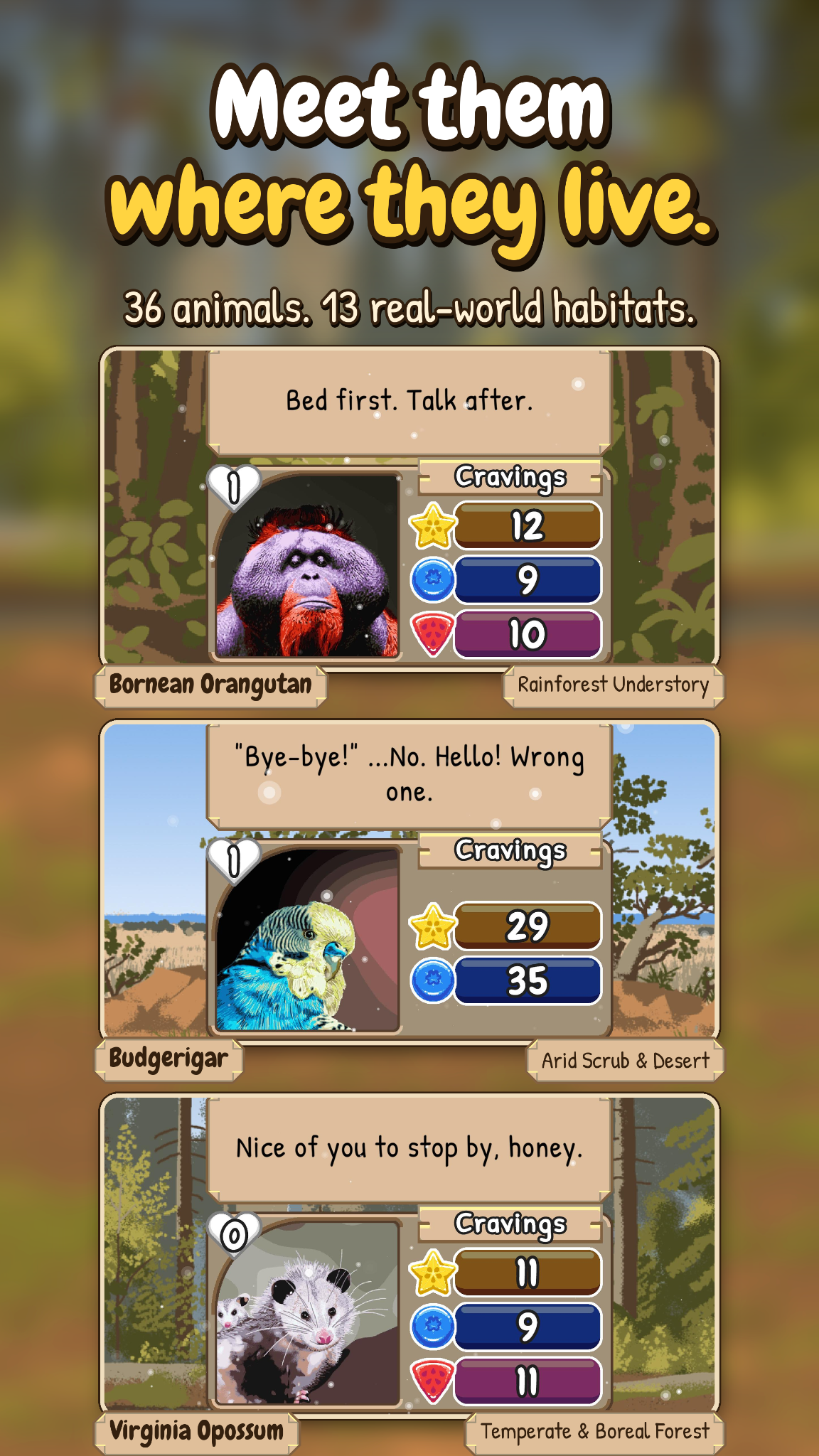
Fruity Fauna introduces real animals through habitats, personalities, and conversations.
Each animal’s portrait starts from a public-domain photo, which I edit and paint over so it matches the rest of the game. Everything else in Fruity Fauna, I made and drew myself. Slowly but surely, I’m redrawing every animal by hand in the same stylized-yet-realistic style, so one day every piece of art in the game will be my own.
The things that surprised me
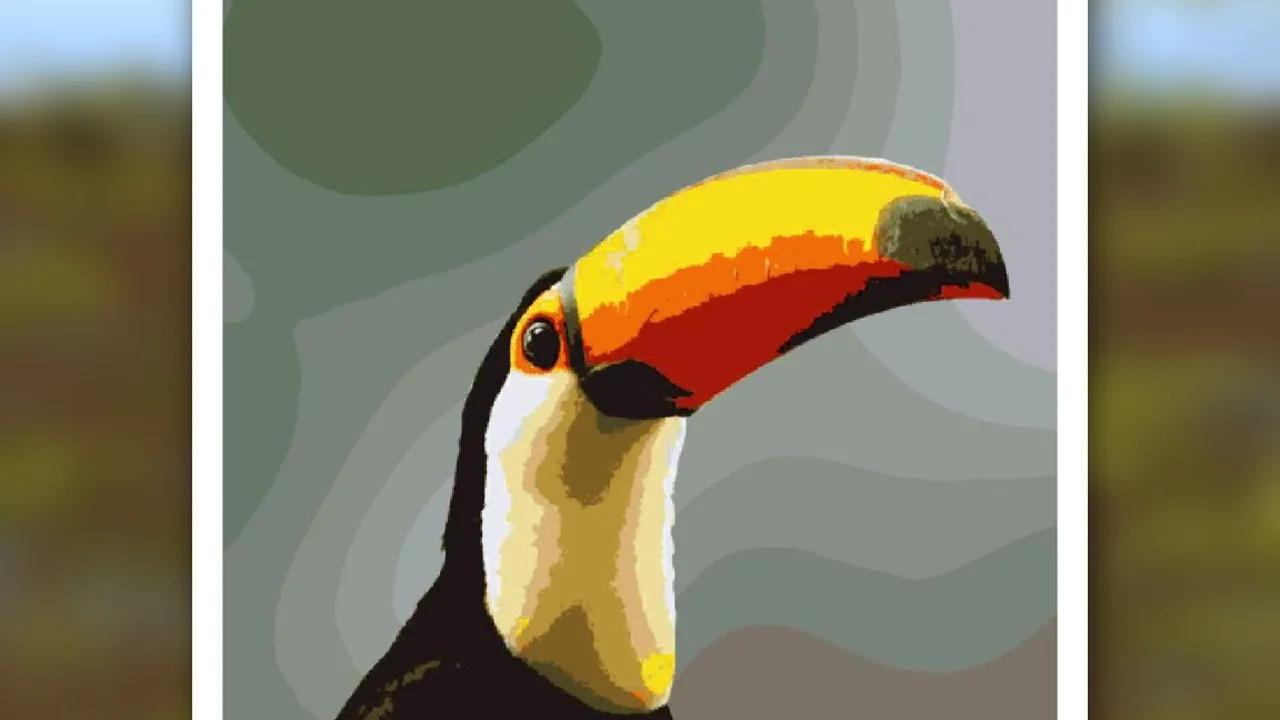
Researching the animals was quite interesting. The toucan surprised me first. That huge bill looks like it should be heavy, but it’s actually very light, and toucans are quick and nimble. So, naturally, the toucan in Fruity Fauna won’t stop bragging about it.
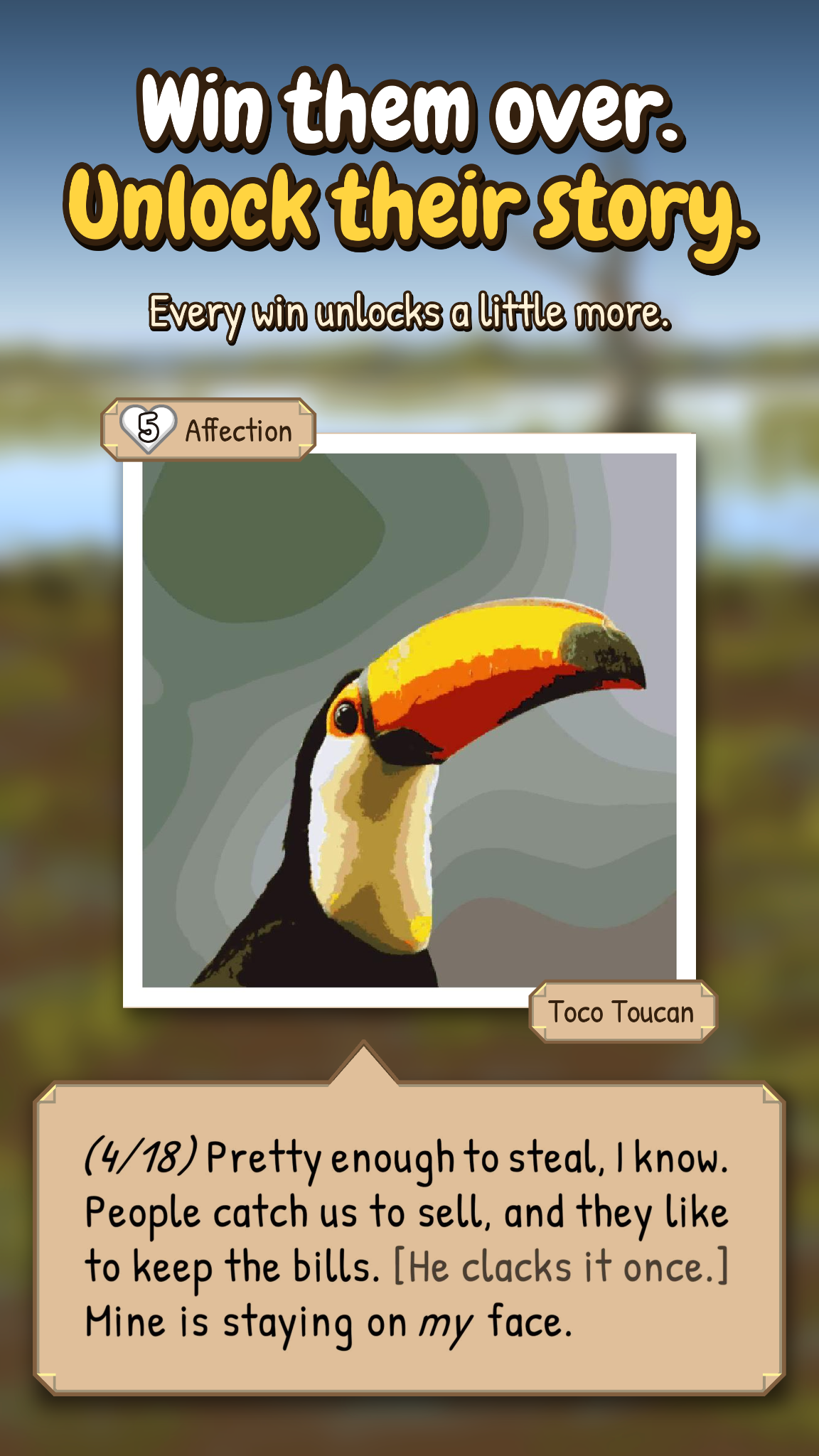
The Toco Toucan’s unlockable story is one example of the game’s animal-focused approach.
Then there’s the binturong, which smells like buttered popcorn. I’m not making that up, and it makes me want to go out of my way to see (and smell!) one in person. There’s a binturong subspecies that lives in Palawan, here in the Philippines, so that trip is now on my list.
I’m not a biologist. I researched every animal online and checked facts along the way. If you play and spot something I got wrong, please let me hear it. Getting the animals right matters more to me than looking like I’m never wrong.
The part that hurt
The old version of Fruity Fauna had a big decorating system. You could build up your habitats with backgrounds and decorations you mixed and matched yourself. It took me months: coding the systems and features, and hand-drawing every background and decorative piece.
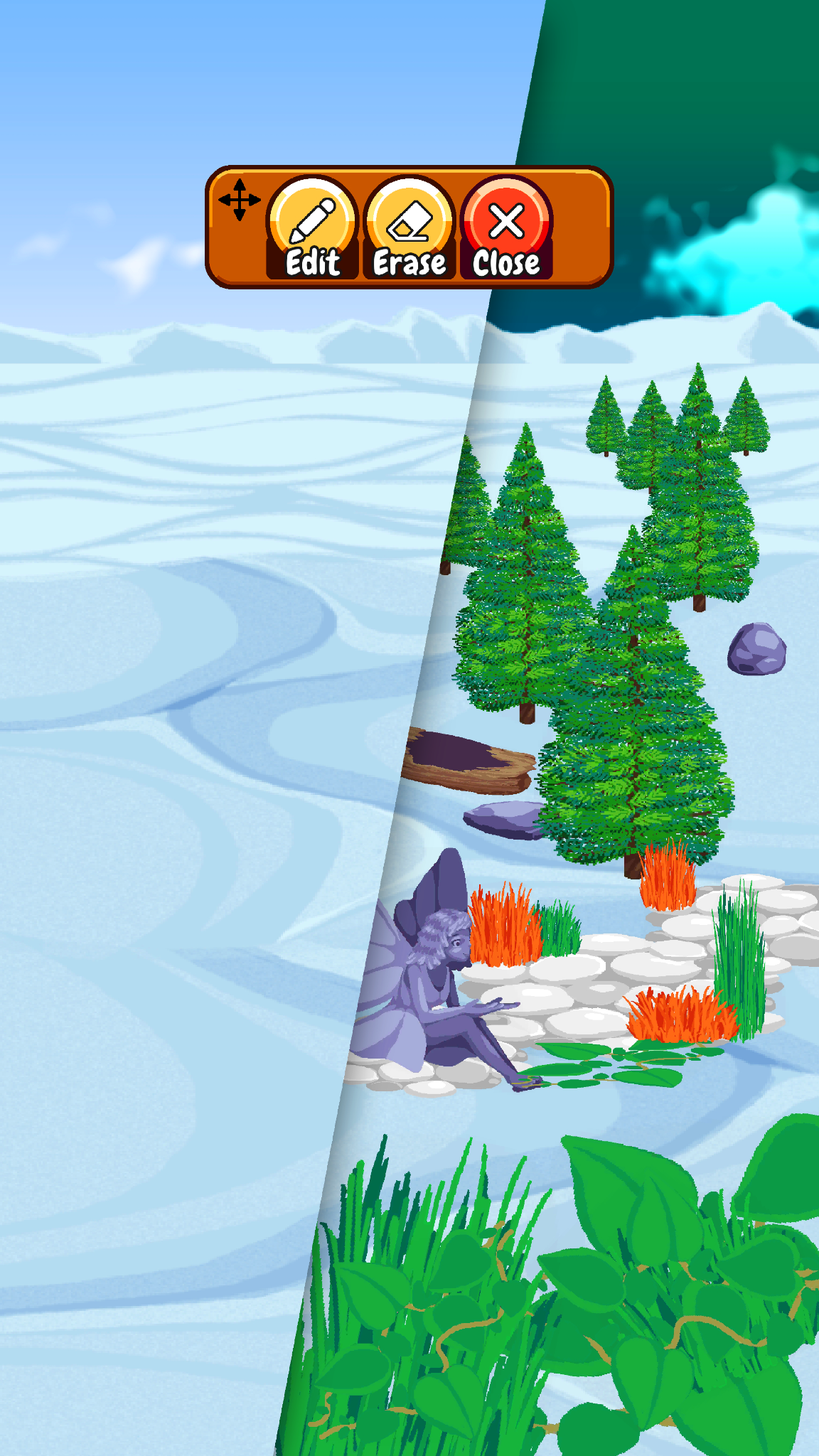
The earlier habitat-decorating system took months to build before Wyli decided to remove it.
But when I looked at the game honestly, you could get by without ever touching it. It sat next to the animals instead of supporting them, and the game felt bloated. What made Fruity Fauna different was never the decorating. It was the animals.
So I cut it. All of it. In exchange, I made the animals’ stories and personalities much more substantial, because that is what the game is really about. It was painful to remove that much work, and I won’t pretend it wasn’t. But I decided that sunk cost shouldn’t stand in the way of making the best version of the game.
Why I removed Energy
The other big cut was Energy, the system that limits how much you can play in one go. My reason for adding it was a good one: I wanted to discourage overly long sessions, especially for players with addictive tendencies.
But Energy systems carry a lot of negative feeling, no matter how gently they’re presented. And I’d already designed Fruity Fauna to be easy to pick up and put down. You can play a short burst or a long session, leave whenever you want knowing your progress is saved, and come back exactly where you left off. The game already has plenty of natural break points, and those do the job better than a meter ever did. So Energy is gone.
What I hope happens
Fruity Fauna is still small. Two years after launch, very few people have played it. This update is my attempt to make it the game I wanted to make from the start: one that’s about the animals, through and through.
If my parents pick it up and find out that a toucan’s bill is lighter than it looks, I’ll count that as a win. If you do too, even better.
Fruity Fauna’s big update arrives on 1 December 2026, free on iPhone, iPad and Android.
Fruity Fauna: Match & Collect
Release: May 2024; major update planned for December 1, 2026 (developer-provided)
Genre: Mobile puzzle / creature collecting
Developer / Publisher: Wyli Charles Olivete
Platforms: iPhone and iPad — App Store · Android — Google Play
Related Reading
Fix Stories: One Swift Engine, Two Phones — How Stelline Came to Android
Fix Stories: Four Years Making a Combat-Free Metroidvania
Written by Wyli Olivete, solo developer of Fruity Fauna, for Fix Gaming Channel.
Send interview pitches, corrections, tips, or developer stories to contact@fixgamingchannel.com.
Support independent games coverage on Ko-fi.