



The Promise of Heaven
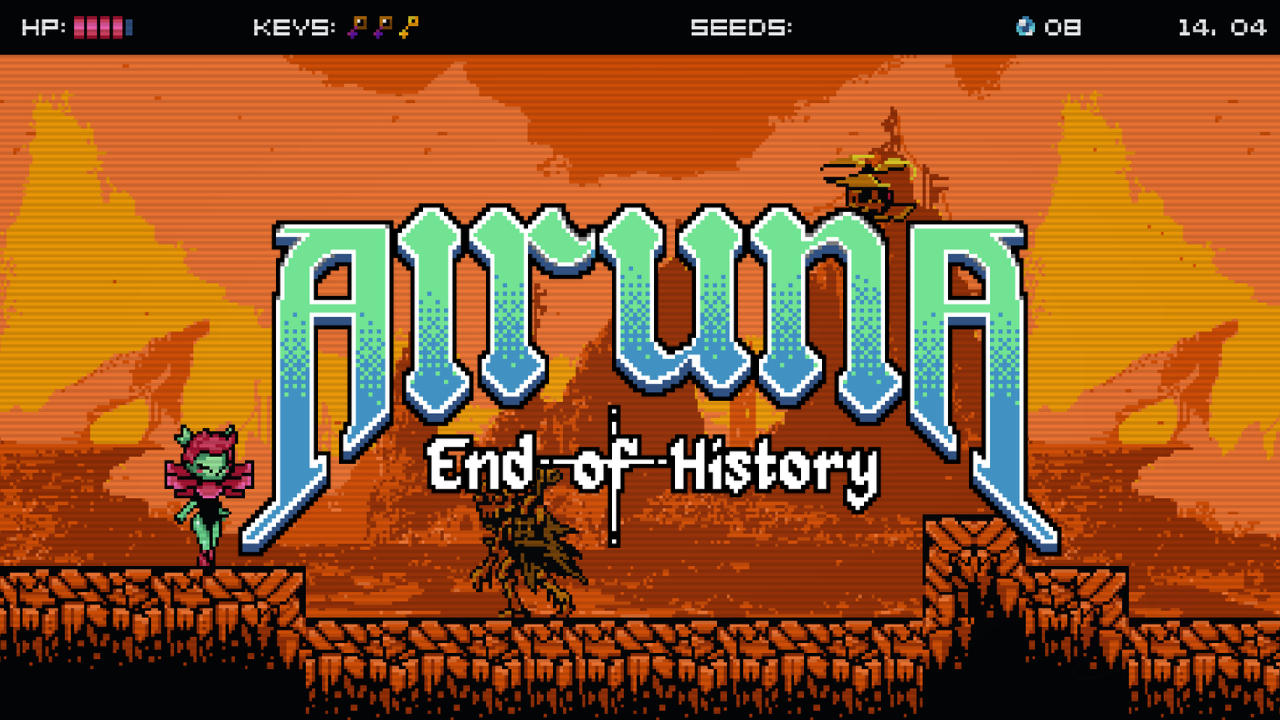
Alruna: End of History is a new compact Metroidvania by Neckbolt. It releases on June 4, 2026 for PC via Steam. It has a beautifully detailed world, with a style and 16-color palette that reminds me of the old 90s grunge aesthetic. The game is set in a post-apocalyptic world.
It also has an appropriately MIDI-style soundtrack. It matches well with the retro aesthetic and works nicely with the many locations you can explore. However, what really caught my eye when I first started playing was the promise on the Steam page.
If you follow our indie coverage, especially games like Well Dweller or The Little Brave, this is another Metroidvania worth keeping an eye on.
Reviewed on PC.Score: 7/10
Alruna: End of History – Official Teaser Trailer
Trailer via Burning Planet Digital / YouTube.
Join Our Newsletter
Stay updated with the latest interviews, previews, and indie gaming news from Fix Gaming Channel.
Alruna: End of History
Release: June 4, 2026
Genre: Metroidvania, Action, Adventure, Indie
Developer / Publisher: Neckbolt / Burning Planet Digital
Platforms: PC (Steam)
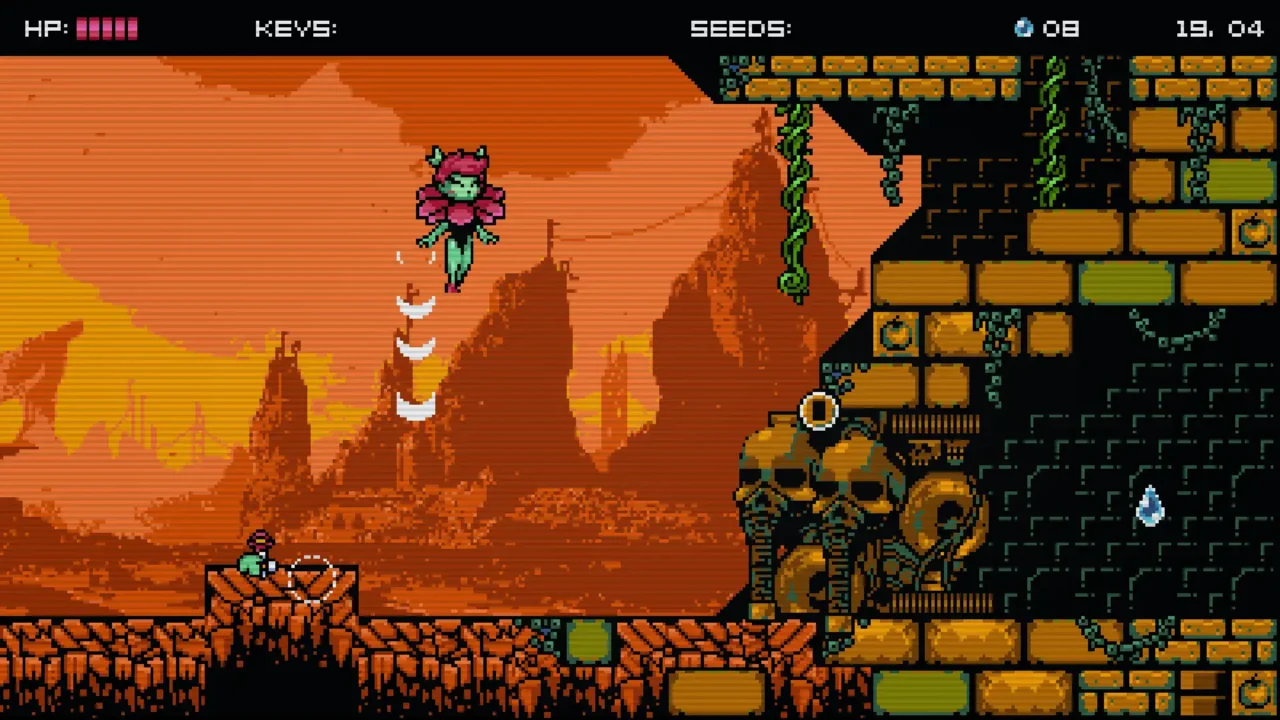
Alruna: End of History mixes compact Metroidvania design with striking post-apocalyptic pixel art.
Promising a “tour-de-force of game design” and “world-class” temples and dungeons, Alruna made a bold claim. Even if it was playful, I was hoping the game would match it. In 2026, we have access to nearly 40 years of Metroidvanias. Because of that, I was worried that Alruna might fall into a familiar category. Some new Metroidvanias just look retro and pretty, but feel repetitive of other games. Others simply fail to be fun Metroidvanias.
However, Alruna was a pleasant surprise that kept me coming back. It kind of feels like a house that looks small on the outside, but huge on the inside.
Platforms and Game Design
Alruna is light on story. It mostly gives vague gestures about reaching heaven and how unattainable it is in the post-industrial hellscape that is now the world. Religious allusions and symbology are everywhere. They mostly work as an aesthetic for the background and sometimes the music.
While the game is beautiful to look at and listen to, what makes it feel bigger than it is, is its design. Everything is a puzzle. If you enter a new area, the game throws a new element at you. It could be spikes, a new elemental power-up, or a new seed you can shoot, like the exploding pumpkins.
I noticed this right at the beginning of the game. When you go to grab your shooting ability, you are presented with simple platforms you can jump through to get higher. That is a standard video game mechanic. Once you grab the bullets, you go back and try to get through the platform. In many other platformers, you just hold down. Or maybe you hold down and jump to fall through the platform. In Alruna, you cannot.
This is kind of a boring example since you just go a different way, but it is the basis of the game. Something as simple as pathing around different areas becomes a small puzzle. You are learning your tools and your environment to get around.

Even simple movement in Alruna often becomes part of the puzzle.
Alruna also does not inundate the player with incredibly complex puzzles. They are not dumbed down either. It hits a perfect medium where you can see the pieces of the puzzle. You still need to experiment to find the solution. It lays out what you have, and it is up to you to find out what you need.

Alruna’s puzzle rooms feel carefully planned, and these behind-the-scenes sketches show how some of that design took shape.
My Heavenly Swiss Army Knife
This is also the bread and butter of Metroidvanias. New items or weapons allow you to get into new areas. What Alruna packs into one area can be amazing. Even in the upgrade room, where you can upgrade your weapons or enhance them, there are secrets and mechanics you have to use to get into the better upgrades.
It feels like so much stuff packed together would be messy, or a little overwhelming because of how much there is. But it never became something that stressed me out. Mainly because even if I was hitting myself against a wall, I would remember a few rooms back. Those rooms were submerged in water, and now I could swim in them with an upgrade.
The base kit is delightfully versatile as well. You have a long jump, a dash, and the ability to do rocket jumps by shooting downwards. All of these can be upgraded too. Stringing them together with new items allows you to think differently about how you move. It also changes where you feel allowed to go. Above all else, it is very fun to use, especially when the movement turns into a puzzle.
I did have some issues with the tools at my disposal. Certain abilities, like the slide dash, can be a little finicky to use consistently. The crouch into high jump also activates a little too soon sometimes. That stopped me from sliding when I wanted to. The vine seed lets you create a climbable platform, but it did not see too much use in my opinion.
However, with how much there was to do with what I had, those minor annoyances stayed minor. They did not stop me from enjoying the movement.
Did We Reach Heaven?
My final thoughts are that Alruna stays surprising throughout. I stayed away from specifically talking about later mechanics and puzzles. For a lot of people who like Metroidvanias, I think they would get a lot out of discovering those things themselves.
There are some issues. I got lost a few times. I also spent a little too long in some areas where the path to progress was not that easy to find. Some paths just felt obtuse to get into. But the biggest issue I had was that it started a little slow. It takes a while for the ball to get rolling. Once it does, you start to feel how much love and care went into building such a vast world in what feels like a little package.
If you enjoy Metroidvanias, this is a great game for you to try out. I can see how it might push people away with some of the issues I talked about. But Alruna has a lot more to deliver than a few frustrating issues.
For me, Alruna is a perfect 7/10.
Related Reading
For more indie and Metroidvania coverage from Fix Gaming Channel, check out Well Dweller Brings Dark Fairy-Tale Charm to a Disturbing Metroidvania, Why You Should Play The Little Brave, and Little Devil Feels Like a Hidden Gem in the Making.
Written by Jake Boyette, Writer & Reviewer at Fix Gaming Channel. Edited for publication.
Have a tip, pitch, or indie game worth showing? Contact us at contact@fixgamingchannel.com.
Enjoy our work? You can support Fix Gaming Channel on Ko-fi and help keep independent games coverage moving.