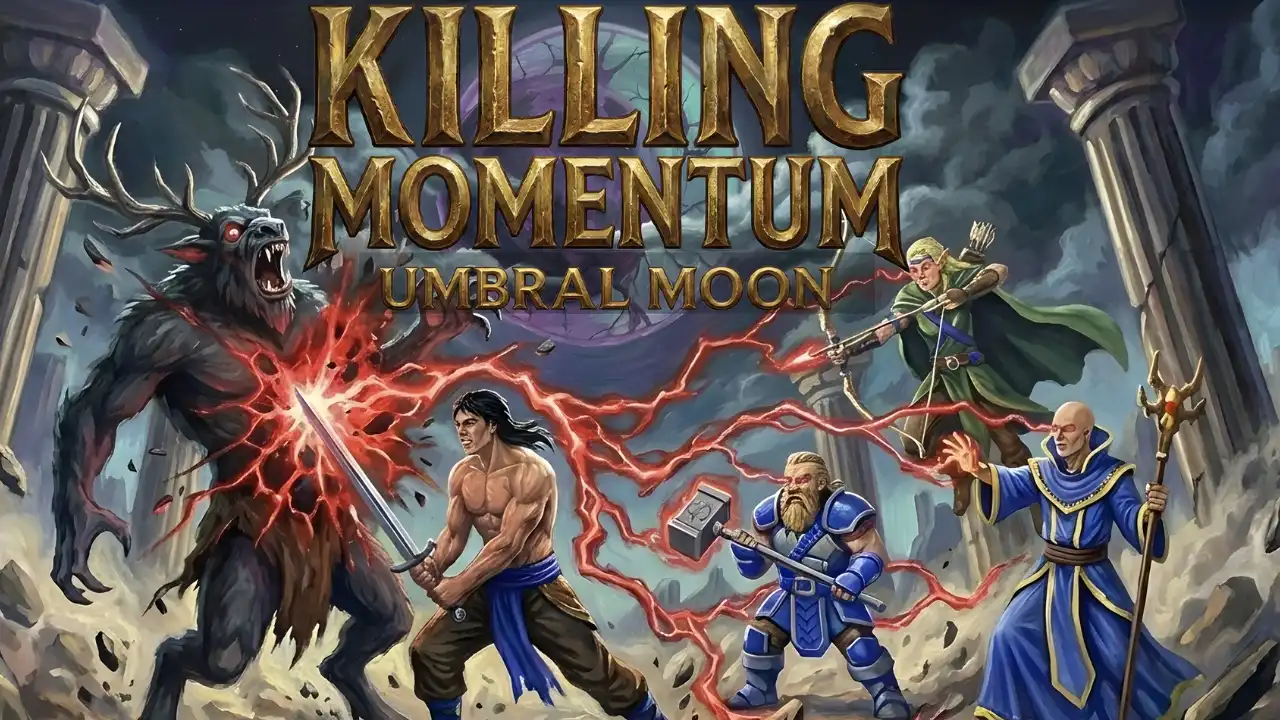
A tough comment that sparked the “Oil revolution” and pushed Umbral Moon forward
This is part of Fix Stories — dev-authored journeys published on Fix Gaming Channel.
Just a few weeks ago, I was the proud owner of an adorable mess.
My game – Killing Momentum: Umbral Moon – was a mismatch of impasto oil background, pixel art sprites, high-res textures, and mobile-game colored UI. It was flamboyant, it was eccentric, and I loved it.
I was blind to its flaws because I knew about all the good it has – a deep, highly tactical system that truly respects the player’s intelligence and skill. The gameplay was highly polished, the balancing was great, the friends I had as playtesters had many good things to say about it. They did mention the style inconsistencies, but that always came as a side comment. I worked hard to get the game engine – a custom engine, completely made by me – to act nice with the UI into and form a unified front. In my eyes, the game was worthy.
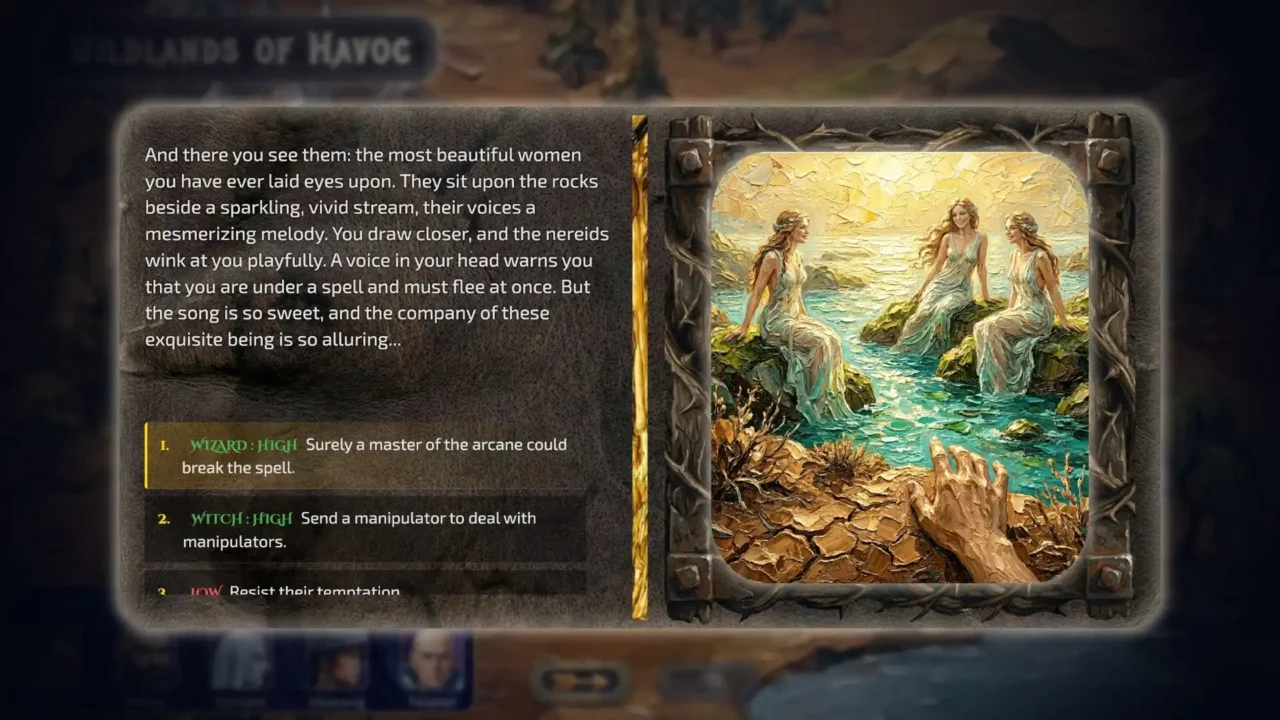
An Adventure Encounter moment — narrative choice options paired with a painted illustration.
And so I showed my game to the world, and created a post on a large facebook group of local developers. Some liked it, others stayed silent, and one stood up, and told me:
“Your game is not fit for Steam.”
Perplexed, I asked why, and he elaborated:
The perspective is wrong
The art style is all over the place
The sprites do not match
There is no internal cohesion.
Killing Momentum: Umbral Moon
Release: Coming soon
Genre: RPG, Strategy
Developer / Publisher: Circle Of Hex
Platforms: PC — Steam
“So what” I told myself. “It’s just one guy, others loved it. I know it’s good!”
But inside, I knew he was right, Yet I was afraid to take that jump.
My steam page was already up. Doing that would mean pretty much ditching marketing for a awhile.
Worse, what if I were to become the wise man of chelm – the same guy who had a mismatch between his shoes and shoelaces, and ended up replacing his entire life and sinking into debt? This whole thing could spiral into a terrible scope creep, and that was some serious threat.
Not to mention all the assets and screens to replace – hours upon hours of work…
Killing Momentum: Umbral Moon — Official Trailer
Join Our Newsletter
Stay updated with the latest interviews, previews, and indie gaming news from Fix Gaming Channel.
But in the end, I knew I had to act. It was time to make the next leap in quality.
I called it the “Oil revolution”, and it was one of the hardest decisions I made – to revamp the entire UI in the span of several weeks.
Every screen, every sprite, every interface – they were all changed. I used any resource I had to do it. I worked long hours, I cancelled my participation in the Next Fest, because I knew it had to be done.
But I didn’t just stop there.
My game was conceived as a turn based tactical battler. It was about creating a team of heroes, and then commanding them on a series of battles against tougher and tougher enemies.

Natasha dialogue scene at camp — story and character moments between battles.
But that was it. As fun as the combat was, it could get old very fast. Furthermore, just a little before that I started giving my characters personality, making them more than just sprites with stats. I wanted a way to expand on this. I wanted to turn the game from a “battler” into a real “adventure”.
That was when I introduced “Adventure Encounters” (AEC), into the game.
AEC is a system which presents the player with a situation – an ambush, a treasure, a moral dilemma – and requires their input.
The player may endanger a teammate in order to win a prize, or kill innocents in order to gain power, or try to solve riddles sung by a decaying ghost. Whatever it is, these encounters reinforce the tone of the world, diversify the gameplay, and supply both rewards and punishments that affect the combat gameplay.
When the dust settled, I was able to see the result – and the result, oh the result ,was worth every last bit of hardship.
I later found the guy and thanked him. He helped save my game, and elevate it to the next level.
The main goal of my journey was never about the money per se, it was about making an amazing game. Using the gifts I got and my imagination to create something really special. Something I want the world to see, and that I can be proud of.
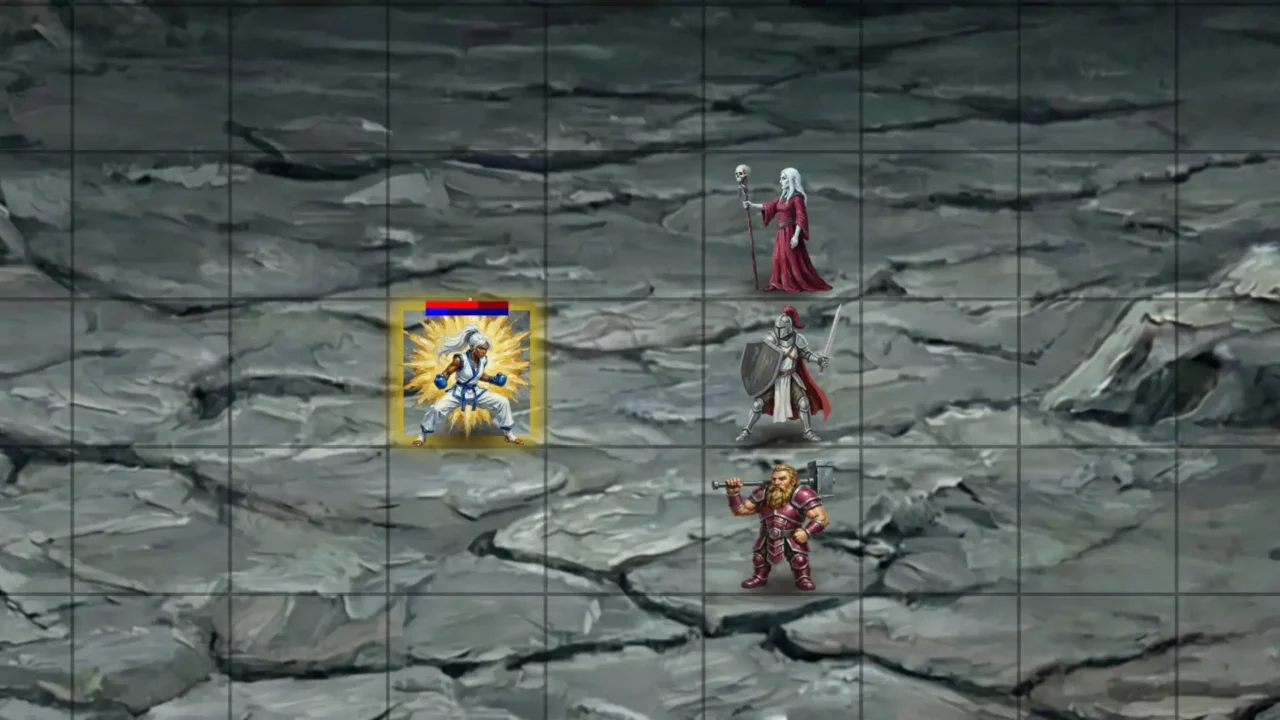
Turn-based tactical combat on a grid — positioning and matchups in play.
These last few weeks got me so much closer to this. Not because I was praised, but because someone was willing to show me where I could still improve.
And I’m intrigued to see how far it can still go.
Related reading
- Fix Stories — dev-authored journeys
- Golel — A tick-based first-person RPG built through persistence and hard lessons
Story by Or Yaniv — Circle of Hex — a one man studio dedicated to RPG’s, strategy, dark fantasy, and humor.
Written by Ronny Fiksdahl, Founder & Editor of Fix Gaming Channel.
Send interview pitches, corrections, tips, or developer stories to contact@fixgamingchannel.com.
Support independent games coverage on Ko-fi.