



Closing the line: how SERENDY came together
From classic arcade territory capture to saving a seven-member idol group, 2eex Games shares how one simple mechanic shaped a music-driven mobile game.
For Fix Stories, 2eex Games shares the first-person story behind SERENDY, including the challenges of synchronizing levels to music and making its neon visuals work on older phones. We also covered its November mobile launch. The account below is presented in the studio’s own words.
More First-Person Developer Stories
Read original accounts from game creators about the ideas, setbacks, and decisions behind their work.
Join Our Newsletter
Stay updated with the latest interviews, previews, and indie gaming news.
By 2eex Games
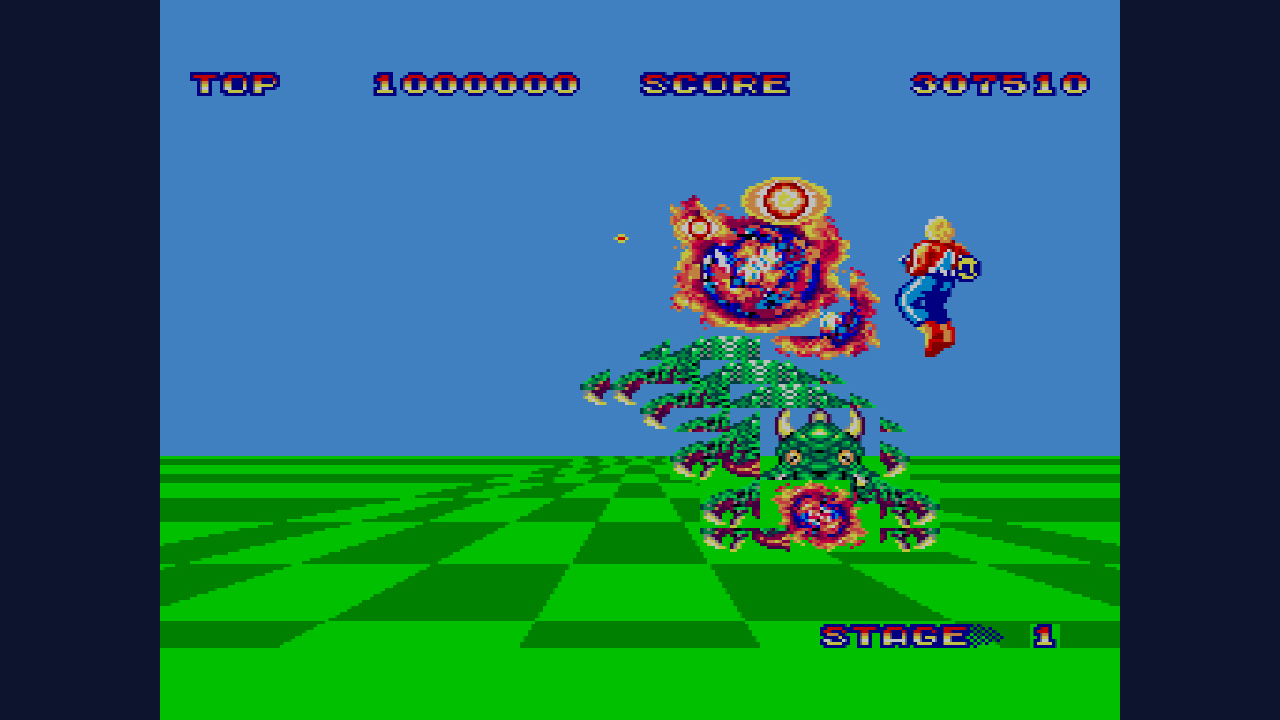
SERENDY started from one of the oldest ideas in arcade games: you leave the safe edge of the screen, draw a line, and close it. Whatever you cut off becomes yours. I have always loved the tension of that moment. While your line is open you are exposed, and the bigger the piece you try to take, the longer you stay in danger.
The first version was just that, with a hidden picture underneath. Every piece you claimed showed a little more of the image. It worked, but I kept asking myself what the picture meant. Why should the player care what is under there?
The answer came when I stopped thinking of it as a picture and started thinking of it as a person. In SERENDY, a neon music city has gone silent, and the seven members of the idol group SERENDY are trapped inside it. When you close a line, you are not just uncovering an image. You are freeing someone. That one change gave every stage a reason, and it gave the old “reveal” mechanic an emotional payoff I had not expected.
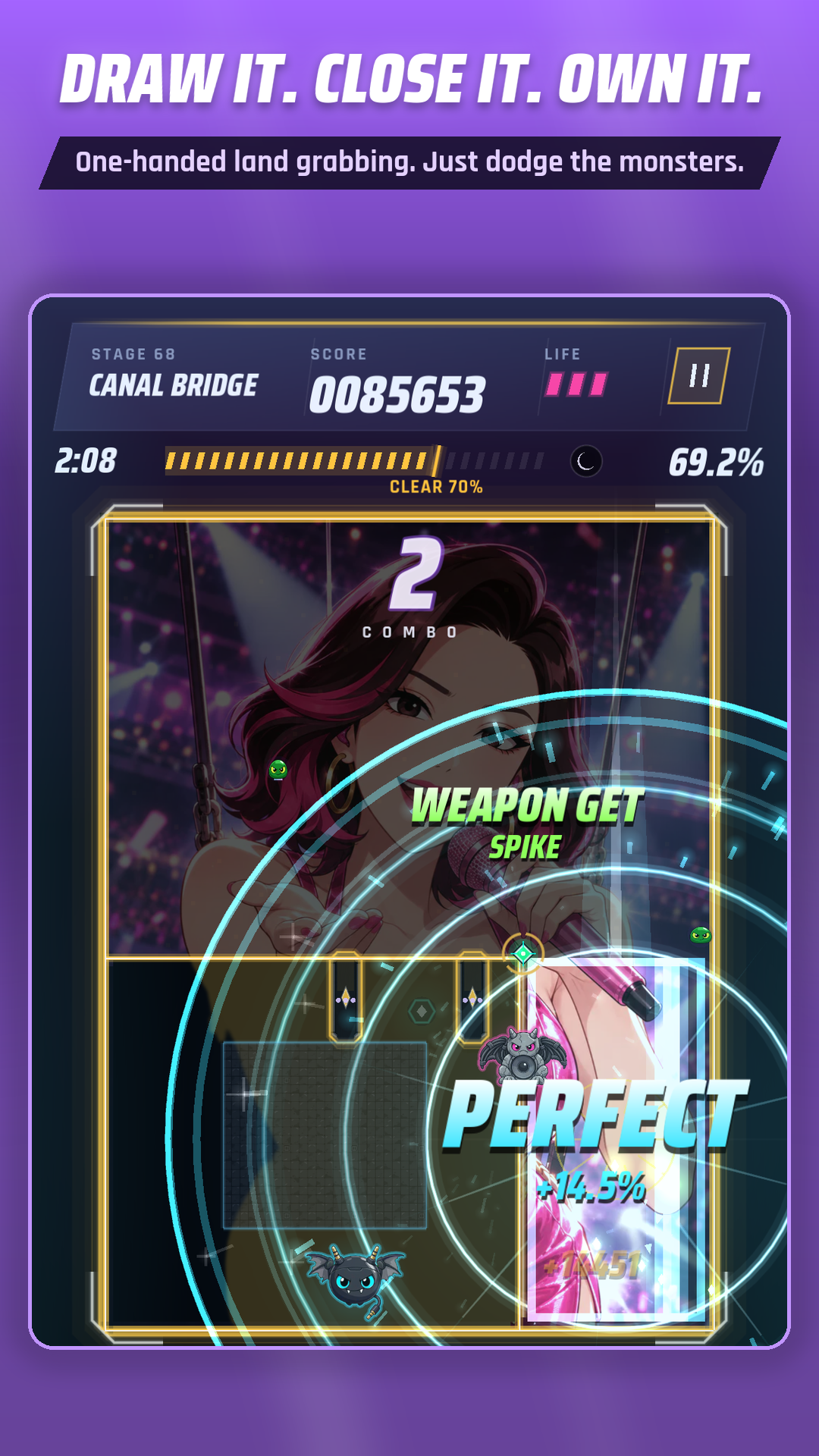
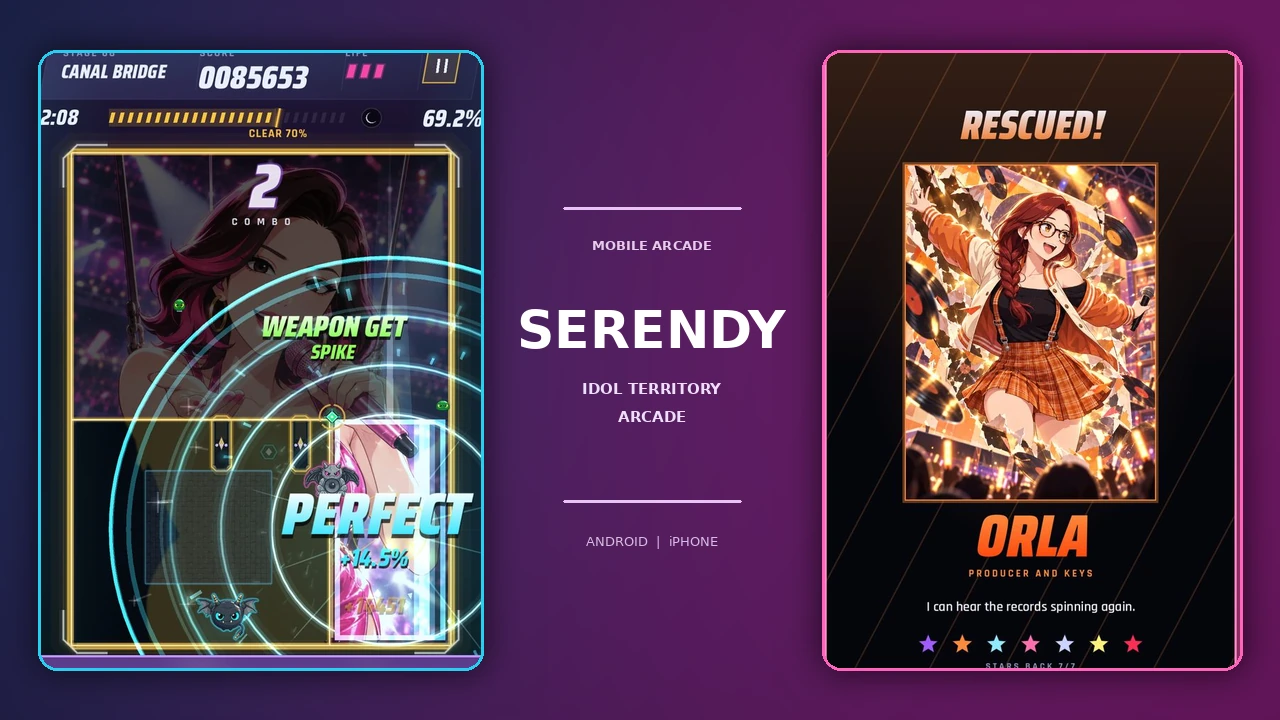
Draw a line out from the safe border and close it: the area inside becomes yours, and more of the trapped member appears.
Once the city was a music city, music had to be more than background. Each of the 20 districts has its own track, and the stage moves with it: hazards, traps and bosses follow the beat of that district’s song. Getting this right was one of the hardest parts of the project. A track that sounds fine on its own can be terrible to play against if its beat is soft or its first downbeat is slightly off. We measured every song, and more than once we went back and replaced a track because the stage simply did not feel right with it.
The members needed to be more than names, too. Each of the seven has a role in the group: a leader and main vocalist, a main dancer, a producer on keyboards, a rapper, and so on. That is where the photocards came from. Rescuing a member fills a 101-card binder with her photos and posters. Because collecting can easily turn frustrating, we decided early on that the odds are always visible in the game and that there is a guaranteed pull after 30 albums. I wanted collecting to feel like a reward for playing, not a wall.
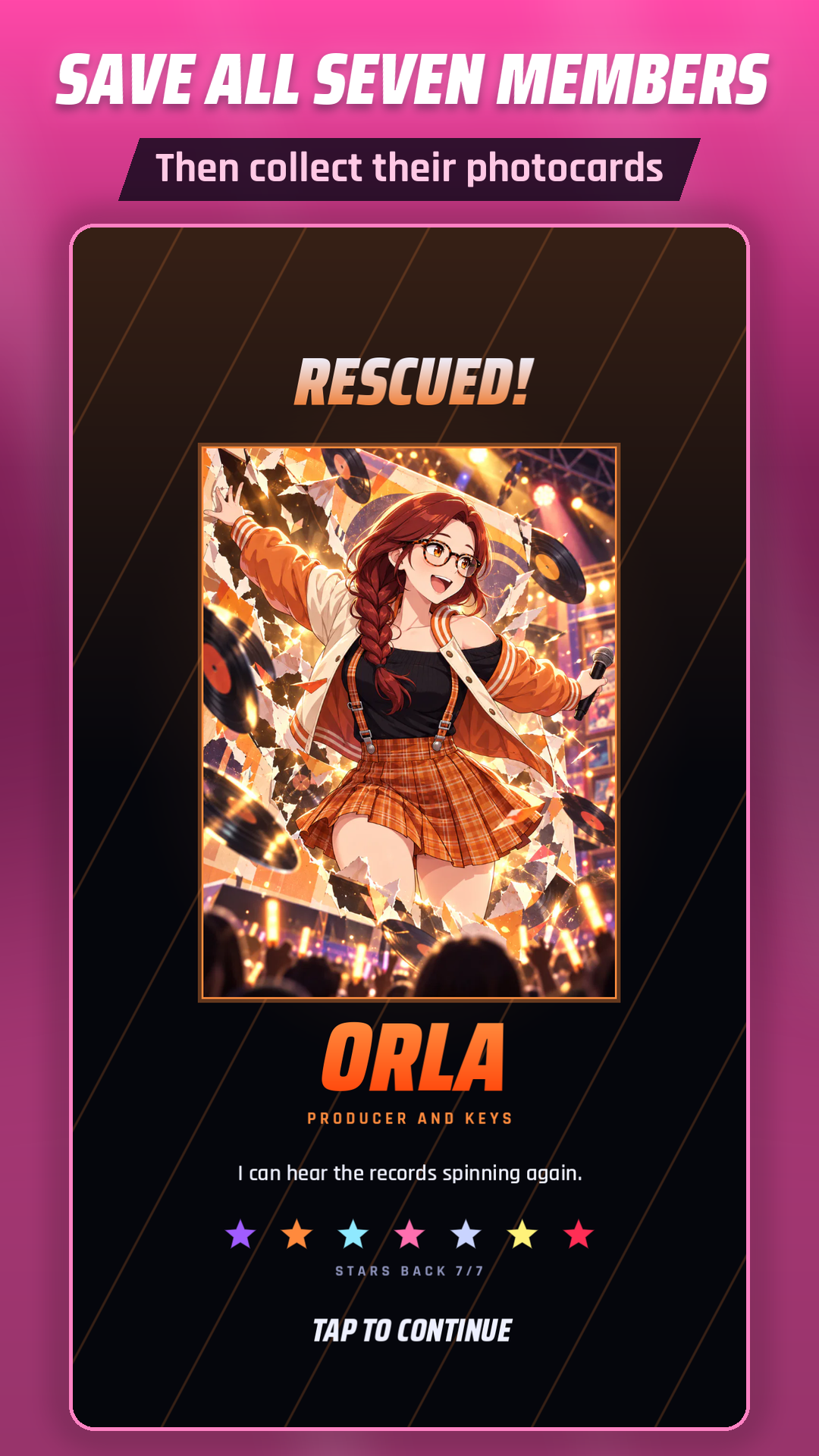
Rescued! Each member you free (here ORLA, the group’s producer on keys) joins you, and her photocards fill a 101-card binder.
The music then grew into its own mode. TWIN DECK is a two-thumb rhythm game that uses the album songs and the stage songs. It began as a small bonus, but it turned out to be a nice change of pace between district runs. Its EASY level never fails you, so anyone can play a song to the end.
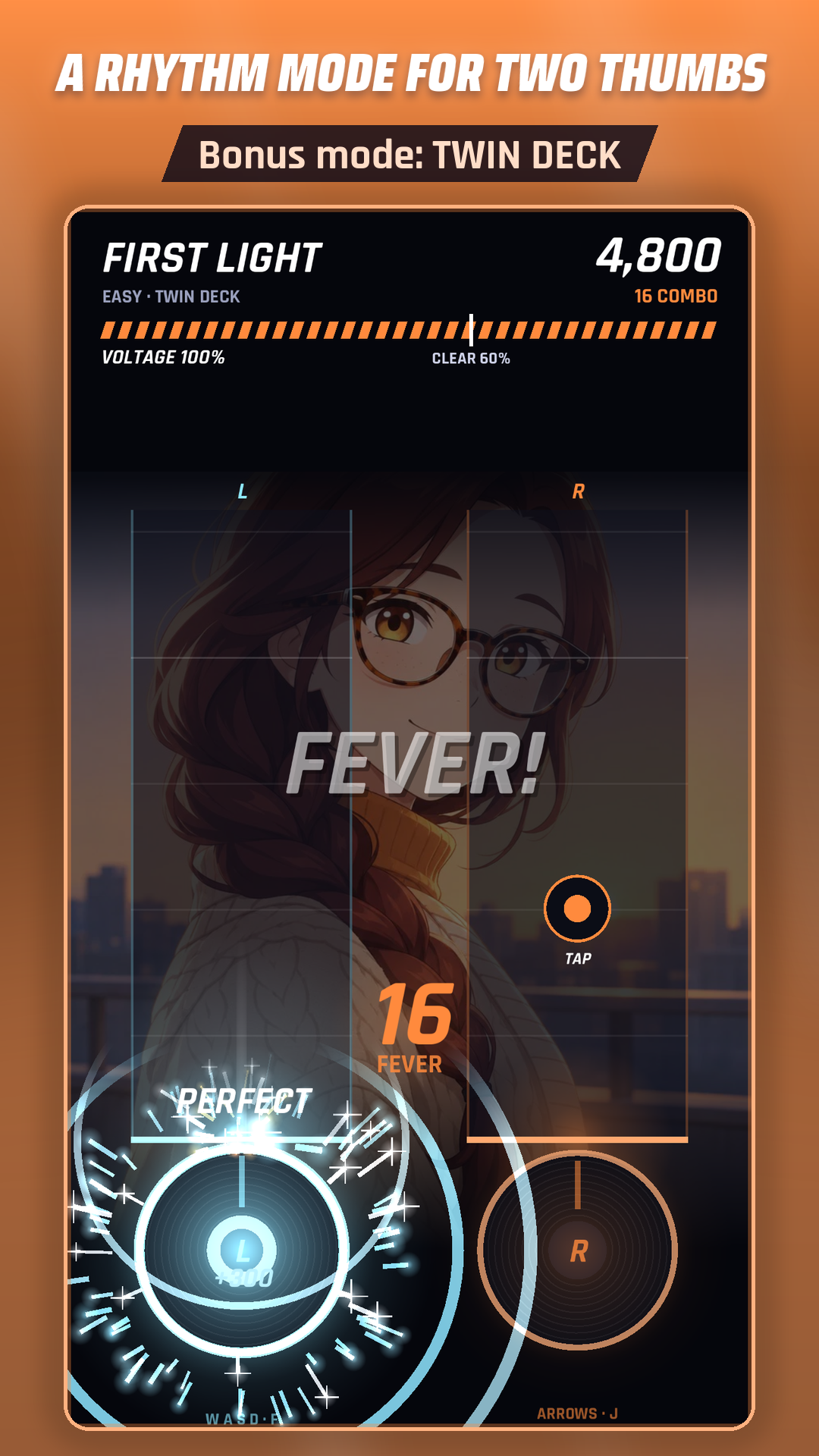
TWIN DECK, the bonus rhythm mode: play the album songs and stage songs with two thumbs. EASY never fails you.
The other big challenge was the phone itself. SERENDY is a portrait game you can play with one hand, in short sessions, and that is how most people will play it. A neon look with glowing lines and moving lights is expensive to draw, and on older phones it showed. We spent a lot of time cutting down what gets redrawn every frame, and we are still improving performance on lower-end devices.
Looking back, the combination sounds unusual on paper: territory capture, idol rescue, photocards and a rhythm mode. In practice they all grew out of one moment, closing the line. That moment claims the land, frees a member, lands on the beat of the city’s music and adds a card to your binder. Everything else was about making that moment feel good 200 times over, across 20 districts and their bosses.
SERENDY is out now on Google Play and the App Store, free to play, in 13 languages. If you try it, I hope you enjoy the moment a member finally appears.
— 2eex Games
About the contributor
2eex Games is the developer and publisher of SERENDY: Idol Territory Arcade. The studio submitted this account for Fix Stories.
Official website: 2eexgames.com
SERENDY: Idol Territory Arcade
Release: November 18, 2026 (iPhone); November 22, 2026 (Android)
Genre: Arcade / Territory Capture / Rhythm / Collection
Developer / Publisher: 2eex Games
Platforms: Android (Google Play), iPhone (App Store)
Price: Free to play; advertisements and optional in-app purchases
Related Reading
SERENDY Turns Qix-Style Territory Capture Into an Idol Rescue Mission
Fix Stories: Building a Match-3 Game Around One Promise — No Ads. Ever.
First-person story by 2eex Games, presented by Fix Gaming Channel.
Send interview pitches, corrections, tips, or developer stories to contact@fixgamingchannel.com.
Support independent games coverage on Ko-fi.