

A Match-3 Game Built Around a Simple Promise to Players
For this Fix Stories feature, Ricardo Tavares Santos of Aevryn Studios shares how one promise shaped the pacing, difficulty, scope, and identity of mobile match-3 game Aevryn Candy.
What changes when removing ads becomes a game design rule?
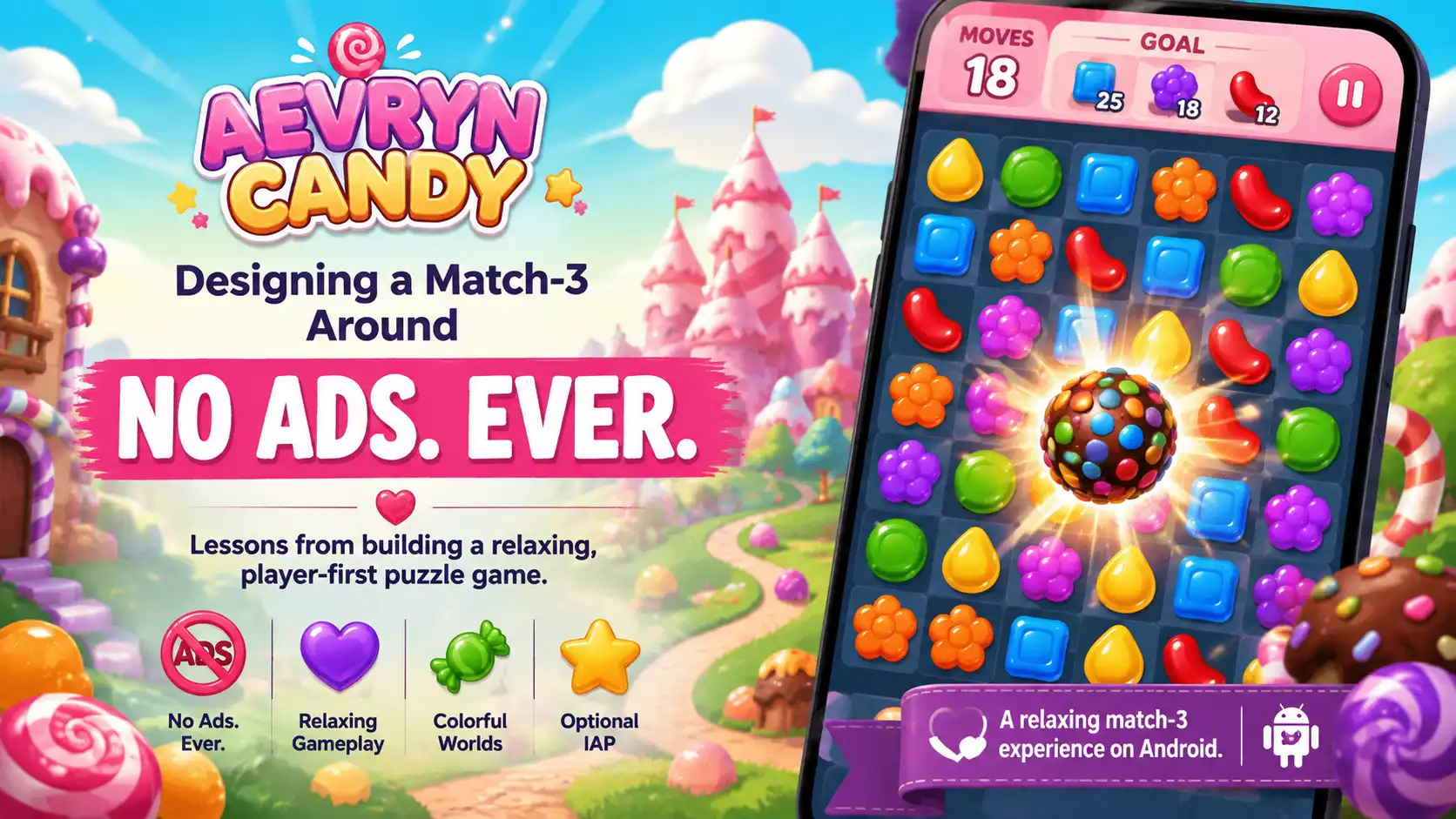
Aevryn Candy is built around a straightforward promise: “No Ads. Ever.” For Ricardo, that started as a monetization decision, but development gradually showed him how removing advertising could influence the design of the game itself.
You can read more first-person development stories in Fix Stories.
Aevryn Candy Trailer
Want more stories directly from game developers?
Get more developer stories, interviews, reviews, indie coverage, and gaming news from Fix Gaming Channel.
Join Our Newsletter
Stay updated with the latest interviews, previews, creator stories, and indie gaming news.
When I started building Aevryn Candy, I wasn’t trying to reinvent the match-3 genre. I like the simplicity of these games: you understand the basic idea almost immediately, you can play for a few minutes, and a good level can be satisfying without demanding a huge time commitment.
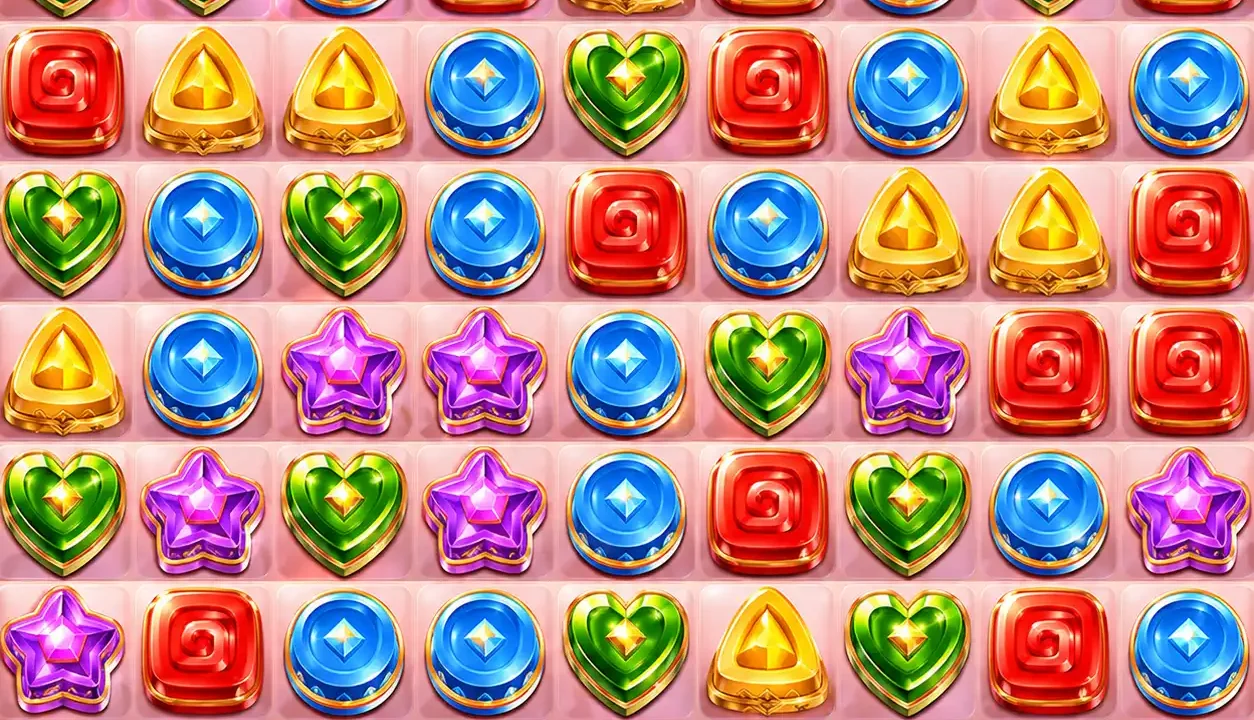
What I did want to change was something around the experience.
Mobile games are often designed around interruptions. Finish a level, see an ad. Lose, watch a video for another chance. Want a reward, watch another video. These systems have become so normal that it is easy to treat them as part of the genre itself.
I decided early that Aevryn Candy would have one very simple rule: No Ads. Ever.
At first, I thought of that mainly as a monetization decision. The game could have optional in-app purchases, but advertising wouldn’t be part of the deal. During development, though, I realized that removing ads changes much more than the business model. It changes how you think about the game.
Without an advertisement creating a pause between levels, the game itself has to create its rhythm. A player should be able to open Aevryn Candy, play a few levels, enjoy the puzzle and leave when they want to — not when an interruption tells them to stop.
That idea started influencing other decisions too.
One of the biggest lessons came from difficulty. The obvious way to design progression is to keep making levels harder. But I found that an endless upward curve didn’t really fit the relaxing game I wanted to make. Challenge is important, but constant frustration isn’t the same thing as challenge.
So from around level 100, I began experimenting with a different rhythm. In selected groups of levels, I reduce the number of candy colors available. That sounds like a tiny adjustment, but it changes the probability of useful matches, cascades and available moves quite noticeably. Those easier stretches can then sit between tougher levels.
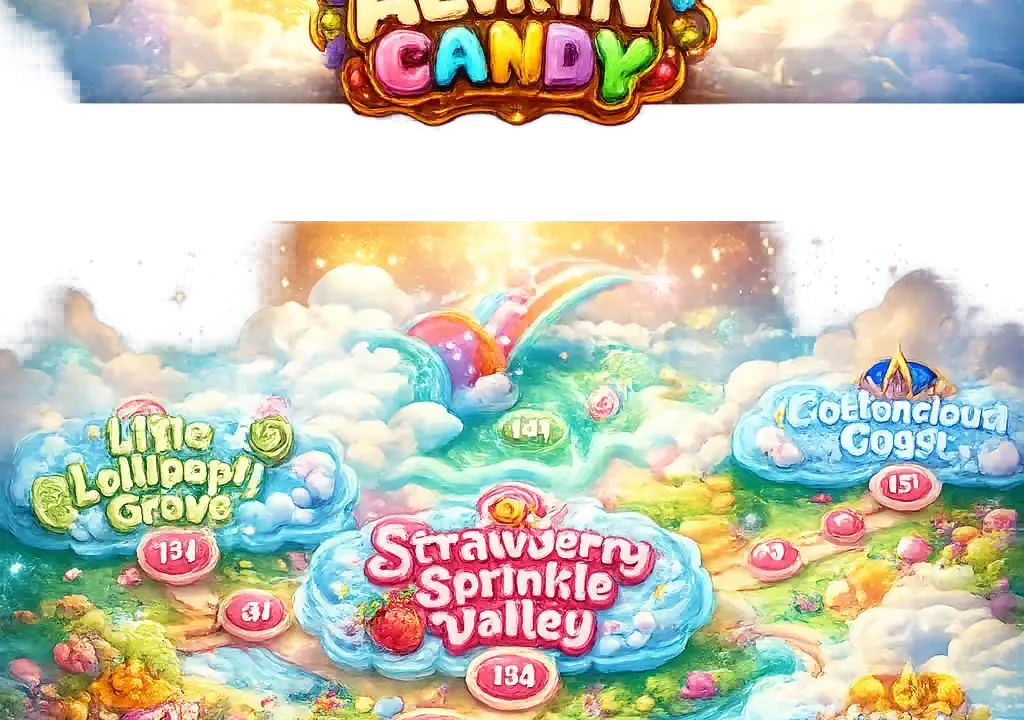
Instead of thinking only:
hard → harder → harder → harder
I started thinking:
challenge → breathing room → challenge → breathing room
That small experiment taught me something that has stayed with me throughout development: sometimes changing one parameter is more valuable than adding another feature.
As developers, it’s tempting to solve every problem by adding something — another booster, another mechanic, another screen, another system. But every addition has a cost. It needs UI, balancing, testing and maintenance, and it has to keep working with everything you add later.
Aevryn Candy has made me ask a different question more often: can the mechanics that already exist solve this problem?
That question matters even more when you’re building as an indie developer. Aevryn Studios is a small project, and Aevryn Candy has been something I’ve built alongside the rest of my life. There is always another idea that could be added. The difficult part isn’t coming up with features; it’s deciding which ones actually deserve to exist.
That has probably been the biggest personal lesson from the project: scope is part of design.
I now try to ask whether a new idea genuinely improves the puzzle experience or whether I’m adding it simply because I can. Saying no to a feature can be just as important as implementing one well.
In a way, that brings me back to the decision that started everything.
“No Ads. Ever.” is defined by something the game doesn’t have, but that absence has become part of its identity. It gives me a simple rule for future decisions: if something damages the relaxed, interruption-free experience I’m trying to create, it probably doesn’t belong in Aevryn Candy — even if it is common practice elsewhere in mobile gaming.
Releasing the game hasn’t ended that process. In some ways, it has made it more interesting. Before release, you’re working with assumptions. After release, those assumptions begin meeting real players, and you start learning which decisions worked, which need adjustment and which ideas sounded better on paper than they feel in the game.
I’m still learning from that.
My goal with Aevryn Studios is not to pretend that a small indie game can outspend or outscale the biggest names in mobile gaming. It’s to keep improving something I enjoy building and, hopefully, find players who appreciate the same things I do: colorful puzzles, short sessions, a bit of challenge, and the ability to simply play without an advertisement getting in the way.
Aevryn Candy is available on Android through Google Play.
Aevryn Candy
Release: Available now
Genre: Match-3, Puzzle
Developer / Publisher: Aevryn Studios / Aevryn Studios
Platforms: Android via Google Play
Fix Gaming Channel: Fix Stories gives developers and creators room to tell the stories behind their work directly in their own words. Ricardo Tavares Santos’ submitted story above has been preserved in his voice and formatted for publication by Fix Gaming Channel.
Related Reading
Instant Estresso Fix Stories: Music, Coffee, and Solo Mobile Game Development
Fix Stories: How I Turned Mobile Gaming Into a Growing Creator Career
More Fix Stories From Developers and Creators
Story written by Ricardo Tavares Santos of Aevryn Studios.
Edited and published by Ronny Fiksdahl, Founder & Editor-in-Chief of Fix Gaming Channel.
Send developer stories, creator stories, corrections, tips, or game pitches to contact@fixgamingchannel.com.
Support independent games coverage on Ko-fi.