
From BODYCAM to The Mortuary Assistant: Making Fear Sound Real
Voice actor Brian Watts talks BODYCAM, Ready or Not, The Mortuary Assistant, realistic screams, performing fear, and why human experience still matters in an age of AI-generated voices.
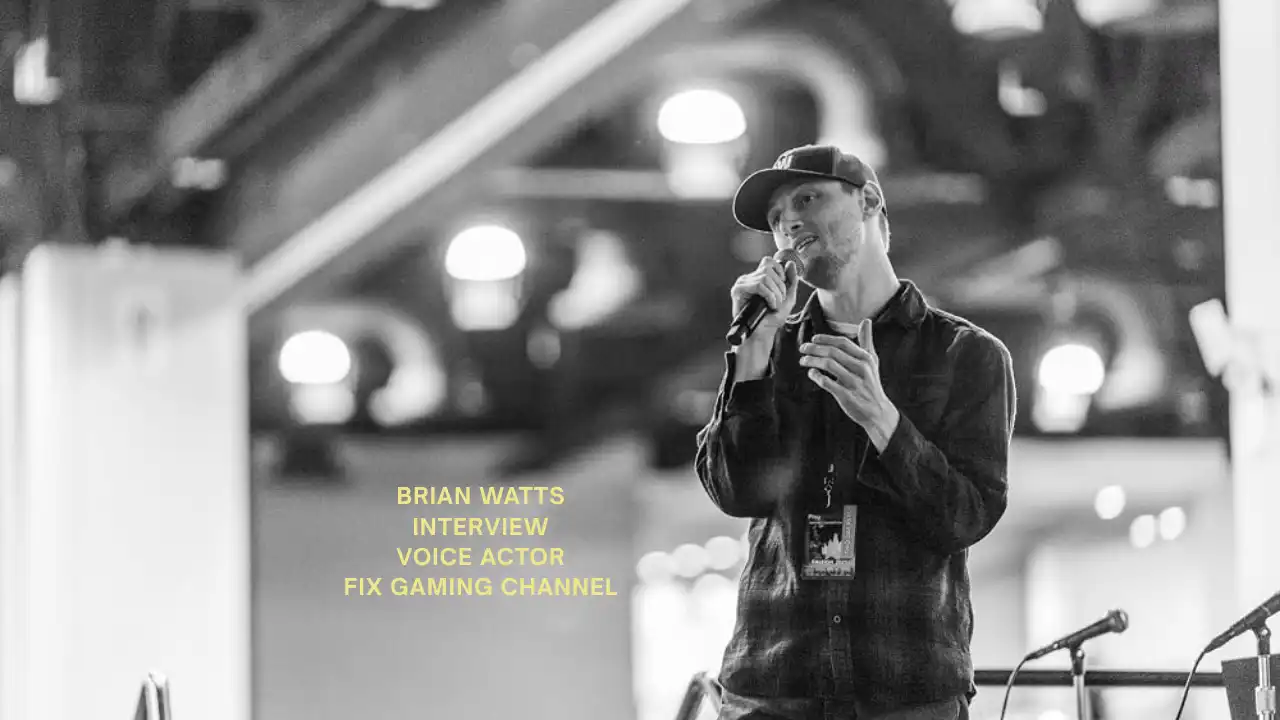
BODYCAM is preparing for its major v0.8: Locked & Loaded update on September 2, with audio playing a major role in the overhaul. One of the voices behind that experience is Brian Watts, who works as a multiplayer announcer and also contributes screams and vocal efforts.
Watts’ credits also include Ready or Not, The Mortuary Assistant, War Thunder, Ground Branch and Broken Arrow. Fix Gaming Channel spoke with him about realistic performance, horror voice acting, working with indie developers, and AI-generated voices.
BODYCAM v0.8: Sound Design Devlog
Want more interviews with the people behind the games?
Get more interviews, game features, reviews, and indie coverage from Fix Gaming Channel.
Join Our Newsletter
Stay updated with the latest interviews, previews, and indie gaming news.
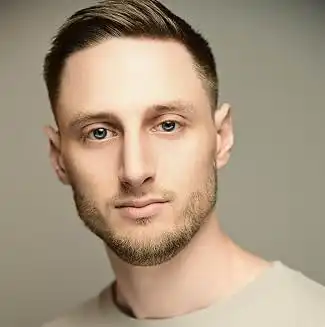
Brian Watts, voice actor and writer. Photo supplied by Brian Watts.
Brian Watts
Voice Actor & Writer
BODYCAM · Ready or Not · The Mortuary Assistant · War Thunder · Ground Branch · Broken Arrow
Official Website · Voice-Over Playlist
Brian Watts: Voice Acting Visual Demo
Watts’ wider gameography stretches across horror, tactical shooters, military games and other projects. His listed work includes Gates of Hell: Liberation, OPERATOR, Pine Harbor, Pneumata, Project Ferocious, HumanitZ, KOHATE and many more.
BODYCAM and Performing Realism
BODYCAM is having a big moment right now, with the Locked & Loaded update arriving on September 2. You’re credited as the multiplayer announcer. What was your approach to creating a voice that has to cut through such a chaotic and realistic-feeling game?
For BODYCAM, I think the biggest thing was coming to understand what kind of game it actually was. With the new update, sound has been pushed more and more to the forefront, which I think is great. Realism is huge for this project, and that is something I really love.
As one of the MP announcer voices, along with doing some of the screams and vocal efforts, my goal was basically to get information out quickly during matches and then provide those blood-curdling screams that actually fit in this world. BODYCAM isn’t really trying to be Hollywood, so the performances can’t sound too polished or theatrical.
BODYCAM puts a huge amount of emphasis on immersion and realism. Does that change the way you perform compared with a more traditional shooter where the voice acting can afford to be bigger or more cinematic?
Absolutely. With the realism of BODYCAM, you have to take into account where somebody is actually being hit. A shot to the chest is going to sound different than getting hit in the thigh or leg. Every vocal reaction needs to change depending on where the damage happened, how severe it is, and what the character would realistically be going through.
BODYCAM is meant to be less Hollywood and more realism. If someone gets shot in the chest, you’re probably not going to hear some massive over-exaggerated death line. I mean, you might hear something, but you’re also going to hear things like agonal breathing, gasping, choking, panic, and other reactions you would realistically expect from somebody who had just been shot.
Ready or Not and the Tension Behind the Door
Watts’ work on Ready or Not puts him inside another game built around tension and authenticity. We recently covered the game’s continued growth after Ready or Not reached three million console sales and more than 13 million copies across platforms.
You voiced The Accomplice in Ready or Not’s Lethal Obsession mission. Ready or Not is another game where authenticity is a huge part of the experience. How much direction did you receive to make that performance feel like a real person rather than a typical “video game character”?
When I recorded for Ready or Not, Zach, who was their audio director at the time, directed me. He was a great director. It’s funny because I remember joking with him that probably 80 percent of my lines had some form of the F-bomb in them, or something close to it. We joked around quite a bit.
I think that’s actually important when you’re working with a director. Obviously you take the work seriously, but you’re also there to have fun and make something cool that the fans are going to enjoy.
As for The Accomplice, I would best describe him as this paranoid redneck who got himself way in over his head. Maybe Gerard influenced him more than he should have. I think the Adam Update trailer probably shows that atmosphere better than anything I could explain.
The Accomplice is basically someone who got caught up in Gerard’s world, and by the time the police arrive, he’s already gone too far. At that point he feels like he doesn’t have any choice left except to fight.
Ready or Not: Adam Update Trailer
BODYCAM and Ready or Not are both grounded tactical games, but they create tension in very different ways. From an actor’s perspective, what changes between performing for those two kinds of experiences?
BODYCAM is far more about the realism and the soundscape. Everything around you matters, footsteps, echoes, gunfire, movement, all of it. People have jokingly called it the “PTSD Simulator,” and honestly, I can see why people say that.
Ready or Not, on the other hand, is basically the ultimate modern police tactical shooter. It’s directly inspired by SWAT 4 and other classic tactical shooters like Rainbow Six.
The tension is different between the two. Ready or Not focuses on not knowing what is behind that door. BODYCAM focuses on not knowing if those footsteps you just heard were yours or somebody else’s.
Then you throw BODYCAM Zombies mode into the mix and it becomes something else entirely. Ever been alone in almost complete darkness with hordes of undead coming after you through a realistic bodycam perspective? “Unsettling” is probably underselling the amount of adrenaline that can create.
The Mortuary Assistant and Performing Horror
Horror asks something different from a performer. It is a side of game acting we have covered before in our interview with voice actor Derek McEwan, and for Watts it includes a long working relationship with developer Brian Clarke.
You also worked on The Mortuary Assistant, which takes us into a completely different kind of tension. What do you remember most about recording for that game, and what made the performance challenging?
The Mortuary Assistant has a special place for me. I love horror, and I love being able to act in horror projects. Working with Brian Clarke has honestly always been a great experience.
Brian and I actually worked together before The Mortuary Assistant. Our first title together was KOHATE, where I played the protagonist. My character was basically captured, bound up, and thrown into this horrible situation with what I can only describe as a SAW-style space collar around his neck.
At one point Brian asked me to sound like I was choking. Okay, so I sent him what I thought were pretty good choking sounds, and he basically told me he wanted it more realistic. He wanted to feel like I was actually choking.
So, being me, I apparently took that as a challenge. I sent him a video with a belt around either my mouth or my throat, I honestly don’t remember which anymore, with the caption, “Is this real enough?”
He laughed. For the record, I was safe. Don’t do that. [Laughs]
That pretty much describes the relationship Brian and I have though. We can joke around, but when it comes time to work, he’s very professional and knows exactly what he wants from his actors.
After KOHATE, we worked together on The Mortuary Assistant. I originally voiced The Patient in the demos and then the final game. Most of my lines were basically this insane mental patient screaming, “GET ME OUT OF HERE!” People seemed to really enjoy that performance.
Later in development, Brian came back to me and asked if I wanted to play another character called The Priest. I always viewed him as kind of an Ed Warren-type character. He had apparently tried to deal with or exorcise whatever was happening to Raymond, and obviously that didn’t go particularly well. Whether or not The Priest died, I’ll let people speculate on that one.
After The Mortuary Assistant, Brian brought me into another DreadXP project called Book of Blood, where I played the protagonist. Funny enough, Brian briefly played my coworker. I played this carnival worker being hunted by a sadistic clown killer. The clown kind of reminded me of Art the Clown, just considerably less gory.
After that, I was supposed to play a pretty important role in Paranormal Activity: Threshold. Unfortunately, Paramount Pictures didn’t approve the development extension Brian requested, and the game was ultimately cancelled. That one sucked because I was really excited about what they were building.
Making Fear Believable
Horror voice acting sounds simple from the outside: scream, panic, sound frightened. But bad horror acting is immediately noticeable. What separates a believable fear performance from someone who is simply trying to sound scared?
You have to put yourself in that character’s shoes. I don’t want to just see “(terrified)” written on a script, I want to actually feel like that character is terrified. If they’re angry, be angry. If they’re depressed, find that emotion. Use things you’ve personally experienced and bring some of that into the performance because it can completely change how believable it sounds.
Breath control is also huge. I remember recording for one horror game where my character was apparently being sawed in half. Beautiful, right? I pushed way too much air out during one of the screams and actually passed out in my old studio. I learned my lesson pretty quickly after that.
Fear is subjective. You can’t just tell the audience your character is scared, you have to make them believe it.
How do you perform things like pain, panic, exhaustion, screaming or death reactions repeatedly without destroying your voice during a recording session?
Understanding your limits. There have been plenty of times, especially when recording military games, RTS games, and FPS projects, where I’ve had to scream so much that I ended up losing my voice afterward.
My grandfather actually poured me a shot of whiskey and honey once and called it the “redneck serum,” which I still find hilarious.
My grandfather was actually one of the people who inspired me to become an actor, along with my theater arts teacher Linda Gorman, who trained me throughout middle school and high school.
When it comes to screaming, rest is extremely important. I’ve also learned not to overdo it. You absolutely can damage your vocal cords if you’re not careful, which is why I try to only do really high-octane work in moderation now. There’s a big difference between pushing yourself for a good performance and just hurting yourself.
Is restrained fear sometimes harder to perform than screaming? For example, trying to sound like someone who is terrified but desperately attempting to stay calm.
If I’m understanding restrained fear correctly, it’s basically being terrified but trying to hide it, either for yourself or for somebody around you.
I think it depends entirely on the character and the situation. Fear is still fear, you’re just holding it back. Maybe you’re trying to protect someone, maybe you don’t want the person threatening you to know you’re scared, or maybe you’re just somebody who refuses to show weakness.
It really comes down to knowing your character and understanding why they are behaving the way they are.
Indie Developers and Making Dialogue Sound Human
Working directly with smaller teams is another recurring part of Watts’ career. Fix Gaming Channel regularly speaks with developers about that side of production through our game developer interviews.
You’ve worked directly with a number of indie developers. How different is that experience from working with a larger studio or a more established production pipeline? Do you sometimes have more influence over the character with a small team?
Indie teams are usually more open to changes, experimentation, and creativity. You’re also more likely to be talking directly to the people actually leading the project. Sometimes you’re literally talking to the person who created the entire game.
With larger companies, there are obviously more layers, so it’s harder to influence something directly or speak with leadership.
That being said, I like working with both and there’s nothing wrong with either one. With indie games, you get more of that creative-liberty side of things. You’re helping somebody build this dream they’ve probably had for years. With larger studios, you get the chance to work with experienced teams on a much bigger production. Both are cool for different reasons.
Have you ever received a line or direction where your first reaction was basically, “There is no believable way a human being would say this,” and had to work with the developer to change the performance?
Absolutely.
I see it mostly when working with foreign developers whose native language isn’t English. Sometimes a sentence can technically be correct English but still sound like something no normal human being would actually say.
That’s where improv and ad-libbing can be huge. Sometimes you can change just a couple of words and suddenly the line sounds 100 percent more believable without changing what the writer actually meant.
I’m also a big fan of different takes. If somebody asks for three takes, I don’t see much point in giving them the exact same performance three times. Give them three options.
AI Voices: “It’s Still an Imitation”
AI-generated voices are becoming increasingly capable. As someone doing this professionally, where do you personally draw the line between AI being a useful production tool and it replacing something that genuinely needs a human performance?
AI is a gift and a curse. It depends entirely on how we choose to use it.
Do I believe artists should be replaced? Absolutely not. I’m firmly against generative AI being used to replace actors, training models on people’s work without permission, AI cloning, voice syncing, or basically anything where you’re taking somebody’s identity or performance and turning it into something without their consent.
Do I believe AI has a place in society? Yes. I’d much rather see AI helping humanity cure diseases, catch problems before they become worse, help disabled people, and actually make people’s lives better.
AI itself isn’t necessarily evil. What people decide to do with it can be.
Experience is something AI can’t simply acquire by generating another take. What do you think an experienced actor brings to a performance that a developer might not realise they are losing when they choose a synthetic voice?
Humanity.
A robot cannot actually be human. It cannot experience loss the way we do. It cannot love somebody, lose somebody, or truly understand what it’s like to be terrified, heartbroken, pissed off, excited, or completely exhausted.
It can be programmed to imitate those things. It can probably even sound convincing.
But it’s still an imitation.
Actors bring everything they’ve lived through into their performances, whether they realize they’re doing it or not. AI can imitate human emotion, but it can’t actually live it.
“I Want to Make People Feel Something”
Finally, out of everything you’ve recorded so far, is there one performance, scene or game that you think best represents what Brian Watts can actually do as an actor, even if it isn’t your biggest credit?
I don’t know if one specific project really represents me.
I think the better answer is that I’m just trying to do the best I can knowing that I’m a flawed human being like everybody else. I’m a big brother. My younger brother is in college now, and I’m incredibly proud of him. I love my family with all my heart.
When everything is said and done, I don’t want my legacy to just be a giant list of games I worked on or characters I voiced. I want people to say I did what I could with what God gave me.
I want to make people laugh. I want to make people smile. I want to make people feel something.
That’s why I became an actor.
If somebody hears one of my performances and, even for a little while, forgets there’s just some guy standing behind a microphone recording it, then I did my job.
Related Reading
Derek McEwan Interview: Voice Acting in Games, Bendy & Timore
Ready or Not: 3M on Console, 13M+ Across Platforms
Written by Ronny Fiksdahl, Founder & Editor-in-Chief of Fix Gaming Channel.
Send interview pitches, corrections, tips, or developer stories to contact@fixgamingchannel.com.
Support independent games coverage on Ko-fi.