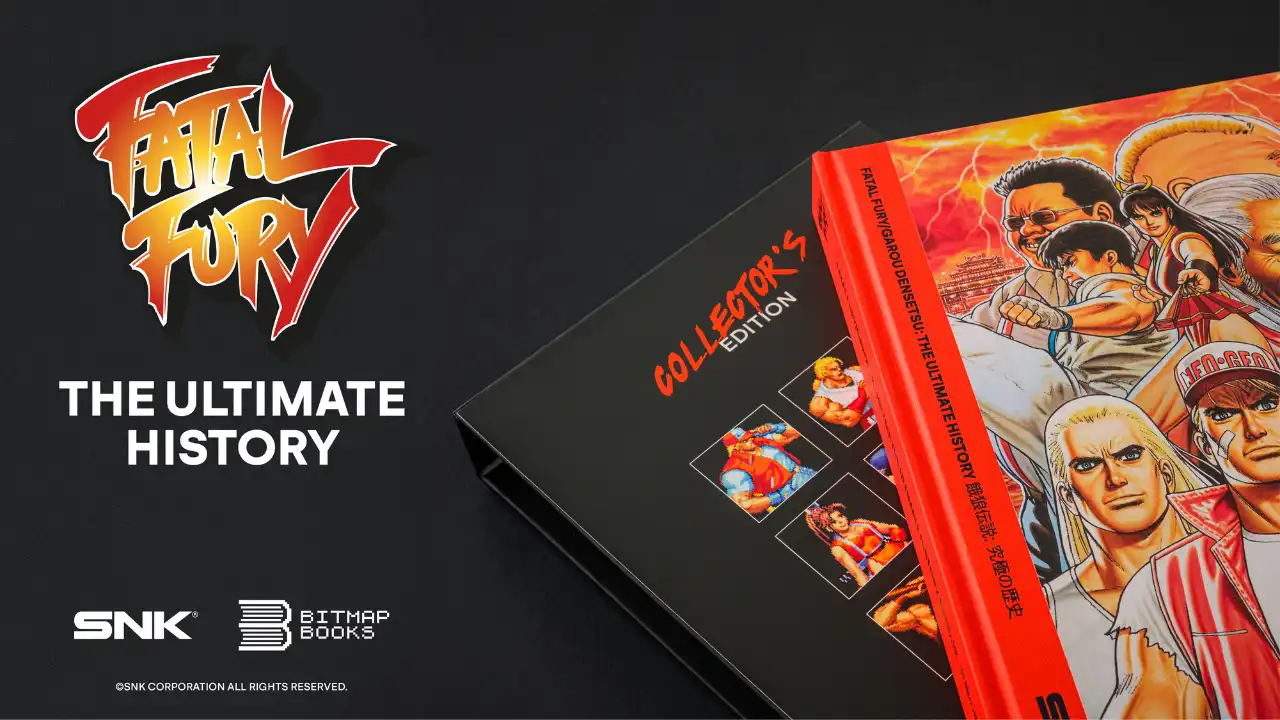
Bitmap Books begins its 468-page visual history with South Town, SNK’s arcade roots, and the promise that brought Fatal Fury back
Fatal Fury/Garou Densetsu: The Ultimate History traces more than three decades of fighting-game history, beginning with the people, hardware, and ideas behind SNK’s famous series.
Bitmap Books provided Fix Gaming Channel with a digital copy for coverage. This is a short impression based on the book’s opening section, rather than a complete review of all 468 pages.
The book is organized around an introductory history followed by individual chapters covering the games. The first dedicated game chapter begins with Fatal Fury: King of Fighters, while later sections reach Garou: Mark of the Wolves and Fatal Fury: City of the Wolves before closing with a developer interview.
Want more gaming history, features, and first impressions?
Get more game features, reviews, interviews, indie coverage, and gaming news from Fix Gaming Channel.
Join Our Newsletter
Stay updated with the latest interviews, previews, and indie gaming news.
The promise behind Fatal Fury’s return
The book opens with a foreword from Yasuyuki Oda, identified as Chief Producer of SNK Fighting Games. Oda dates the original game’s debut to November 25, 1991, and recalls his involvement with the series from Fatal Fury Special through Garou: Mark of the Wolves.
Oda says that after joining the new SNK on February 15, 2014, he pitched what eventually became Fatal Fury: City of the Wolves under the working idea of Fatal Fury 4.
The King of Fighters and Samurai Shodown came first, but the planned revival remained alive. City of the Wolves ultimately launched on April 24, 2025, bringing the series back with its first completely new entry in decades.
That return has since moved in directions few could have predicted, including the Cristiano Ronaldo crossover in City of the Wolves. The foreword gives the modern game a personal connection to the history documented in the pages that follow.
South Town before the first punch
The main history begins with South Town, the fictional city connecting Fatal Fury with Art of Fighting and parts of The King of Fighters. The opening map identifies 26 locations, including Pao Pao Café, Sound Beach, Howard Arena, and Geese Tower.
This makes South Town more than a collection of fighting stages. The city provides a shared setting for rivalries, families, criminal organizations, tournaments, and characters whose stories continue across several games.
From Street Fighter to the NEOGEO
Takashi Nishiyama provides the clearest bridge between the early history of Street Fighter and the creation of Fatal Fury. Before joining SNK, Nishiyama directed Kung-Fu Master at Irem and the original Street Fighter at Capcom in 1987.
The book revisits the original Street Fighter arcade cabinet with its pressure-sensitive attack controls, as well as the more successful six-button version. It then follows Nishiyama to SNK, where he became involved with the company’s new arcade hardware.
In his interview, Nishiyama says his first major project at SNK was the NEOGEO. He describes proposing a system that allowed arcade operators to keep the same hardware while changing comparatively inexpensive ROM cartridges, along with the idea for a home-console version.
The history also stops at Street Smart, released by SNK in 1989. Although closer to a brawler than a conventional one-on-one fighting game, the book presents it as an early step toward the characters, arenas, health systems, and tournament structure that would later appear in the company’s fighting games.
After contributing to the NEOGEO MVS, Nishiyama headed the development of Fatal Fury: King of Fighters. Its playable trio consisted of Terry Bogard, Andy Bogard, and Joe Higashi, all drawn into the tournament controlled by Geese Howard.
The original game emphasized its story and imposing final opponent while introducing a two-plane battle system that allowed fighters to move between foreground and background lanes. It also supported two players fighting together against a computer-controlled opponent instead of limiting multiplayer to a standard one-on-one match.
How Art of Fighting expands the history
The opening also explains why Art of Fighting belongs in this history. It was released in 1992, one year after the first Fatal Fury, but its story takes place earlier in South Town’s timeline.
The first Art of Fighting is set in 1978 and follows Ryo Sakazaki and Robert Garcia. Its story and sequel help establish the rise of Geese Howard, his connection to Jeff Bogard, and the events that eventually send Terry and Andy toward revenge.
The book also credits Art of Fighting with introducing Desperation Moves and using the NEOGEO’s scaling capabilities to move the camera closer to or farther from the fighters. These connections show how SNK developed its mechanics, characters, and fictional world across more than one series.
More archive than decoration
Bitmap Books says the complete book covers 11 games, beginning with Fatal Fury: King of Fighters and ending with Fatal Fury: City of the Wolves. Its research includes interviews with developers and artists such as Yasuyuki Oda, Youichiro Soeda, Nobuyuki Kuroki, Takeshi Kimura, and Hitoshi Okamoto.
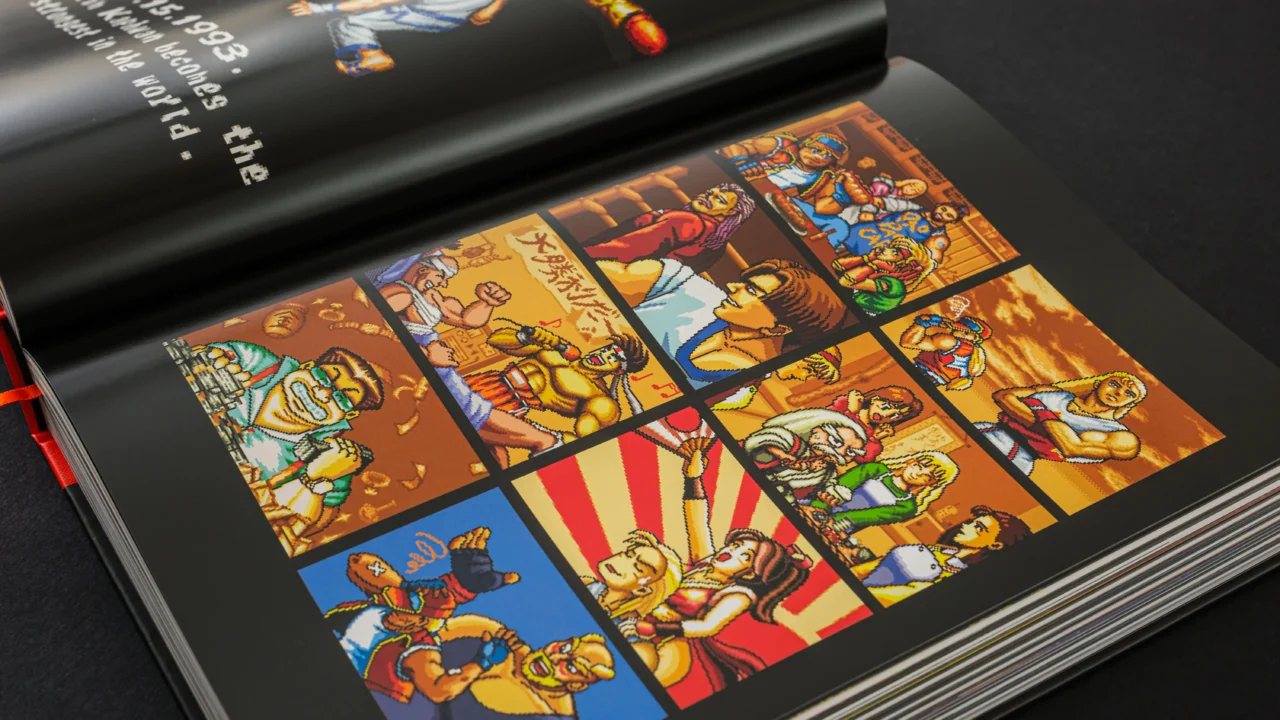
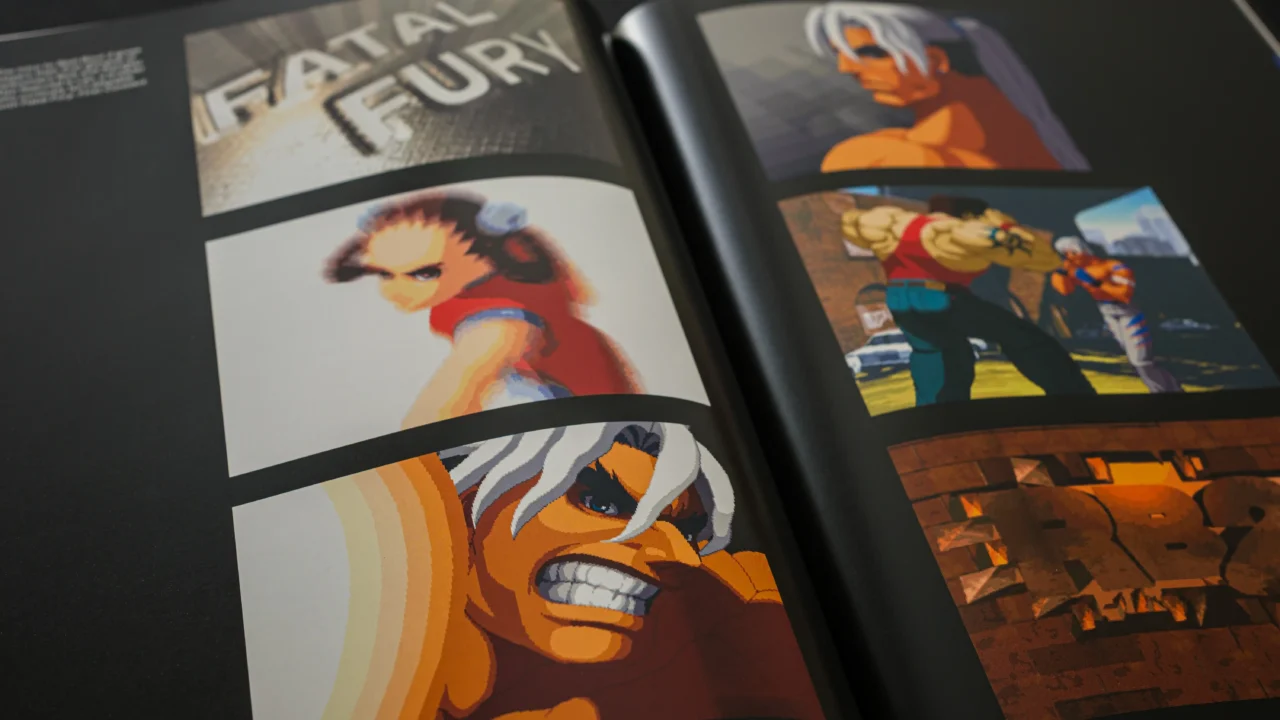
The publisher also received access to SNK’s archive of concept sketches, promotional illustrations, and cover artwork. These materials sit alongside screenshots, sprite sheets, development documents, and written history.
The physical edition measures 210 × 297 mm and uses edge-to-edge lithographic printing, special Pantone ink, and sewn binding designed to let the pages lie flat. It also includes a black foil-blocked cover and spine, a bookmark ribbon, and a complimentary digital PDF.
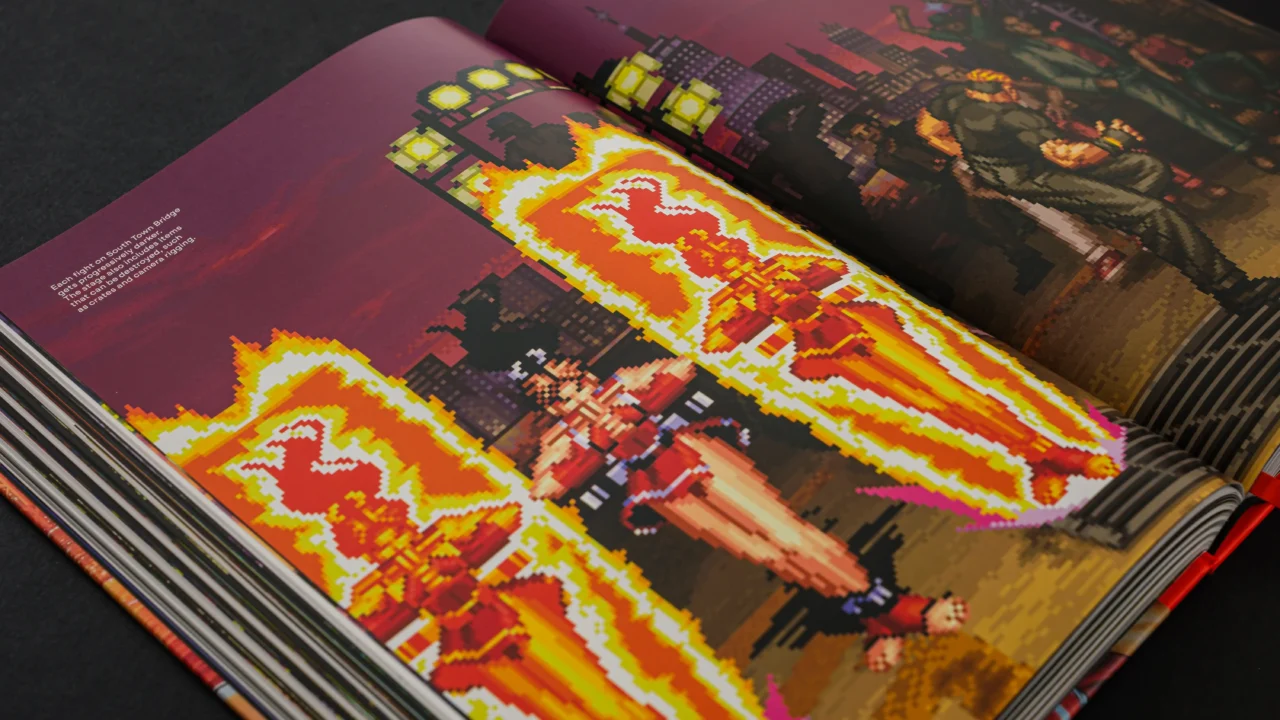
Based on the opening, the book’s strength is the way its visuals and historical material support each other. It does not begin with a simple list of games or character profiles. Instead, it first explains the arcade hardware, developers, rival companies, and story decisions that shaped the original release.
This limited look is not enough to judge the consistency of every game chapter or the closing developer interview. However, the opening makes a strong case that Fatal Fury/Garou Densetsu: The Ultimate History is more than a collection of attractive screenshots. It is structured as an extensive visual archive of the games, people, artwork, and technology behind one of SNK’s defining series.
Fatal Fury/Garou Densetsu: The Ultimate History
Pages: 468
Publisher: Bitmap Books
Format: Large-format hardback with complimentary digital PDF
Dimensions: 210 × 297 mm
Official page: Bitmap Books
Related Reading
What the Hell Is Cristiano Ronaldo Doing in Fatal Fury?
Written by Ronny Fiksdahl, Founder & Editor-in-Chief of Fix Gaming Channel.
Send interview pitches, corrections, tips, or developer stories to contact@fixgamingchannel.com.
Support independent games coverage on Ko-fi.