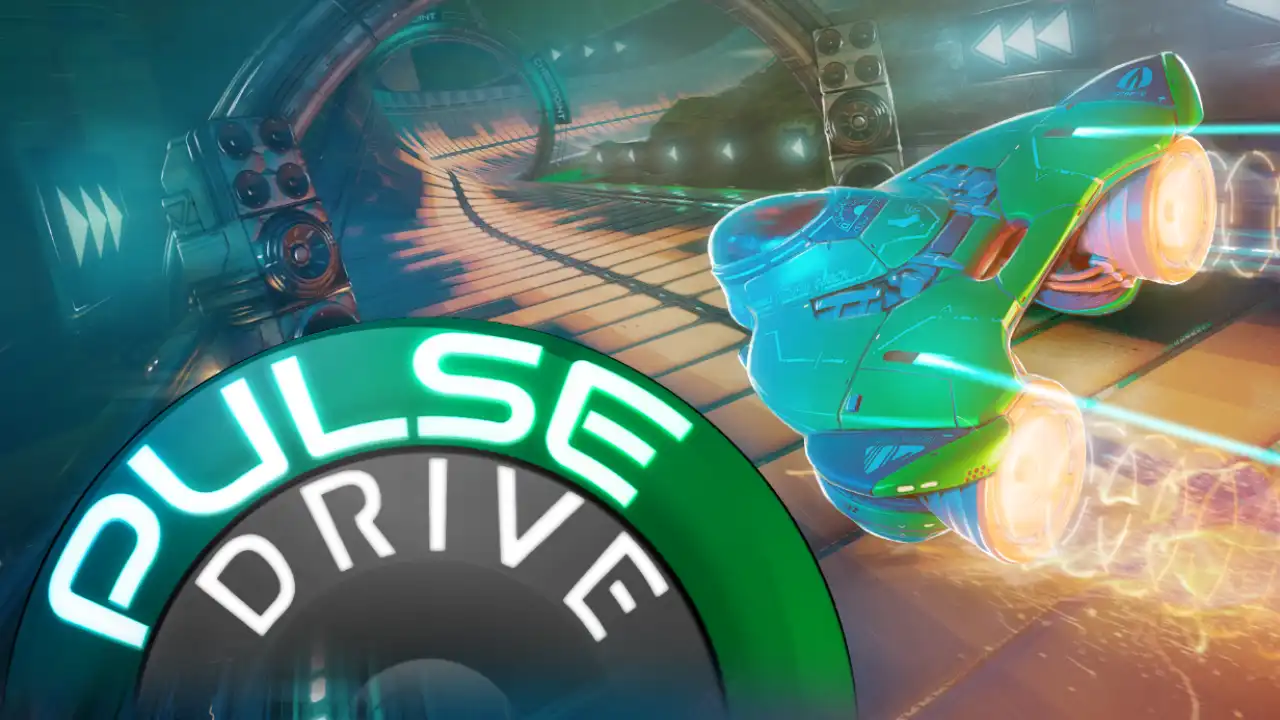
Pulse Drive Demo Review — Fun With a Question Mark
It kept me racing until sunrise, but this rhythm racer still has some work to do.
Reviewed on: PC via Steam
Build: Early access to the upcoming public demo
Access: Provided directly by developer Simen “Nemi” Stroek
Inputs tested: PlayStation 5 controller and keyboard
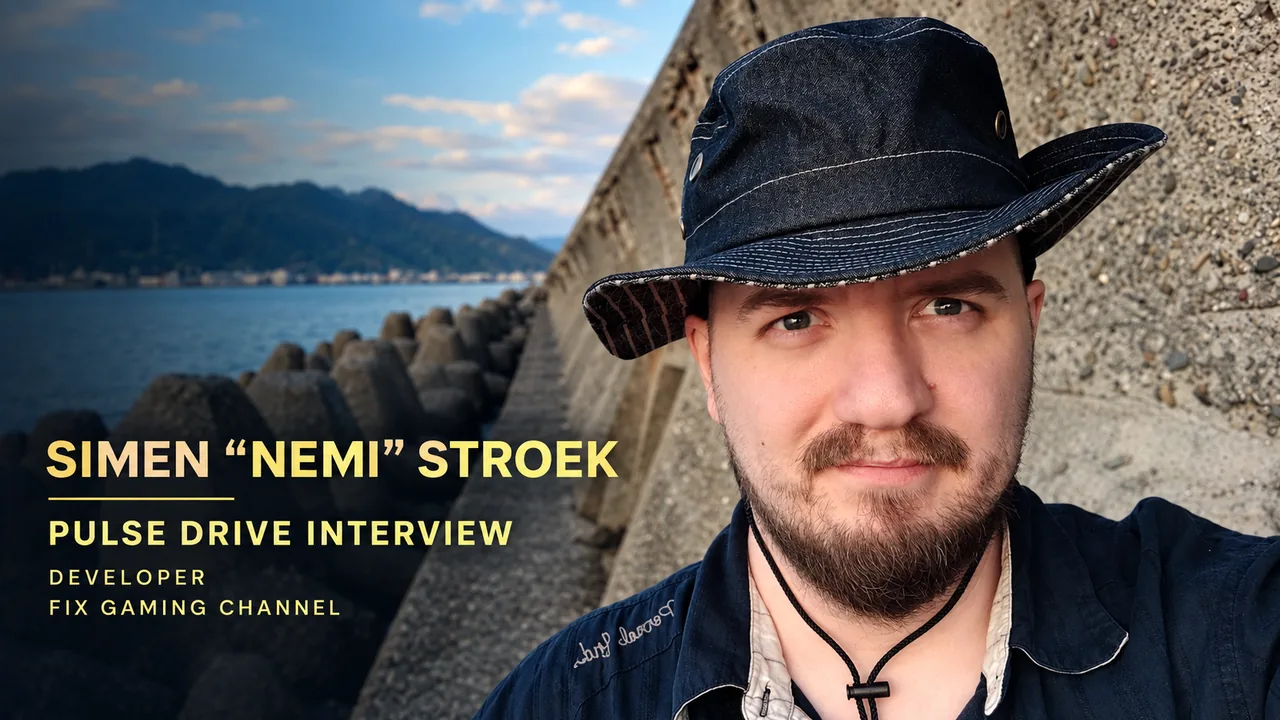
I got early access to the Pulse Drive demo directly from developer Simen “Nemi” Stroek ahead of its public Steam release on September 29, 2026. I recently spoke with Nemi about his path through the games industry and building the game largely by himself in our full Pulse Drive interview.
I should also admit something before getting into this: rhythm games and I do not always get along. I can play different instruments, but put rhythm mechanics into a game and my timing suddenly becomes questionable. Somehow, Pulse Drive still kept me playing long enough for the sun to come up.
Pulse Drive Gameplay Trailer
Watch the official Pulse Drive Gameplay Trailer · Pulse Drive Demo on Steam
Watch Pulse Drive Demo Gameplay on YouTube
Join Our Newsletter
Stay updated with the latest interviews, previews, and indie gaming news.
Rhythm Is the Accelerator
Pulse Drive is an arcade racer built around a simple idea: tapping to the beat makes you faster. Instead of holding an accelerator and concentrating only on the racing line, the rhythm becomes part of driving.
Once I switched to keyboard, I started tapping the left and right keys with the beat, using the space bar as the brake. You can also steer while airborne, so jumps are not just something to survive; you still have control over where the vehicle is going to land.
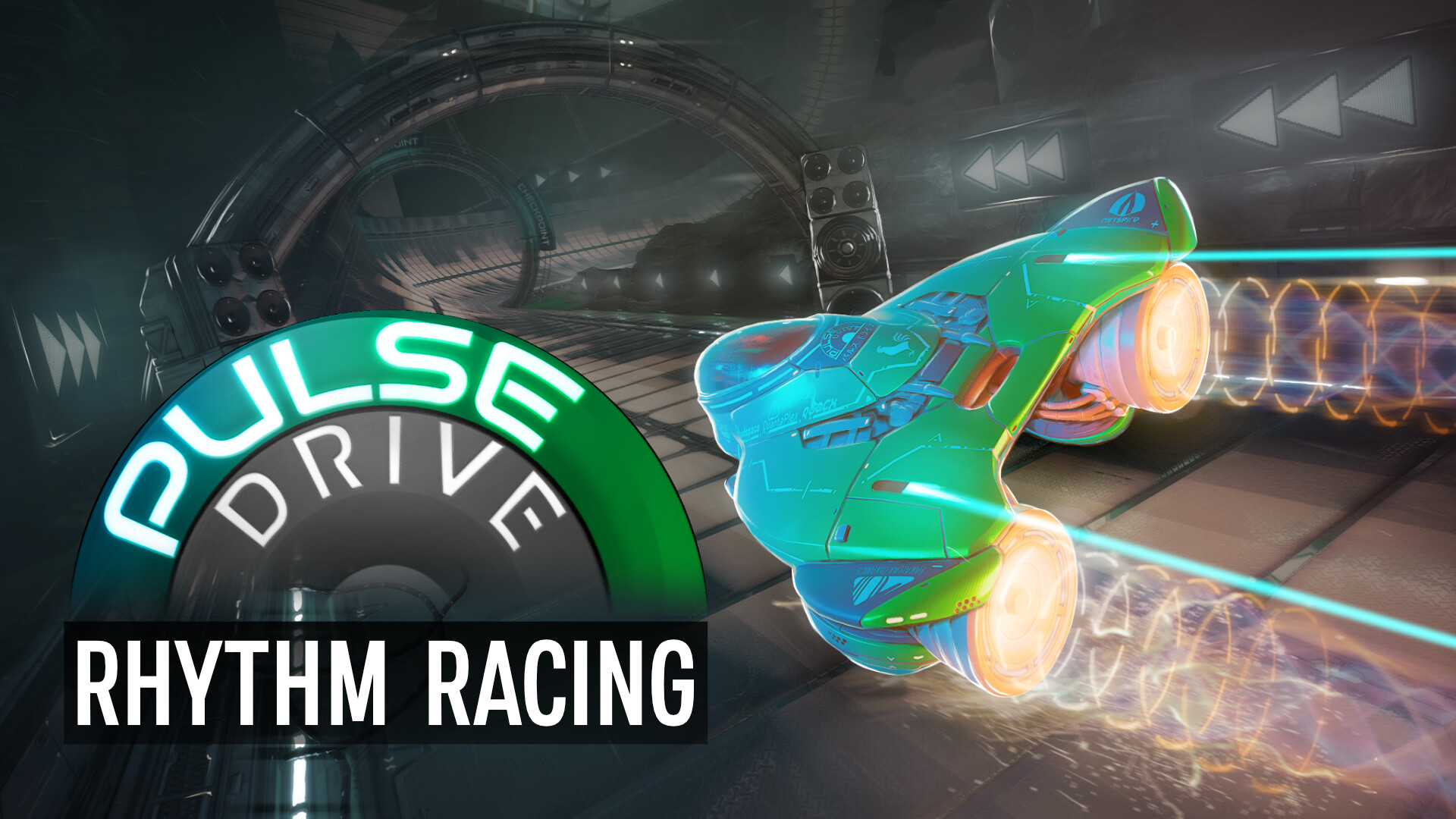
Pulse Drive ties speed directly to keeping the beat while racing.
I have played a lot of racing games over the years, including some that look or feel close to this in other ways, but I cannot remember playing one where keeping rhythm is this directly tied to speed. That makes it stand out.
The PS5 Controller Sent Me Back to Keyboard
I started with my PlayStation 5 controller and had trouble getting comfortable with the directions and buttons. Some of that is absolutely me learning a new control idea, but my first reaction was still that the keyboard felt considerably more natural.
After I had written this review, Nemi commented on my controller criticism. He explained that an earlier version used more conventional racing controls, but he moved away from them because he felt they weakened the core rhythm-driving idea.
Fair enough — but as Nemi also pointed out, a new player will not have the developer there to explain that decision. So I am leaving my first experience exactly as it was.
I will probably test it again with an Xbox controller later, but for this review the keyboard was the input that got me properly going.
The Tutorial Was There — I Just Skipped It
My first thought was that Pulse Drive needed a better tutorial. Then I went back over it and realized the guidance was there; I simply did not treat it as something important and moved on.
That still tells me something about the presentation. A clearer heading such as “Tutorial” or “How to Navigate in Pulse Drive” would make it much harder to skip. In a normal racer, missing one instruction may not matter much. In a game where the accelerator itself works differently from what many racing players expect, it matters a lot more.
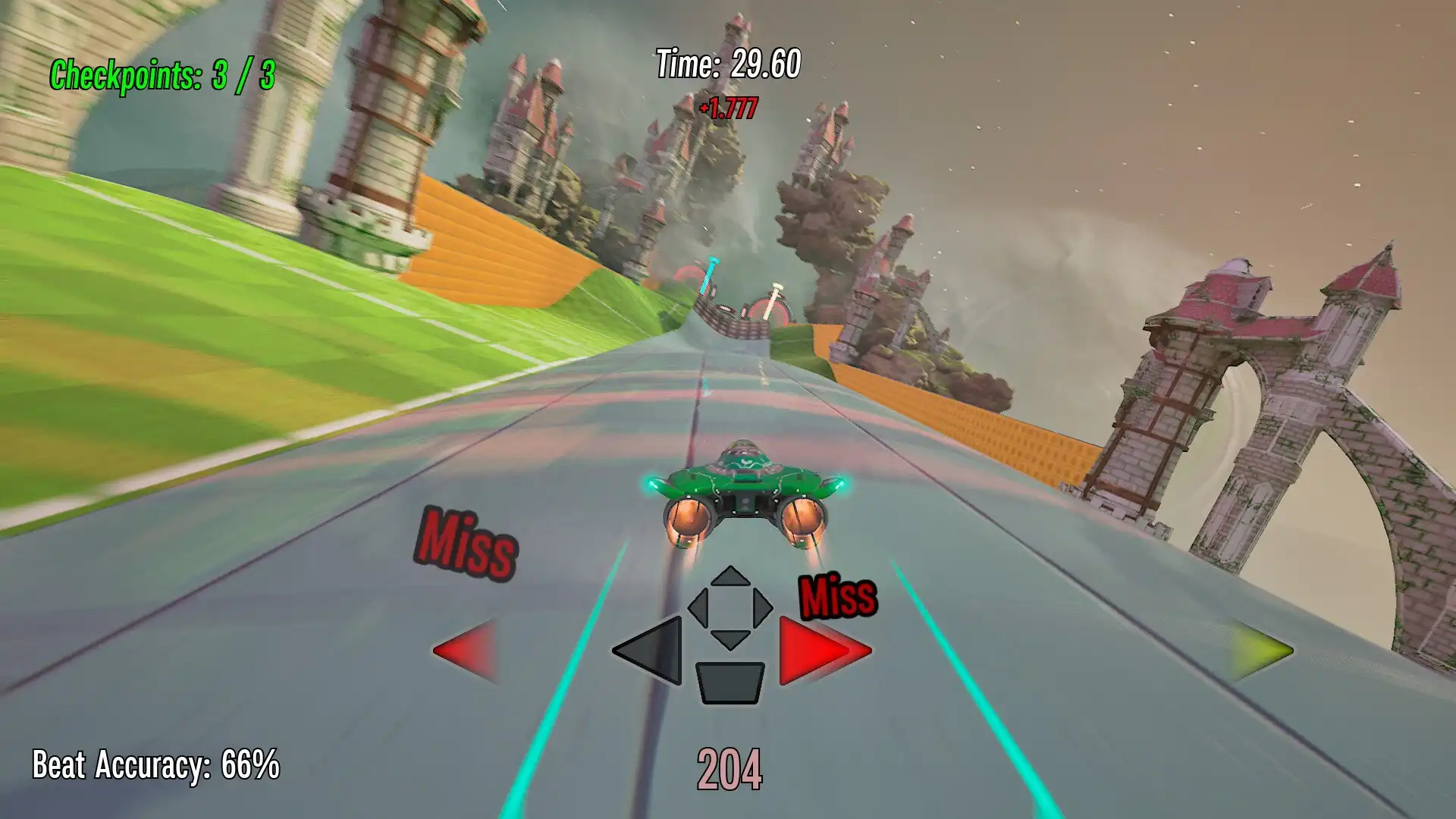
Getting into Pulse Drive took some adjustment. My early 66% beat accuracy tells part of that story.
Nemi also told me that earlier playtesters tended to hit “Next” after finishing maps, while genre players who choose “Improve” and start chasing gold medals can have a very different experience. That kind of player is also much more likely to expose problems that basic completion testing misses.
Going Off the Track Is Not Always a Bug
At one point I ended up somewhere I was not entirely sure I was supposed to be. My first reaction was simple: falling under the world is not especially fun unless somebody has deliberately made it fun.
After talking to Nemi, it turns out leaving the track itself is intentional. He had players looking at scenery such as the pyramids in the distance and deciding they wanted to climb them, so he chose to let people explore and even put things out there for them to find.
I actually like that. If I can see somewhere strange beyond the racing line and the game lets me go there, I am probably going to try it.
Falling through cracks in the world, however, is not intended. Nemi acknowledged that this probably should not happen. So there is a clear distinction between deliberately letting players explore beyond the racing line and simply dropping through the geometry.
The Music Could Push the Idea Further
The soundtrack does its job, but I want more from it because music is not background decoration in this game. It is part of the driving system.
When your speed depends on following the beat, the music has more responsibility than it does in a normal racer. I would like the full game to get more creative with that side of the experience and make individual runs feel even more tied to the tracks playing underneath them.
Graphics and Performance Are in a Good Place
On the technical side, I had very little to complain about during what I played. The graphics look clean and current, and performance felt good. I did not run into FPS problems that got in the way of racing.
I would also love to test Pulse Drive on mobile. The quick-run nature of the game and the rhythm input could make it an interesting fit there if Nemi ever decides to take it in that direction.
Steam Deck is another one that immediately came to mind. I have not tested the demo on a Steam Deck, so this is not a compatibility claim, but the structure feels made for the kind of “one more run” play that works well on a handheld.
Here Is the Problem: I Kept Playing It
For all the things I can criticize, this is the part Pulse Drive gets right.
I kept playing.
Once I started understanding the rhythm and the controls, there was always another reason to try again: a cleaner run, better timing, a medal, or simply seeing whether I could stop missing the beat quite so badly.
That improvement became obvious while I was playing. I could go from a run where my beat accuracy looked embarrassing to one where I was suddenly hitting the rhythm properly. When it clicks, it feels good, and that is where the danger starts because one run turns into another very quickly.
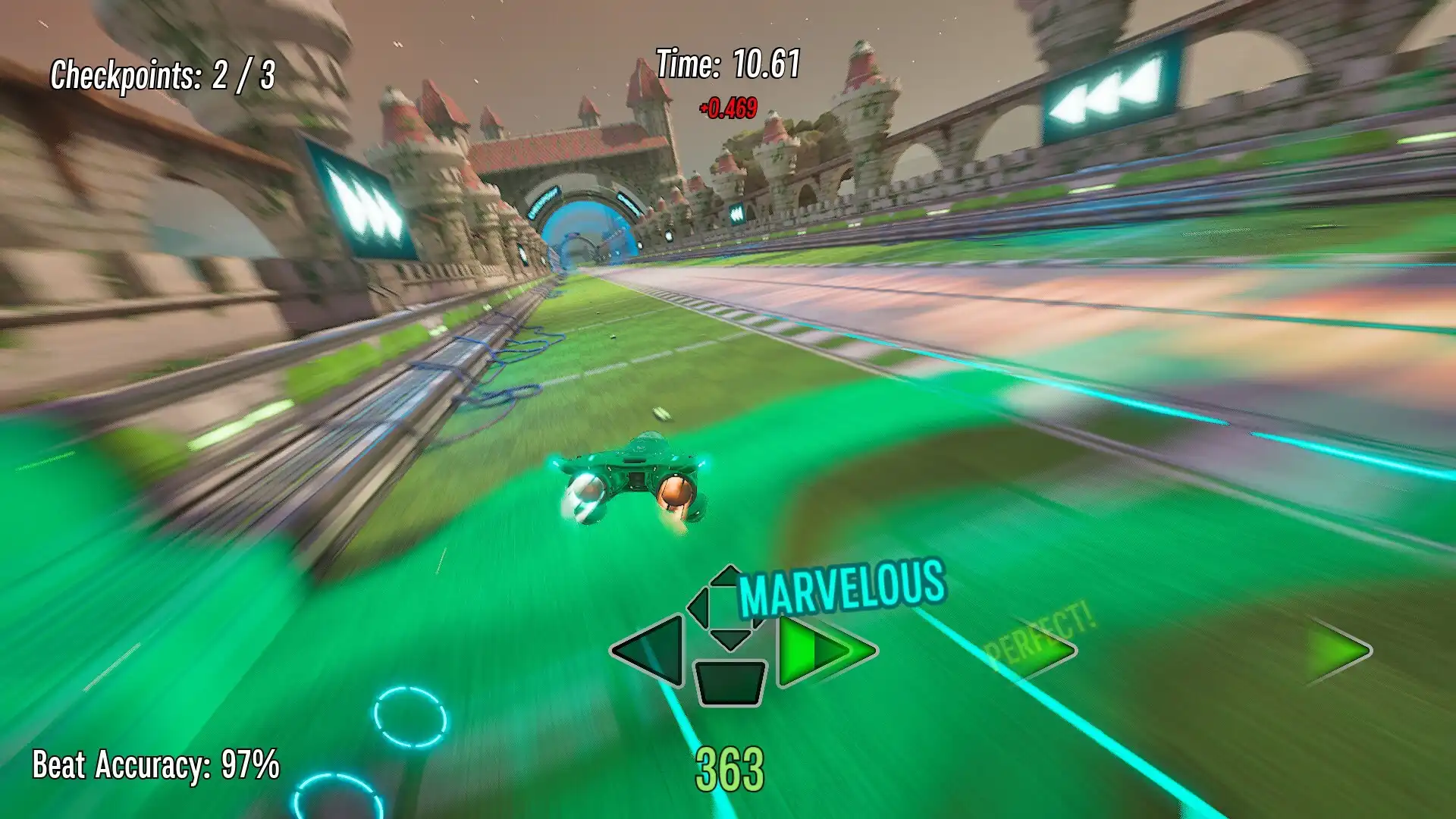
Once the rhythm started clicking, I was hitting 97% beat accuracy — quite a change from those early misses.
Eventually I told myself I needed to stop before my night turned into day.
Then I looked out the window.
The sun was already coming up.
So I guess I was too late for that.
The Verdict — Fun With a Question Mark
Pulse Drive has a genuinely interesting core idea. Rhythm-powered racing feels different, the performance was solid for me, and once I got comfortable with keyboard controls the game became surprisingly difficult to put down.
There are also things I think need more work. The onboarding should be much harder to miss, the controller experience did not click for me, the music could do more with such an important role, and falling through geometry still needs attention even if exploring outside the racing line is intentionally allowed.
If what I played were presented to me as the finished game, I would not consider it ready. But it is not the finished game. This is a demo arriving publicly on September 29, with the full release still planned for Q4 2026, and Nemi is continuing to work on it.
Most importantly, I wanted to keep playing. That matters.
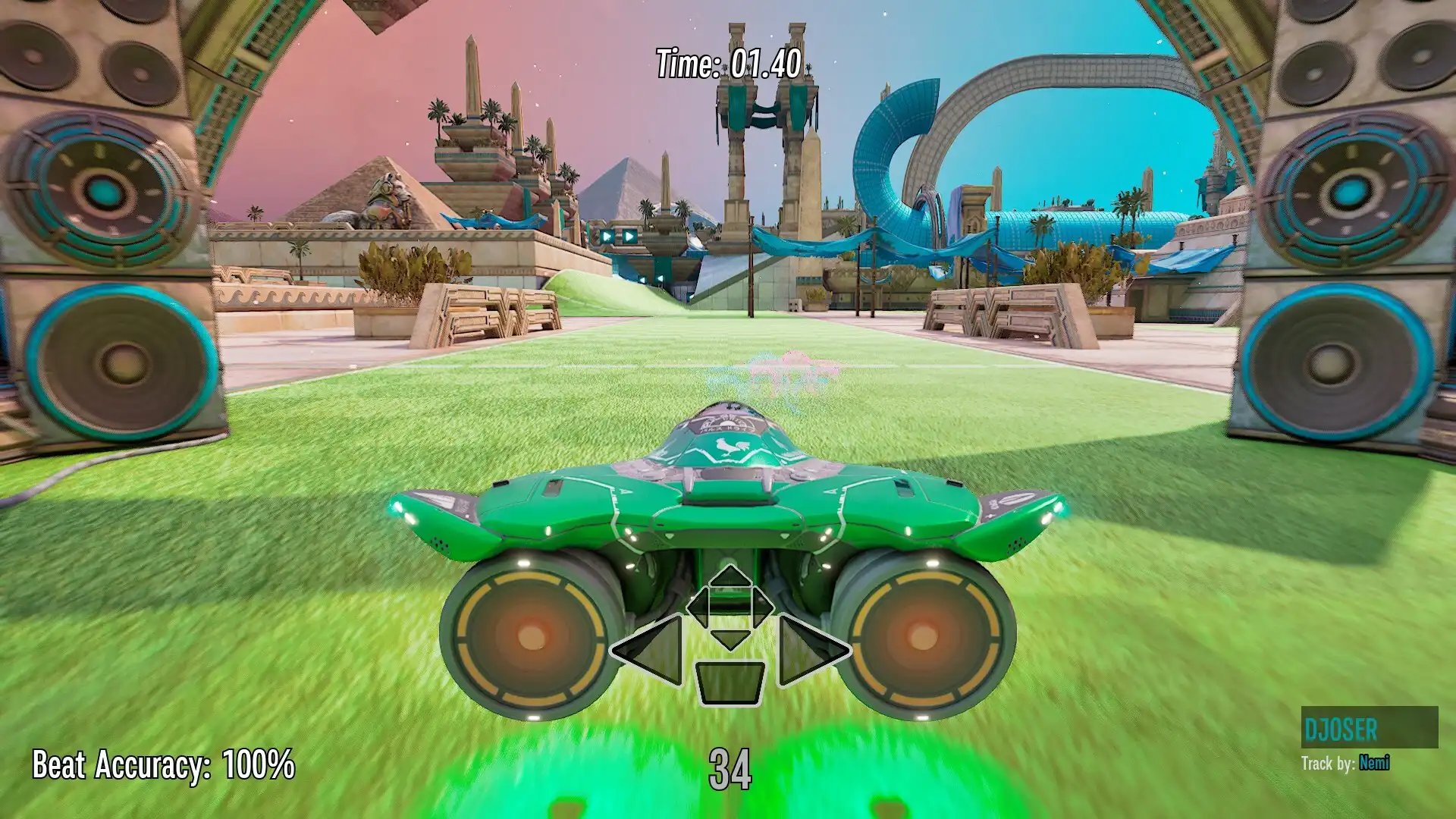
By the end, the rhythm system made much more sense to me — including runs starting at 100% beat accuracy.
Keep it on your radar. For now, Pulse Drive is fun — with a question mark.
Pulse Drive
Release: Demo — September 29, 2026 | Full Game — Q4 2026
Genre: Arcade Racing, Rhythm
Developer / Publisher: Nemi / Nemi’s Brainworms
Platforms: PC — Steam
Related Reading
From Horizon Zero Dawn to Pulse Drive: Simen “Nemi” Stroek on Going Solo
Speed Freeks Review – Unleashing Mayhem in the Warhammer 40,000 Universe
Aaero2 Review – Chasing the Perfect Line in a Neon Rhythm Rail Shooter
Written by Ronny Fiksdahl, Founder & Editor-in-Chief of Fix Gaming Channel.
Send interview pitches, corrections, tips, or developer stories to contact@fixgamingchannel.com.
Support independent games coverage on Ko-fi.