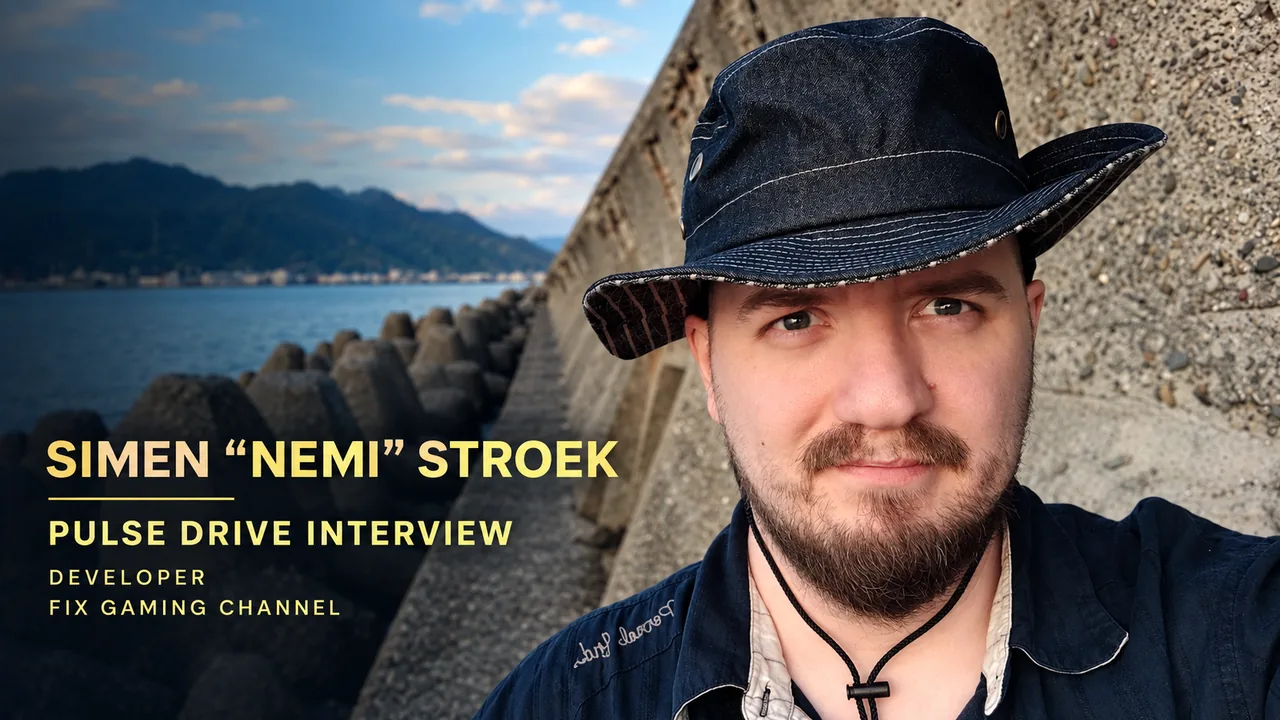
From Big Studios to a Game That Is Entirely His Own
Simen “Nemi” Stroek talks Quake and Half-Life mapping, Guerrilla, Horizon Zero Dawn, GRIP, Speed Freeks, Unreal Engine optimization, solo development, ADHD, and building Pulse Drive largely by himself.
Simen “Nemi” Stroek’s route into game development began with Quake and Half-Life levels in the early 2000s. Years later, that path took him through professional game art, Guerrilla, GRIP, Warhammer 40,000: Speed Freeks, and now a project where the creative responsibility sits much closer to home.
Pulse Drive is an arcade rhythm racer built around a simple idea: tap to the beat to build speed. Nemi says everything except the audio is his own, a sharp contrast with his experience on large productions. Fix Gaming Channel spoke with Nemi about that change in scale, the technical lessons he carried into Pulse Drive, the personal cost of solo development, and what he learned about himself along the way. You can find more conversations with creators in our game developer interviews.
Pulse Drive Gameplay Trailer
Watch the Pulse Drive Gameplay Trailer · Pulse Drive Demo on Steam
Want more interviews with the people behind the games?
Get more interviews, game features, reviews, and indie coverage from Fix Gaming Channel.
Join Our Newsletter
Stay updated with the latest interviews, previews, and indie gaming news.
Starting Out in Game Development
1. You started getting into game development through Quake and Half-Life levels back in the early 2000s. Was there a particular moment when you realised this could become more than a hobby and actually turn into a career?
I was always more obsessed about the “here and now” than long term prospects. If you had asked me anywhere from the age of 15 what I was going to be doing, it would probably be game development, but I’m not sure I really believed it at the time. The ingenuity on display in games, even in the late 90’s, made me doubt I would ever get to that level. I also expected myself to be able to do everything – otherwise it wasn’t really “mine”. That expectation has filled me with self doubt for a long time.
2. You’ve described your time at Guerrilla as being a small part of a very large machine, while working on GRIP gave you much more ownership over the 3D pipeline. How different were those experiences, and what did each teach you?
Since I had already dabbled in game dev before getting a degree in game art, I was used to being the one with the answers. Joining Guerrilla as an intern, I was not that person anymore. Some of the brightest minds in the industry were there, which was exciting but also made it difficult for me to find my place in the team. I was a jack of all trades surrounded by specialists in every field.
GRIP launched on kickstarter, worked on a small budget, with a core team of about 5 people. I may not have been the best artist, but I was a much better fit for that team because the broad range of my knowledge is much more useful in a small production like that.
When Millions See the Game, but Not Your Name
3. When you work at a studio like Guerrilla, millions of people may see your work without ever knowing your name. What was that experience like from the inside? And now that you’re independent and Pulse Drive is very clearly your game, how different does that feel?
I can’t point at a single thing in Horizon Zero Dawn and say: “I made that”. An object as simple as a wooden door has been treated by concept, art direction, blockout modeling, outsourcing, then back to in-house – and all these things are done by different people at different times. I didn’t feel very attached to any single thing in the game, though I liked the world we were building.
Pulse Drive is the opposite; everything except the audio is my own. Music is produced by two close friends.
In a way, it fulfills the unreasonable expectation I had of myself as a 15 year old. Another thing that’s very different is that I can bend the game design and art style to fit the skills I have, instead of the other way around. This lets me be far more efficient than when I’m working on a team project.
What GRIP and Speed Freeks Taught Him
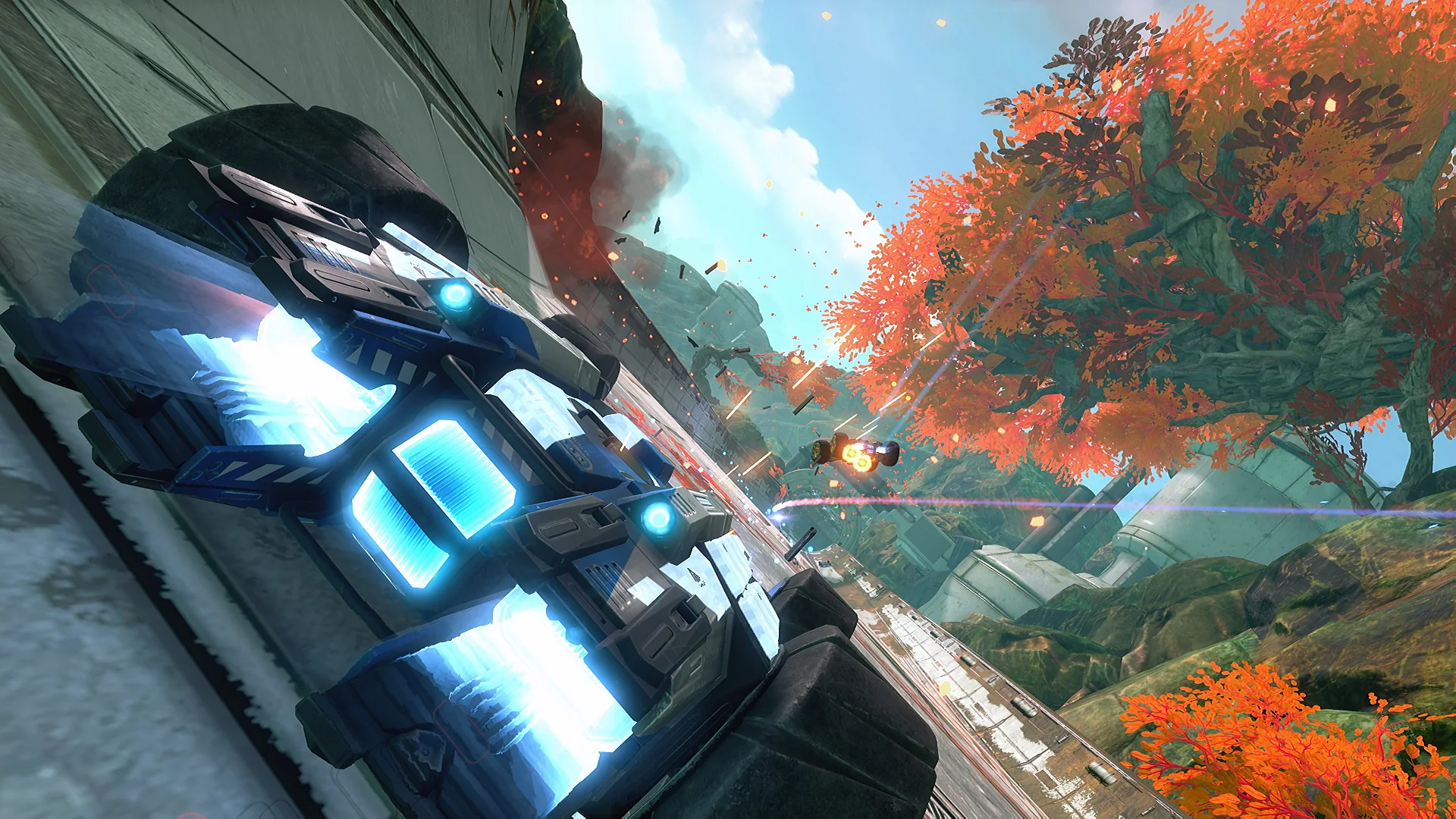
GRIP was one of the racing projects Nemi worked on before building Pulse Drive.
4. You worked on both GRIP and Warhammer 40,000: Speed Freeks. How much of what you learned from those racing games has carried over into Pulse Drive, even though it is doing something quite different?
GRIP and Warhammer 40k: Speed Freeks were both built using Unreal Engine, so a lot of the things I learned carried over to Pulse Drive.
In particular, the engine gets a bad rap for producing poorly optimized games. Epic Games are building an engine that sells on its graphics, and so their default project configuration caters to as many different kinds of games as possible. Most games don’t actually need all those bells and whistles, but knowing what to change takes a lot of knowledge and experience. And trying to trade an out-of-the-box feature like Lumen for traditional baked lightmaps is not something most studios can afford to do after production has started – even if it would benefit a lot of games.
At the time of shipping the Speed Freeks early access, I’d spent considerable time optimizing draw calls, shader instruction counts and making custom post processing effects to emulate effects that are traditionally quite expensive; such as animated volumetric fog and weather. Getting it running at 60fps on a Steam Deck was a chase goal that I cared about more than anyone else, and I managed to do it.
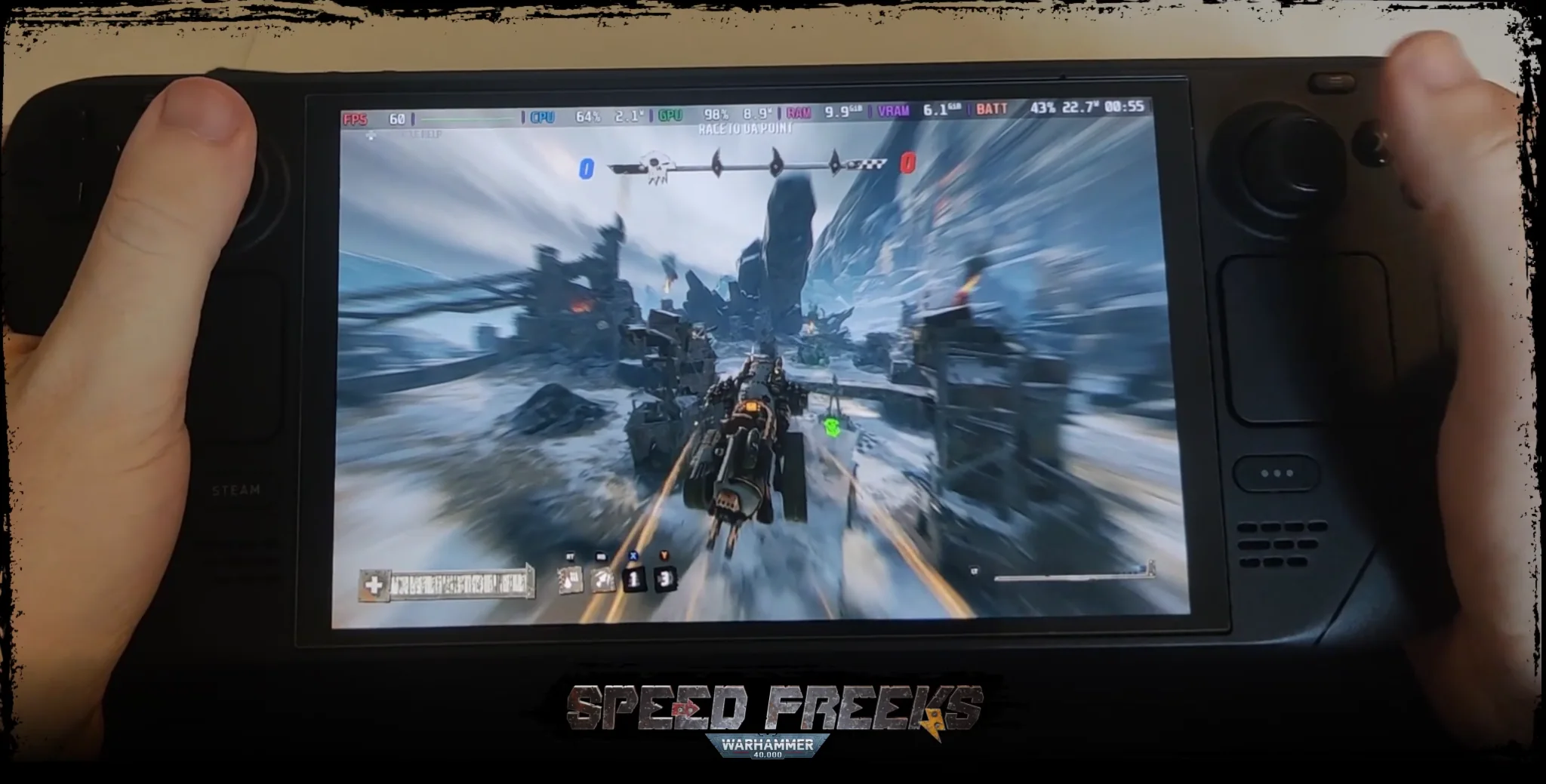
Nemi says getting Speed Freeks running at 60 FPS on Steam Deck was a personal optimization goal.
Why Pulse Drive Had to Exist
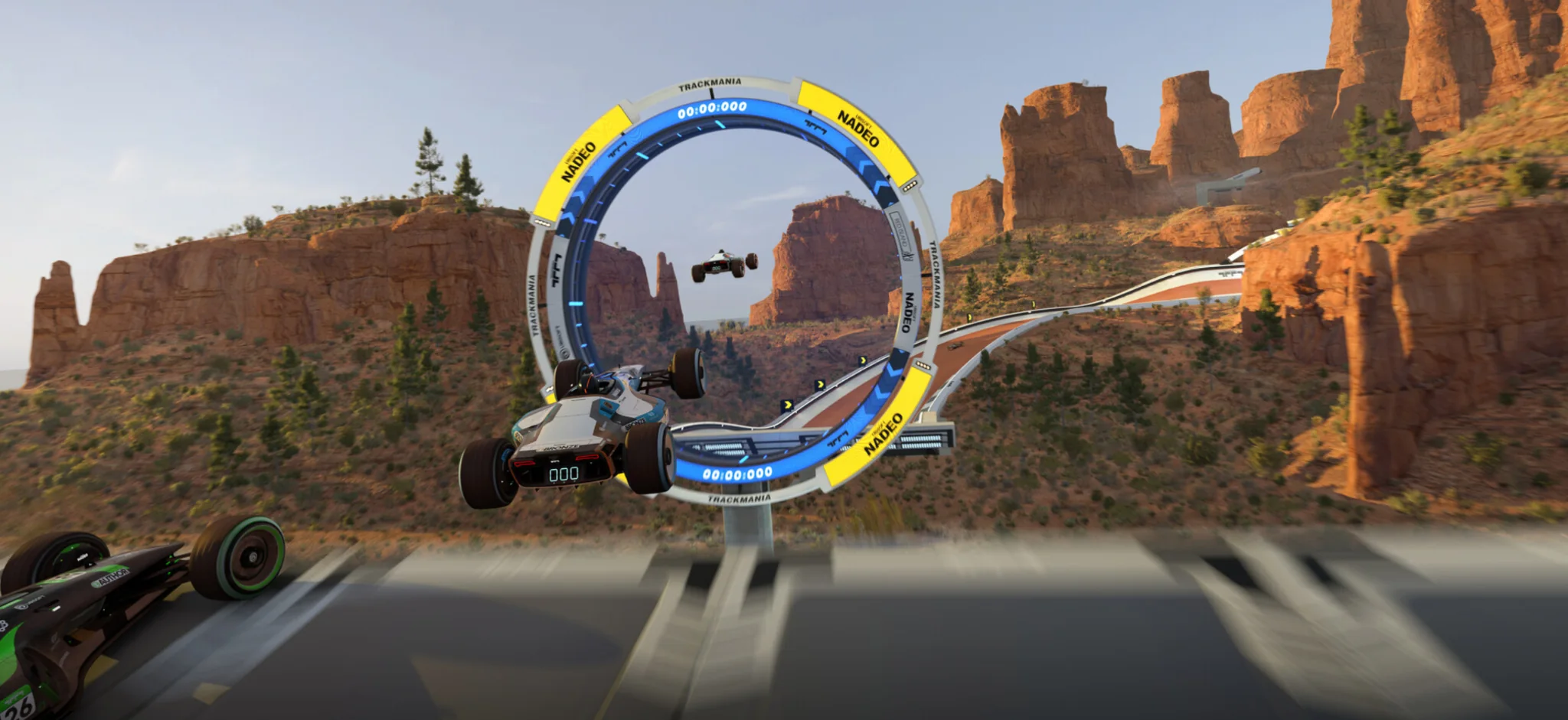
Nemi describes Trackmania as a major influence on the racing side of Pulse Drive.
5. You’ve said that Pulse Drive is essentially a game you personally wanted to play. What was the original idea that made you think, “I need to make this myself”?
I’m a big fan of Trackmania – an arcade racing game where you make F1 racing cars perform unreasonable acrobatics. The game is all about time trials; finding the fastest way to the finish, no matter how you do it. It has an in-game level editor and over 350.000 user-made tracks.
Besides that, I saw a new trend emerge of incorporating simple rhythm mechanics in other game genres. Hi-Fi Rush is an action platformer, but rewards you for timing your jumps and swings to the beat, and Dead as Disco has you brawling to the music.
So the idea was simple and came almost fully-formed. What if you played a racing game – but you’re steering to the beat? Rhythmically tapping to accelerate and drift through turns. That’s the feeling I wanted to capture.
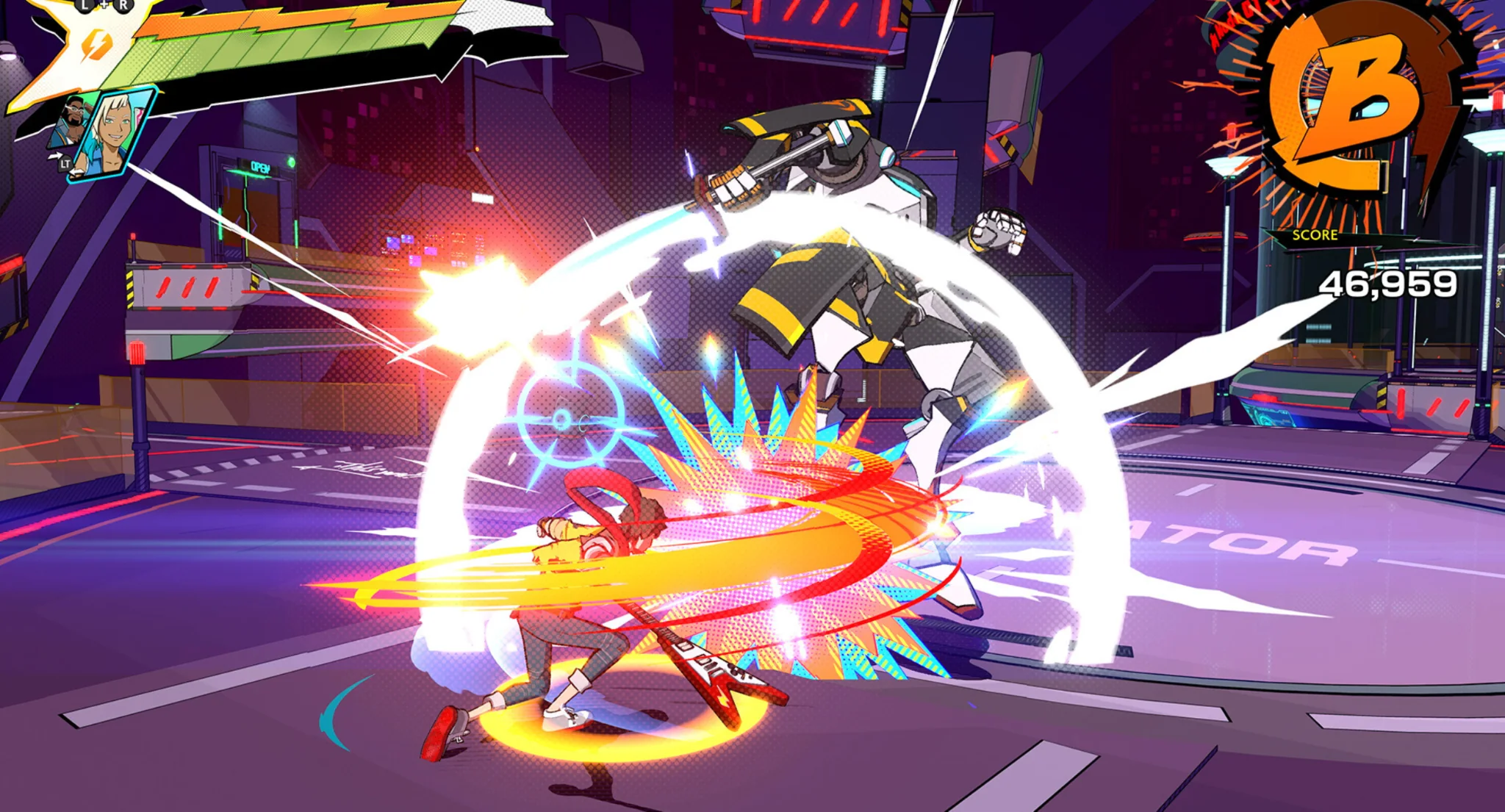
Nemi cites Hi-Fi Rush as an example of rhythm mechanics being integrated into another genre.
6. Rhythm isn’t just part of the soundtrack in Pulse Drive — driving with the beat actually affects your speed. How difficult was it to make rhythm and physics-based racing work together without either side taking over?
For me, this was the first time doing vehicle physics – or any physics programming – myself. Getting that responsive input right has probably taken me as much time as all other aspects of the game combined. It took nearly a year before I finally locked in the formula.
The rhythm part of it was less complex to build, but harder to make decisions about. For example, an early prototype let gamepad users steer with a thumbstick and use a different button for rhythm tapping. This made the game easily accessible to players with muscle memory from other racing games, but undermined the fundamental point of Pulse Drive.
The people who played that early version were sad to see it go, which is understandable. But I firmly believe the game is better off for it.
The Personal Cost of Solo Development
7. You’re creating almost everything yourself while also working professionally as a 3D Art Lead. No major funding, no large team behind you, and a lot of nights, weekends and holidays going into it. What has been the hardest part of keeping that going?
The hardest part, without a doubt, is the toll it has taken on my social life. To make meaningful progress with such a busy schedule, I have to decline a lot of invitations. A familiar story you hear from solo game developers is that it takes them by surprise how hard it is to get their own friends to try their game. I didn’t think that would affect me as much as it did. When I tell friends and colleagues about it, they respond with excitement and admiration and tell me they would love to try it, but most of them never actually do. It makes sense, this game is appealing to a particular niche audience and they are not it. But it’s still the biggest personal project I’ve ever made and seeing others enjoy it is incredibly validating.
Learning to Program After Years in Art
8. You came into this project with years of professional art experience, but solo development has also meant learning programming, game design, QA, marketing and everything else that normally gets divided between different people. Which part of becoming a solo developer surprised you the most?
For the longest time, programming seemed inaccessible to me. I’m a visually oriented developer, and code takes a lot of memorization, planning and organisation. I’ve gotten better at it, but 95% of Pulse Drive’s game logic is built with blueprint visual scripting, which is much easier for me to read and understand. I have a small library of C++ functions to speed up math operations that need to happen on every physics tick.
The surprise for me was that once I got a few weeks into it, it got so much easier and the feeling of “I will never be truly able to understand this” turned to “I can do anything now”. My only regret now is not taking the time for it sooner.
What Would 2003 Nemi Build Today?
9. Let’s go back to the Quake and Half-Life days — but this time you get modern hardware, modern development tools and everything you know today. What kind of game would 2003 Nemi end up making?
Minecraft, I suppose?
Time traveling paradoxes aside, I still use a lot of optimization principles that I learned in the early days of game development. I think back in those days, lighting was not considered as important as it is today. After all, changing the direction of the sun required a 3-hour lightmap calculation before seeing the result. It didn’t make sense to spend a lot of time tweaking and trying things out. Even with the hardware of the time, games could have looked better if developers were able to iterate as quickly as we can today.
That said, 2003 Nemi would waste all that opportunity on making a Dragonball fan game.
“The Game’s Successes and Failures Are My Own”
10. After roughly 15 years of contributing to other people’s games, what does it mean to finally put something out where the creative decisions, successes and mistakes are all yours?
The game’s successes and failures are my own. Despite telling myself I need to temper expectations, that I’m building a niche game for a niche audience, that it’s a market that’s being flooded with low effort slop, and that I should be happy with the personal accomplishment; I do care a lot that people see the game and get enjoyment out of it.
On the day of writing this, Tekky, a well known high level Trackmania player, tried the demo and spent several hours beating me at my own game. The sense of joy and validation I got from that is hard to describe.
Understanding ADHD and Long-Term Goals
Nemi also agreed to answer a more personal question about receiving an ADHD diagnosis later in life and how that changed the way he looked back on earlier experiences.
You mentioned that some earlier periods of your career were difficult, and that you weren’t diagnosed with ADHD until much later. Looking back now, did that diagnosis change how you understood some of those experiences? And do you feel those challenges, difficult as they were, helped shape the person and developer you are today?
My understanding of ADHD is that it’s a deficiency in long term planning, or multi-step goal-oriented behavior. And that describes how I’ve lived for the first 35 years of my life perfectly. I was able to understand and describe future outcomes of my actions, but it only ever felt like an abstract hypothetical to me. So I always chased short term rewards.
It explains why I was always learning new things, rather than spending a long time getting good at one specialty. Understanding something new feels rewarding.
It explains why I spent unhealthy amounts of time playing video games that have a steady drip feed of action-reward moments in their design.
It explains why I felt unable to realize my ambitions, even if I knew the exact steps to take, and that I was able to take them.
Two things changed for me:
One is that I got medication that helps me focus on things much longer than I could before. This had trickle down effects in many aspects of my life. I lost weight, quit drinking, got a fulltime job in a game studio with a physical office, separated from my personal space.
The other, and more important one, is that I’m actively thinking about how I can lean into leveraging the things my brain does, rather than fight the things it doesn’t and feel bad about it.
Pulse Drive started with a simple, small scope. Something I could potentially finish in a couple of months. That way, the finish line always stayed in sight. It was always close enough to a state where I could call it done and be happy with it – even as the project went on for years.
If there’s one takeaway I’d share with anyone who struggles to realize long term goals; make your goal smaller. For beginning game devs specifically; start with the smallest thing you could call a game and finish it. Every project balloons while you work on it, and if your first attempt is an epic narrative driven RPG, it becomes an unclimbable mountain long before you make meaningful progress.
Pulse Drive Is Close to the Starting Line
Pulse Drive is scheduled to launch on Steam on November 3, 2026. Its demo arrives September 29, giving players an earlier chance to try the rhythm-based racing system Nemi spent so long refining.
Pulse Drive
Release: November 3, 2026
Demo: September 29, 2026
Genre: Casual, Indie, Racing
Developer / Publisher: Nemi / Nemi’s Brainworms
Platforms: PC — Steam
Related Reading
Borderlands Creator Matthew Armstrong on Cancelled AAA Games, Half-Life: Decay, and Dung Ho!
Fail Fail Succeed Interview: Martin Zetterman on Failure, Mental Health, and Eira
More Game Developer Interviews
Written by Ronny Fiksdahl, Founder & Editor-in-Chief of Fix Gaming Channel.
Send interview pitches, corrections, tips, or developer stories to contact@fixgamingchannel.com.
Support independent games coverage on Ko-fi.