What It Means to Turn Real People and Imperfect Memories Into Fiction
In 2006, Konstantin Kosolapov spent two weeks at summer school in Cambridge. Two decades later, those experiences are behind It Was That Summer, the visual novel he is creating with Echo Bay Studios. In this Fix Stories contribution, he writes about the people he met, the memories that changed as he grew older, and why he chose not to recreate those weeks exactly as they happened.
For more first-person accounts from developers, see the Fix Stories series.
Stories From the People Who Make Games
Get more first-person developer stories, interviews, indie coverage, and gaming news from Fix Gaming Channel.
Join Our Newsletter
Stay updated with the latest interviews, previews, and indie gaming news.
The following story is written by Konstantin Kosolapov of Echo Bay Studios and is presented in his own words.
My Summer in Cambridge
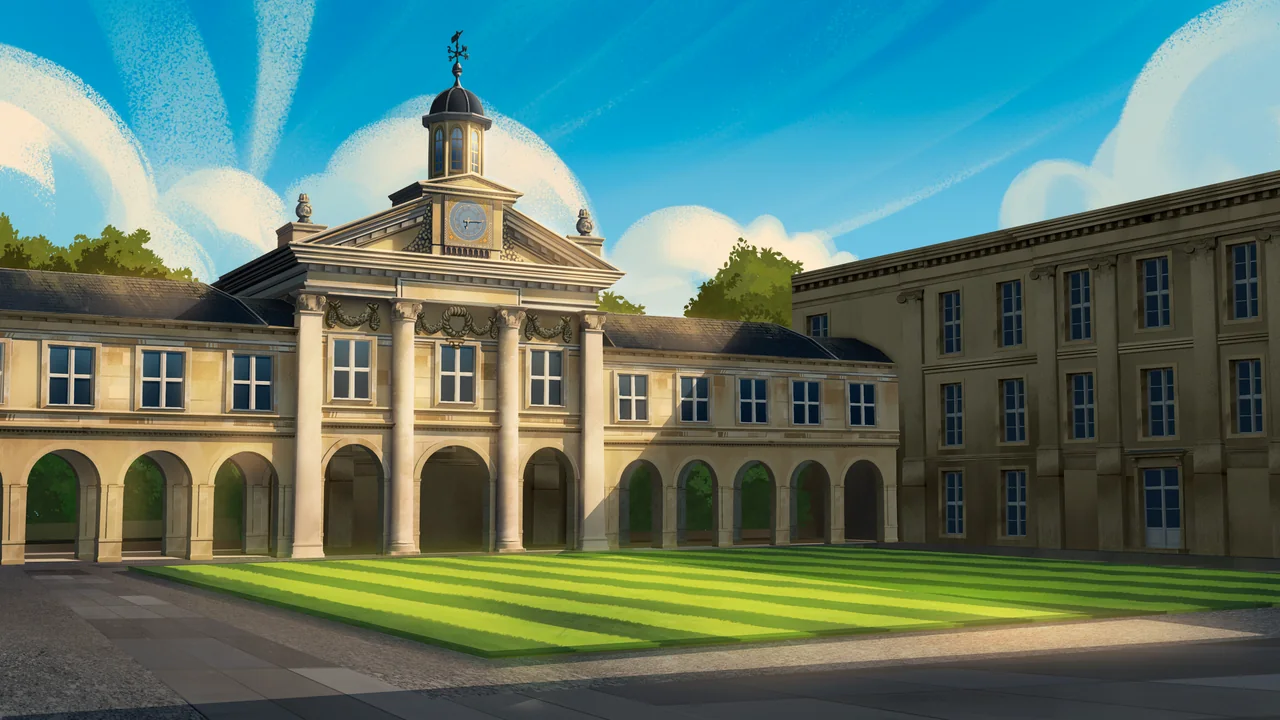
In the summer of 2006, I spent two weeks at a summer school at the University of Cambridge. In my parents’ plan, it was supposed to prepare me for my last year of high school, improve my grades and help me get into a prestigious university. On paper, that’s all it was: lectures in the morning, tutorials in the afternoon, homework in the evening, and a mock exam at the end. Twenty years later, I’m making a game about it, because those two weeks turned out to be the place where the rest of my life started.
I didn’t understand that at the time, of course. You never do. I was an average student from an average high school in Drøbak, Norway, and I’d spent the first half of that summer at home, reading novels and playing The Simpsons: Hit & Run on my computer. I was a bit sceptical about summer school. My future felt like a distant thing, and I didn’t want to worry about it yet.
But Cambridge was the first time I felt free. Nobody there knew me. Nobody had already decided who I was. I met people from all over the world: a cerebral Swiss girl who was deep into analysing the hidden themes in Tupac songs; an American guy whose chaotic energy completely confused me after years among my calm Norwegian compatriots; and a group of Canadians who argued endlessly about how to pronounce “Toronto”. We ate together under the portraits in an old dining hall, skipped lectures, argued about nothing, and stayed up far too late. I still remember the soft light in my dorm room, which accompanied all our evenings together and put a colour filter over my memories. I also remember “Coup de Boule”, the song that became our friend group’s running joke for the whole two weeks. I still smile when I hear it.
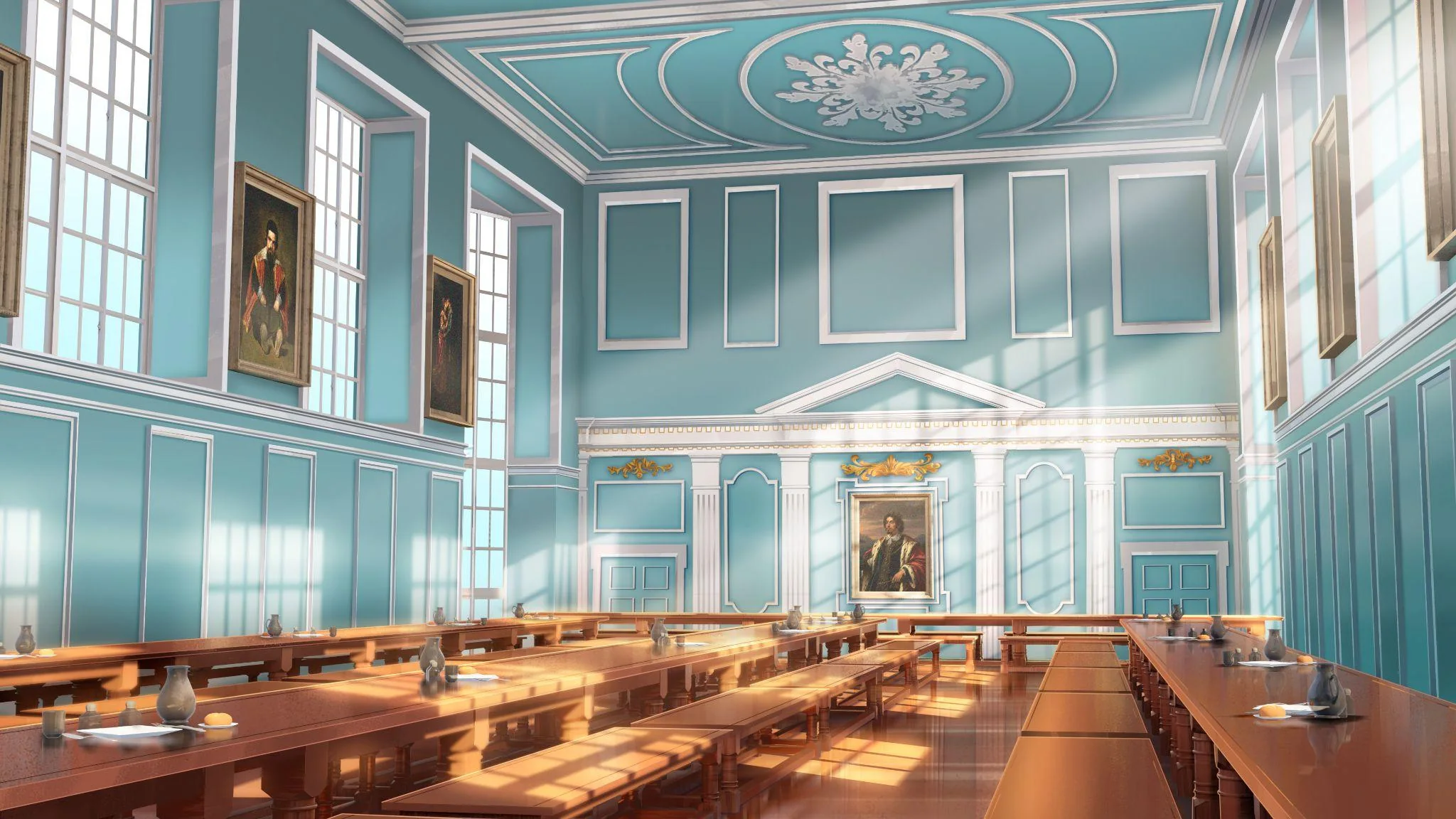
A dining hall recreated for It Was That Summer. Image: Echo Bay Studios.
And, because I was young, I fell for someone. Then it got more complicated than that.
The boy who called himself Hunter
The main character of It Was That Summer, Leon, arrives in Cambridge and does something I recognise very well: he introduces himself under a different name. He calls himself “Hunter”, a bolder, cooler version of himself, the kind of guy from a TV show. Hunter gets things that quiet Leon never would.
That’s the honest core of the game. When you’re seventeen and nobody knows you, you get the chance to be someone else for a while. The question is whether that someone else is a mask or a better version of you. And what happens when the summer ends and you have to go home?
In the game, the player decides which side of him takes over.
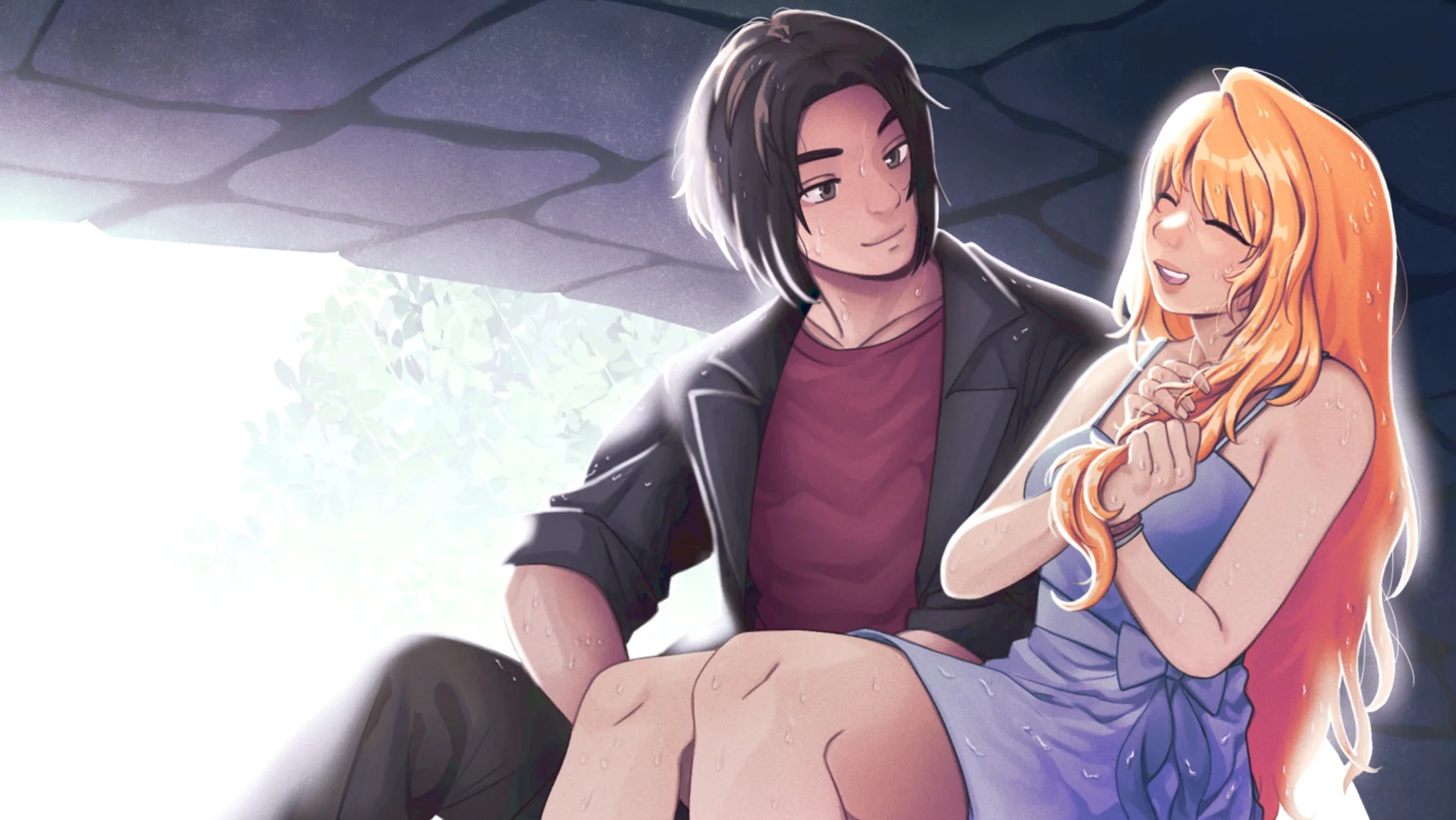
Two characters share a quiet moment beneath a bridge in It Was That Summer. Image: Echo Bay Studios.
Turning memory into fiction
The game started, if I’m honest, as something much simpler and more naive: a story about a boy and three girls. That was how the younger me remembered it. But the older I got, the less the story was about who I liked and the more it was about who I was. What changed in me? What could that naive boy have done differently? Who did I fail to call back?
So I didn’t try to make a documentary. Some characters stayed close to the real people; others are almost completely invented. Families, backstories and conflicts were added because the story needed them, not because they actually happened. Some characters are an amalgamation of several people, and some come from a different period of my life.
The three girls the player can get close to, Lina, Marlène and Elise, all started from real feelings, but each one became her own person on the page. What I tried to keep true wasn’t the facts. It was the feeling: the way everything seemed to matter enormously, the way two weeks felt like a whole life.
Twenty-year-old memories are unreliable. I’ve accepted that. Some scenes I remember perfectly. Others I’ve had to rebuild from a single image, like a photo my father took of me just as I walked into the dorm room that would be my home for the next two weeks. But memory is already a kind of fiction. It keeps the light and throws away the boring parts. That’s why our backgrounds are built the way they are: our environment designer models every location in 3D first to get the light right, then paints over it by hand. It looks real, but a little warmer than reality. Just like a memory.
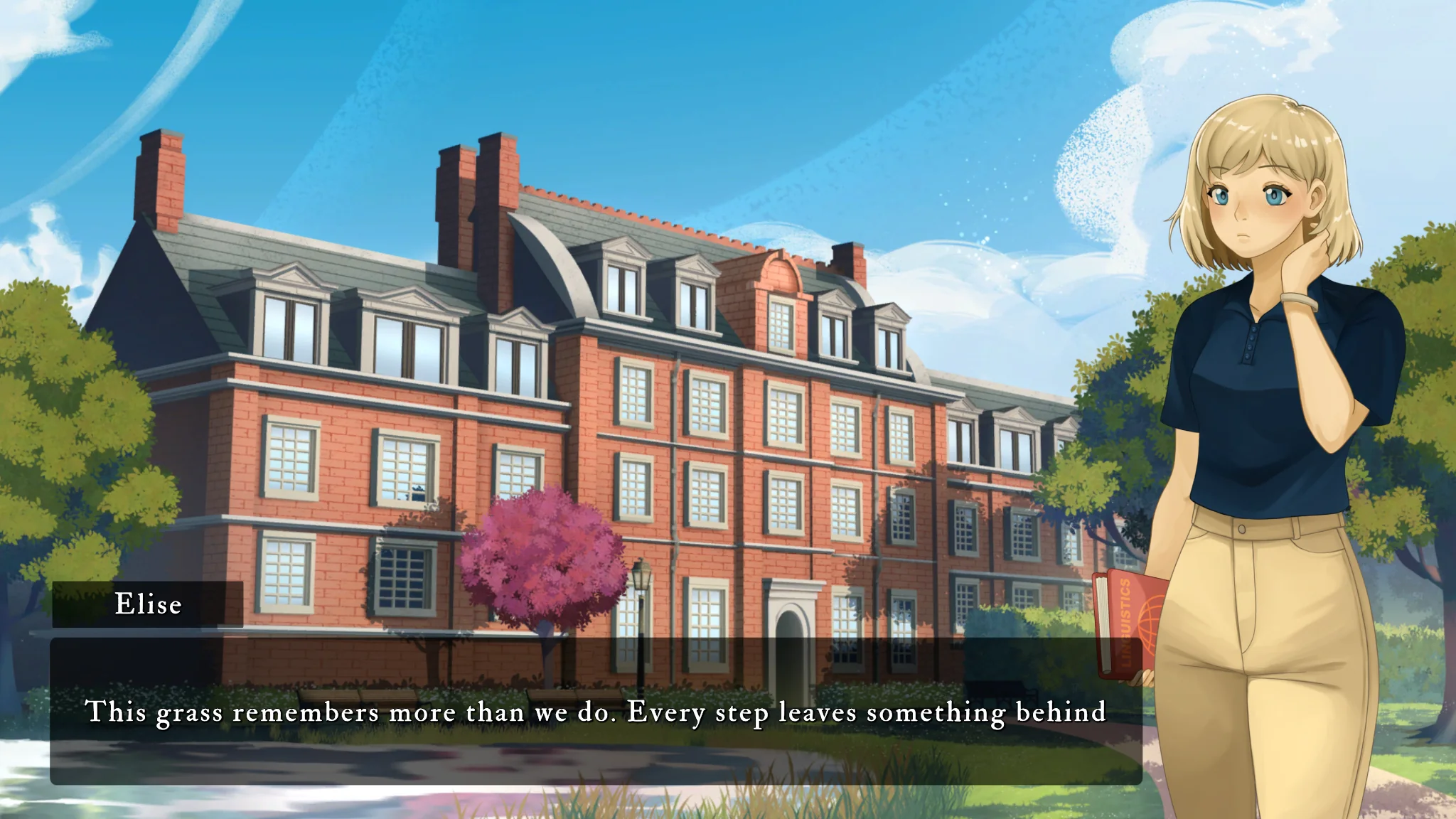
Elise appears in a scene from It Was That Summer. Image: Echo Bay Studios.
Why 2006 matters
2006 was the last summer before everything moved onto smartphones. If you liked someone, you had to find them in person, or wait for a text on a flip phone that might arrive at midnight, or might never arrive at all. That uncertainty is built into the game: who you sit with at breakfast, whether you skip a lecture, how you answer a late-night message from a friend back home. Each choice opens some doors and quietly closes others. There are more than sixty endings, and not all of them are happy. Some are simply lonely, and I think those matter too.
What I want players to feel
Everyone has a moment they still think about, even decades later. A place, a person, a version of themselves they almost became. It Was That Summer is about mine. But if someone finishes the game and thinks about theirs, and maybe sends a message to someone they haven’t spoken to in twenty years, then I’ll have done what I set out to do.
It Was That Summer is coming to Steam. You can wishlist it here: https://store.steampowered.com/app/3846130/It_Was_That_Summer/
It Was That Summer
Release: Coming soon
Genre: Visual novel, coming-of-age narrative adventure
Developer / Publisher: Echo Bay Studios
Platforms: Windows PC — Steam
Fix Gaming Channel: Fix Stories is our series of firsthand stories from the people creating games. The contribution above was submitted by Konstantin Kosolapov and formatted for publication while preserving his original wording.
Related Reading
Fix Stories: Games Don’t Always Need to Ask More From Us
Fix Stories: One Swift Engine, Two Phones — How Stelline Came to Android
Burned Out From Game Development, I Made Tiny Tape Store
Story written by Konstantin Kosolapov of Echo Bay Studios.
Edited and published by Ronny Fiksdahl, Founder & Editor-in-Chief of Fix Gaming Channel.
Send developer stories, creator stories, corrections, tips, or game pitches to contact@fixgamingchannel.com.
Support independent games coverage on Ko-fi.