

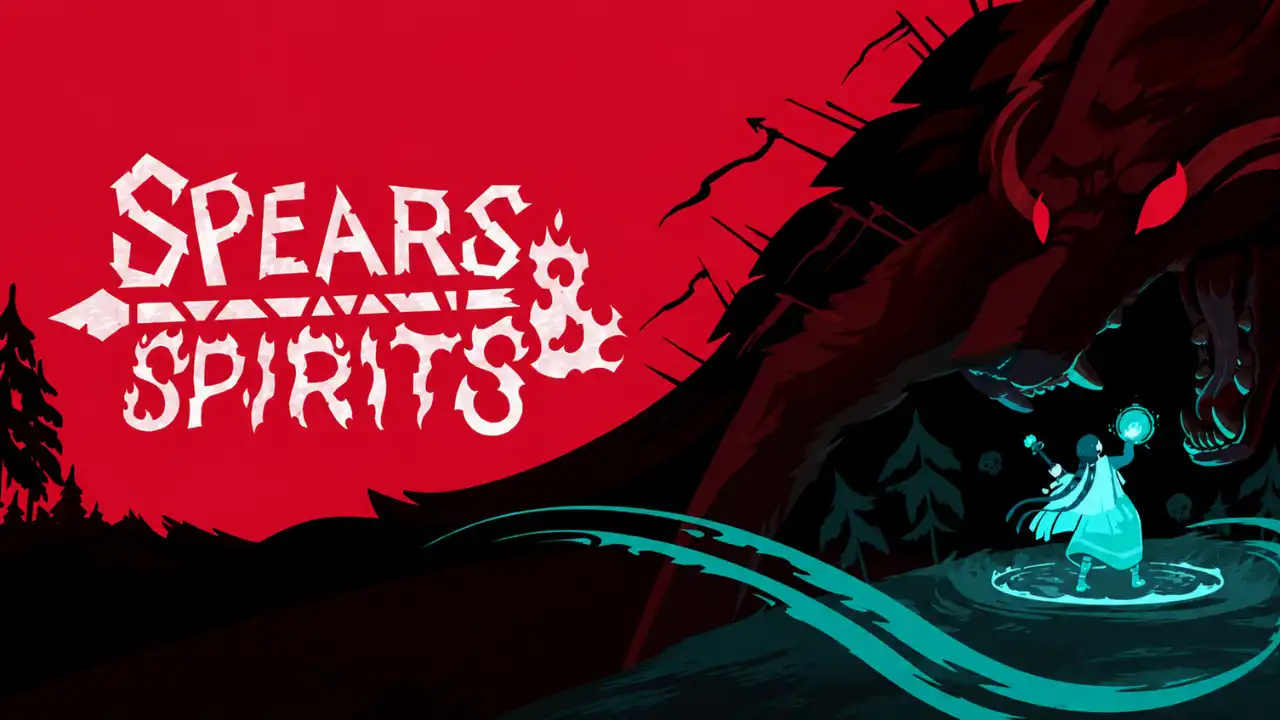
A shamanic legend, seventeenth-century Siberia, and a tactical combat system built around Health and Spirit.
Fix Stories is a developer-authored series where creators share the ideas, experiences, setbacks, and decisions behind their games in their own words.
In this story, the team at Go North Studio explains how an old shamanic legend and the idea of physical and spiritual combat became the foundation of Spears & Spirits.
The following story has been lightly edited for grammar and readability while preserving the developer’s voice.
Join Our Newsletter
Stay updated with the latest interviews, previews, developer stories, and indie gaming news.
Where Spears & Spirits Came From
Spears & Spirits has two roots: one comes from the story, and the other from the game design.
Some time ago, I came across a book on shamanic legends published in Yakutia. It contained many stories, one of which stayed with me.
It was about a young woman said to have been destined to become a great shaman. Evil spirits were after her and trying to prevent her initiation, her spiritual “dismemberment,” and her transformation into a shaman. I will try not to give too many spoilers!
The girl had been chosen by spirits, but in many ways was also their victim. She went through one disaster after another, found people who helped her, and thus survived to be reborn as a powerful shaman.
I kept thinking about that story for years and wondering how it could become a game.
The other root of the project came from our attempts to make tactical combat feel more layered.
On the surface, the idea was simple: small groups of fighters, compact battlefields, and relatively clear rules. But underneath that, we wanted several layers of tactics.
We wanted to make combat happen on two levels: the physical and the spiritual. You might have warriors who are physically weak but very strong in spirit, and you could choose whether to attack an enemy’s body or try to break their will.
At some point, these two ideas came together. The legend of the young shaman and the idea of physical and spiritual combat became the starting point for Spears & Spirits.
Building the Setting
Before starting work on the game, I had already made several documentaries about Yakutia, so I knew quite a bit about the Sakha people, their beliefs, and their metalworking traditions.
But the legend that inspired the game was about the Evenki. Their shamans were often considered particularly powerful, so we were happy to explore a subject that was new to us.
We began collecting material: historical timelines, articles, dictionaries, photographs, ethnographic studies, and anything else we could find.
This is how the fictional Kětengir clan appeared. The name means “The Numerous.” Our protagonist became Erumi, a name that can be translated from Evenki as “Misfortune.”
The story takes place somewhere in the northwestern part of present-day Yakutia, but we do not say exactly where. It could be near the Yana, the Indigirka, or the Kolyma rivers. We wanted the setting to feel real without tying it to one exact river.
The year, however, is more specific: 1684.
At that time, the territory of modern Yakutia was part of the frontier of the Tsardom of Moscow. Many different peoples, cultures, beliefs, and ways of life were meeting there, trading, fighting, adapting, and trying to survive.
That gives us a lot to work with.
We are interested in what happens when different beliefs and cultures collide, and whether people can find any kind of common ground during a time of fear and upheaval. It is an old subject, but it hardly feels outdated.
History, but Also Fantasy
The game is historical, but it is still fantasy.
Our main goal is to tell a good story in a setting that feels fresh. Traditional fantasy is full of the same landscapes, creatures, and cultural references, and we wanted to look somewhere else.
There is already more than enough fantasy about Vikings. The North is almost automatically associated with them.
So why not make fantasy about the real far North and the people who lived there? Compared with the peoples of northeastern Siberia, Vikings were practically warm-weather southerners.
We are not trying to turn the game into a history lesson. It should work first as a game, with characters, battles, difficult choices, strange spirits, and a strong atmosphere.
But if someone plays it and then becomes curious about the peoples and cultures of Siberia, that would be a very good result.
Health and Spirit
As the story developed, the combat system also became more practical.
The original idea of fighting in two separate planes was probably too complicated. In the end, it became two main resources: Health and Spirit.
Physical attacks reduce Health. Fear, supernatural pressure, and shamanic powers reduce Spirit.
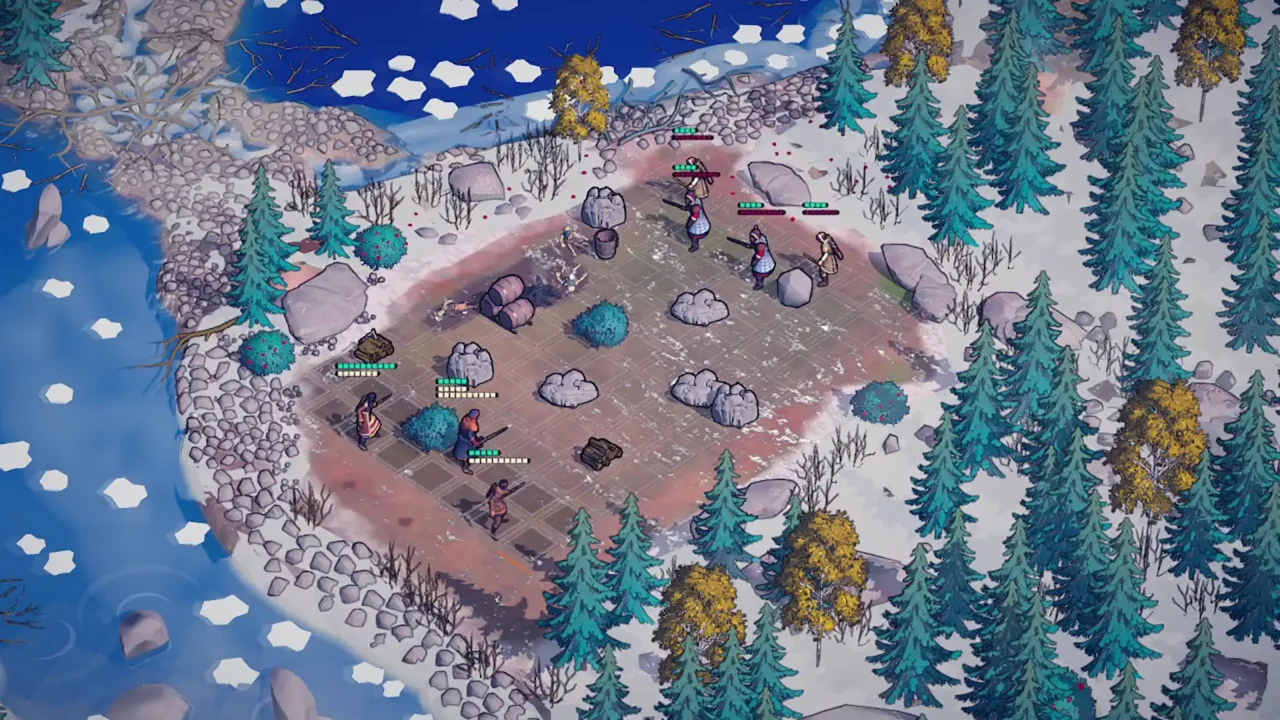
A character whose Spirit falls to zero may lose the ability to keep fighting, even if they are still physically unharmed.
For example, Erumi can summon the spirit of someone who died without finding peace. That spirit can terrify an enemy, break their will, and force them out of the fight.
Shamanic magic is built around card-game mechanics.
To us, that makes sense because spirits are as temperamental and unpredictable as a deck of cards.
The cards represent amulets attached to a shaman’s clothing. Each amulet is connected to a spirit. During combat, the shaman calls on those spirits and tries to awaken them.
But you never know exactly who will answer.
And it is not only the shaman’s own spirits who are listening. Every battlefield has its own deck of local spirits. The spirits of the place can also respond, sometimes helping and sometimes making the situation worse.
Wounds That Stay With You
We also wanted the game to reflect how harsh life in the North could be.
Characters do not simply lose Health in battle. They can suffer injuries to different parts of the body, and some of those injuries may remain after the fight.
Healing them costs resources, and resources are limited.
Erumi can use her shamanic abilities to treat her companions, but she cannot help everyone. Time in Camp is limited, so helping one person may mean leaving someone else untreated.
There is also another problem: she cannot fully help a companion until she has earned their Trust.
Trust and Camp
Trust is one of the most important systems in the game.
In some ways, Spears & Spirits is structured like a road movie. A group of very different people are thrown together by circumstance and forced to travel toward the same goal.
They do not all like each other. They do not share the same beliefs or background. Some of them may not trust Erumi at all.
The player will need to build relationships with the members of the Party in order to unlock new abilities, choices, conversations, and forms of help.
Trust can change because of what happens in battle, but we want most of it to develop through conversations around the campfire.
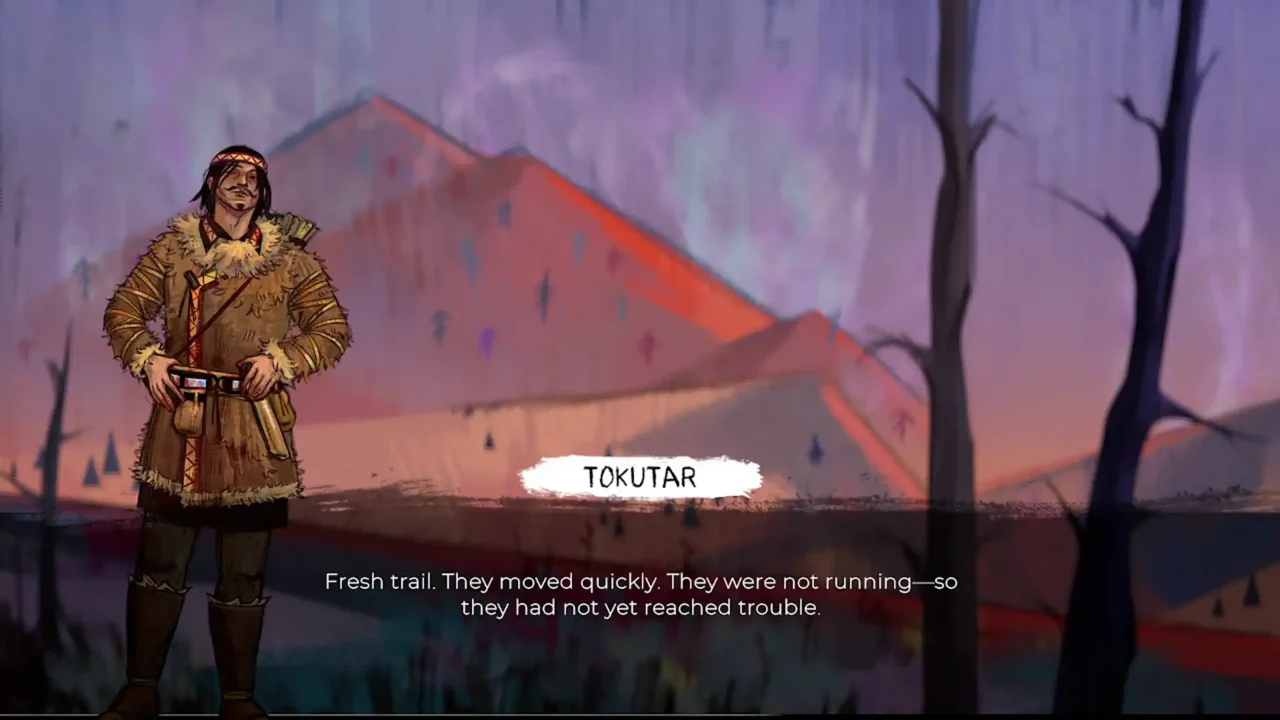
This is where players will learn who their companions are, what they fear, what they want, and why they joined the journey.
But Camp time is limited.
You will not be able to speak to everyone, heal everyone, or solve every problem. Some relationships will grow stronger, while others may remain distant.
You probably will not be able to make everyone happy.
That is part of the point.
What We Are Working On Now
Right now, we are building the campaign for the Spears & Spirits demo and trying to bring all these systems together in a form that feels clear and playable.
That includes physical and spiritual combat, shamanic cards, local spirits, lasting injuries, limited Camp time, and trust between characters.
We hope to finish the demo and open the game for public playtesting soon.
Follow our progress and add Spears & Spirits to your wishlist.
Spears & Spirits
Release: To be announced
Genre: Tactical RPG, turn-based strategy, deckbuilding
Developer / Publisher: Go North Studio
Platform: PC via Steam
Related Reading
Fix Stories: I Always Wanted to Run a Band, So I Built One
Archor Games Hits 100 Steam Releases — Fix Stories
Developer story by Go North Studio for Fix Stories.
Edited and published by Ronny Fiksdahl, Founder & Editor-in-Chief of Fix Gaming Channel.
Send interview pitches, corrections, tips, or developer stories to contact@fixgamingchannel.com.
Support independent games coverage on Ko-fi.