




Millennium Whisper, ethical AI, and acting for algorithms
Set at the tail end of 1999, Millennium Whisper is an Early Access relationship sim where all the AI runs locally on your own hardware, and every character model is trained on in-house performances rather than scraped data. It’s a strange, ambitious mix of late-90s college life, pixel-art drama, and AI-driven conversations that live or die on how you choose to navigate rumours, feelings, and end-of-the-millennium confessions.
At Fix Gaming Channel, we’ve been following how AI is being folded into games – from concerns about creative jobs and authorship to how far you can push new tools before you lose the “human” in the process. In that wider context, Millennium Whisper stands out because Parable Studios is trying to build something actor-led and ethical rather than another generic AI toy built on scraped internet data. We later named it Game of the Week #32, and it also went on to win our Community Choice GOTY. 
Join Our Newsletter
Stay updated with the latest interviews, previews, and indie gaming news from Fix Gaming Channel.
To learn more about how that actually works in practice – from contracts and royalties to GPU requirements and emotional tone – I spoke with Parable Studios founder and CEO Ambrose Robinson about the ideas and systems behind Millennium Whisper.
Millennium Whisper – Interview with Ambrose Robinson (Parable Studios)
1.) Millennium Whisper approaches the delicate subject of using A.I as part of the game’s core mechanic. In your case, it utilises a machine-learning architecture combined with royalty-compensated, original creative input from real actors. Was that important to you from an ethics standpoint, if so why?
We believe there needs to be an ongoing relationship between creatives and AI, you can’t extract one from the other – as you can’t extract the musician from the song. If one of the characters were to become popular, we believe the actor who was the soul of that character should be compensated.
If there isn’t creative work behind the product then you don’t have a worthwhile product. The actors from our original actor sessions knew that they were being brought into something
2.) Has communicating how the game is perceived to players been challenging – particularly when it comes to helping them understand the ethical approach you’ve taken, where A.I still relies on creative input from human creatives to build it?
We found there’s a massive misunderstanding in what AI is and where it comes from, both in terms of data and development but also inference and hardware. Customers think that AI comes out of the magic AI bubble in the sky, when really it comes from, for the most part, stealing huge amounts of data from the internet and sticking it on an incredibly resource-intensive GPU in a server farm somewhere. Trying to get across to players that we are not really competing with something like ChatGPT has been an uphill battle, personally I thought that speaking to something that was more abrasive and inherently stylistic was a huge bonus for the game. But often we found people experienced whiplash when the models weren’t that trade-mark compliant and sycophantic style we are all used to with virtual agents at the moment. It’s also been difficult when people believe that AI isn’t resource intensive, or that local models need more than a 10 yr old laptop with GPU. As our local models get better, we are starting to prove the naysayers from local models wrong and I think in time there will be an understanding of AI on your machine and AI in the sky, especially when the bubble bursts and server costs skyrocket.
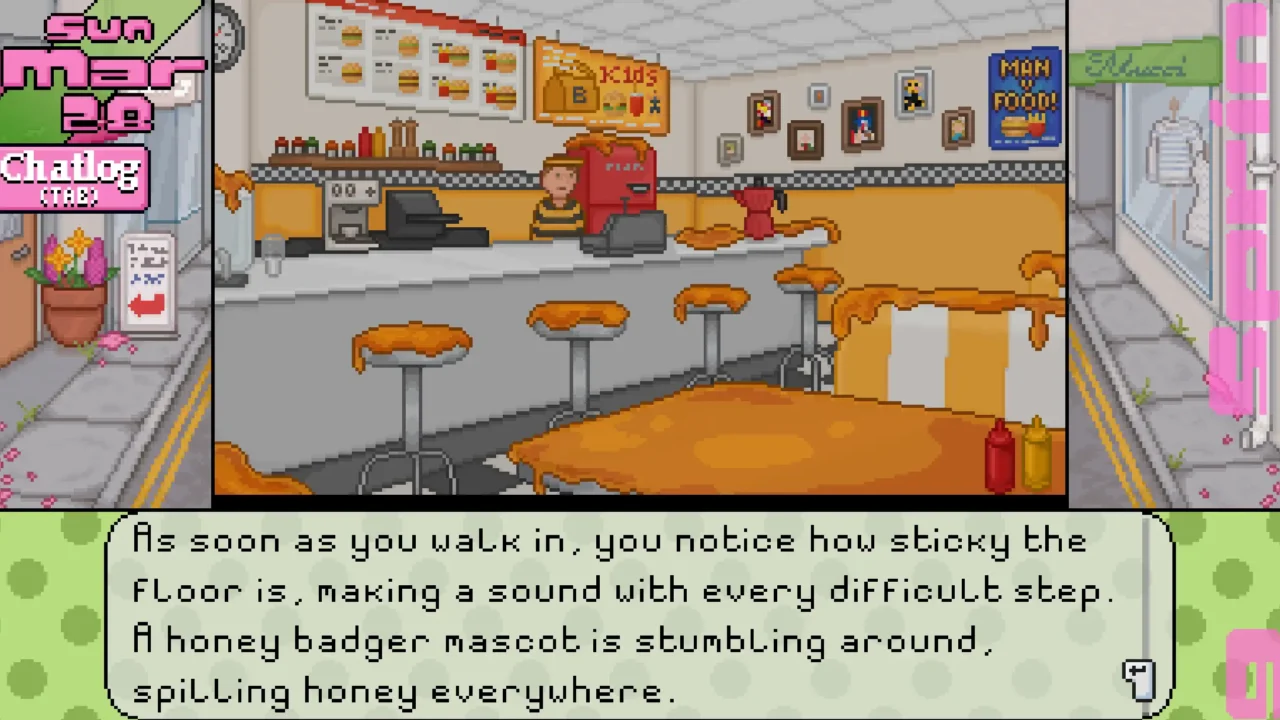
A chaotic diner visit in Millennium Whisper, with honey dripping from every surface.
Millennium Whisper
Release: February 14, 2025 (Early Access)
Genre: Casual RPG, Simulation, Dating Sim
Developer / Publisher: Parable Studios
Platforms: PC — Steam
3.) Millennium Whisper’s A.I system runs locally and requires a graphics card with 6GB VRAM (video memory) minimum to play. How are you approaching the technical demands of the game in relation to optimising it for your audience?
We’ve made leaps and bounds since the beginning, the pre-release version needed 12 gb of VRam, the initial release was 8 gbs and we’ve gotten it down to 4 but found it is interfering with the amount the system’s OS use. We’re spending a lot on cross-platform and integrated graphics card systems so that we can reach as much of our audience as we possibly can. But mainly we feel the model footprint that we are working with is the right balance between size and capability and we are becoming a lot more interested in improving capability rather than meeting absolutely everybody’s system specifications.
4.) The acceptance of A.I in videogames still has a long way to go. Do you think companies may be underestimating how audiences and players are being exposed to the technology?
I think a lot of different machine learning techniques are conflated into the same pile. Personally I agree with the backlash against art-generation, music-generation and in a really complicated way writing-generation as well. The only way I sleep well at night is knowing my system creates creative jobs and not just call-centre mindless labelling work but actually interesting and expressive design and performance work. A lot of companies are peddling the same pre-trained models or API’s or asset-generation and this idea of ‘AI slop’ has been rightly elevated to a pretty central space in popular consciousness at the moment. I think companies are going to start seeing a lot of their first moves in AI within games received with indifference because of the wide understanding of its capabilities. The low-hanging fruit has already been and gone before anybody really got a chance with it.
5.) Millennium Whisper is centred around relationships – what were the complexities of training the A.I with real actors?
We were lucky, in that the events were small and nobody really cared. We didn’t have to vet volunteers as they were generally friends of the actors or genuinely enthusiastic about the project. Whatever we do next will need much stricter safeguarding measures. The key complexities from a design perspective came from having a central set of comprehensive, easily understood and expressive systems for representing relationships between people. We had to break down emotion and personality frameworks into systems we could easily translate into hard data and that could be easily interpreted by the actors because something that ends up becoming a problem with this method is cognitive load on the actors. They’re often balancing multiple player-playthroughs and so they needed to be able to context-switch and still have everything that they needed to know to continue a believable performance right there in front of them. What wasn’t hard was having the actors really express themselves and iterate upon the characters on the fly because that’s what’s really fun about this method is it brings out the creativity in people and you see that in that the most creative and spontaneous characters came from the most inspired actors.
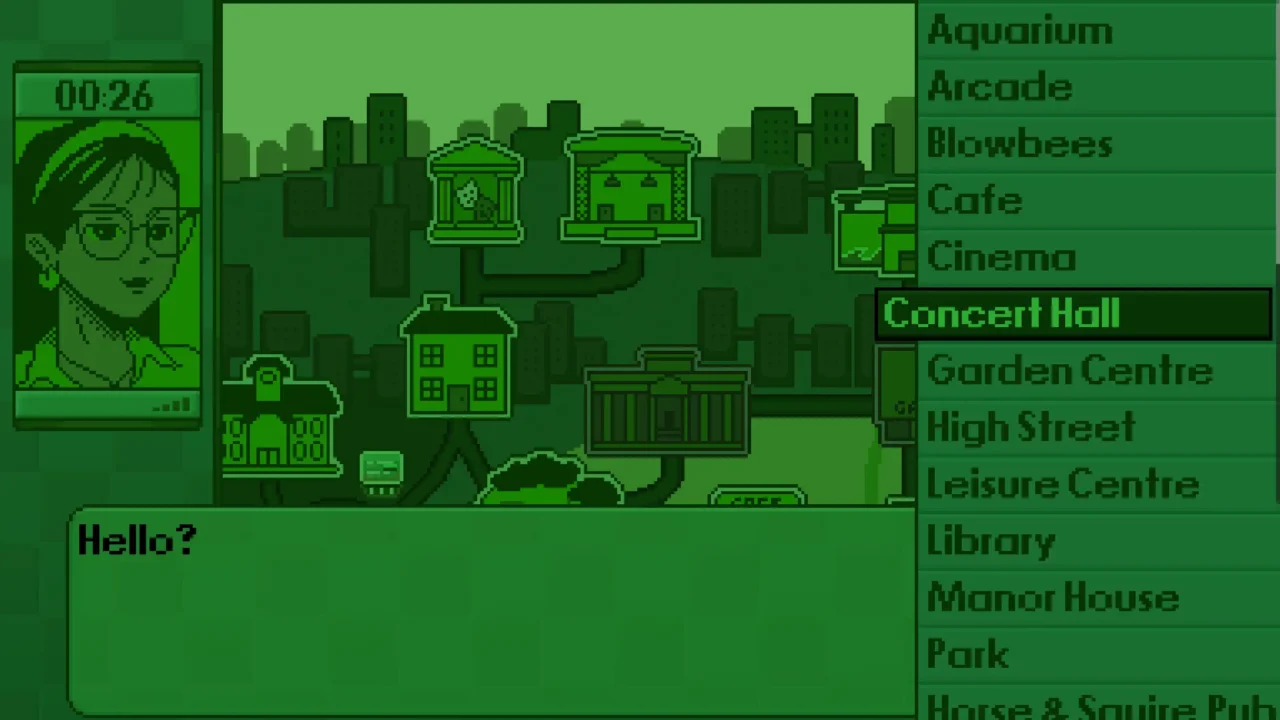
6.) Because Millennium Whisper leans so heavily on relationships and emotional nuance, how early in development did you start thinking about “tone” – the kind of emotional space you wanted players to inhabit – and how did that shape the way you used A.I and actor performances together?
We knew as early as casting that tone would be highly character-specific. In a lot of ways, that can mean it feels all over the place at times, but I feel that this compliments the experience. How did you feel at university? Because for me it felt like constant tonal whiplash. As we iterate upon the AI models themselves we are taking the freedom away from the models and with it – that complete player freedom. But we found that the trick with AI at the moment is authorship and as the models mature I think we as authors can mature with it.
7.) When it came to casting your actors, what were you looking for specifically, knowing that their performances would be used not only in a traditional sense, but also to help train and guide the game’s A.I systems?
We looked for the personalities of the actors themselves and how much they could utilise it in the performances, a lot of the time we wanted it to be that the knowledge of the actors in real life could be utilised in the characters. We have a super genius character who knows all about AI and we knew having that as a goal was unrealistic in the real person but if you place somebody in the right ballpark for the right character, we found it would usually pick up the correct ideas. Knowing how to play games was also a plus, because that is what it ultimately boiled down to from their perspective – a much more complicated videogame roleplay experience.
8.) There’s a big conversation right now around consent and long-term use of an actor’s likeness and voice. How did you approach contracts, compensation and ongoing control for the actors involved in Millennium Whisper, so that they felt protected and fairly represented?
Obviously they receive royalties which are ongoing for as long as the game is sold. We also don’t use voice as we don’t think it is appropriate. Ultimately, there is nothing personally identifiable about the character models and generating from their voice we think would be crossing that line. We also had the actors act outrageously in various situations and we found that though the actors found that their outrageous in-character behaviour was accurate, similar behaviour in another situation can feel jarring and voice added into that mix suddenly turns it into something quite dystopic. The contracts we used were the ones recommended to us by Equity, the UK Performing Arts Trade Union and we don’t have the data for any project. Their IP is kept secure and only used in projects that they directly benefit from and this was super important to us as we don’t see actor-sessions as one time things but something we enjoy and want to do as much as possible.
9.) On the design side, how do you balance player agency with the unpredictability that comes from Millennium Whisper’s underlying systems – especially in a relationship-focused game where small choices and emotional beats really matter?
We’ve often found that in this early stage leaning into the skid is a lot better. The AI reacts much better to things that are clear and exaggerated and players react much better to mechanics that are clear and interpretable. We are building on this through more reliable AI to craft more fine-tuned experiences, to give more weight to the little decisions. But in the shorter term, we’re finding that more conventional game design systems actually can give really wide reaching, dynamic and engaging results, suddenly having the money to buy flowers means a lot more when the character can thank you in their own words and in a way that makes sense in the context of your relationship. The other side of the coin being that you then have to train the model to not believe the player and it’s a balancing act we are still coming to understand.

Darth shares his very strange week in Millennium Whisper’s school cafeteria.
10.) What has early player feedback been like so far, particularly from players who might usually be cautious about experimental or tech-driven games? Have any reactions surprised you, either positively or negatively?
I had a very clear and overly ambitious idea of how the game would be received initially. I’ve still managed to receive that from one or two fans who really understand the influences and what I was going for. But generally as much as there’s been hostility towards the game’s concept, there’s been a real warmth from those who have found long-term enjoyment out of it. Those people don’t care that it’s experimental, they don’t care that it is tech-driven, they simply know it’s a small passionate team and resonate with the characters. Even those that hate it understand it’s something you can’t get anywhere else. The wholesomeness of the community that’s built up around it, even amongst the game in its real fledgling form when it first released, thoroughly surprised me and makes it worthwhile.
11.) From a creative standpoint, do the tools you’re using open up narrative possibilities you couldn’t realistically explore with purely traditional scripting, or is it more about expanding and deepening what your writers and actors are already doing?
There’s definitely unexplored territory here, but we have found that pre-existing game story techniques still have a place within this, branching narrative trees are only made more exciting when you give the character’s decision points along with the player. The dynamic nature of the characters gives us an opportunity to explore a real breadth of scenario and world that we wouldn’t be capable of otherwise as a very small team. It also leads to an interesting dichotomy between actors as characters with writers controlling scenarios and directing from a high-level, but it becomes a more of an open-dialogue between writer and actor because the actor has more control than they would otherwise in most forms of media. The writers can get their own back later in the process once they have full control!
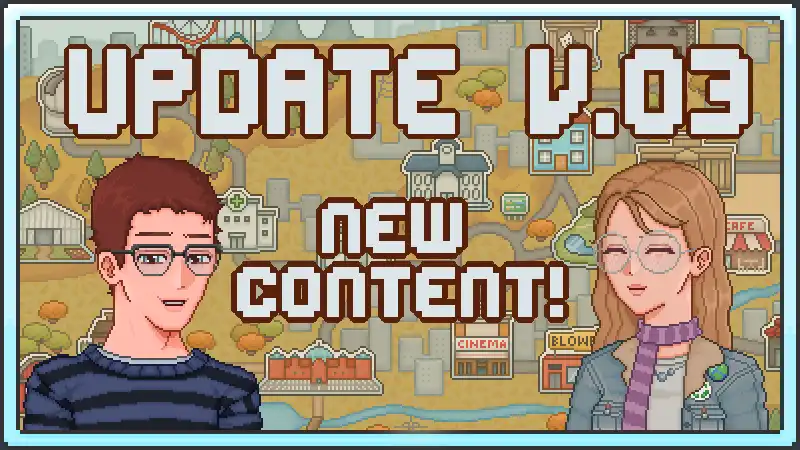
Parable Studios highlights new content for Millennium Whisper in the v0.3 update banner.
12.) Looking ahead a few years, where would you personally like to see the wider industry land in terms of blending new technology with human artistry? What would a “healthy” balance look like to you?
I think a very clear understanding of what the technology can and can’t do is the first step to something healthy. The next big step is complete transparency when it comes to IP and I’m pretty confident that will come naturally as consumers start noticing the trend between content with real IP and those that are riding the coat-tails of others. I think we will start to see a lot more interesting and unique training methods coming out of games and that becoming part of the artistry in the unique ways it designs training signal and derives it from human expression. I also think that on-device will be the way forward and we will start to see Indies taking risks and experimenting without the overwhelming fear that comes from this technology. QA is also important and is often an afterthought but as techniques mature we’ll have a greater sense of certainty as to whether the experiences we are making are doing the things we want them to do.
13.) Finally, when players reach the end of Millennium Whisper, what do you hope sticks with them most – the relationships they formed, the choices they made, or the questions it raises about how we use technology in our own lives?
My original intention was for it to be a message about social networks, about the propagation of information and the way that perception and groups interact with emotions. I think that it will probably end up being more about having fun and seeing the possibilities with this technology.
Millennium Whisper is currently available on Steam priced £9.99
Ambrose Robinson
CEO and Founder of Parable Studios
Related reading
- For another look at how systems and player stories evolve together, read our Space Drilling Station Fix Stories feature.
Written by Ronny Fiksdahl, Founder & Editor of Fix Gaming Channel.
Send interview pitches, corrections, tips, or developer stories to contact@fixgamingchannel.com.
Support independent games coverage on Ko-fi.