





From assisted pixel art to a 2009 puzzle game, this showcase struggles to define what an AI game is
The third-party AI Gaming Festival is live on Steam until September 28, bringing discounts, games, and development talks together under one label that quickly becomes difficult to explain.
The AI Gaming Festival has opened on Steam, running from September 7 to September 28, 2026. This is a third-party event presented through a Steam curator page, not one of Valve’s own themed festivals. Its stated goal is to educate players and developers about how AI is being used in game creation while showcasing projects built with the technology.
That is a reasonable subject for a festival. The problem is that the live page stretches the term “AI game” so far that its categories begin to lose meaning. We have argued before that useful AI disclosure should tell players what changed in the product, not turn every tool used during development into the same warning label. This event provides a clear example of why that distinction is important.
Want more independent reporting on AI and game development?
Get more industry news, interviews, indie coverage, and original features from Fix Gaming Channel.
Join Our Newsletter
Stay updated with the latest interviews, previews, and indie gaming news.
A festival about more than AI artwork
The event sorts its lineup by how AI was reportedly used. Its 12 sections cover artwork, asset creation, programming, NPC actions, player-input interactions, story and lore, localization, voices, music, sound effects, testing and debugging, and marketing. SteamDB currently displays 100 products and warns that the results have been limited because the event contains too many products for one page.
Three very different entries in the lineup
Backpack Dungeon
Release: July 14, 2026 | Developer: 夜喵 | Publisher: Shuffle Play Games | Platforms: Windows, macOS
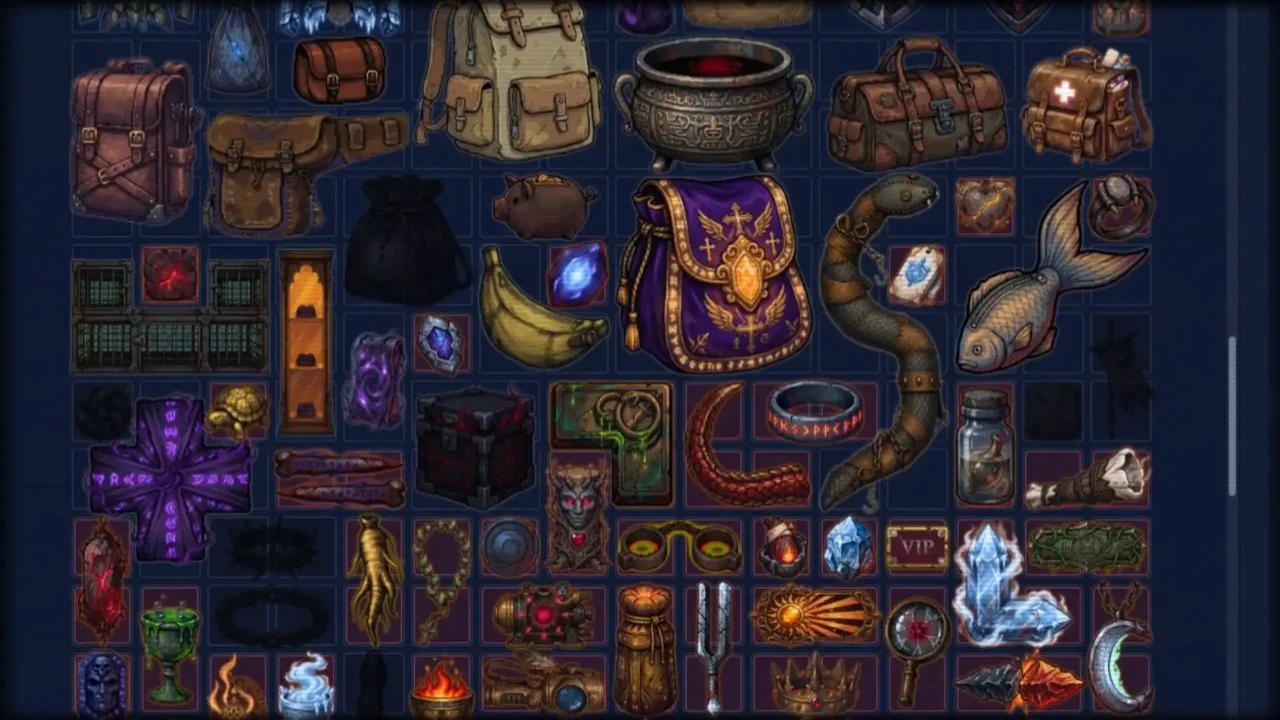
Backpack Dungeon is a pixel-art backpack-management roguelike in which item placement, adjacency, and trigger mechanics shape each run. Its Steam disclosure says AI assistance was used for some pixel-art item icons and monster sprites.
Esports Manager 2026
Release: July 6, 2026 | Developer: Neurona Games | Publisher: indie.io | Platform: Windows
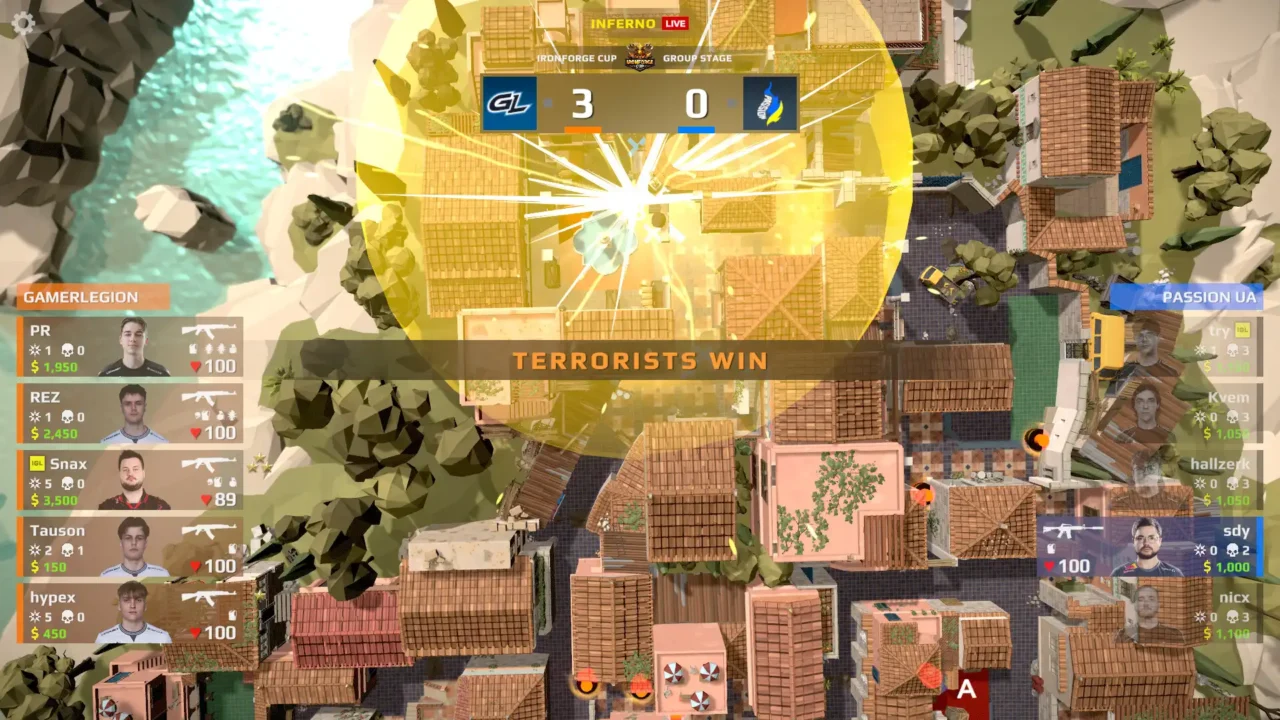
Esports Manager 2026 is a strategy and management simulation about running a professional esports organization. The developer says AI was used to generate player faces and in-game logos. Fix Gaming Channel previously covered its July 6 Steam launch.
AI Pals Engine
Early Access: January 8, 2026 | Developer and publisher: Amped Horizon | Platform: Windows
AI Pals Engine is not a conventional game. It is Early Access desktop software built around locally run AI assistants, characters, text responses, and customizable widgets. Meanwhile, Ariokan is a competitive card game whose disclosure warns that some player-created artwork may be generated by AI. These are materially different uses, and separating them is more informative than treating them as one category.
Then Bad Rats appears everywhere
The festival’s attempt at precision breaks down when the entries are inspected. At the time of writing, the live event page places Bad Rats: the Rats’ Revenge in every one of its 12 AI-use sections, including programming, localization, voices, music, testing, and marketing.
Bad Rats was released on Steam on July 20, 2009. Its current store page contains no visible AI Generated Content Disclosure. Nothing on that public page explains why a 17-year-old physics puzzle game has been placed in every AI-use category.
It is not the only unclear example. Bangkok Story: A Stray Dog appears under programming, AI NPC actions, story and lore, and testing and debugging, yet its public Steam page also contains no visible AI disclosure. That does not prove the developers concealed anything. The festival may be relying on a separate submission form, its categories may include non-generative tools, or the page may contain configuration errors. From the storefront alone, readers cannot tell which explanation applies.
That uncertainty is important because the organizers say the festival is intended to educate. If a category tells players that AI contributed to a game’s programming or narrative, the page needs to explain what that means and where the information came from. Otherwise, the labels create suspicion without providing clarity.
Steam’s own disclosure policy is clearer
Valve’s official Steamworks content survey draws a useful line. It says routine efficiency gains from AI-powered development tools are not the focus of its generative-AI section. Valve instead asks about content created with AI that ships with the game and is consumed by players.
Steam then separates that content into two groups. Pre-generated content is made with AI during development and included in the shipped product. Live-generated content is created while the game is running, with developers required to describe safeguards against illegal output.
The festival goes much wider by adding programming, testing, debugging, and marketing as headline categories. A developer could use an AI coding assistant or testing tool without producing player-facing generated content, meaning there may be no public Steam disclosure to read. That likely explains part of the mismatch between the festival and individual store pages, but it also makes the festival responsible for supplying the missing context.
This is the same transparency gap raised by The Alters AI controversy: a disclosure system is useful only when players can understand what was generated, where it appears, and whether it affects the experience they are buying.
The conference may be more useful than the sale
The event extends beyond Steam. An online conference hosted through Glitch runs from September 10 to September 30. Its schedule lists 22 livestream sessions covering rapid prototyping, AI graphics, coding, testing, marketing, and the debate around AI terminology.
Those sessions could provide the context missing from the storefront. A workshop can show exactly how a tool was used, what a developer retained control over, and what limitations came with it. That is more valuable than dropping games into broad lists and asking players to infer the rest.
The organizer’s prize page also advertises $20,000 in “OpenAI Codex 5.6 Credits”, divided among five games with the highest total playtime. That is the organizer’s published claim. The page does not establish an independent sponsorship announcement from OpenAI.
Why the AI Gaming Festival lineup raises questions
The AI Gaming Festival contains a valid idea. AI-assisted development is broad enough that players benefit from seeing the difference between generated artwork, localization support, live NPC dialogue, and background tools. Games with narrow, specific disclosures should not automatically be treated the same as products built around undisclosed or uncontrolled generation.
Developers also remain responsible for the final result. In our Hoop Dynasty Fix Story, creator Aric Morrow described using AI to assist UX iteration, selected visuals, and quality assurance while retaining authorship and responsibility for the game. That kind of detail allows readers to judge the work instead of reacting to a vague label.
The Steam festival does not consistently offer that detail. Its best entries show why specific disclosure can help. Its unexplained placements show how quickly the message collapses when categories are not verified or defined in public.
Players do not need a festival to tell them that every use of AI is identical. They need accurate labels, direct explanations, and enough information to judge each game on its own work. Until the AI Gaming Festival provides that consistency, its sprawling lineup says more about the confusion surrounding AI games than the games themselves.
AI Gaming Festival
Steam event: September 7 to September 28, 2026
Online conference: September 10 to September 30, 2026
Format: Third-party sale page and online livestream sessions
Related Reading
Everyone Uses AI Now. So What Are We Really Disclosing?
The Alters AI Controversy Raises a Bigger Steam Question
Written by Ronny Fiksdahl, Founder & Editor-in-Chief of Fix Gaming Channel.
Send interview pitches, corrections, tips, or developer stories to contact@fixgamingchannel.com.
Support independent games coverage on Ko-fi.