




CS2’s skin market just collapsed — why treating skins like “investments” is a terrible idea
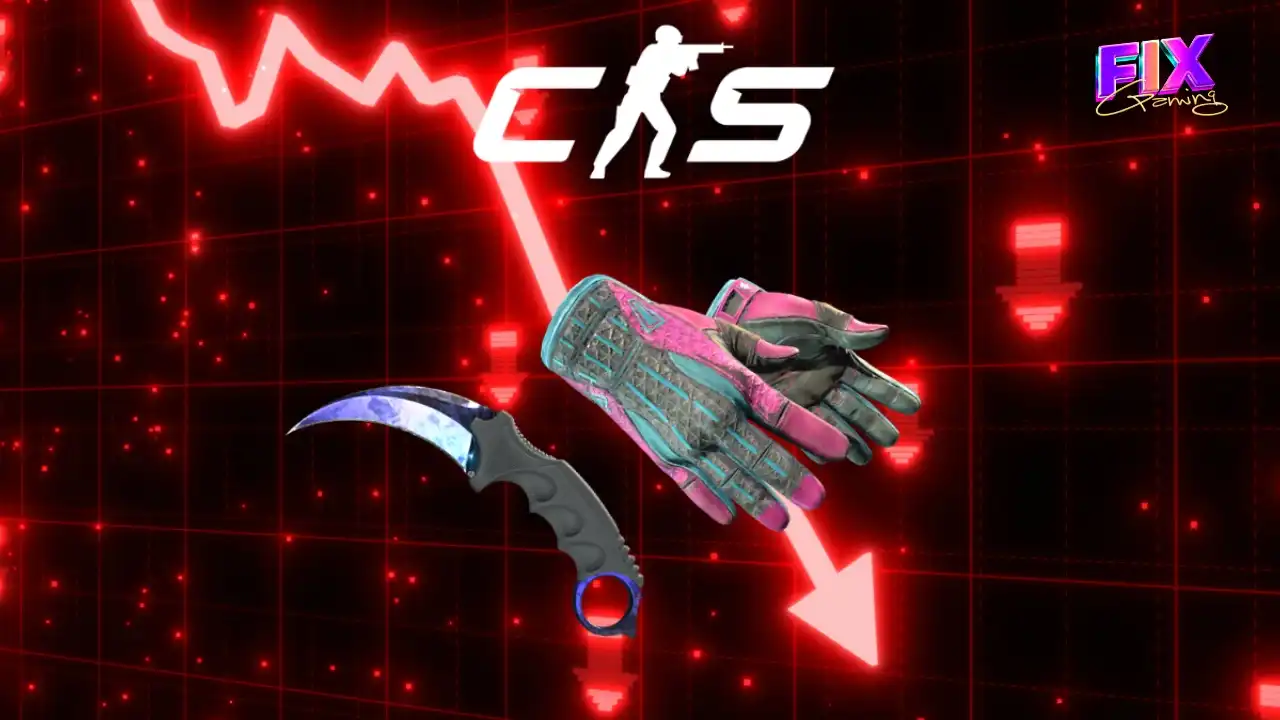
If you’re new to Counter-Strike 2, those flashy knives and gloves might look like “assets.” Don’t treat them that way. A small but seismic Trade-Up change on October 23–24, 2025 made knives/gloves dramatically easier to obtain. Within hours, prices across the CS2 skins economy whipsawed—reminding everyone these are volatile cosmetics, not investments. For wider Steam platform context, see our report on Steam’s concurrent-user record and our Steam legal-case coverage.
Join Our Newsletter
Stay updated with the latest interviews, previews, and indie gaming news from Fix Gaming Channel.
At a glance
- What changed: Players can now exchange five Covert skins for a random knife or gloves (StatTrak → StatTrak; regular → regular). See patch notes and HLTV recap.
- Immediate impact: Scarcity assumptions broke; high-end prices fell fast while certain Covert items spiked during the rush.
- Scale: Third-party trackers framed the drawdown in the multi-billion-dollar range within ~24–29 hours. Exact figures vary by snapshot.
What changed (and why it matters)
The update extended the Trade-Up Contract so five Covert skins can be converted to a knife (or gloves). That single lever increased supply of previously ultra-scarce items, undercutting prices across marketplaces as traders repriced, panic-sold, or tried to arbitrage the new conversions. See: Valve, HLTV, esports.gg.
How big was the hit?
Estimates vary by tracker and time window, but multiple dashboards/outlets cite a multi-billion-dollar swing—often framed as ~$2B to ~$2.4B over roughly a day—as the market repriced. Either way, it’s one of the sharpest drawdowns the scene has seen.
Key embeds & on-the-record snapshots
Multiple Counter-Strike skin investors are posting about s*icide as a result of the in game economy crashing. pic.twitter.com/VySHLjjcat
— DramaAlert (@DramaAlert) October 23, 2025
Counter-Strike’s creator Minh @GoosemanCS Le on the CS2 Knife Trade Up update: pic.twitter.com/FrfWdkOedd
— Pricempire.com (@pricempire) October 23, 2025
Why “skins as an investment” is a bad idea
- Patch risk: A single platform change can rewrite scarcity overnight.
- No investor protections: This is an unregulated, developer-controlled market.
- Fickle liquidity: When sentiment flips, bids vanish and spreads gap.
- Entertainment, not equity: Skins are cosmetics. Buy for self-expression and fun—not as a financial plan.
Valve, gambling, and responsibility
Valve says it opposes third-party gambling, yet a vast economy has grown around Steam items. Critics argue Valve benefits from transaction fees while policies can reprice markets in an instant. For a wider look at the long-running controversy, read this overview of Coffeezilla’s critiques: Coffeezilla Critiques Valve’s Relationship with Gambling.
Context from the creators
For roots-level perspective, read our interview with Counter-Strike co-creator Minh Le: Minh Le on Counter-Strike, Creativity, and Alpha Response.
Mental-health resources
Never risk money you can’t afford to lose on virtual items. If you or someone you know is struggling, help is available. In the U.S., visit 988lifeline.org. For international resources, see the IASP helpline directory.
Bottom line
Buy skins for enjoyment—never for returns. When a platform can alter supply mechanics at will, “investing” becomes a gamble.
Disclosure: Opinion/analysis for general information only; this is not financial advice.
Written by Daniel Józef Sarach, Fix Gaming Channel.
Send interview pitches, corrections, tips, or developer stories to contact@fixgamingchannel.com.
Enjoy our content? Support Fix Gaming Channel with a donation via
Ko-fi to help keep independent game journalism alive.