Inside the mind of Joe Theis: blending tactics, roguelike replayability, and creative passion in Infiniwar
Infiniwar pairs real-time tactics with a true roguelike loop—procedural battlefields, airdropped reinforcements, and off-map support that favors quick thinking over base-building grind. Every run plays differently, forcing smart choices and unpredictable outcomes.
In this Q&A, solo developer Joe Theis takes us behind the curtain—from the spark of inspiration to his philosophy on evergreen gameplay. What emerges is not just another indie experiment, but a project aiming to reshape how tactical combat and roguelike systems collide. Let’s get into it.
If you like deep-dive interviews, check out our feature: Minh Le on Counter-Strike, creativity, and Alpha Response.
Join Our Newsletter
Stay updated with the latest interviews, previews, and indie gaming news from Fix Gaming Channel.
What was the initial spark or idea that came to mind when you first conceived of Infiniwar?
Can you describe the moment or thoughts that led you to start this project?
The main inspiration for Infiniwar came from a deep love of the game World in Conflict. I had already played the campaign many times, and many skirmish matches, but I was craving something new. The developer, Massive, had moved away from the genre entirely, and it looked like we’d never get a sequel (I’m still waiting!).
I’m also a big fan of evergreen games: the kind where you can start a brand new save file and play very differently than you did the last time, think starting a new city in Sim City, a new campaign in Civilization, or a new character in Diablo or Path of Exile. I came across a GDC talk called Designing Path of Exile to be Played Forever. It outlined the major pillars of what makes ARPGs so replayable: random level and item generation, and deep character customization, to name a few.
Combine an unanswered longing for more World in Conflict, a love for replayable evergreen games, and a game design toolkit borrowed from ARPGs, and the idea of Infiniwar was born! (In those early days I hadn’t even played a roguelike yet, so that influence came later.)
What do you believe are the unique selling points of Infiniwar that set it apart from other games in the real-time tactics and roguelike genres?
I think the main selling point is simply that these two genres are rarely combined. Most roguelikes are deckbuilders, action games, bullet hells, platformers, shooters, etc. There are a few roguelike RTS games out there, but they tend to follow the classic Starcraft/C&C RTS model that’s more about base building, workers gathering resources, tech trees, build orders, and so on than it is about combat. Modern military real-time tactics games (e.g., Wargame) tend to be more focused on realism and simulation, which isn’t a natural pairing with roguelike mechanics.
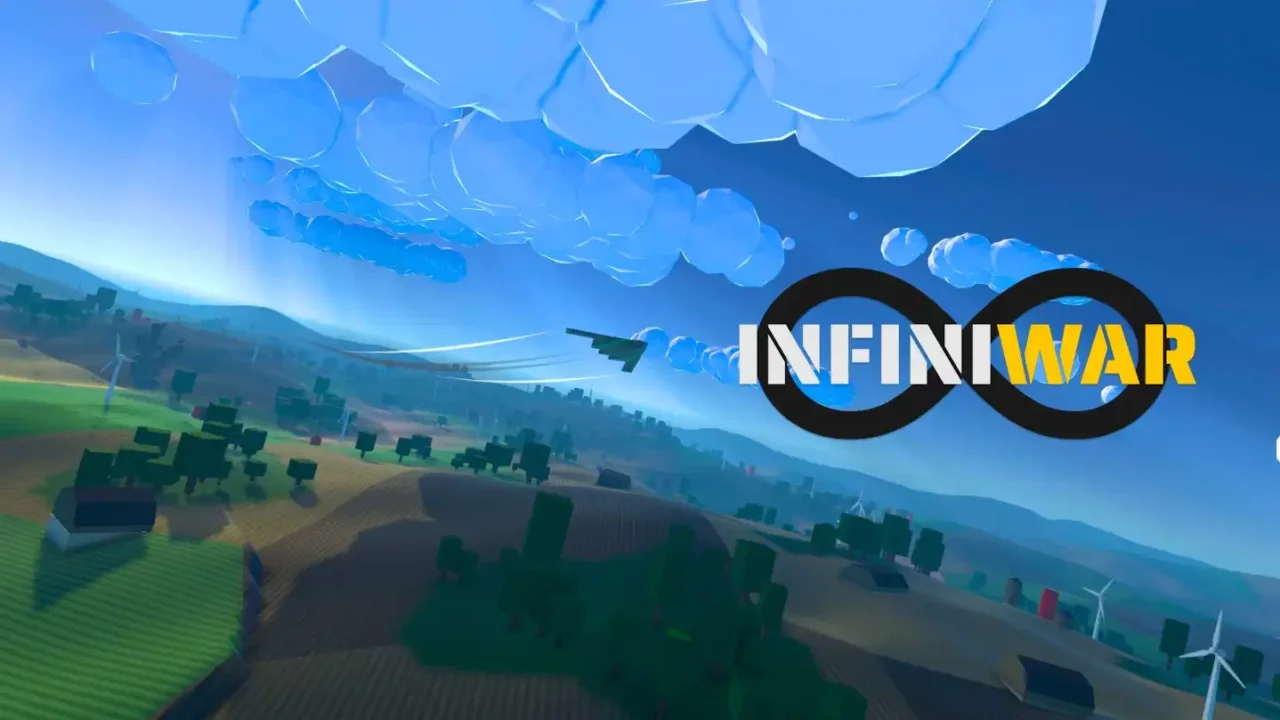
Infiniwar is a unique blend of the epic and approachable tactical combat of World in Conflict with the replayability of a roguelike. Every battle takes place on a fully procedural 3D map, with procedurally generated allies and enemies, so no two battles play out the same way. A unique objective and persistent resource system ensure that battles are not simply win or lose and instead require the player to make hard choices and tradeoffs that will impact the rest of their campaign.
Could you delve deeper into how the game’s mechanics, like the airdrop reinforcements and off-map support abilities, work to enhance strategic depth and replayability?
Airdropped reinforcements are lovingly borrowed (read: stolen) straight from World in Conflict. It removes the need to have unit-producing structures and all the mechanical baggage that brings from traditional RTS. Airdropped reinforcements allow the player to react quickly to changing needs on the battlefield, changing your current unit loadout as needed to capture a difficult objective, defend against an unexpected push, etc. You can quickly (but not instantly) swap between helicopters, tanks, amphibious units, anti-air, etc., to counter what the enemy is doing, and adjust your tactics on the fly. It’s also a vibes thing. It’s not very realistic or immersive to be building tank factories on the frontlines. And I always thought it was so much more epic to have the heavy transport aircraft swooping in low and fast to drop off fresh troops while the battle rages on the horizon, vs just appearing next to some building.
Off-map support abilities are intended to give players a powerful toolkit to problem-solve on the battlefield. There’s already a wide variety of options, and I’m always making more: precision bunker-buster airstrikes for destroying hard targets; rocket strafing runs to wipe out entire columns of armored vehicles; air-to-air strikes to shoot down pesky helicopters; radar scans to reveal enemy movements; chemical strikes to choke enemy troops but leave cover intact; napalm strikes to cut a path through a forest; just to name a few. But because all the abilities are limited, the player has to think carefully about where and when to employ them, or whether they should save them for later in the battle.
There are also powerful procedurally generated enhanced versions of these units and abilities, similar to loot in an ARPG. Think tanks with turbocharged engines, stealth helicopters that are hard to target with homing missiles, and so on. The player won’t have the full arsenal of units or support abilities unlocked from the beginning. As they progress through the roguelike campaign, new units and abilities will become available to round out their capabilities. But they will need to choose carefully, as they have limited strategic resources to spend on them in any given campaign.
How do you approach balancing gameplay, especially with so many variables and procedural elements in play?
What’s your process for testing and ensuring consistency across different play sessions?
In some ways, my philosophy is to embrace the chaos. I prioritize gameplay experience variety over consistency. So that may mean that some battles are harder than others due to circumstances of how they were generated. I’m OK with this. Because battle outcomes are non-binary (not just win or lose and restart), more difficult battles will serve to test the player’s skill to mitigate the damage, while easier battles will challenge them to maximize the value and efficiency of their victory.
That said, as a developer I do spend a lot of effort to try to make sure that the generation doesn’t end up with totally broken cases where normal gameplay isn’t possible (e.g., 0 objective spawning because no suitable locations were found, etc.). A major challenge has also been making sure the enemy AI can play well enough on a fully procedural map, such as spawning lots of naval units in a lake that has no access to any objectives or much of the map. I’ve created various debugging tools and heuristics to help improve these things over time.
Do you consider developing Infiniwar more as a hobby or as your professional work?
How do you balance this project with other commitments, and what does it represent for you personally?
That’s in a bit of flux at the moment. Previously it was more in the realm of a hobby, but it’s becoming more and more important to me the farther I get into it. It’s not quite at a professional level yet, though, since I can’t rely on it to support me. So it is somewhere (awkwardly) in between right now.
Has working on Infiniwar influenced your views on making game development a long-term career?
How do you see your future in this industry?
Definitely. Previously I wouldn’t have even considered game dev as a career option, since I had little relevant experience. That said, the wider industry is currently going through some pretty challenging times right now, so I don’t know if it’s a good time to fully jump in at the moment.
What does working on Infiniwar bring to your life personally?
Does it fulfill a creative need, or is it more about the challenge and technical mastery?
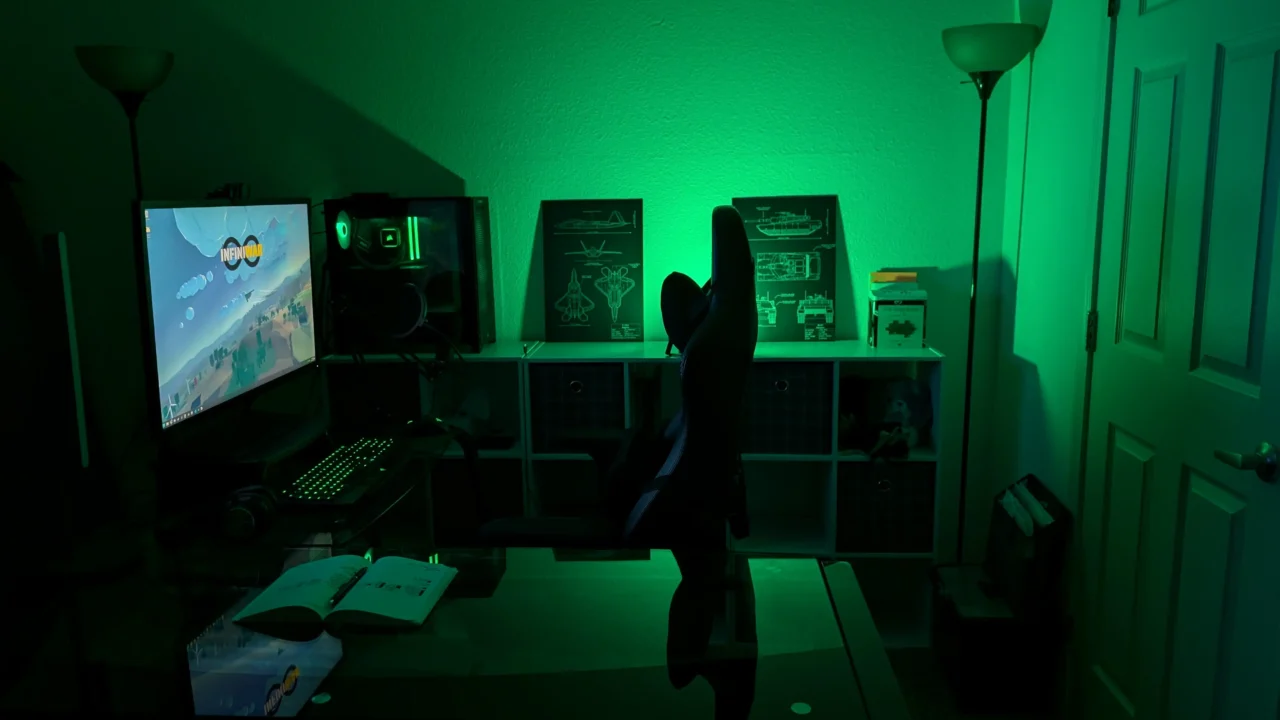
It’s definitely a creative outlet. It’s so satisfying to see something I dreamed up and created come to life and (in some cases literally) take flight before my eyes. I have endless fun just seeing what the map generator comes up with, or watching the AI teams fight a battle and react to each other. I love being surprised by my own creation!
How do you integrate your game development with your personal life?
Are there specific routines or boundaries you set to ensure a balance?
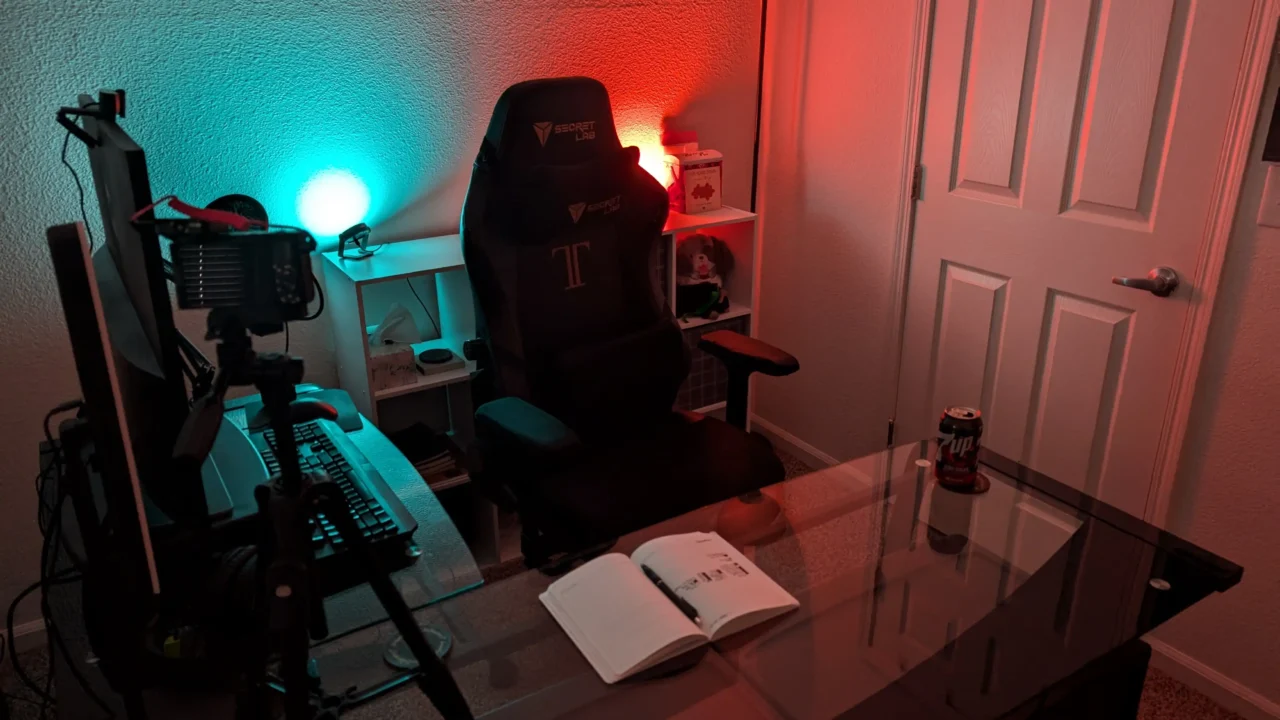
Infiniwar has been mostly a nights and weekends passion project of mine for several years, fitting it in where I can around a full-time job that pays the bills. Mostly I let myself work on it whenever I’m feeling inspired, motivated, productive, etc., as you can’t really waste those moods when they happen. When I’m not feeling those things, I still try to make progress via discipline, sacrificing time playing other games to make my own game instead, for instance. That said, I think time outside of the computer chair is very important for clarity, energy, and creativity. My dogs get me up and outside for walks multiple times a day. I also think it’s important to dedicate time each week to pursue a hobby or activity that is physical and face-to-face social with other humans (the opposite of sitting and staring at a screen). For me, that hobby is dance (lessons, classes, events, etc.). It puts my brain in a completely different mode of operation than game dev does, and I find that the switch makes it easier to come back refreshed.
If you had to choose, would you prioritize turning game development into a full-time career or keeping it as a hobby that complements your life?
Why?
As I said before, this is somewhat in a state of flux right now. I’m very passionate about creating Infiniwar, but it is not currently able to support me. It’s possible I could make smaller games to turn a profit more quickly, but I am not sure the motivation would remain if I were to do that. It’s also very hard to make a decent living selling small games as an indie. So for the time being, I’m on the slow and steady path of developing Infiniwar on the side, but staying open to the possibility of it becoming a larger part of my career if the opportunity strikes.
What motivates you to continue developing Infiniwar despite the challenges that come with being a solo developer?
Is it passion, the potential for financial success, or something else?
Infiniwar is a game I want to exist regardless of the financial reward at the end. It would be great if there’s some measure of financial success, but I would do it even if I knew there wouldn’t be. Early on when I was learning game dev I found it difficult to stay motivated, because I wasn’t working on projects I cared about. I made a whole devlog about the struggles of escaping tutorial hell, lack of motivation and confidence, etc. Infiniwar was the project that broke me out of that cycle, and I want to see where it takes me.
Could you share a story from a typical day in your life as an indie game developer working on Infiniwar?
What are some of the routine tasks and unexpected challenges you encounter regularly?
Game dev and programming in general is often banging your head against a proverbial wall trying to understand the cause of some bug or strange behavior that seems impossible. While it’s not always the case, I find that the longer something like that goes on, the more likely it is that the cause is something tiny, stupid, and easy to fix (once you find it). The big problems tend to manifest in more obvious ways. Probably my biggest challenge is figuring out what the most important thing to work on at any given time is. Graphics? Gameplay? Systems? UI? Content? Marketing? Community? Planning? It’s a constant juggling act, and the answer is always changing.
What would you like to tell gamers about Infiniwar?
Why is it worth waiting for, and what can players expect from the game?
One of my main goals for Infiniwar is to break down some of the barriers that the Real-Time Tactics genre suffers from. Many games in the genre are unwelcoming to new players, especially those coming from classic RTS games. Rather than overwhelming you with complexity and pedantic realism, Infiniwar aims to focus on action, spectacle, and fun. You don’t need to be a milsim nerd to enjoy Infiniwar.
How long should players expect to wait before they can get their hands on Infiniwar?
Do you have a target release window in mind?
“My current plan (which could change!) looks something like this:”
Where can gamers follow you and your work on Infiniwar?
Are there specific platforms or social media channels where you regularly post updates and interact with your community?
Yes! I have a devlog on YouTube, and I post on both X/Twitter and BSky. You can also wishlist Infiniwar on Steam
With the intense schedule that comes with game development, how do you switch off during the holidays?
Can you share how your Christmas looks? Are you a keyboard warrior even then, or do you manage to step away and enjoy some festive downtime?
“I’ll be doing a bit of both, definitely taking advantage of some of the holiday downtime to get some game development done. But I’ll also be taking some time to celebrate more traditionally, with a Christmas feast and board games with my girlfriend’s family.”
Joe Theis isn’t chasing trends—he’s building the game he wants to play. That intent shows in every system of Infiniwar, from procedural battlefields to the tough trade-offs that shape each campaign. Whether or not this turns full-time, the vision is clear: real-time tactics with true roguelike replayability.
We’ll keep tracking Joe’s devlog and sharing meaningful updates here on Fix Gaming Channel. If you want more deep-dive interviews and hands-on impressions from the indie frontlines, stick with us—there’s more to come.
Written by Ronny Fiksdahl, Founder & Editor-in-Chief of Fix Gaming Channel.
Send interview pitches, corrections, tips, or developer stories to contact@fixgamingchannel.com.
Support independent games coverage on Ko-fi.