

Turning a collage of Italian inspirations into a city that finally felt alive
This is part of Fix Stories — dev-authored journeys published on Fix Gaming Channel. In this instalment, we explore Verice Bay in Whirlight.
I’m Ciro Camera, and I’m one of the developers at Imaginarylab, a small indie studio based in Italy. We’re currently working on Whirlight – No Time To Trip, a narrative-driven point-and-click adventure about time travel and paradoxes. Our first game was Willy Morgan and the Curse of Bone Town, another point-and-click adventure game.
From the very beginning, the heart of Whirlight has been its city: Verice Bay.
Whirlight – No Time To Trip Trailer
Trailer courtesy of Imaginarylab.
Join Our Newsletter
Stay updated with the latest interviews, previews, and indie gaming news from Fix Gaming Channel.
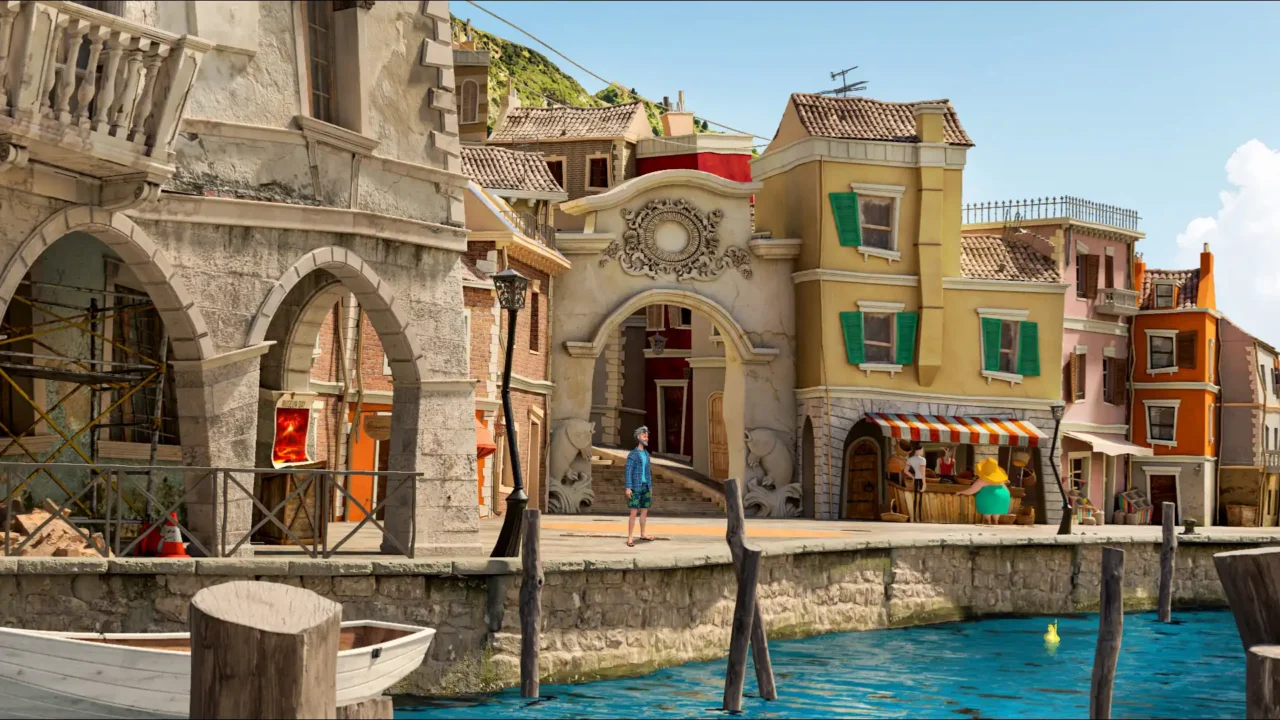
A bright canal-side view of Verice Bay, showing the layered architecture and Mediterranean-inspired atmosphere behind Whirlight’s world. Image courtesy of Imaginarylab
Our original idea was simple and deeply rooted in where we come from. We wanted to create a fictional city that felt authentic, layered, and lived-in, so we looked at places we knew well. Venice inspired the sense of history, Burano influenced the bold colors and playful visual contrasts, while Verona gave us a sense of spatial logic and quiet corners.
At first, Verice Bay was a collage of inspirations. We treated locations as individual scenes, each carefully composed, visually striking, and mechanically functional. Every background was designed to host puzzles, dialogue, or narrative beats. Once a location was finished, we moved on.
On paper, it worked.
In practice, something was missing.
During internal playtests, the game felt correct but strangely static. Players understood what to do, but they didn’t feel inside the city. Verice Bay looked nice, but it didn’t feel like a place shaped by time, people, and events. Ironically, for a game about time travel, the city itself wasn’t changing at all.
That realization forced us to rethink one of our core assumptions.
Instead of asking, “Does this location work?” we started asking, “Does this location belong to the same city as the others?” Continuity became more important than individual perfection. We stopped treating Verice Bay as a collection of backdrops and started treating it as a single evolving organism.
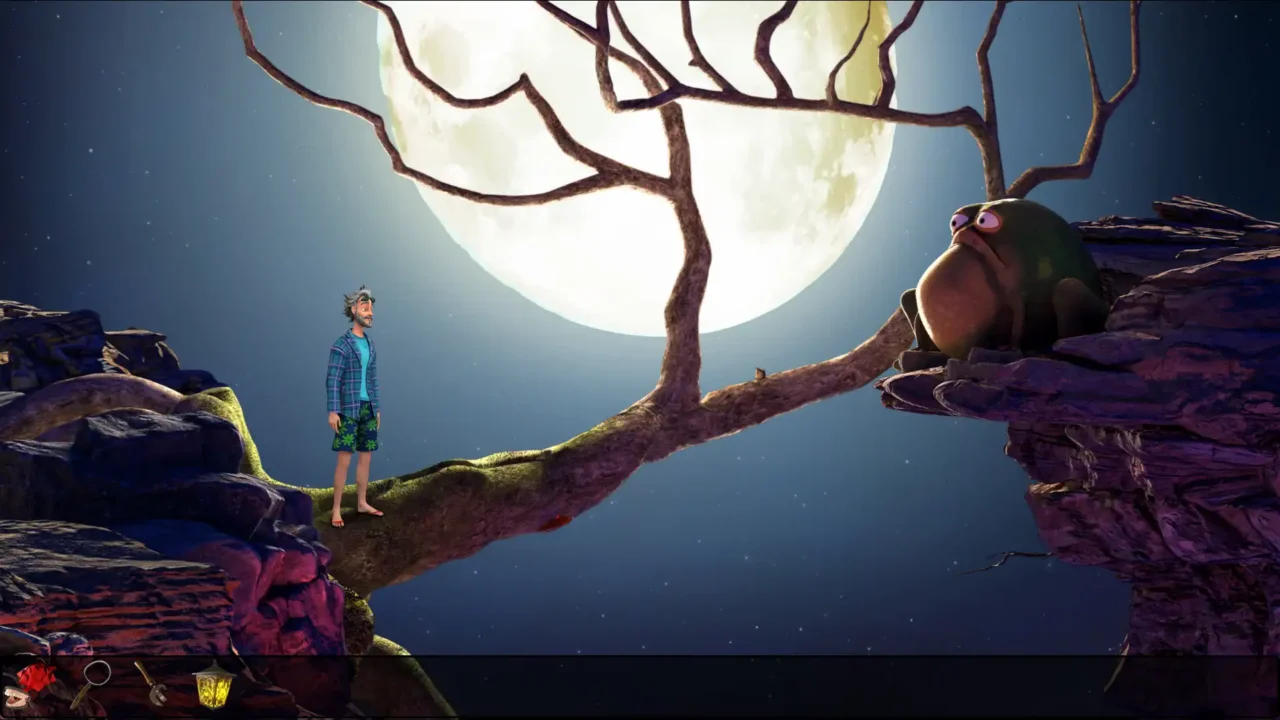
A surreal moonlit encounter that highlights Whirlight’s stranger, more dreamlike side. Image courtesy of Imaginarylab
We went back to our real-world inspirations, not to add more references, but to understand why those cities feel alive. Venice isn’t compelling because of one building; it’s compelling because layers of history coexist. Burano’s colors work because they repeat, clash, and echo across streets. Verona feels real because spaces flow naturally into each other, even when their purposes change.
So we applied the same logic to Verice Bay.
We allowed locations to evolve over time. Posters changed. Windows gained or lost details. Streets subtly shifted tone depending on narrative progression. Some changes were obvious, others almost invisible. Not everything served a puzzle. Some things existed simply to reinforce the feeling that time had passed and events had consequences.
From a production standpoint, this was uncomfortable. Revisiting “finished” areas meant reworking assets, retesting scenes, and accepting a certain level of inefficiency. But creatively, it was liberating.
One location that perfectly represents this shift is the Verice Bay Museum. Originally designed as a straightforward narrative space, it became a place where continuity and change could coexist. Exhibits evolve.
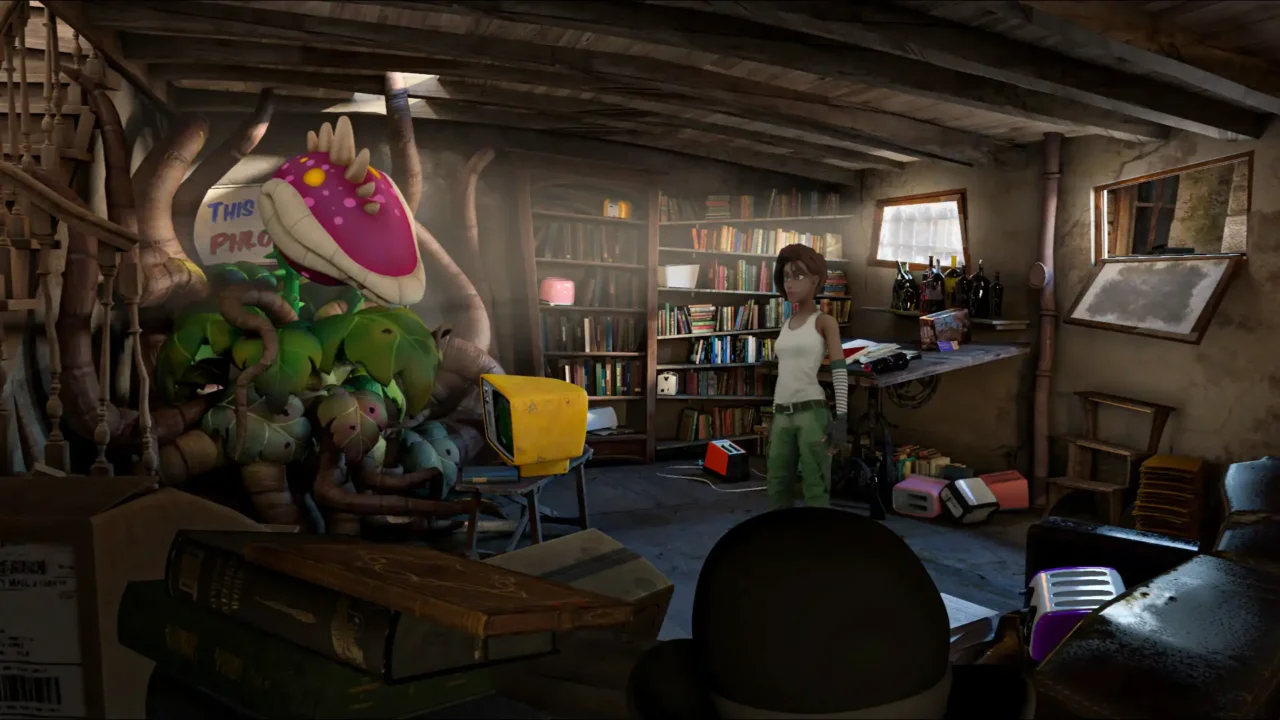
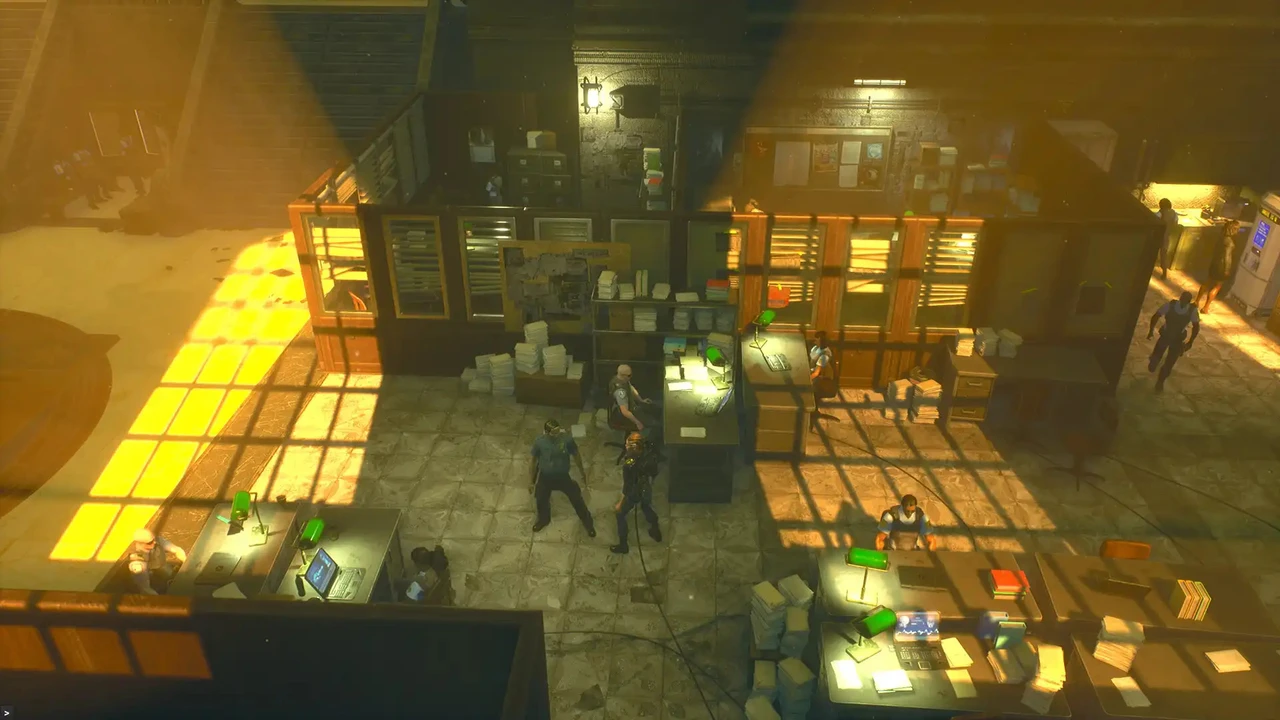
One of Whirlight’s more eccentric interiors, blending mystery, humour, and a lived-in sense of place. Image courtesy of Imaginarylab
This approach also changed how we designed puzzles. By letting the environment do more narrative work, puzzles no longer needed to carry all the meaning on their own. Instead of stacking mechanics in isolation, we let context, time shifts, and environmental continuity support player understanding. The result was better pacing and puzzles that felt grounded in the world rather than imposed on it.
Today, Verice Bay is no longer just inspired by real Italian cities, it behaves like one. It carries traces of its past, reacts to the present, and hints at futures that may or may not happen. And in a game about time, that feels exactly right.
If there’s one thing this city taught us, it’s that inspiration is only the starting point. A world truly comes alive when you allow it to grow beyond what you originally planned.
Whirlight – No Time To Trip
Release: 2026
Genre: Adventure, Casual, Indie, Point-and-Click
Developer / Publisher: imaginarylab, Vsoo Games
Platforms: PC — Steam
Links
Steam: Whirlight – No Time To Trip
Website: imaginarylab.it
Facebook: Whirlight
X: @whirlightgame
Discord: Join the Discord
Instagram: Whirlight on Instagram
Bluesky: whirlight.bsky.social
YouTube: @imaginarylab1067
Byline
Ciro Camera — Game Designer & Producer at Imaginarylab
Ciro is co-founder of imaginarylab, a small indie team focused on developing narrative games. Our first title was Willy Morgan and the Curse of Bone Town. Whirlight – No Time To Trip is imaginarylab’s upcoming point-and-click adventure, planned for 2026.
Related Reading
Skull X Aibohphobia: A Strange Yet Nostalgic Adventure
Angelo & Deemon 2: Too Hell of a Quest
Written by Ciro Camera — Fix Gaming Channel.
Send interview pitches, corrections, tips, or developer stories to contact@fixgamingchannel.com.
Support independent games coverage on Ko-fi.