




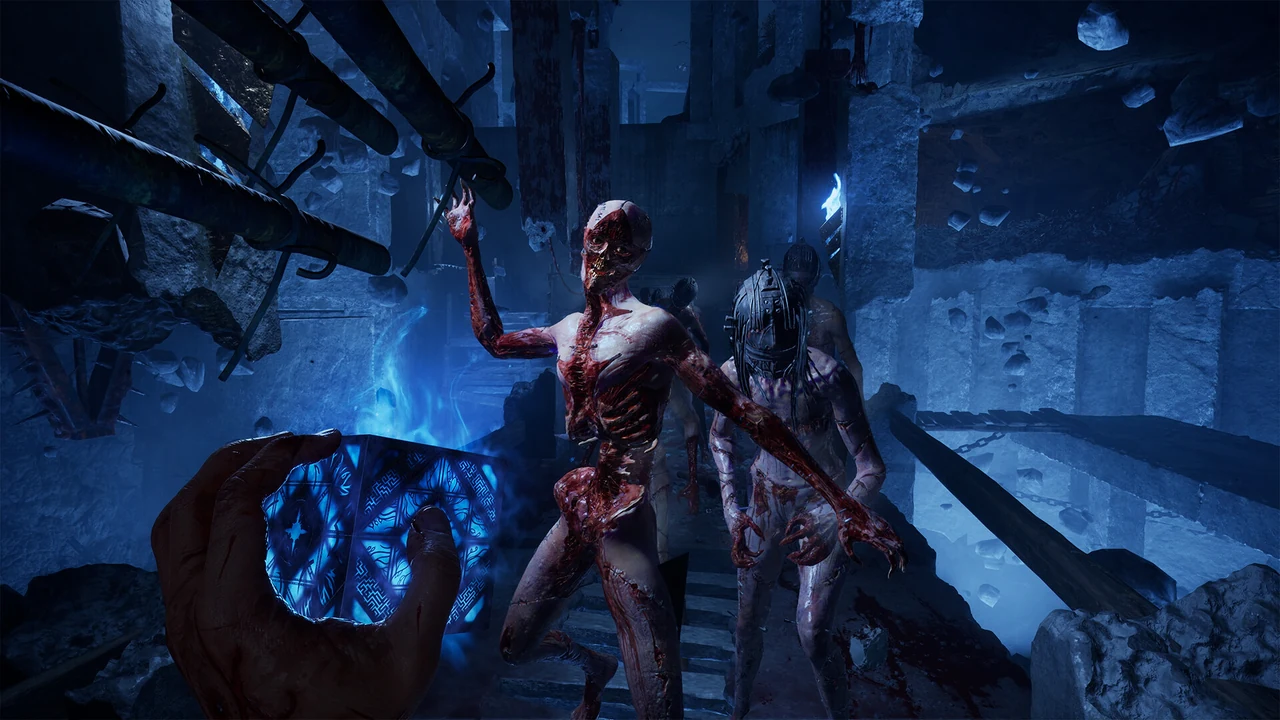


The final day of PAX West 2026
It’s the finale you’ve all been waiting for, but instead of a bang, PAX ends with a long, relieved sigh.
I’ll be honest, PAX West 2026 was awesome, but so many of the developers and publishers I spoke with were glad that PAX was coming to a close.
This wasn’t because PAX was bad for them. Quite the opposite. They saw increased wishlists, better traffic on their websites, and posts on social media explode from their time interacting with attendees at PAX. But PAX is also tiring.
Four days of running around the convention center, socializing with amazing and nice people, and just generally being in an incredibly warm building left everyone who had been at PAX for the full duration tired.
I felt this walking in on Monday. I had plans to again hurriedly run between the Arch building and Summit, but instead, I took my time today to try out more demos, and this time, I spent some more time talking to the devs who made them.
Want more PAX West and indie coverage?
Get more game features, reviews, interviews, indie coverage, and hands-on impressions from Fix Gaming Channel.
Join Our Newsletter
Stay updated with the latest interviews, previews, and indie gaming news.
More booths around Arch, and the people I talked to
My first stop caught my eye a lot. Next to one of those rideable lawn mowers was another entry in the chore/job simulation genre. Skyhook’s sequel to their popular game Lawn Mowing Simulator is coming out September 23, taking the franchise to America and expanding the simulator aspect to include better grass simulation so you can properly get better lawn stripes, maintenance for your lawn mower so you have to watch out for dull blades leaving patchy grass, and having to clear debris from the grass so you don’t hit any rocks or trash.
Lawn Mowing Simulator 2 is a very relaxing game, kind of like PowerWash Simulator. And it’s not just about cutting grass; you’re also taking care of the whole lot. It’s very satisfying when you’re raking and blowing leaves into a big pile before using your weed whacker to remove the weeds growing up from the cracks in the asphalt or spaces between concrete slabs.
When I talked with the Skyhook team, they told me that despite being a UK team, when they released the first Lawn Mowing Simulator, 90% of the audience was in America. So when they began production on the sequel, they and the publisher decided to place the game in America, set around the Northeast, with their inspiration being around Pennsylvania.
It was a weirdly enlightening conversation about how the recognizability of in-game locations can be used to appeal to larger audiences. Of course, the main focus of the sequel is more on the enhanced simulation of being a lawn caretaker. The demo I played, which you can play on Steam, was more linear, but the full game promises to be more open-ended.
Then, during the free time I had, I checked out a game I’ve had wishlisted for a while but never got around to. That game is Desktop Explorer, and I got to speak with Rodolfo Hernandez, the co-studio head and developer of the game.
Desktop Explorer is a really impressive simulation of an OS based on Windows 98, and the gameplay uses that system to its fullest. With the many puzzles in Desktop Explorer, you have to check source code to find hidden messages, rename files, resize text boxes to reveal images, and more, using general computer knowledge to reveal the mystery on this computer given to you by your grandfather.
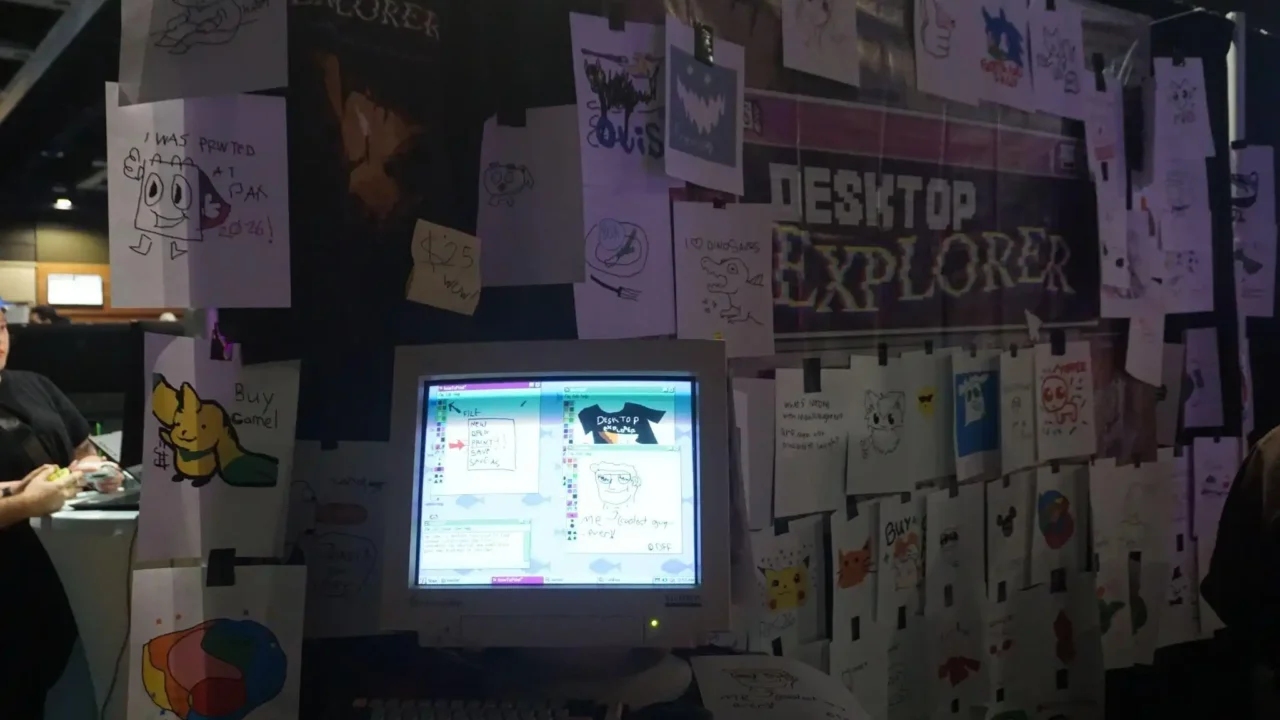
Fan art surrounds the Desktop Explorer setup at PAX West 2026. Photo: Fix Gaming Channel.
The demo was a great slice of the game, and sold me on it. In a very cool move, the Desktop Explorer booth was also selling physical cards with a code for the game on them. It was a great chance to buy the game and directly support the developers who made such a wonderfully detailed experience.
When speaking more with Rodolfo, he told me about his respect for and frustration with gaming publications. He said it’s great that there are publications that focus on covering indie games and not just the biggest releases.
However, he’s been snubbed in the past, especially by one larger publication that his team gave a Steam key and assets for an article. He told me they didn’t even play the game before reviewing it.
It was a point of frustration for him and the team, and speaks to a bigger issue with large publications, but that’s outside the scope of the article. Hopefully this section of our coverage does justice to Desktop Explorer.
I then went to the DreadXP booth, who’ve published some of my favorite games like PIGFACE, Dread Delusion, White Knuckle, and VILE: Exhumed. I had already played most of their games, and they are all great.
The only game I did play was PIGFACE because they had mice that were in the shape of a gun and simulated recoil when you pulled the trigger. It was a fun gimmick for the booth, but I wouldn’t recommend it for daily use.
Similar to Desktop Explorer, the developer of VILE: Exhumed, Cara Cadaver, was selling physical discs of the game. During that time, we also spoke about the developers who work with DreadXP, and she was happy to work with such creative people who make such great games.
She said it was a good motivator for her, and she’s glad to be where she is. It was a pleasant conversation about the people who inspire her.
I did want to highlight these conversations the most from my time at PAX, mainly because what’s lost in coverage like this, with all these different games, is the people behind these games.
These small conversations provided me with a little insight every time into what goes into video games and being an indie developer. That focus on the people making games is also why we spend so much time on our developer interviews.
Back to Indie Games from Poland
Then I stopped by the Indie Games from Poland booth once again. There were so many games at the booth that I had returned multiple times for my own enjoyment.
I jumped on Truckful first, which was described to me as Dredge in a truck, and yeah, it lives up to its name.
This game is charming, with that sort of toon art style that’s a delight to look at, and it has a great mechanic where you stack your deliveries in the back of your truck in a 3D grid, with one of your first deliveries being another delivery driver whose van broke down.
She gets sat in the back of the truck like the rest of the mail, and rolls around with it. I had to be careful with how fast I was going because, if I wasn’t, I’d knock the packages and the woman I picked up out of the back of the truck.
The game takes place in a town past some woods where, no matter what car goes in, it breaks down, except yours. Now you act as the only delivery person, taking mail to the delightful townspeople scattered across town.
Of course, this wouldn’t be Dredge in a truck if there wasn’t some kind of monster to look out for, and that monster is a monster truck that attacks you in the dark.
Despite its cheery appearance, the game is surrounded by woods that can be eerie when driving silently across long, shaded stretches deeper in the woods.
The demo was pretty short, but it was just enough for me to get the gist of the game. It’s not exactly my kind of game, but Dredge wasn’t my kind of game either. If you loved Dredge and you like this kind of delivery game, then keep an eye out for Truckful.
Next I played Unbroken: The Awakening, and at the insistence of the developer, I should tell you that, despite its looks, it isn’t a boomer shooter. It’s something more akin to Hotline Miami but in first person.
Your character and the enemies are glass cannons that can dish out a lot of damage but are easily dispatched. Luckily for you, you have resin, a smokable power-up that slows down time and super-powers your kick, sending enemies and items flying.
The fights are fast, but your movement is slow, offering a strange but satisfying level of combat that makes you think about where to move and what to prioritize, especially when certain structures are breakable. This makes your kick even more valuable, letting you break a couple of beams to knock down an enemy with the high ground.
Though I only got to play the demo for 30 minutes, I was told that the overall story has about nine endings, all based on how you play the game and who you interact with.
It’s like a lite-RPG, which reminded me a bit of one of the first first-person shooter/RPG hybrids, Strife, which the developer confirmed to me was a big inspiration.
Unbroken: The Awakening is kinda awesome, with a really cool grimdark Victorian setting. It’s out now in Early Access, and while I don’t think I could recommend it to most people, if you like strange and exploratory games with lots of action, then this game could resonate with you.
Critical Reflex Booth
On my last day, I finally got to go to the Critical Reflex booth. However, I had already been there a few times, as they are the publishers for Buckshot Roulette and No, I’m Not a Human, and are responsible for the physical arcade I played days prior.
Critical Reflex has a ton of games coming out soon, but the two I played today were Pipes.exe and Tanuki: Pon’s Summer.
First, Tanuki: Pon’s Summer was a surprise because I had scheduled to play Inkblood, but that wasn’t at PAX, or at least wasn’t there on the last day of PAX.
So when I sat down to play the demo, I had no information on the game and no expectations. What I got was a delightful mix of a delivery game and a BMX game.
You play as Pon, a tanuki, a Japanese raccoon dog, who gets a job at a post office to make money and repair a shrine for the coming tanuki festival.
You ride around on a BMX bike delivering packages while hitting tricks around the city. And the biking is very similar to the Skate series, where you earn points for chaining tricks and even get off your bike to walk around the town.
Walking around the town, you meet with the residents who need your help for a variety of minigames to make a little extra cash on the side.
While I don’t exactly care for delivery games all that much, the biking was awesome. Grinding along rails, jumping off and doing tricks off a half-pipe to get to your destination is awesome, and I really got sucked in trying to maximize my points before actually delivering my packages.
That might have been to my detriment, though, since I didn’t get that far in my demo.
I did spend some time watching others and talking with the booth attendants to learn more, specifically about the day system that progresses with the story, and how the Tetris-like packaging system would be expanded in the future, adding a small puzzle element to delivering packages.
I will be honest, Tanuki: Pon’s Summer didn’t grip me as much as other Critical Reflex titles.
It’s a fun and very chill game, one that a lot of people loved at PAX, since there were lines to play it every day I was there. I would prefer more BMX riding, but that’s not what this game is about, and I bet for people who like delivery games, this game would resonate with them.
Now, Pipes.exe is a different story. I was immediately enamored with the old CGI-style graphics for the game and the immediate switch to something more gamey when you open the game.
It has an evocative undertone that made it feel like it was presenting some techno-dystopian world stuck in the early 2000s.
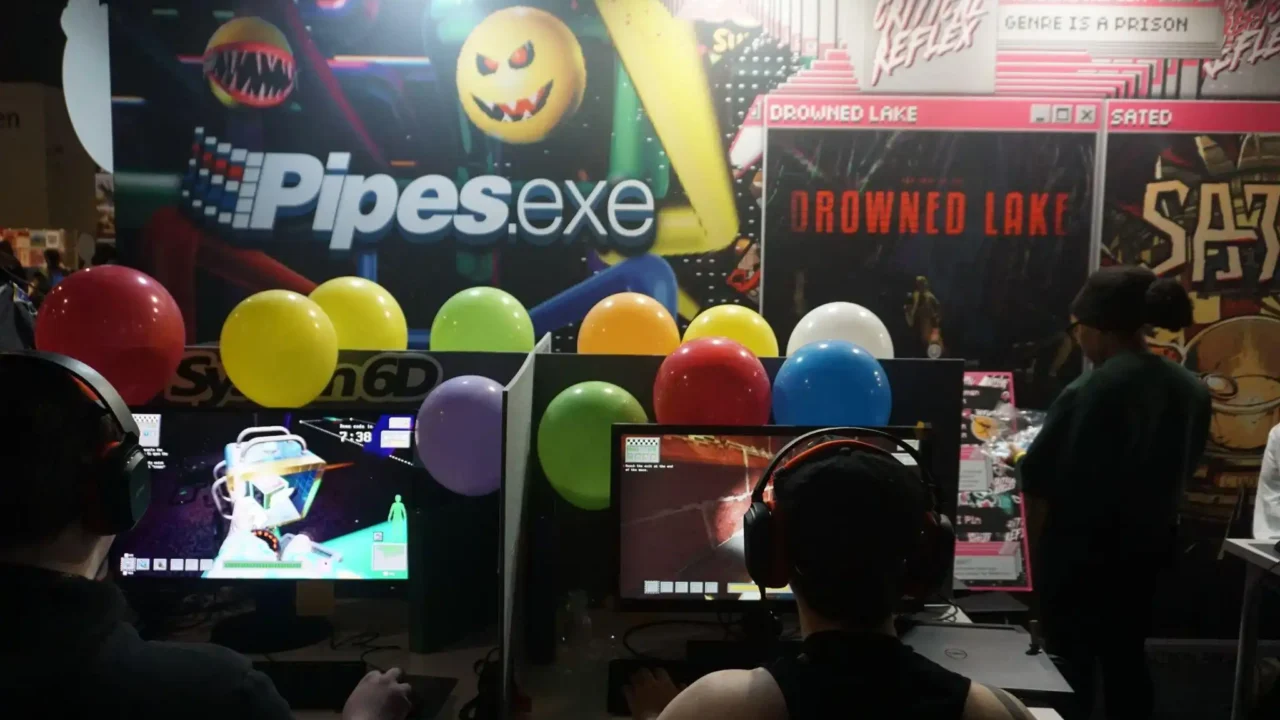
Attendees play Pipes.exe at the Critical Reflex booth during PAX West 2026. Photo: Fix Gaming Channel.
The gameplay is also really cool, being an online co-op 3D platformer, semi-adjacent to friendslop, but the game is more about the strange world of Pipes.exe.
You load into matches on your company PC that transports you into the digital world, where the main mechanic is that you can climb anything, including other players.
You have to hang from pipes that are procedurally generated to collect items to recycle, getting you points and employee benefits to buy upgrades and items.
My favorite was the paper plane you could hang on to get to places far away. However, you have to watch out for your stamina bar so you don’t fall into the void down below.
Pipes.exe also surprised me when it went from the jungle gym of pipes to swing from to a genuinely creepy confined maze in a different level. Then, when I finished that level and went to the next, the recycling bin came to life and floated away.
It was all very silly, and balanced the ridiculous nature of the game with its creepy horror elements.
My only regret with Pipes.exe is that I didn’t get to play with anyone else; I had to climb solo. Seeing others play, it looks a lot more fun with friends.
I’m excited about Pipes.exe because I bet in the full release it will be a delight to play and discover what more the game has to offer.
Another Pint
I will start this off by saying that I’m already in love with Another Pint; I fell in love when I was invited to their booth and wishlisted the game on Steam.
This game looks so cool, and I’m not just talking about the graphics. I’m talking about the idea of a tavern simulator mixed with an RPG. It sounds like a match made in heaven.
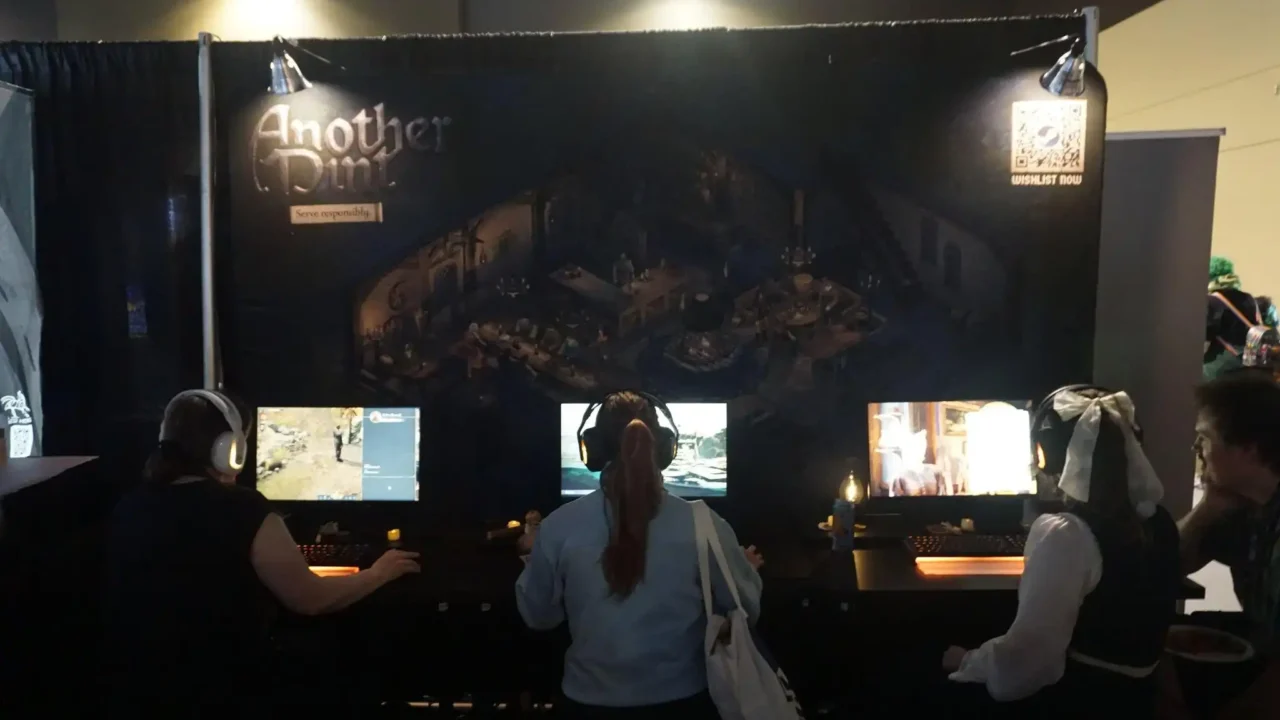
Players try Another Pint at its PAX West 2026 booth. Photo: Fix Gaming Channel.
To start with the graphics, which I want to highlight first, it perfectly matches the vibe of a 2000s RPG, old MMOs, and Pillars of Eternity, which the lead artist told me were the main inspirations.
This game’s vibe is great. The light, especially late at night in the tavern, sets the scene perfectly and makes everything feel a little more fantastical.
The game promises a system-driven management game where building up your tavern and creating your own drinks are paramount to your success.
In the demo I played, I didn’t get far enough to create my own drinks, but I did get to experience the tavern-building mechanics.
If you’re familiar with The Sims, it’s exactly like that, with a variety of furniture to turn the shack you’re given into something people will actually want to drink in.
It’s a really extensive decoration system. I wish I had the chance to play just the build mode because you could make a really lovely tavern, and I’m so excited about what you’d be able to do in the full release.
On the RPG side, it looks like it’s a really cool system. Each NPC seemed persistent in the world, with their own preference for drinks and relationships with the player.
For the more important NPCs like the builder, herbalist, and tailor, it looks like it will leverage its RPG elements to use quests to unlock new items for your tavern and new ways to make drinks.
Again, I wish I could’ve seen more. I was able to help Hardin, one of the first NPCs you meet, by finding his diary for him, which got me some reputation from him and some silver.
It’s such a cool combination of genres that it intrigues me a lot, and I was told by the developers that it would become a much more important system as the game goes on.
Finally, actually running your tavern is a treat. Customers order drinks, you pour them in a quick minigame, and place them on a tray.
Whenever you have multiple customers, it gets a little chaotic, as it feels like tavern-goers are a little impatient and will leave if you don’t serve them fast enough.
Besides that, the game continues to charm me. With multiple sizes and drinks, it becomes a fun little side game to perfect your pours and serve fast enough to get more customers through the door.
And the detail that customers pay by leaving gold on the table was just another small piece of the game that I liked. It all adds to the atmosphere the game does so well.
Overall, I am excited about Another Pint. If you like management games and you love customization, this game is shaping up to be something amazing.
Take the Main Stage
Finally, the last game I saw at PAX was all the way back at the Indie Incubator row, where I met with the team behind Take the Main Stage, a unique life sim where you are a struggling musician trying to make it big in Seattle during the alternative music boom in the 1990s.
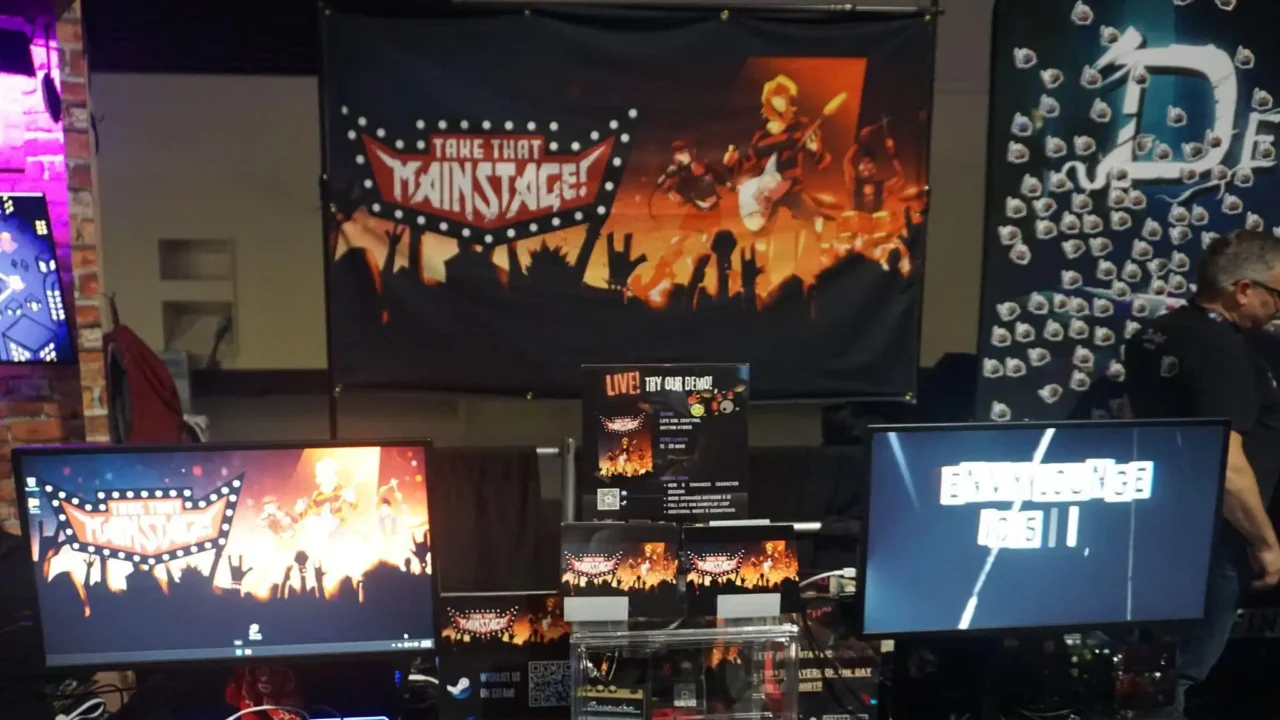
Take the Main Stage on display during the final day of PAX West 2026. Photo: Fix Gaming Channel.
What’s unique about this game is that it’s also a strategy game, a rhythm game, and a management game.
When you write music, you first have to talk to other people. You play a strategy game asking questions and getting answers, building your relationship and the conversation meter; the better the conversation, the better the inspiration.
Then you build your music sheet with different notes you add to create a pattern to play. When you play your music, you enter a rhythm game section, playing the notes as you built them.
And you manage yourself, training to play the guitar, and in between battles against other bands, you do short minigames to tune your instruments and mingle with the crowd.
There’s so much in the game, and crazily, it all works.
The demo was pretty linear in what you could do, only giving me the crumbs of what the game promises, and it promises a procedurally generated world with randomly generated people, so every new character would be in a completely different world to strategize in.
It also has multiple genres of music you can choose, a ton of new notes to unlock, and a full game world to travel around and build relationships in.
Even one of my only complaints, that I think the rhythm game section should be more challenging, was addressed by the devs when they said the full release would have ways to make the songs harder and more rewarding.
Overall, this was a great game to find because it’s so unique, it’s trying so much, and so far it’s succeeding.
It’s a game of potential, and I hope it reaches that potential because I would love to see what madness the final product will be.
Conclusion
If you care at all, I never got my No, I’m Not a Human pin; I was too busy playing demos, and by the time I went back to the physical arcade, it was closed.
However, PAX was great. I met great people, and I played great games. I watched as the community of gamers was able to do the same.
What I heard from developers at the booths was that they had a great time as well; it’s just that after four days, we’re all ready to go home.
I hope to return to PAX next year. The games I got through were barely 40% of what was on offer, but I hope that from these articles, I can highlight the fact that indie gaming is in the best place it’s ever been right now, even if the industry as a whole is shaky.
The best thing we can do for the hobby we love is to support the people who make the games we love.
Whether that means playing their games, wishlisting them on Steam, or just being able to tell them in person that you love what they make, it’s a damn good way to show support.
Related Reading
PAX West 2026 Day 1: Indie Games Take the Spotlight
PAX West 2026 Day 3: Seattle Indies and the Expo Floor
Written by Jake Boyette – Fix Gaming Channel.
Send interview pitches, corrections, tips, or developer stories to contact@fixgamingchannel.com.
Support independent games coverage on Ko-fi.