AI helped one developer build faster. It also gave him new ways to be confidently wrong.
For this Fix Stories feature, computer engineer and solo developer Mert Eker shares what AI-assisted coding genuinely made possible while building Futbolle — and what still required human judgment when the generated work looked finished but was wrong.
Futbolle is a browser-based football puzzle project built by Mert in his spare time. His story is less about whether developers should use AI and more about what happens when one person relies on it heavily enough to discover both its leverage and its failure modes.
You can read more first-person developer and creator stories in Fix Stories.
Update: Since submitting this story, Mert says Futbolle has grown to 20 games, with a squad-builder called Kadro Kur now live alongside a head-to-head mode. He also says the site has passed 1,800 monthly players.
Editor’s note: The dataset sizes, traffic figures, hosting measurements, and other numerical figures below come from Mert’s own logs and datasets and are presented as developer-supplied figures.
Want more stories from the people building games?
Get more developer stories, interviews, reviews, indie coverage, and gaming news from Fix Gaming Channel.
Join Our Newsletter
Stay updated with the latest interviews, previews, creator stories, and indie gaming news.
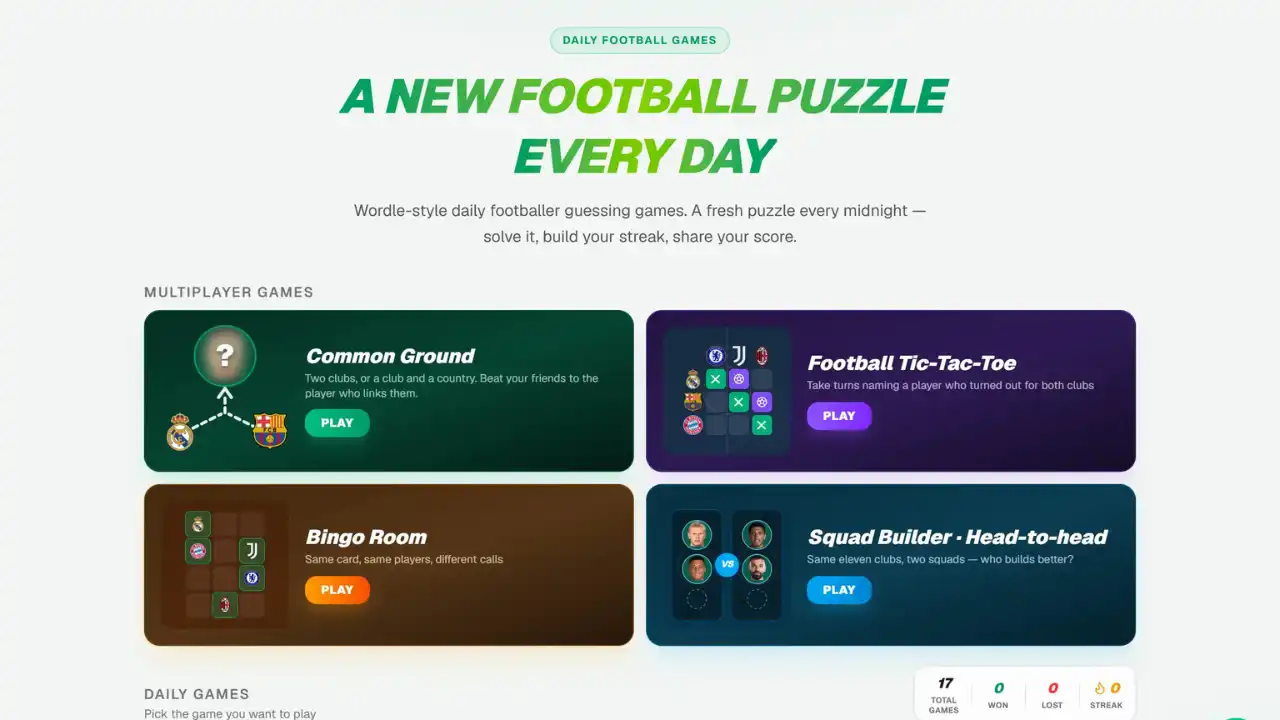
I am a computer engineer, and Futbolle is the football puzzle site I build alone in the evenings. Seventeen daily games, four rooms you can play against a friend, three languages, a fresh puzzle at every player’s local midnight. Today’s is puzzle #62; the first one went out on 15 July 2026. That pace is not normal for one person with a day job, and I am not going to pretend it came from discipline. I build with an AI coding assistant, on almost every file. What I want to describe is where that genuinely changes the work — and the three times it quietly broke my site.
WHAT IT ACTUALLY ENABLES
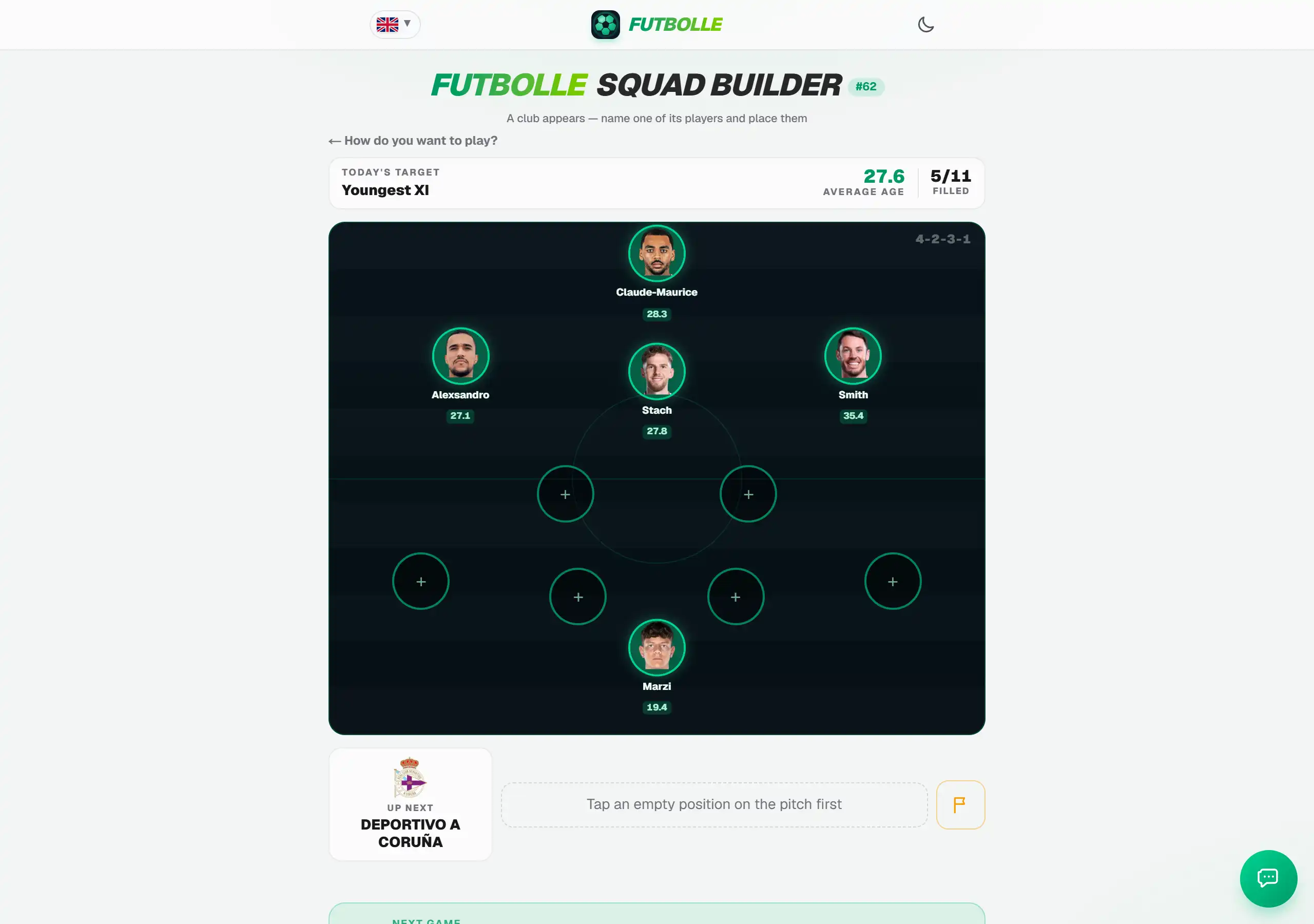
The honest answer is not “it writes the code for me.” I read every line that ships, and I throw plenty away. What it removes is the tax that kills solo projects: the third translation file, the Open Graph image generator, the sitemap entry, the FAQ markup, the accessibility pass on a component I just redesigned. Alone, those chores are the reason a good idea sits in a branch for three weeks. Squad Builder, my newest game, went from sketch to production in a day — pitch, server-side validation, three languages, share cards, and a head-to-head room. The idea was still mine. The twelve boring files around it were no longer my problem.
The second thing it buys is nerve. I rebuilt the entire club-player dataset — 75,429 players and 121,252 club relationships — twice in one week, because rewriting a scraper is no longer a weekend I have to budget for.
WHERE IT FAILS
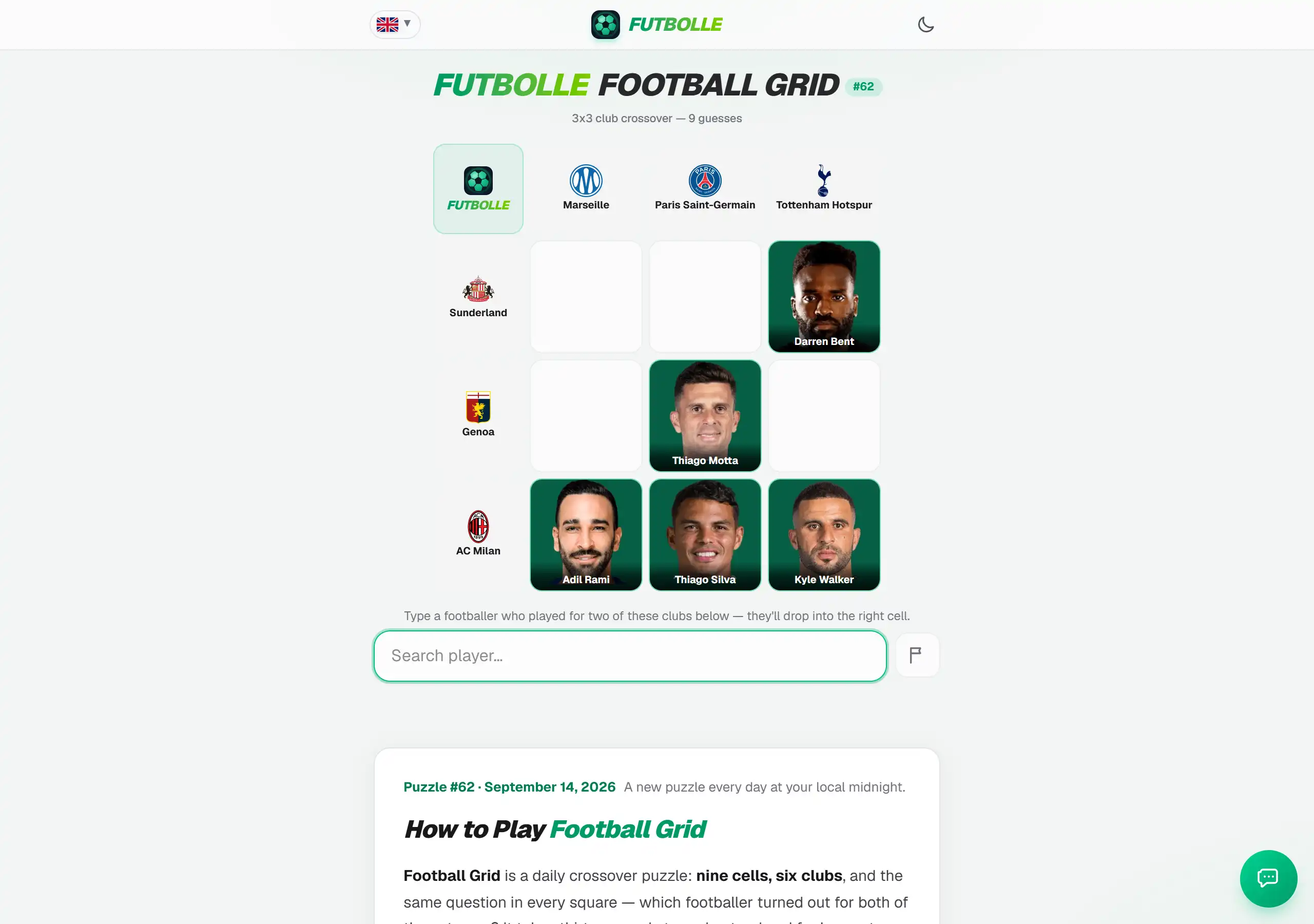
It builds confidently on a wrong premise. One morning I checked the day’s Football Grid and three of the nine answers were wrong. The code was fine; the model of the world underneath it was not. Players were keyed by name — and there are two Marquinhos and several Paulinhos, so my data had welded their careers together. I had asked for a scraper and I got an excellent scraper of the wrong thing. An assistant will keep polishing a house built on the wrong plot forever, and it will never ask whether the plot is right. Rebuilding player identity on Wikidata entity IDs raised the number of players confirmed by two independent sources from 43,736 to 48,272.
It fails silently — and so does the tooling it writes for you. Wikipedia began rate-limiting my requests, roughly 60% of the identity lookups were being dropped, and the script still reported success. Worse: my nightly audit, also AI-written, screenshotted the English site without setting the browser locale, so every “English” page it checked was actually Turkish. For weeks the audit was green and verifying nothing. Generated code is very good at looking finished.
It is happy to be destructive. My first attempt at cleaning the bad records was a clever heuristic. Before running it I asked one question — does this touch the rows that are already correct? — and the answer was that it would delete Oğuzhan Özyakup’s Feyenoord spell and 44 real Alanyaspor players. That question was the entire value I added that day. Nothing in the assistant’s output suggested asking it.
WHAT STILL NEEDS A PERSON
Judgment about damage. Every data rebuild now has to clear a 23-answer control set before it can ship. That rule exists because I was nearly wrong once, not because a model proposed it.
Decisions with a cost or a principle attached. The multiplayer rooms validate every guess on the server, so the answer pool never reaches the browser; the simpler design ships the answers to the client, and an assistant optimising for “working” takes that path. When page regeneration hit 75% of my monthly hosting quota, cutting it roughly twenty-fourfold was an architecture call, not a coding one.
Everything with a face on it. There is no generative art on Futbolle: all 9,204 player portraits are real photographs, cut out and standardised by script, and the crests are the real crests. I still check them by eye, because an automated lookup once handed me a photo of Messi for a completely different player.
And taste, which mostly means using your own product on your own phone. The homepage card for head-to-head mode dropped players straight into an empty lobby instead of asking how they wanted to play. The invite button copied a line of text in front of the link. No test caught either. I did, on the sofa, like a player would.
THE DISCLOSURE I WOULD WRITE FOR ANY SOLO DEVELOPER
AI assistance did not make me a developer, and it did not make Futbolle. It multiplied how much of my own design I can actually get built, and it introduced a failure mode I never had before: confident, well-formatted, thoroughly wrong work that passes review if you are tired. Every bug that reached my players came from somewhere I had stopped thinking, not from somewhere the model had stopped typing.
The site is sixty days old, has around 1,600 monthly visitors and no revenue — AdSense has turned me down twice. One person, no budget, no team. That is the trade, and I would take it again: with the control set, the guard question, and my own thumbs on the screen.
Futbolle
Format: Browser-based football puzzle games
Creator: Mert Eker
Website: Futbolle.com
Fix Gaming Channel: Fix Stories gives developers and creators room to tell the stories behind their work directly in their own words. Mert Eker’s submitted story above has been preserved in his voice and formatted for publication by Fix Gaming Channel.
Related Reading
Fix Stories: The Game Existed Before the Interface — How AI Helped Me Bring Hoop Dynasty to Life
This May Be Anti-Inspirational. It Worked Anyway.
Everyone Uses AI Now. So What Are We Really Disclosing?
Story written by Mert Eker, computer engineer and solo developer of Futbolle.
Edited and published by Ronny Fiksdahl, Founder & Editor-in-Chief of Fix Gaming Channel.
Follow Futbolle on X, Instagram, and TikTok.
Send developer stories, creator stories, corrections, tips, or game pitches to contact@fixgamingchannel.com.
Support independent games coverage on Ko-fi.