From Gaming Giants to the Challenges Facing Indie Developers
At Gamescom Asia 2026, Jin Oh shared his perspective on what small studios face before launch—from finding the right players to making difficult decisions when time and money are running out.
Robelle and I sat down with Jin Oh at gamescom asia x Thailand Game Show 2026 on October 30. We came to talk about indie games and the people making them. We wanted to understand the problems that follow small developers from their first idea all the way to launch day.
We had mentioned the meeting in our Day 2 report from Bangkok. Over more than two decades in gaming, Jin Oh has served as President of Worldwide Publishing at Riot Games, CEO of Garena, Managing Director at Blizzard Entertainment for Korea and Southeast Asia, and Chief Global Publishing Officer at KRAFTON. His career in publishing and international operations connects him to franchises including League of Legends, VALORANT, World of Warcraft, and StarCraft. His official Gamescom Asia speaker profile outlines those roles.
I knew those games and companies long before I knew Jin’s name. For me, meeting someone with that history felt like sitting down with one of the gaming industry’s behind-the-scenes legends. Jin had been on the conference program to discuss what makes great games endure. We wanted to hear what his experience could tell us about the challenges facing much smaller teams.
More From Gamescom Asia
Follow our conversations with developers, our event reports, and the stories behind the games.
Join Our Newsletter
Stay updated with the latest interviews, previews, and indie gaming news.
A Game Can Look Good and Still Struggle
One of our opening questions concerned a familiar problem for indie developers. A game might look impressive and still attract little attention. Is something wrong with the game, the way it’s presented, or simply the people it’s reaching?
Jin’s answer started with uncertainty. Nobody can reliably predict the size of a game’s success before it launches. He recalled how even people close to games that later became enormous hadn’t anticipated what would happen. He had also seen confident predictions about other games prove wrong.
“No one knows until the game launches.”— Jin Oh
What gave him greater confidence was something less glamorous than a beautiful trailer: developers who could explain exactly who their game was for. A broad demographic description wasn’t enough. He wanted to see a real understanding of the intended players, what they enjoyed, and why this particular game would appeal to them.
That led me to talk about the challenges of giving developers honest advice. When someone has invested years of effort, they understandably believe in what they’re making. You want them to succeed, but supporting their work sometimes means questioning an approach rather than agreeing with everything. Jin’s response was that conviction is important; he placed more confidence in developers who combined that conviction with a clear understanding of their audience.
The Work Nobody Sees Before Launch
For a solo developer or a tiny team, programming, artwork, and design can already consume every available hour. But someone also needs to think about budgets, a store page, marketing, community conversations, potential publishers, and how people will hear about the game in the first place. When there’s no significant funding or investor lined up, those jobs don’t simply disappear. They fall on the same few people trying to finish the game.
We asked Jin about a studio approaching the end of its runway with only six months left. He wouldn’t prescribe a universal list of features to cut; every situation is different. What came through strongly was his sympathy for passionate teams in that position, and his belief that difficult, sometimes boring decisions are far easier to make near the beginning of development than when time has almost run out.
“It’s so hard to turn the course in six months.”— Jin Oh
If a studio knows whom it is serving, it has a better basis for deciding what improves the experience and what can wait. More polish, more features, and more ambitious ideas can all sound attractive. But adding them late may be the opposite of what a project needs.
That is one of the cruelest parts of the indie grind: years of hard work can bring a game closer to completion without necessarily bringing it closer to a sustainable launch. Planning and discipline cannot guarantee success, but they can help a team recognize problems earlier, while it still has options.
Funding, Rejection, and Finding the Right Players
We also talked about the experience of pitching a game and not hearing the whole reason it was rejected. Jin drew on his time in venture capital. People making funding decisions may soften difficult feedback because they don’t want to hurt someone or close the door on a future relationship. For the developer, that can leave important questions unanswered.
He suggested that trusted contacts can sometimes help developers get a clearer perspective. But he kept returning to the same underlying issue: whether the team can explain its game clearly and knows its intended audience. In his view, a beautifully designed pitch deck is less useful if the thinking behind it isn’t focused.
That carries directly into marketing. A small developer can spend time posting everywhere and still struggle if the message doesn’t reach the people most likely to care. Jin’s preference was to begin with a specific group of players, serve them well, and give those players a reason to tell others. It isn’t a promise that a game will take off. It is a clearer starting point than trying to make something for everybody.
“Nothing’s for everybody, right?”— Jin Oh
When Jin Started Asking About Fix Gaming Channel
We had arrived with questions for Jin, but at one point he turned the conversation toward us. He asked how our independent publication and the work we do with developers fit together.
For a moment, the questions were going both ways. I explained that Fix Gaming Channel is independent, and I intend to keep it that way.
I even got a little carried away and joked that Jin couldn’t buy Fix Gaming Channel at any price. It was my enthusiastic way of saying how much I value the independence we have built.
Small Studios Have Advantages, Too
We returned to the question of what indie developers can learn from bigger companies, particularly when it comes to building communities that last.
Jin saw an advantage in small teams being nimble and close to the players they want to reach. Many indie developers make games because they are deeply involved in gaming communities themselves. Larger organizations can find that closeness harder to preserve as they grow.
“I think indies do have an advantage, right? A lot more nimble.”— Jin Oh
His caution was that being small and creative doesn’t mean avoiding structure. Even modest processes, introduced early, can help a developer decide what to prioritize and learn from the results. They don’t remove the risk of failure; they can give the team more room to respond before it reaches a crisis.
The conversation found a personal connection, too. When Manila came up, Jin told us he had attended school there as a child and remembered his time in the Philippines fondly. It was another part of the meeting that went beyond our prepared questions.
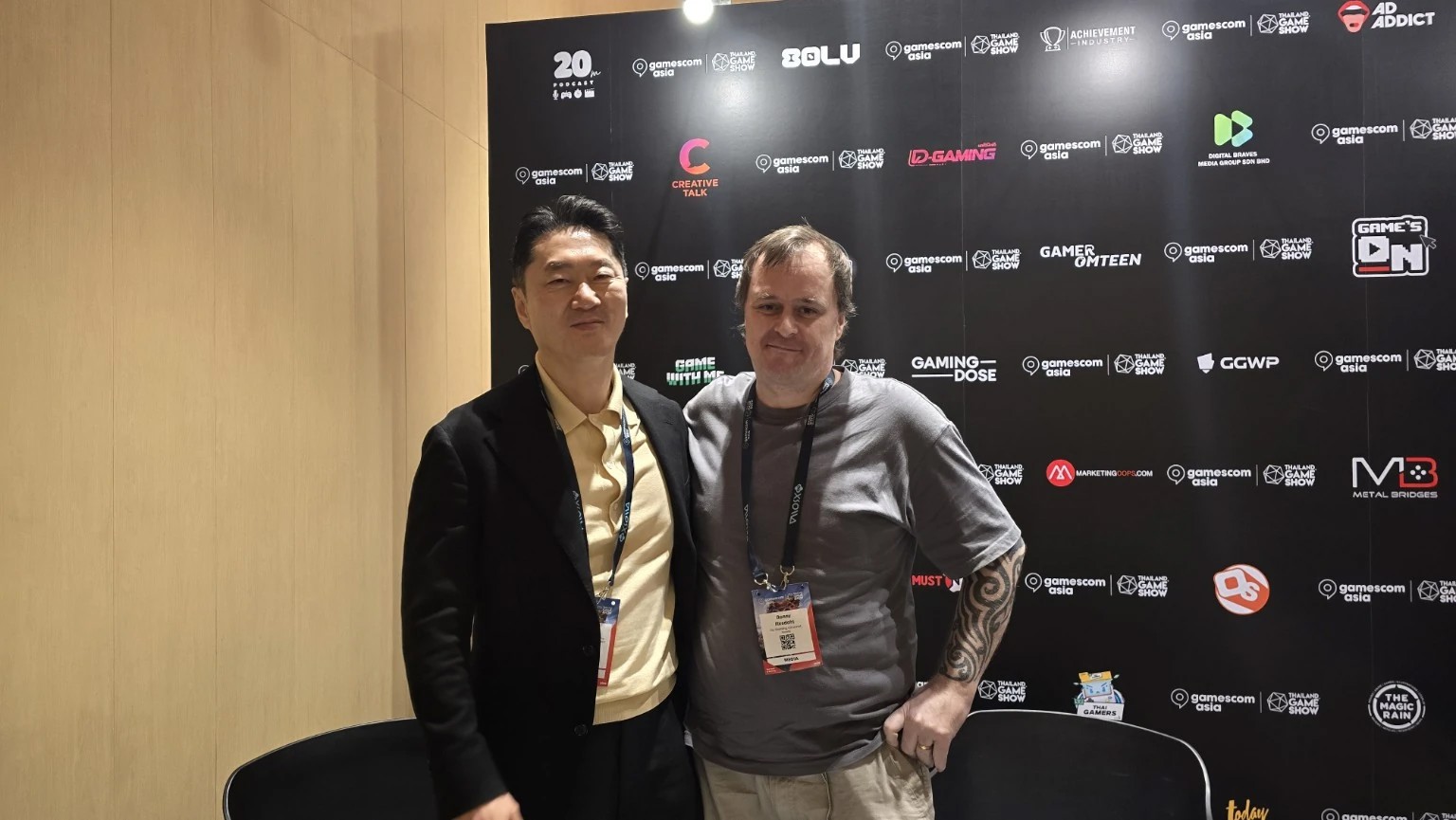
We wrapped up our conversation and took a photo together.
I left thinking about how many different jobs an indie developer has to do before anyone gets to click Play. Research, development, budgets, publishing, marketing, community building, and launch planning are all part of the same difficult road. Some teams can execute every step carefully and still not find the audience they hoped for.
Jin never offered a formula for guaranteed success. What he offered was a practical way of thinking about the uncertainty: know who the game is for, make the hard decisions early, and give the people creating it the best chance to see their work through.
Related Reading
Gamescom Asia 2026 Day 2: Wired Games, Jin Oh, and a Few Laughs
Gamescom Asia 2026 Day 4: Closing Figures and Indie Awards
Fix Gaming Channel’s Gamescom Asia 2026 coverage hub
Written by Ronny Fiksdahl, Founder & Editor-in-Chief of Fix Gaming Channel.
Send interview pitches, corrections, tips, or developer stories to contact@fixgamingchannel.com.
Support independent games coverage on Ko-fi.