

Why DARQ Needed Silence and Bloody Hell Hotel Needs Freedom
Wlad Marhulets wanted to make games partly so he could write music for his own projects. Then DARQ taught him when to leave the score out. In this Wlad Marhulets interview, the film composer and Unfold Games founder talks about starting over in America, learning to build a game, and protecting time to create while running a larger studio.
As a musician, I wanted to ask about more than the soundtrack: timing, silence, and what different art forms can communicate. That thread also runs through our conversation with composer Benedict Nichols. Here, Wlad explains how DARQ led to Bloody Hell Hotel, why its vampire can be a peaceful host, and why he now plans a complete 2027 release rather than Early Access.
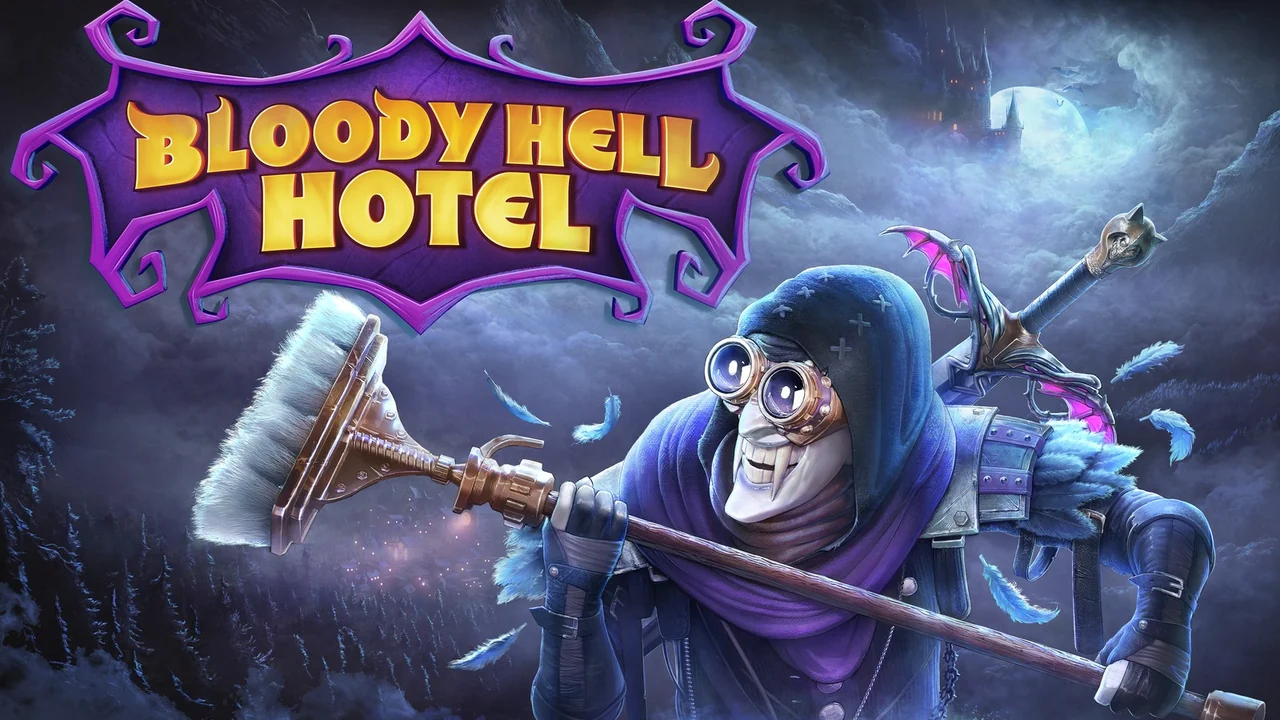
Bloody Hell Hotel Official Gameplay Trailer
Watch the Bloody Hell Hotel gameplay trailer
More Conversations About the Art of Making Games
Hear from the developers, composers, and artists behind independent games.
Join Our Newsletter
Stay updated with the latest interviews, previews, and indie gaming news.
Starting Over and Finding Creative Freedom
You arrived in the United States at 20 with just $300 and without speaking English. That’s quite a journey from where you started to where you are today. Looking back, what were the moments that truly changed your direction, and did you ever imagine your life would take you into filmmaking, writing, and game development?
Not in a million years! I think the biggest turning point was simply deciding to go to America. At the time, I had to borrow money just to afford a short visit, let alone relocate permanently. I was completely broke, facing homelessness, didn’t speak English, and even if I did, it wouldn’t have made much difference because I had a severe stutter that made speaking virtually impossible anyway. On paper, it was a terrible idea! But looking back, almost everything good that happened in my career came from taking lots of action despite terrible odds. Failing, trying again, failing some more, and refusing to give up. As cliché as it sounds, that turned out to be the recipe for overcoming countless challenges, many of which seemed impossible at the time.
What pulled you towards making games when you were already working in film music? Was there something you wanted to create that composing alone couldn’t give you?
Creative freedom! As a film composer, you’re contributing to someone else’s vision. Which can be great, especially when you work with people you admire. But I’ve always had this desire to create something entirely my own. With games, I could create my own worlds, be ridiculous, and take creative risks I wouldn’t otherwise have had the freedom to take. Game development felt like combining all my creative interests into one medium. To this day, I see video games as one of the most expressive art forms, bringing together so many different disciplines and allowing players to experience them on their own terms.
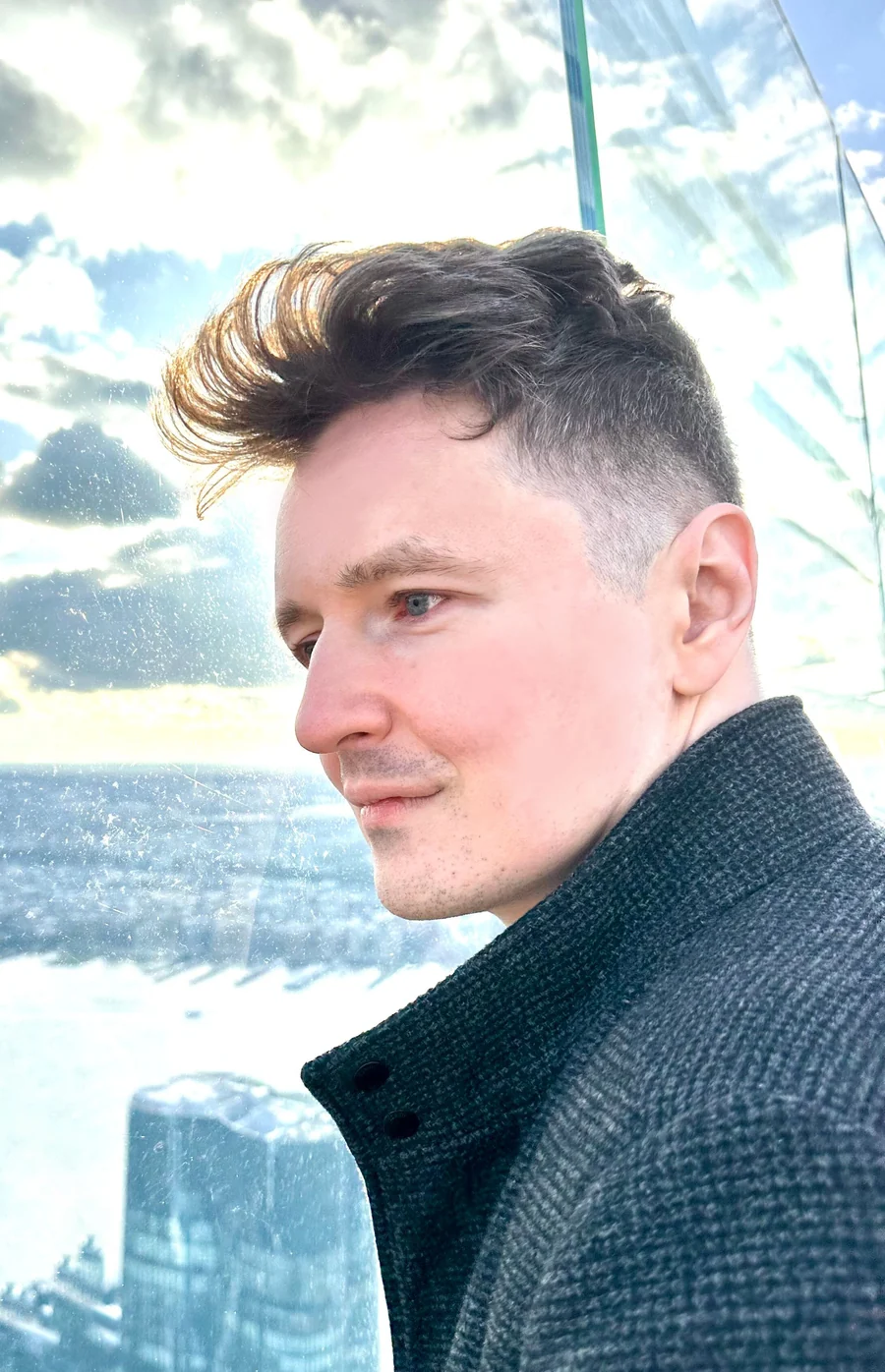
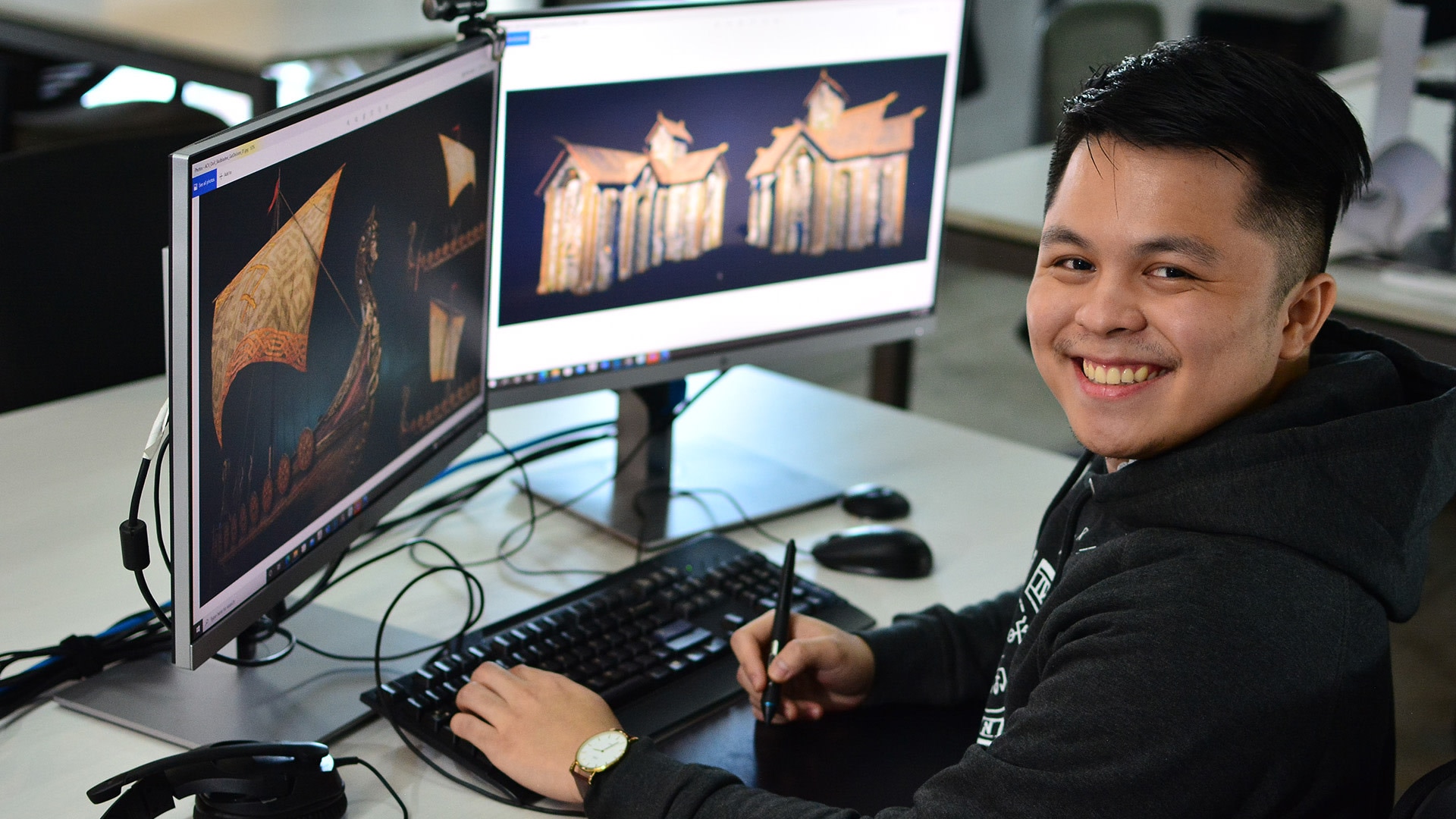
Wlad Marhulets, founder of Unfold Games. Photo supplied by Wlad Marhulets.
You’ve contributed music to major films, including Hitman: Agent 47, The Giver, and The November Man. Hitman particularly interests me because it originated as a video game. What was that experience like, and did working on a film connected to gaming influence your interest in developing games yourself? Or were those two completely separate creative journeys?
I worked on those films as an additional composer, alongside Marco Beltrami. It was a fantastic experience and I learned a lot from working with him! As for Hitman, the connection to video games was purely coincidental. My interest in game development developed independently of my film career, but my experience in the film industry had a huge influence on how I approach making games. For me, storytelling, cinematography, lighting, acting, sound effects, and of course music all translated directly into game development. For example, almost every trailer we’ve made for our games is essentially a music video. We record the music first, then edit the gameplay footage tightly to its rhythm, with the visuals playing a supporting role. That’s quite different from how game trailers are typically made, in my experience!
Music, Silence, and Building DARQ
As a musician, I’m interested in how timing, tension, and silence carry across different creative disciplines. Can you describe a moment in DARQ where your musical instincts influenced the experience beyond the soundtrack itself?
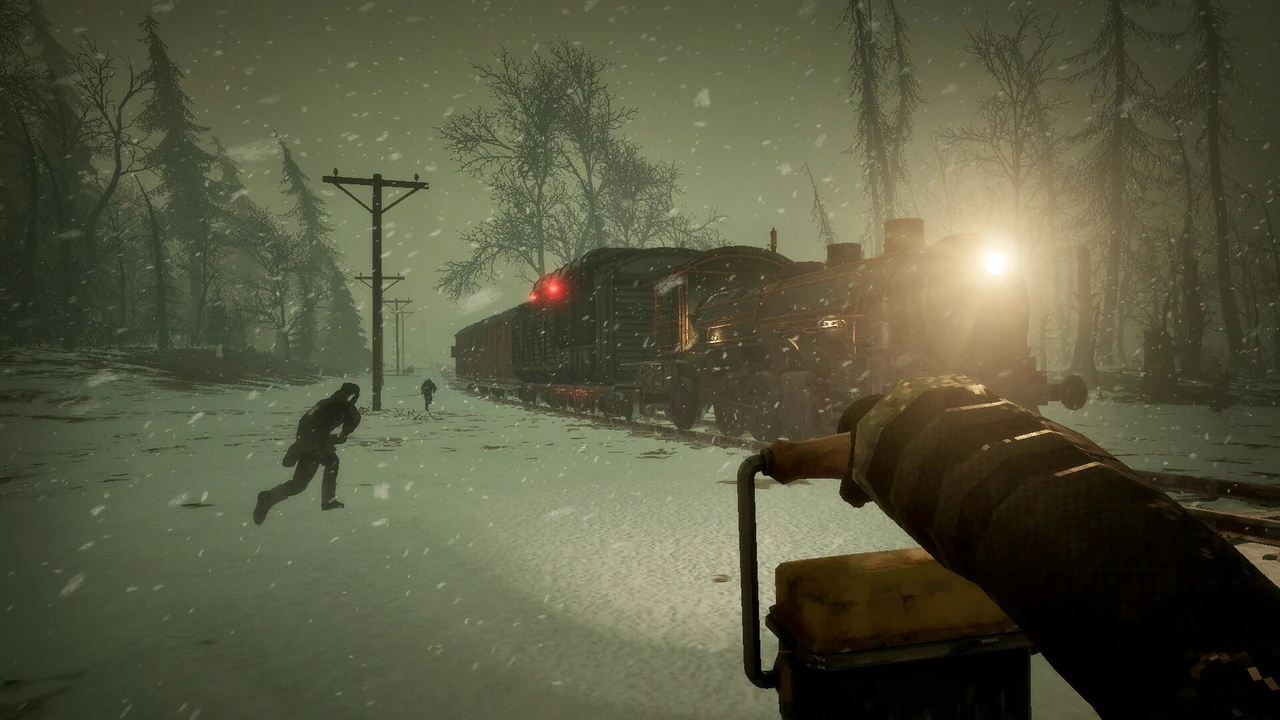
Great question, and it’s not something I often share, but one of my motivations for getting into video game development was the desire to write music for my own projects. At first, DARQ was being made with that in mind, and throughout development I couldn’t wait to dive into writing an elaborate orchestral score for the game. But in the end, I looked at it through the eyes of a game director rather than a composer and came to an interesting conclusion: this game doesn’t need much music at all. In fact, using music very sparingly felt like the strongest choice for that particular project, especially since the game was already carried by the incredible sound design of Bjørn Jacobsen, known for his work on Cyberpunk 2077. So I chose to do what was best for the game and got rid of most of the score, letting the atmosphere, sound effects, and silence lead the way. DARQ ended up shipping with just a handful of musical pieces, most notably on the loading screen and during the end credits. And I think that’s where my musical experience had the biggest influence on DARQ, ironically enough. It’s a lesson I learned early in film scoring: sometimes the most powerful musical decision is knowing when not to use music.
You’ve contributed music to films, created the world of DARQ, and addressed readers directly through your book, GAMEDEV. As someone who works across these different forms, how do you see the differences in communication? Are there emotions or ideas that music can express better than words, or that writing and interactive experiences can communicate in ways music cannot?
This is a fascinating topic! We tend to think of language as a precise form of communication, but I don’t believe truly precise communication exists at all, especially when it comes to emotions. Even a simple word carries different emotional associations for the person speaking it and the person hearing it. Take a word like “home.” For one person, it might evoke warmth, safety, and happy childhood memories. For someone like me, it might bring up a place I couldn’t wait to escape. Same word, completely different emotional worlds. And yet, somehow, despite all this imprecision, we still manage to understand each other just fine, even across cultural, generational, and deeply personal differences. I think it’s because, beneath all our differences, we share so much of the same human experience. There’s something really beautiful about that paradox. And I think art is at its most powerful when it leaves room for that shared human experience. The less literally we communicate something, the more deeply it can resonate. When you leave room for interpretation, people fill in the blanks with their own emotional experiences. Music does this beautifully, and so does literature. But I think video games have the greatest potential of all – they combine so many forms of expression! And at the same time, they let players actively shape their own experience. They’re not just observing a world, they’re participating in it. Take “Journey,” for example. Imagine that game with photorealistic graphics, realistic characters, and everything explained through dialogue. Would it have the same emotional impact? I don’t think so. As AI-generated content becomes more widespread, I think people will naturally look for games that move them emotionally and speak to their humanity, rather than simply keeping them entertained.
DARQ is often described as an “almost solo” project. What did you take on yourself, and where did working with other people make the biggest difference to the finished game?
When I started working on DARQ, I didn’t know a thing about making games. I taught myself programming, 3D modeling, texturing, animation, level design – the list goes on. It was a relatively small project, but it felt enormous because of the budget limitations and simply how much I had to learn to make progress. I did, however, have the honor of collaborating with a few talented contractors who contributed about 5% of the modeling and animation you see in the game. Most importantly, though, I knew that sound design would either make or break the game. That’s where Bjørn Jacobsen came into the picture. He was responsible for all sound design in DARQ, and the credit for every sound design award the game was nominated for or won goes to him.
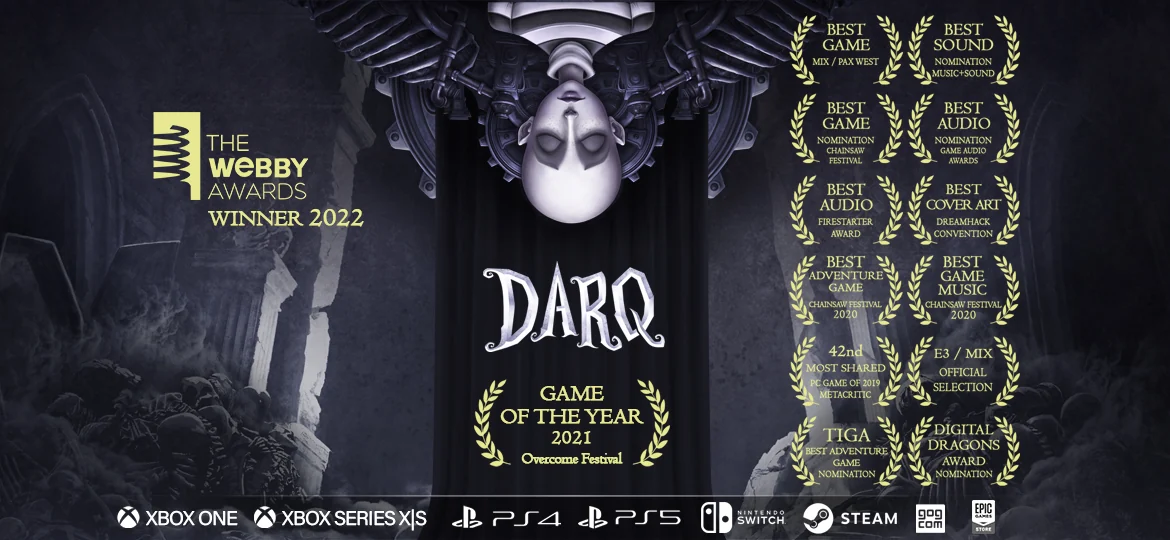
DARQ promotional artwork supplied by Unfold Games.
Your team mentions around seven million DARQ downloads, largely through Epic. What does that figure include, and what did reaching that audience actually change for you and Unfold Games?
The seven million figure includes both paid copies and free downloads, with the vast majority coming from a one-week Epic Games Store giveaway during Halloween. So it’s important not to confuse downloads with sales! But having millions of people experience DARQ was pretty surreal. More importantly, DARQ gave us a foundation to build on. It allowed Unfold Games to grow and eventually take on a much more ambitious project – Bloody Hell Hotel.
You wrote GAMEDEV to help others make their first game. What have you learned since writing it that would make you revisit or rewrite part of your advice today?
One thing I’ve learned is that the title “GAMEDEV: 10 Steps to Making Your First Game Successful” is rather cheesy! But hey, it became an Amazon bestseller, so apparently the title did its job. That aside, I was well aware that the video game industry changes fast, and my intention was to write a book that would remain relevant even through major changes in the industry. The book deliberately avoids technical advice or coding tutorials. Instead, it focuses on principles that have more to do with the psychology of staying committed to a long-term project than with specific technologies that might quickly become outdated. I think the book still holds up for someone trying to make their first indie game. But perhaps the chapter that’s missing is how to go from making a small game to running a studio capable of developing something much larger. That’s something I’ve been learning myself over the past five years. More than 150 contractors have contributed to Bloody Hell Hotel so far. By all measures, it’s an AA project, and the development pipeline is vastly different from that of a small indie game. But interestingly, the same principles of mindset, habits, and time management, still apply.
Giving Players the Keys to Bloody Hell Hotel
In film, the audience watches; in music, they listen; but in games, players become part of the experience. How has giving people that freedom changed the way you think about storytelling and communicating emotions? Have players ever surprised you by experiencing something completely differently from what you intended?
As terrifying as it may be to a game developer, I love being surprised by what players can do in the worlds we’re building. DARQ is a short and linear game where player freedom was never the priority, but Bloody Hell Hotel is very different in this regard. It’s a sandbox sim with multiple interconnected game systems, high customization, and countless ways to play the game. You can play as a peaceful vampire who never has to kill anyone, or as a bloodthirsty maniac with special appreciation for violence. You can focus on making the hotel feel cozy, decorating and furnishing the rooms, farming and cooking, or on forging weapons and exploring procedural dungeons. All systems are pretty much optional. There are always multiple ways to accomplish any task. Having gone through multiple rounds of playtesting, I’m constantly surprised by how players interact with the game. Every time, I see things I never anticipated. And I think that’s what excites me most about this kind of game design: instead of telling players a story, I’m creating a world where they can make their own.
Where did the idea of putting a vampire in charge of a hotel come from? What convinced you there was a whole game in that combination?
I loved the absurdity of it! Imagine being a powerful vampire who’s probably the worst possible candidate for a job in hospitality. But what I love most about the premise is that the vampire possesses ridiculous supernatural abilities. Depending on the class you choose, you might have telekinesis, incredible speed, combat magic, and so on. There are 270 skills and upgrades in total! And all these incredible powers are often used for the most mundane tasks imaginable, like making soup or sweeping the floor with a flying broom. As for where the idea came from, I think it was influenced by all the vampire movies I grew up watching, starting with Interview with the Vampire, which happens to have one of my favorite film scores of all time. And more recently, What We Do in the Shadows, which was filmed not far from where our studio is located. I love that kind of deliciously ridiculous vampire humor.
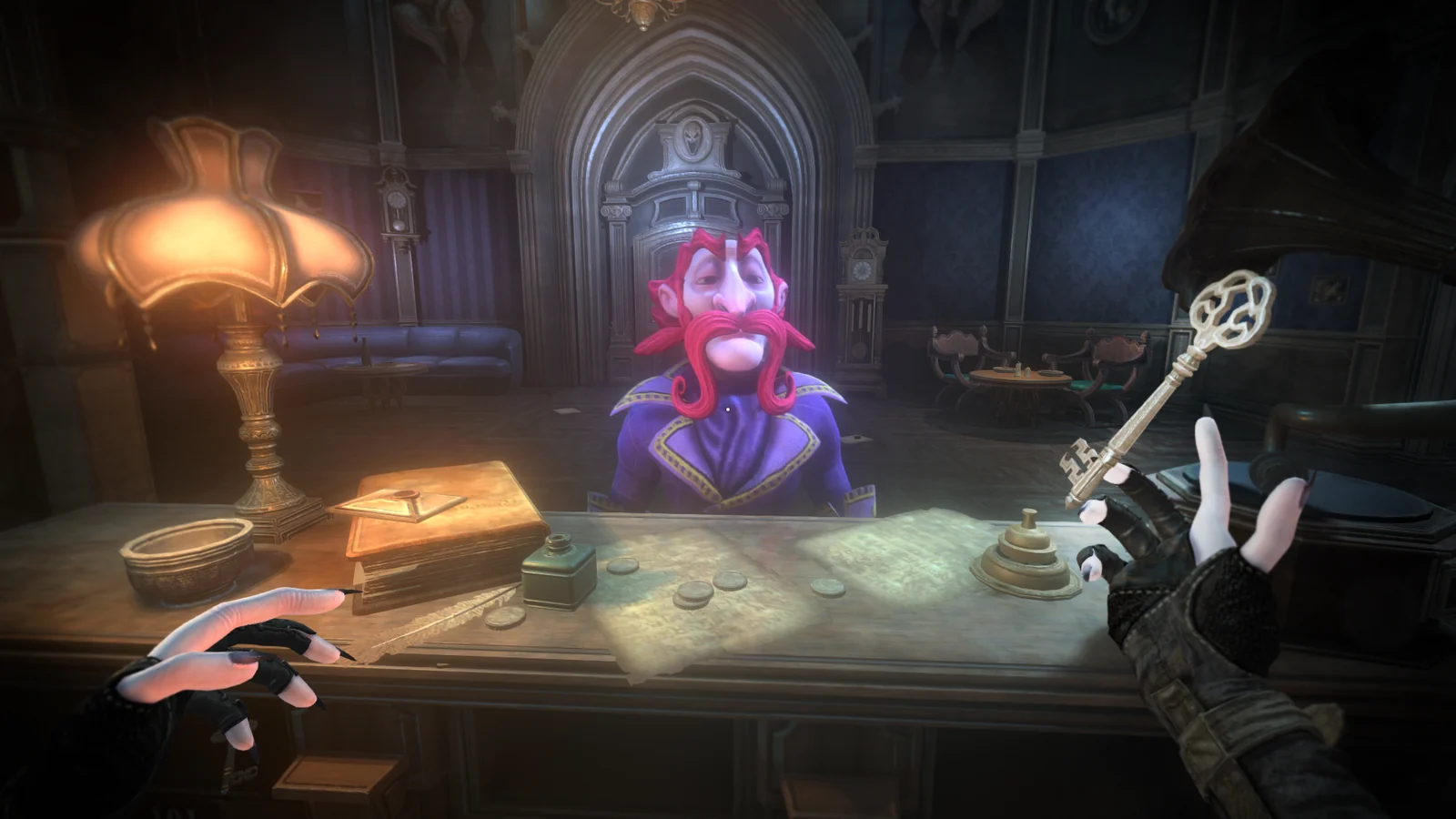
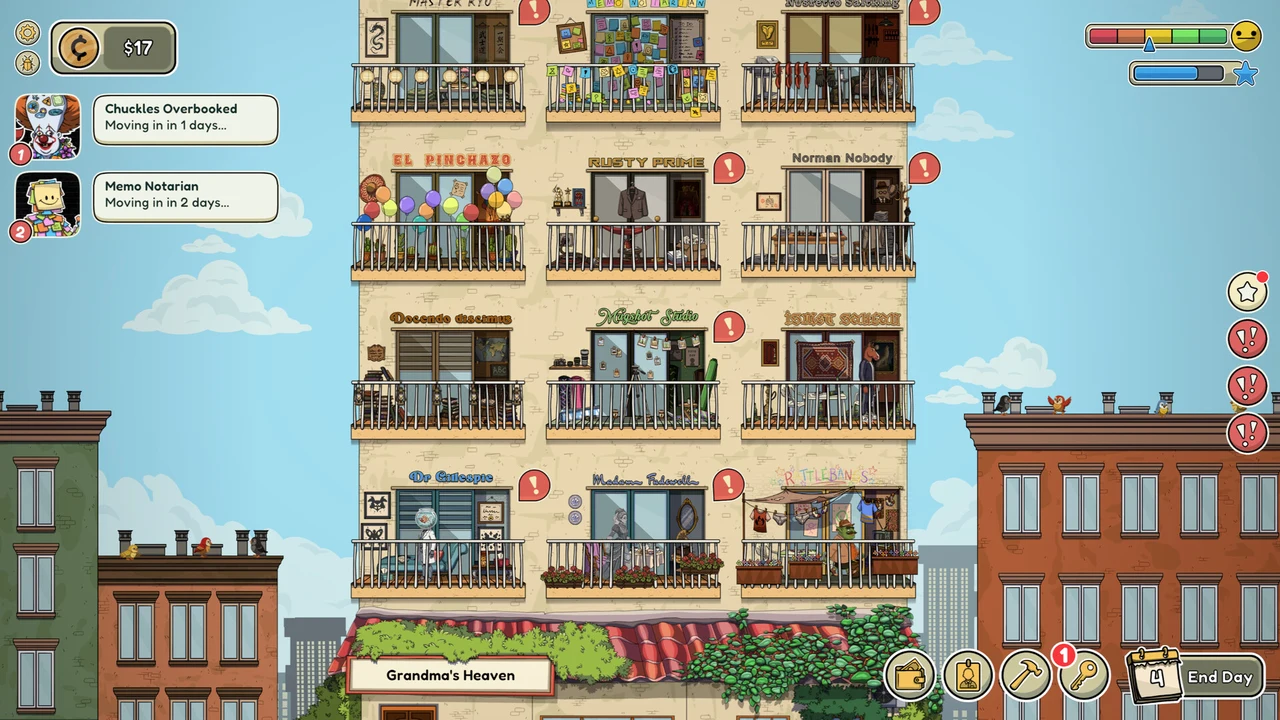
A guest waits at reception in Bloody Hell Hotel. Screenshot courtesy of Unfold Games.
Could you walk us through a situation in Bloody Hell Hotel where being a good hotel owner conflicts with being a hungry vampire? I’d love to hear about the decisions the player gets to make.
Sure! One thing the player learns early on is that dead guests don’t pay for their stay. In Bloody Hell Hotel, cash is rarely used, and guests pay their bills at checkout with a convenient credit card transaction (remember that steampunk tech I mentioned?). So part of the fun is deciding who gets to leave and who becomes your dinner. Of course, feeding on guests is entirely optional. You can buy blood from the Vampiric Council and run a perfectly peaceful hotel. Guests who leave alive also write reviews, which can help or hurt your business depending on their traits and preferences. So once you’ve identified a guest worth keeping alive, you might want to make sure they have a wonderful stay. The needs of those who aren’t going to survive can be disregarded with great satisfaction. There’s nothing like smacking an annoying guest in the face with a baguette first thing in the morning. What a way to start the day! But there’s another twist: guests have secrets, and discovering them can completely change your plans. That seemingly harmless guest might be a vampire hunter in disguise, and attacking them could trigger a fight with one of the game’s most powerful enemies – they’re virtually unbeatable. Or they might be a food critic whose glowing review could attract much wealthier guests. So being a good hotel owner and a hungry vampire often requires some rather interesting business decisions!
Between hotel management, farming, crafting, and dungeon exploration, there’s a lot going on. How do you decide which ideas belong in Bloody Hell Hotel and which ones to leave out?
Bloody Hell Hotel might seem like a game with a lot of unrelated systems, but that’s actually not the case. At its core, there are two main gameplay loops that connect to hotel management: farming + cooking, and weapon forging + dungeon exploration. Simple 🙂 When deciding which features belong in the game, we look at how they connect with everything else, rather than treating them as standalone systems. We also want Bloody Hell Hotel to feel cozy and relaxed. Often, progression in simulation games comes from increasing the number of tasks players need to complete within a limited amount of time. That’s not how we roll. We never want players to feel rushed. Instead, we want them to enjoy the experience they choose at their own pace. Speaking of game systems, almost everything is optional. For example, players advance through their class-specific skill trees by collecting Wisdom Points, which they earn by recovering lore items from dungeons. But what if you don’t enjoy combat? You can explore dungeons on days when fewer monsters spawn, depending on the moon cycle (there’s even an app on the lobby computer that tracks it!). And if you don’t enjoy dungeon exploration at all, you can turn guests into thralls and send them on missions to recover those items for you. That’s the core philosophy behind the game: every system is connected to others, but opting out of a system is totally OK and allows players to experience the game in new ways. Our goal is to give players as much freedom as possible to enjoy Bloody Hell Hotel their way.
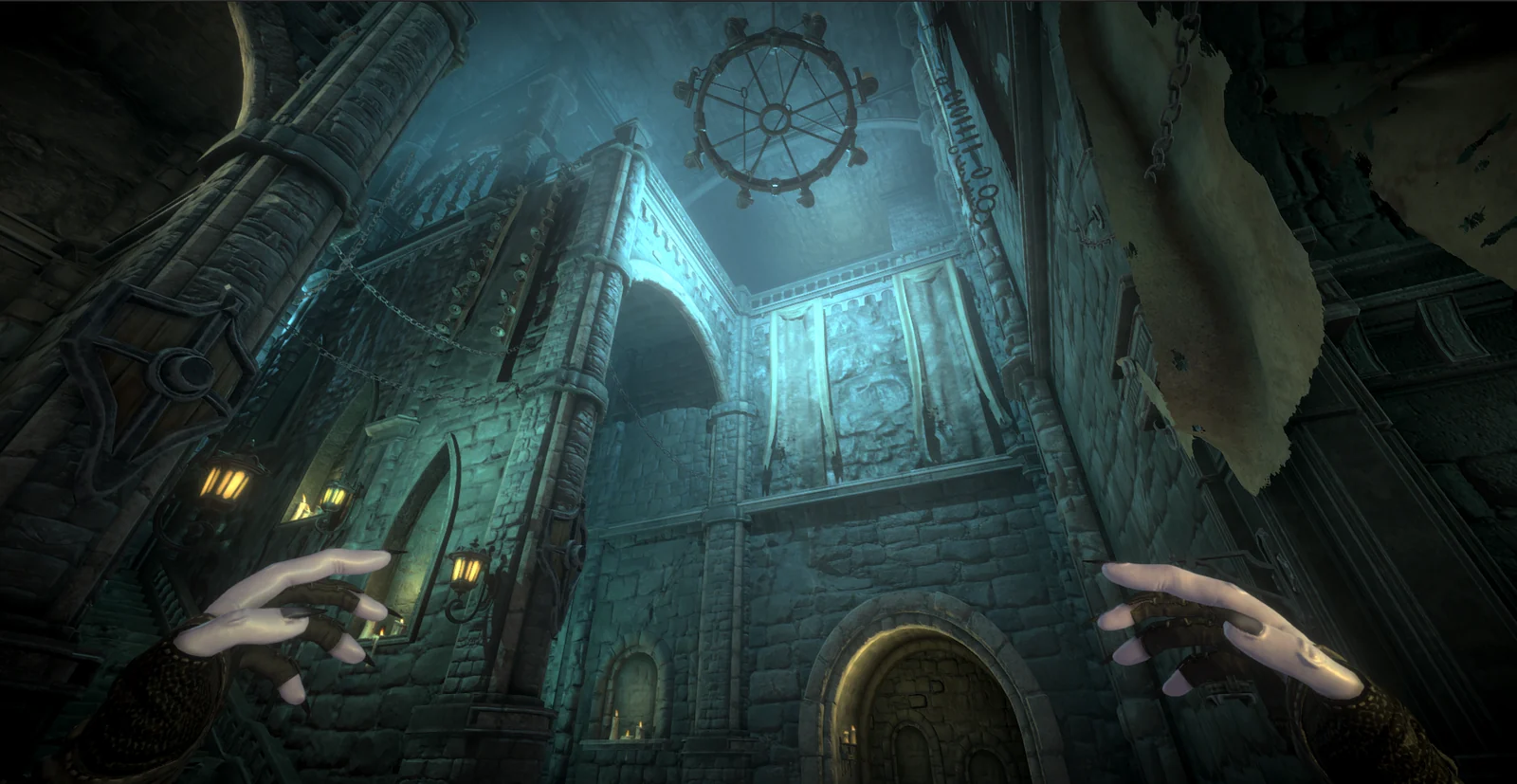
Bloody Hell Hotel‘s dungeons offer another path beyond running the hotel. Screenshot courtesy of Unfold Games.
A Complete Release and Time to Create
You’ve recently announced that Bloody Hell Hotel will launch as a complete game in 2027 rather than entering Early Access. What was the most important factor behind that decision? And after spending years developing the game, how do you personally decide when something is finally ready to be released?
Bloody Hell Hotel has grown a lot since its announcement in 2022, largely because the feedback and ideas we’ve received from our community resonated strongly with us. We’ve been developing the game closely with our players from the very beginning, and many of their suggestions have made it into the game. Early Access was appealing as a natural continuation of this collaborative approach, but it was also a way to fund the final stretch of development. The compromise was that we’d have to release the game without some major features. And asking people to buy an unfinished game after so many years of development just didn’t feel right to me. Thankfully, we recently secured additional funding from our publisher, which allowed us to aim for a complete 1.0 release in 2027 instead. As for knowing when a game is finished… I don’t think any creative person ever feels their work is truly finished! At some point, you have to decide that the experience you’re offering is complete, enjoyable, and worthy of people’s time and money. But that doesn’t mean there’s nothing left to create. We plan to support Bloody Hell Hotel long after launch with content updates and DLCs.
What does your working day look like now compared with the DARQ days? How do you balance running the studio with having time to create things yourself?
The development of DARQ was pretty extreme when it came to my personal schedule. There were many periods of 16-hour workdays. And no, nobody forced me to work those hours. I chose to do it, although I wouldn’t recommend it to anyone, especially long-term! I still work crazy hours, about 12 hours a day on average, but I do take an occasional day off here and there to recharge. The nature of my work has changed quite a lot, though. I’m lucky to collaborate with some incredible artists and programmers, so a lot of my work now comes down to game design, directing, putting everything together in the engine, and a million little things that mostly affect how the game feels. But I never wanted to become someone who just manages spreadsheets and meetings. Creating things is what I love, so I try to protect as much time for that as possible. I still write code, create models, design systems, and compose music. What matters to me most is that I’m still learning something new every single day. I’m constantly trying to get better at things I couldn’t have even imagined myself doing just a few years ago. It’s exciting to look back and see how much has changed, but even more exciting to think about how much there still is to learn and discover. That feeling of being a kid in a candy store that got me into game development is just as strong today as it was when I started 11 years ago.
For another perspective on creative discipline and human-made art, read our interview with artist Matt Essom.
Bloody Hell Hotel
Release: 2027 (planned full release)
Genre: First-person simulation / Hotel management / Sandbox
Developer / Publisher: Unfold Games / Unfold Games, Gambit Digital
Platforms: PC — Steam; consoles announced, specific platforms to be confirmed
DARQ
Release: August 15, 2019 (original PC release)
Genre: Puzzle / Adventure / Psychological horror
Developer / Publisher: Unfold Games / Unfold Games, Feardemic
Platforms: PC — Steam; PlayStation 4, PlayStation 5, Xbox One, Xbox Series X|S, Nintendo Switch
Related Reading
Behind the Scores: Our Interview With Benedict Nichols
Matt Essom Talks Max Payne, UFC 4, AI Art, and Creative Discipline
Written by Ronny Fiksdahl, Founder & Editor-in-Chief of Fix Gaming Channel.
Send interview pitches, corrections, tips, or developer stories to contact@fixgamingchannel.com.
Support independent games coverage on Ko-fi.