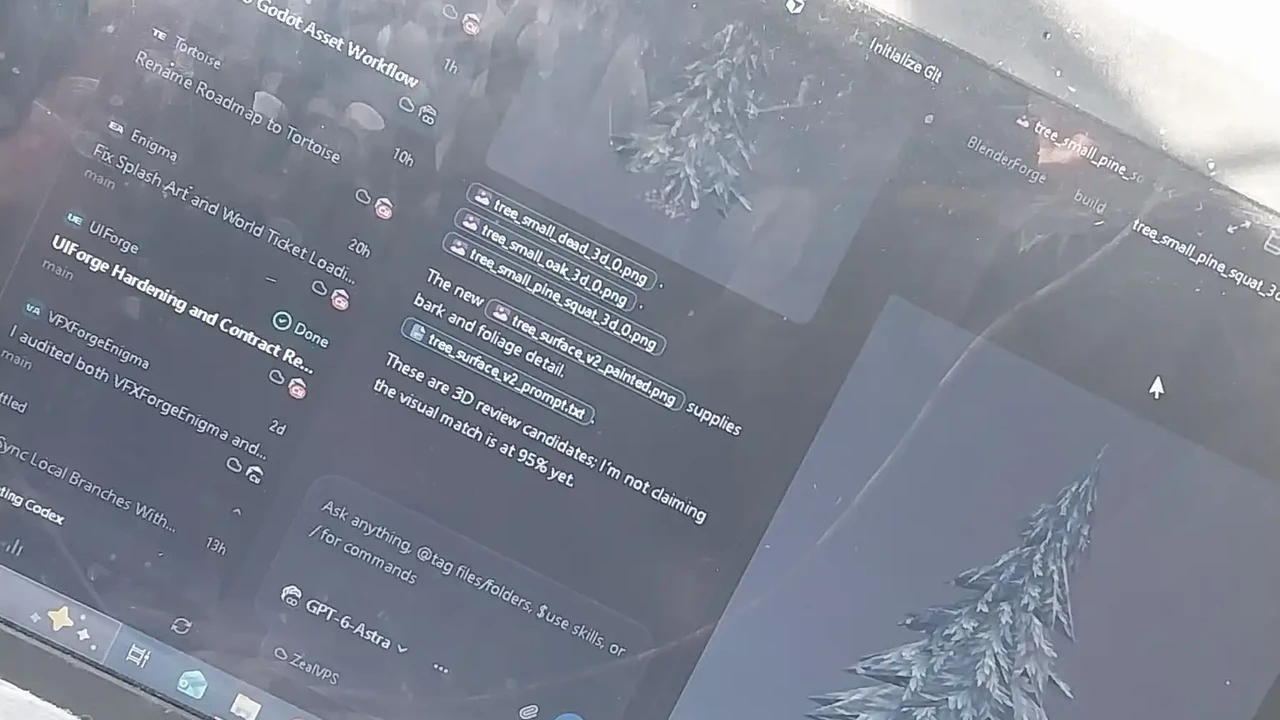
What software development looks like when your car is also your home and office
For this Fix Stories feature, Travis shares what it has meant to keep building software, game-development tools, and experimental projects while living and working from a 2006 Nissan Pathfinder.
His development process relies heavily on AI-assisted coding, but this is not a story about pretending the tools are doing nothing. It is about what remains when the code generation stops: deciding what to build, testing what comes back, catching failures, rebuilding bad ideas, and trying to turn accumulated skills into something sustainable.
You can read more first-person developer and creator stories in Fix Stories.
Want more stories from the people building games?
Get more developer stories, interviews, reviews, indie coverage, and gaming news from Fix Gaming Channel.
Join Our Newsletter
Stay updated with the latest interviews, previews, creator stories, and indie gaming news.
For roughly the last 10 months, my 2006 Nissan Pathfinder has been my home, my transportation, my DoorDash vehicle, and, in a weird way, my office.
I didn’t start building software because I had some clean startup plan. I started because I like making things and because software is one of the few fields where a person with a laptop can potentially create something valuable without already having money, a degree, an office, or a network.
That matters a lot more when you don’t have a house.
Most days are split between survival and building. I DoorDash because it gives me enough flexibility to make money without giving up the hours where I can actually work on projects. But homelessness has its own operating cost. Gas isn’t just transportation when the vehicle is also where you sleep. Food costs more when you don’t have a kitchen. You think about where you’re parking, whether the vehicle is making a new noise, where you’re going to charge things, whether you have enough fuel, and whether tonight is going to be one of the nights where getting comfortable enough to actually sleep is a problem.
Then, somewhere inside all of that, I open the laptop and build.
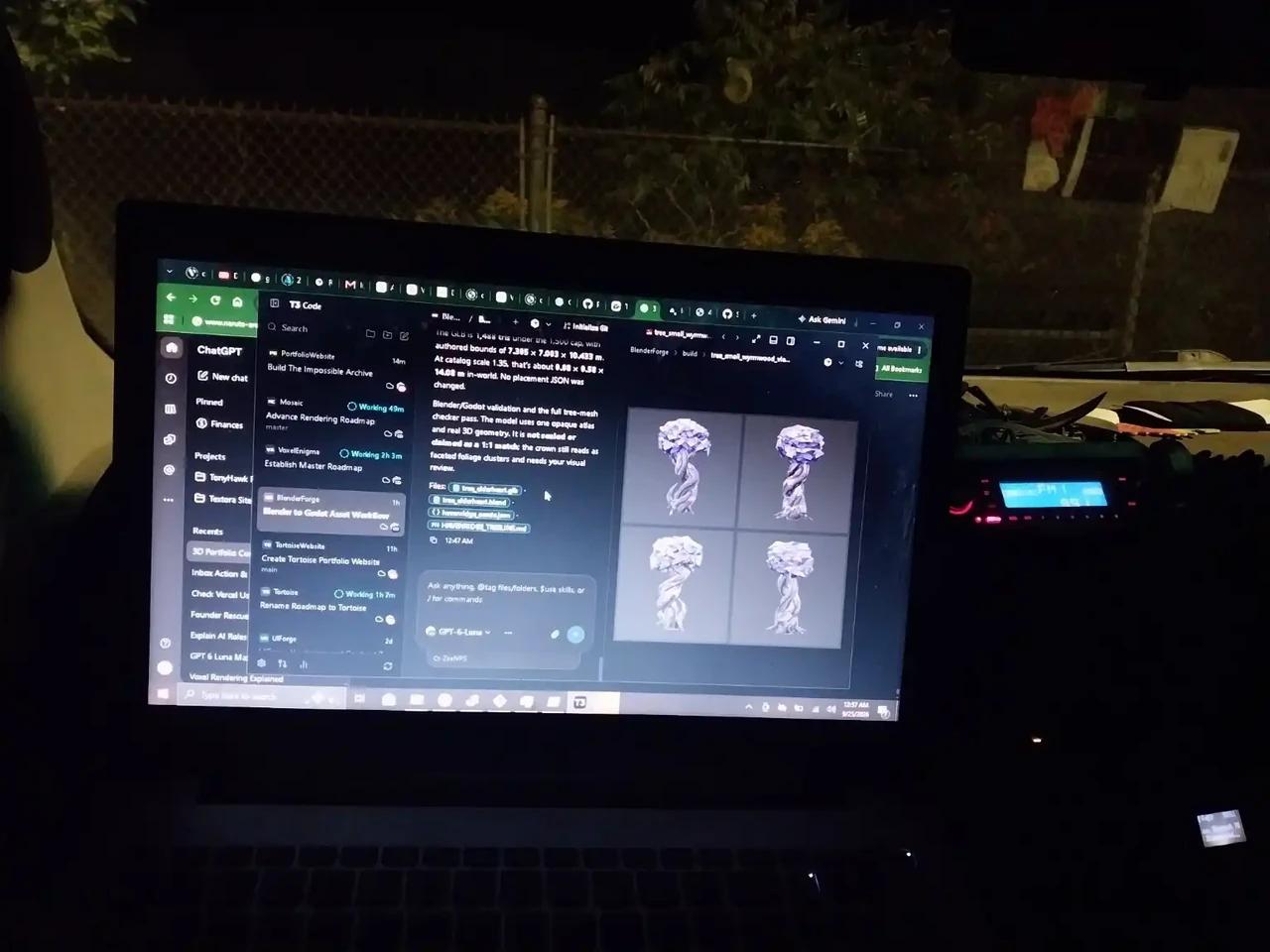
Travis’s development setup inside the 2006 Nissan Pathfinder that also serves as his home and workspace. Image: Travis.
A lot of my development is AI-assisted. I call myself a vibecoder because pretending otherwise would be stupid. I use tools like Cursor heavily and I use AI to write a lot of the code. My part is deciding what I’m trying to build, breaking problems apart, testing what comes back, catching when the model is wrong, pushing it toward the architecture I want, and repeating that process until the thing works.
That approach has let me build much farther beyond what my traditional background would suggest. I don’t have a computer-science degree. I don’t even have a high-school diploma. But I have repos full of real systems, failed experiments, half-finished games, tools that became more serious than I expected, and projects where I learned enough along the way to realize the first version was garbage and rebuild it properly.
Some of the projects worked. Some absolutely did not.
IconForgeEnigma is one of the projects I’m proudest of technically. It grew into a serious attempt at deterministic, validation-heavy tooling around generating and managing game icon assets. A lot of the work became less about “make an icon” and more about the boring-but-important stuff: validation boundaries, process cleanup, schemas, tests, and making AI-generated workflows behave predictably instead of like a slot machine.
VFXForgeEnigma followed a similar direction for game VFX data and export pipelines. Again, the interesting part became reliability. I found myself caring about provenance, validation, safe generated artifacts, CLI behavior, and preventing the kind of edge cases AI coding agents happily create if you let them.

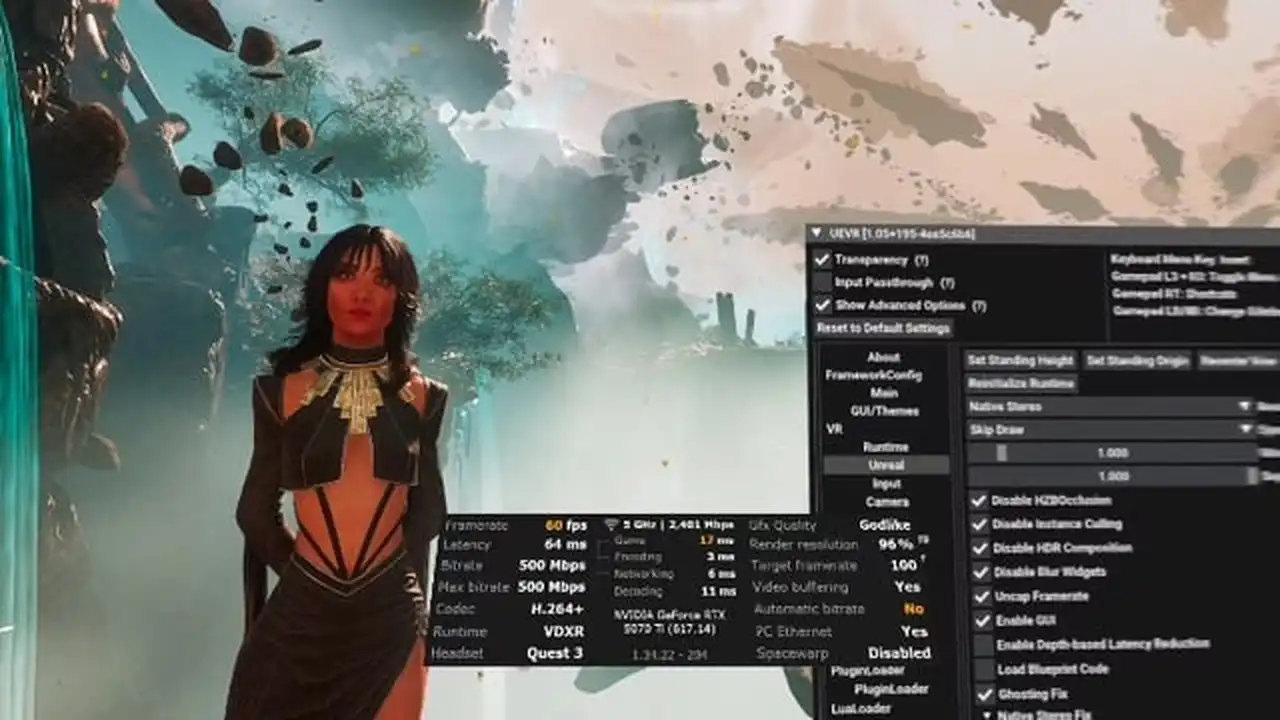
VFXForge is one of Travis’s experimental development tools, built around real-time VFX authoring for Godot. Image: Travis.
Then there are the games.
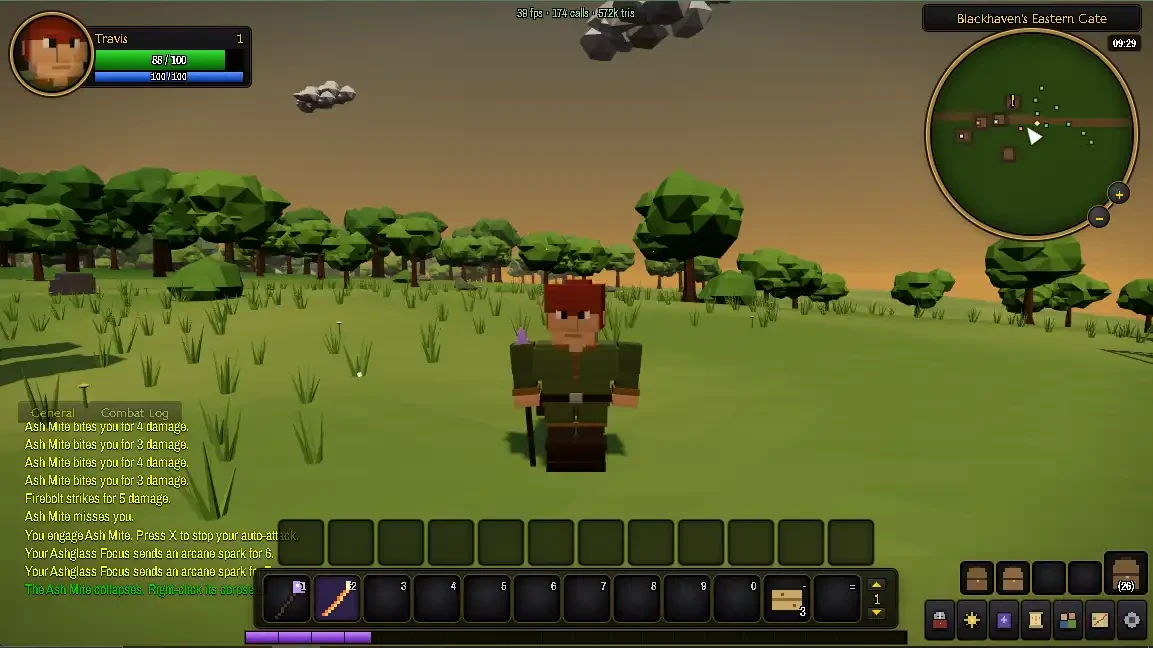
One of Travis’s voxel-style game projects, showing the kind of experimental game-development work discussed in his story. Image: Travis.
Pantheon Arena, later Beta Arena, was a browser-based 3v3 turn-based strategy game built around mythological gods. I spent a ridiculous amount of time thinking through combat systems, character kits, turn flow, state handling, networking, replays, spectating, and admin tooling. It has gone through multiple names and iterations. It is not some shipped success story. But it taught me more about product scope than almost anything else.
I also have MMO experiments, an OSRS/RSMod-based server project, smaller games, weird prototypes, websites, and side tools. My GitHub has the archaeological layers of somebody who learns by building first and cleaning up the wreckage later.
Living in a car changed how I look at all of this.
When you have a normal setup, it is easy to waste six hours polishing something nobody needs because the cost of those six hours is abstract.
When you’re homeless, time gets brutally concrete.
Six hours might also be the amount of DoorDash time that pays for several days of gas and food. A bad technical rabbit hole can literally compete with your survival budget. That doesn’t mean I suddenly became perfectly disciplined. I still overbuild things. I still chase ideas because they seem interesting. I still sometimes start another project when I should probably finish the previous one.
But I notice the cost now.
It has also changed the way I think about failure.
I used to look at unfinished repos as evidence that I wasn’t finishing enough. Now I see them more like a record of skill accumulation. Some were bad ideas. Some were too ambitious. Some taught me exactly what I needed before the next project. Some probably should stay dead.
The important thing is that the building never really stopped.
There have been days where I was frustrated out of my mind with the car, money, or where I was going to sleep, and then an hour later I was debugging some absurd state-management problem or having an AI agent write regression tests because a validation rule broke in a way I didn’t expect.
That contrast is strange, but it is also probably why I’ve kept doing it.
Software gives me a sense that I can still move forward even when the rest of my life feels stuck.
I’m not trying to romanticize homelessness. It sucks. There is nothing creatively magical about sleeping in a vehicle, worrying about mechanical failures, or spending money just to remain functional enough to earn more money. Stability would make me a better developer, not a less interesting one.
That’s why I finally made the fundraiser.
My immediate goal isn’t to become rich from one of these projects. It is much simpler than that: get stable housing, probably relocate somewhere more affordable, keep the vehicle functional long enough to bridge the gap, and create enough breathing room to turn the skills I’ve been building into consistent technical income.
I’m still DoorDashing. I’m still building. I’m still trying to find remote work, freelance technical work, product opportunities, anything that gets me closer to not needing the car as a bedroom.
I don’t know which project, job, or opportunity is going to be the thing that works.
I just know I want the next year of development to happen from a desk.
Projects Mentioned
Fundraiser: Travis’s GoFundMe
Fix Gaming Channel: Fix Stories gives developers and creators room to tell the stories behind their work directly in their own words. Travis’s submitted story above has been preserved in his voice and formatted for publication by Fix Gaming Channel.
Related Reading
Fix Stories: The Game Existed Before the Interface – How AI Helped Me Bring Hoop Dynasty to Life
This May Be Anti-Inspirational. It Worked Anyway.
Everyone Uses AI Now. So What Are We Really Disclosing?
Story written by Travis, software and game-development tools creator.
Edited and published by Ronny Fiksdahl, Founder & Editor-in-Chief of Fix Gaming Channel.
Send developer stories, creator stories, corrections, tips, or game pitches to contact@fixgamingchannel.com.
Support independent games coverage on Ko-fi.